The Power of Let’s Pretend: A Comprehensive Guide for Parents on Nurturing Pretend Play
Pretend play—also known as imaginative play, make-believe, or dramatic play—is far more than just child’s entertainment. It is a cornerstone of cognitive, social, and emotional development. As a parent, you may have watched your toddler turn a cardboard box into a spaceship, or heard your preschooler announce that she is now a doctor who needs to check your temperature with a plastic toy. These moments are precious, but they are also rich with learning opportunities. This guide will help you understand why pretend play matters, how to support it without taking over, and what to do when your child seems stuck in repetitive scripts.
Why Pretend Play Is Essential for Development
Before diving into practical strategies, it is worth appreciating what happens inside a child’s brain during a pretend play episode. Research in developmental psychology has consistently shown that pretend play supports:
- Executive function skills: When a child decides, “I am a firefighter, and I must rescue the teddy bear from the burning building,” they hold a rule in mind (the role), inhibit distractions (they don’t suddenly become a cat), and flexibly adapt the scenario as needed. This is real-world training in working memory, self-control, and cognitive flexibility.
- Language and literacy: Pretend play naturally expands vocabulary. A child who pretends to cook will use words like “whisk,” “simmer,” and “ingredients.” More importantly, they practice narrative structure—beginning, middle, end—which underpins reading comprehension.
- Social and emotional intelligence: When two children play house, they must negotiate roles, share props, read each other’s emotional cues, and sometimes resolve conflicts. This builds empathy and theory of mind—the ability to understand another person’s perspective.
- Creative problem-solving: A child who needs a “crown” but has only a paper plate and a broken necklace must invent a solution. This kind of divergent thinking is the foundation of creativity in adulthood.
Understanding these benefits helps you see pretend play not as a break from “real learning,” but as one of the most powerful learning tools your child has.
The Parent’s Role: Facilitator, Not Director
One of the biggest mistakes parents make is taking over the pretend play. You might be tempted to say, “No, the dragon doesn’t live in the castle, it lives in a cave,” or “Let me show you how to build a better spaceship.” But the moment you direct the play, you steal the child’s ownership. Your role is to set the stage, then step back.
Prepare the Environment
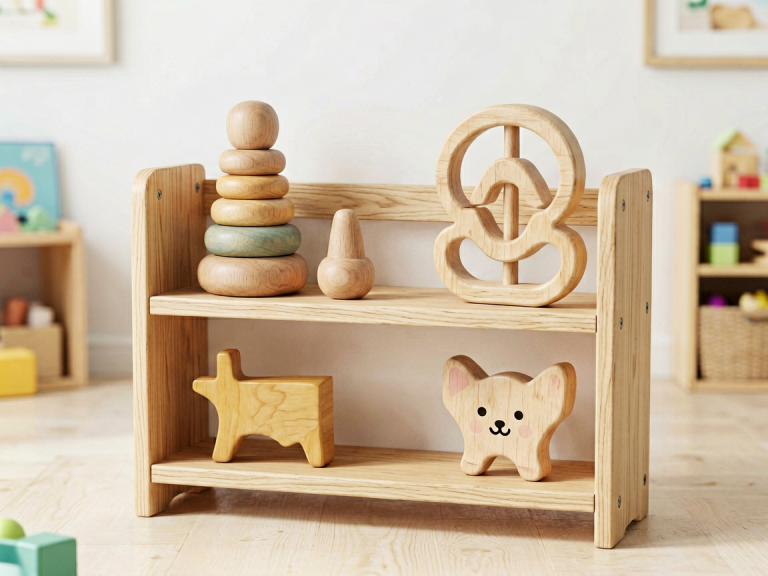
You do not need expensive toys. In fact, the best props are open-ended and ambiguous. A collection of fabric scraps, empty boxes, plastic bowls, old hats, and scarves can become anything. Create a “pretend play corner” in your home where these items are accessible. Rotate them occasionally to spark new ideas. The environment should whisper, “Something magical can happen here.”
Observe and Listen
Before you intervene, watch. What is your child’s current theme? Are they playing alone or with others? What emotions are surfacing? A child who repeatedly plays “sick patient” might be processing a recent visit to the doctor. A child who always wants to be the “boss” might be exploring power dynamics. Your observations will guide your gentle support.
Use the “Sideline Coach” Approach
Instead of jumping into the play, you can comment from the periphery. For example: “Wow, you are mixing a very special potion. I wonder what it does.” This affirms the play without controlling it. If your child invites you in, enter as a supporting character, not the lead. Ask questions: “What would you like me to do? Should I be the customer or the waiter?” Follow their script.
Recognizing and Supporting Different Stages of Pretend Play
Pretend play evolves as children grow. Understanding these stages helps you tailor your support.
Early Pretend Play (Ages 1–2)
Toddlers begin with simple imitative actions. They hold a phone to their ear, pretend to drink from an empty cup, or feed a doll. At this stage, they are learning that objects can represent something else. You can support this by modeling simple pretend actions and then letting them imitate. Do not correct their “mistakes”—if they pretend to comb their hair with a spoon, that is brilliant creativity.
Symbolic and Sequential Play (Ages 3–4)
By age three, children can hold a whole scenario in mind. They might pretend to drive a car, then stop for gas, then visit a friend. They also begin to assign roles: “You be the baby, I be the mommy.” At this stage, they need more narrative support. You can offer simple story starters: “I wonder what happens after the bear falls asleep?” Be careful not to ask too many questions, though—over-interrogation can interrupt the flow.
Complex Socio-Dramatic Play (Ages 5–7)
Older preschoolers and early school-age children engage in elaborate collaborative play. They plan ahead: “First we build the castle, then you attack, then I use magic.” They can negotiate rules and stay in character for extended periods. Your role here is to provide more complex props (e.g., a cash register, play money, puppets) and to help them resolve disputes that arise. If they argue about who gets to be the queen, you can facilitate a conversation: “How could you both be queens? Or could you trade roles after the first game?”
When to Intervene: Common Challenges and Solutions
Even the most enthusiastic pretend players sometimes get stuck. Here are common scenarios and gentle strategies.
Repeated Scripts
If your child plays the same scenario every day—for example, always pretending to go to the grocery store—they might be seeking comfort in predictability, or they may simply enjoy that script. There is no need to force change, but you can gently expand it. Say, “I notice you always go to the grocery store. I wonder what happens when you come home? Do you cook a special meal?” You can also add a single new prop that suggests a twist—a toy fire truck near the grocery store might inspire a rescue mission.
Refusal to Engage
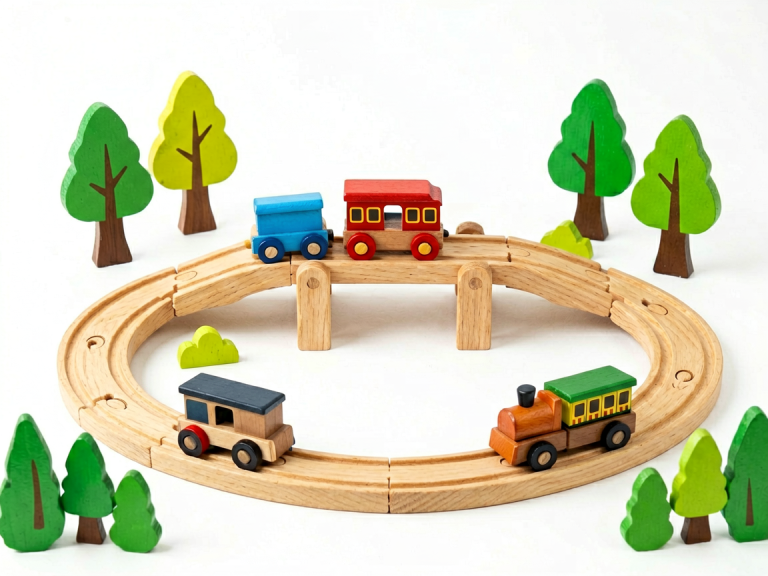
Some children prefer construction play or physical play over pretend. That is perfectly fine. Do not force it. However, you can invite them into low-pressure pretend by embedding it in their favorite activity. For example, if a child loves building with blocks, you can say, “What if we pretend this block tower is a rocket launching into space? Let’s count down!” This bridges their interests.
Overly Rigid Play
A child who insists, “You must say exactly these words,” or “No, you can’t be a cat, only I can be a cat,” may be struggling with control. This is common, especially among children who are highly sensitive or have strong ideas. Validate their need for structure: “I understand you want the game to be just right.” Then offer a small compromise: “What if I am a cat that can also talk? Would that be okay?” Over time, you can help them practice flexibility by modeling it yourself: “Okay, I’ll be what you say, but next time we play, maybe we can try something new.”
Supporting Pretend Play in Sibling Play
When siblings play together, pretend play can be a battlefield or a beautiful collaboration. To encourage the latter, set simple rules: “In our house, everyone gets to choose one thing about the game.” Post a visual chart if needed. Also, ensure that each child has enough resources—a single “doctor coat” can cause conflict, so have two. If arguments escalate, pause the play, help each child express their feelings, and brainstorm a compromise together.
How to Use Pretend Play to Teach Real-World Skills
Pretend play is also a powerful vehicle for teaching life skills in a low-stress, low-pressure environment.
- Emotional regulation: Use dolls or stuffed animals to reenact frustrating situations—like not getting a turn on the swing. Let the doll express anger, then model calming strategies. Your child learns through the story.
- Empathy and diversity: Introduce props that represent different cultures, jobs, and family structures. A child who pretends to be a grandmother who uses a wheelchair, or a chef who speaks a different language, builds understanding.
- Problem-solving: Create pretend scenarios that require a solution. “Oh no, the teddy bear’s boat is sinking! What can we use to rescue him?” Let your child generate ideas without judging them.
- Literacy and math: Add a “menu” to the pretend restaurant, a “prescription pad” to the doctor’s office, or a “shopping list” to the grocery game. These integrate reading, writing, and simple counting naturally.
Encouraging Pretend Play Without Screens
In a world of digital entertainment, many parents worry that their children have lost the ability to pretend. Screens are not evil, but they tend to provide pre-packaged narratives that leave little room for imagination. To encourage self-directed pretend play, consider these tips:
- Limit passive screen time, especially before playtime. A child who has just watched a fast-paced cartoon may struggle to settle into internal narrative creation.
- Create “boredom opportunities.” Do not rush to fill every free moment. Boredom is the soil in which pretend play grows. When a child says, “I’m bored,” resist the urge to suggest an activity. Instead, say, “What do you think you could pretend right now?” and wait.
- Model pretend play yourself. Occasionally, let your child catch you pretending. Pick up a stick and say, “Oh, what a beautiful wizard’s staff!” Your willingness to play sends a powerful message that make-believe is valued.
- Celebrate the process, not the product. Do not ask, “What did you make?” Instead, ask, “What happened in your story?” or “How did it feel to be a dragon?” This reinforces the imaginative journey rather than a final result.
When to Seek Guidance: Deep Engagement or Red Flags?
Most pretend play is healthy, but there are a few situations where you might want to consult a pediatrician or child development specialist:
- A child persistently engages in violent or distressing pretend scenarios (e.g., repeated reenactments of a car accident or injury) without being able to shift to other themes. This could indicate a need to process trauma.
- A child cannot engage in any pretend play by age 3 or 4, or shows rigid, repetitive, non-imaginative play (e.g., lining up cars again and again without any narrative). In some cases, this may be an early indicator of autism spectrum differences.
- A child’s pretend play is regularly disrupted by intense anxiety or meltdowns when the script deviates.
For the vast majority of children, however, pretend play is a natural, joyful, and profoundly educational activity. Your role as a parent is to create the space, provide the tools, and then—most importantly—get out of the way.
Conclusion: The Gift of Imagination
Pretend play is not a luxury; it is a necessity. It is how children make sense of a world that is often confusing, big, and overwhelming. When you support your child’s make-believe worlds, you are not just keeping them busy. You are building the neural pathways for creative thinking, emotional regulation, and social cooperation. You are giving them a safe space to practice being a hero, a parent, a scientist, or a monster—without real consequences. And you are sharing in the magic of childhood.
So the next time your child hands you a plastic teacup and says, “Pretend this is a magic potion,” drink it. Ask what it does. Let your tongue turn purple. Be silly. Be present. The world of pretend is fragile and fleeting—a few short years, and it fades into memory. But the skills and the joy your child gains from it will last a lifetime.
Now, go forth and play.