The Conscious Parents Guide: A Checklist for Choosing Fewer Toys
In an era of overflowing playrooms, cluttered living spaces, and relentless marketing aimed at children, the concept of owning fewer toys has become both a radical act and a quiet revolution. Parents everywhere are beginning to realize that more toys do not equal more happiness, more learning, or more development. On the contrary, an abundance of plastic distractions often leads to shorter attention spans, less creative play, and a sense of overwhelm for both children and adults. This article offers a thoughtful, research-backed checklist for choosing fewer toys — not as a deprivation strategy, but as a path toward deeper engagement, greater gratitude, and more meaningful childhood experiences.
Why Fewer Toys? The Case for Intentional Curation
Before diving into the checklist itself, it is essential to understand the "why" behind the philosophy of fewer toys. The benefits are not merely aesthetic or organizational; they are deeply developmental.
Enhanced Focus and Deeper Play
When a child is surrounded by dozens of options, the brain struggles with decision fatigue. Instead of sinking into a rich, imaginative world with one toy, children flit from item to item, never fully engaging. Research in developmental psychology shows that children with fewer toys engage in more sustained, complex play. They invent stories, build systems, and solve problems because they are not constantly distracted by the next shiny object.
Cultivation of Gratitude and Care
Scarcity, when deliberately curated, breeds appreciation. A child who receives one thoughtful gift per occasion learns to treasure it, to maintain it, and to derive long-term satisfaction from it. Conversely, the avalanche of birthday and holiday presents often leaves toys broken, abandoned, or forgotten within days. Fewer toys teach children that value is not in quantity but in experience.
Reduced Parental Stress and Clutter
Let’s be honest: the toy mess is a major source of daily tension. Picking up scattered Lego bricks, puzzle pieces, and doll accessories erodes patience and steals time from quality interaction. A minimalist toy philosophy directly reduces this burden, freeing parents to focus on connection rather than cleanup.
The Choosing Fewer Toys Checklist: Seven Essential Questions
This checklist is designed to be applied before every single toy purchase or acquisition. Whether you are shopping for a birthday present, considering a hand-me-down, or tempted by a flashy sale, run each potential toy through these seven filters. If it does not clearly meet at least five of the criteria, think twice.
1. Does This Toy Inspire Open-Ended, Child-Directed Play?
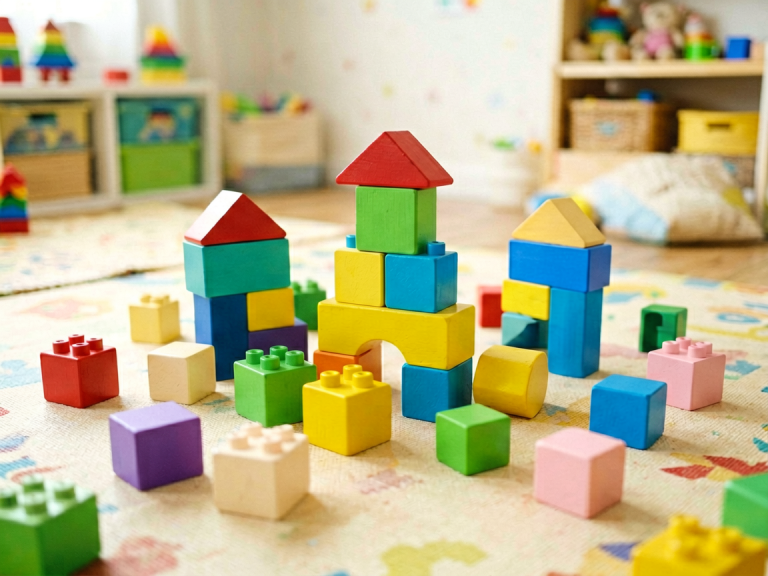
The most valuable toys are those without a single "correct" use. A set of wooden blocks can become a castle, a spaceship, a bridge, or a mountain. A plain doll can be a baby, a friend, a student, or a superhero. Open-ended toys stimulate creativity, problem-solving, and language development because the child must invent the narrative.
Red flags:
- Toys that only do one thing (e.g., an electronic toy that sings one song when a button is pressed).
- Toys with pre-programmed scripts or limited outcomes.
- "Playsets" that come with specific, fixed scenes (e.g., a pirate ship with only one way to arrange the pieces).
Green flags:
- Raw materials: blocks, fabric, clay, sand, water, cardboard boxes.
- Simple dolls, animals, or action figures without elaborate backstories.
- Construction toys like Magna-Tiles, Duplo, or simple wooden trains.
2. Is This Toy Durable Enough to Survive Multiple Children and Years?
A toy that breaks within weeks is not a bargain; it is a waste of money, resources, and emotional investment. Choose toys built to last — ideally from wood, metal, or high-quality, non-toxic plastic. Consider whether the toy can be passed down to younger siblings or donated in good condition.
Ask yourself:
- Can this toy withstand rough handling, drops, and chewing?
- Are the parts easily replaceable if lost?
- Is the toy timeless in design, or will it look dated and embarrassing in two years?
Avoid flimsy, battery-operated novelties from dollar stores or fast-fashion toy lines. They break quickly and often cannot be repaired.
3. Does This Toy Align with the Child’s Current Developmental Stage and Interests?
Many well-intentioned parents buy toys that are either too advanced (causing frustration) or too babyish (causing boredom). Observe your child’s current fascinations. If they love building towers, a new set of larger blocks may be perfect. If they are obsessed with pretending to cook, a simple wooden kitchen set (without electronic sounds) can fuel hours of play.
Practical tip:
Before buying, imagine how the toy would be used in an average play session. Does it fit naturally into their existing play patterns, or would it require them to learn an entirely new skill set that they may not be ready for? The sweet spot is a toy that is just challenging enough to engage, but not so difficult that it requires constant adult intervention.
4. Is This Toy Multifunctional or Adaptable?
A single toy that serves multiple purposes is far more valuable than a single-purpose gadget. A set of colorful scarves can be used for dress-up, dancing, building tents, or sensory play. A simple wooden train track can be rearranged into countless configurations. Multifunctional toys encourage flexibility and resourcefulness.
Examples of multifunctional toys:
- Crayons, paper, and child-safe scissors (art, writing, cutting, sculpting).
- A play kitchen with open shelves (cooking, organizing, pretend grocery shopping).
- A set of plain wooden animals (imaginative play, counting, sorting, storytelling).
Avoid toys that are so specialized they cannot be repurposed. A plastic toy that only shoots balls into a specific basket has limited creative potential.
5. Does This Toy Encourage Active, Screen-Free Engagement?
In a world saturated with screens, the last thing children need is another glowing, beeping, or talking device. Passive toys that entertain the child (rather than the child entertaining themselves) dull creativity and reduce the need for active problem-solving. The best toys require the child to move, manipulate, build, imagine, or interact physically.
Evaluate:
- Does the toy require batteries? If yes, reconsider seriously. Battery-operated toys often replace the child’s role with pre-recorded sounds and lights, leaving little room for active participation.
- Is the child physically moving while playing? Toys that promote gross motor skills (balls, balance boards, climbing structures) or fine motor skills (puzzles, beads, lacing cards) are excellent choices.
- Can the child play with this toy entirely on their own without needing a parent to set it up or read instructions? Independence is a key goal of play.
6. Will This Toy Complement the Existing Collection Rather Than Duplicate It?
Before buying a toy, take a mental inventory of what you already own. Do you already have three different versions of the same type of toy? For example, a child does not need six different plastic animal sets, four puzzles of similar difficulty, or seven dolls that all serve the same function. Each new addition should fill a genuine gap in the play landscape.
Check for overlap:
- What category does this toy fall into? (construction, pretend play, art, movement, board games, etc.)
- Do you already own toys in that category that are being used well? If yes, consider if this one truly offers a different play experience.
- Could an existing toy be used to achieve the same purpose? (For instance, using regular blankets to build a fort instead of buying a pre-made pop-up tent.)
7. Is This Toy Made from Safe, Sustainable, and Ethically Sourced Materials?
This final question is about values as much as practicality. Toys that are made from non-toxic, sustainably harvested wood, recycled plastics, or organic cotton are better for the planet and safer for your child. Avoid toys with small parts that pose choking hazards for younger children, and watch out for paints, glues, or finishes that may contain harmful chemicals.
Research:
Look for certifications like FSC (Forest Stewardship Council) for wood, or GREENGUARD for low chemical emissions. When in doubt, opt for natural materials over synthetic ones. Also consider the packaging: is it minimal and recyclable? A toy wrapped in layers of plastic and cardboard contradicts the message of mindful consumption.
Putting the Checklist into Practice: A Step-by-Step Approach
Having a checklist is only half the battle; implementing it consistently requires deliberate habits. Here is how to integrate this philosophy into your daily life.
Step 1: Conduct a Toy Audit
Before buying any new toys, go through your current collection. Separate toys into three piles: keep, donate/sell, and discard (broken or hazardous). Apply the checklist retroactively to the "keep" pile. If you own dozens of toys that fail the open-ended, durable, and active tests, consider reducing them to a manageable number — perhaps 20 to 30 items total, depending on the age and space.
Step 2: Create a "One In, One Out" Rule
For every new toy that passes the checklist, remove one existing toy from the collection. This prevents accumulation and forces thoughtful evaluation. It also teaches children that new additions come with responsibility and trade-offs.
Step 3: Resist the "Just One More" Mentality
Retail therapy for children is tempting, especially during sales or holidays. Before purchasing, pause for 24 hours. Ask yourself: "Will this toy still excite my child in three months? Is it truly needed, or is it impulsive?" Often, the answer reveals itself with a little distance.
Step 4: Engage Your Child in the Process
Even young children can participate in mindful decision-making. Explain that we are choosing toys that help them play longer and better. Involve them in the audit — let them decide which toys they have outgrown. This builds decision-making skills and ownership over their space.
Step 5: Embrace Alternatives to Toys
Many of the best play experiences do not involve store-bought toys at all. Time outdoors, art supplies, cooking together, building with blankets, or simply exploring nature provide richer developmental benefits than most commercial products. Redirect your toy budget toward experiences: a museum membership, a trip to the park, or a subscription to a craft kit that promotes creation rather than consumption.
Conclusion: Less Stuff, More Play
Choosing fewer toys is not about deprivation; it is about liberation. By applying this checklist, you are freeing your child from the tyranny of clutter and the constant pressure of novelty. You are creating space — physical space in the playroom, mental space for deep focus, and emotional space for genuine gratitude. Every toy that passes through these filters becomes a treasured companion, not a disposable commodity.
The checklist is a tool, but the real goal is a mindset: that play is sacred, that quality matters more than quantity, and that our children deserve environments that nurture their imagination rather than overwhelm their senses. So the next time you reach for a shopping cart or click "add to cart," pause. Pull out this checklist. And choose, consciously, to give the gift of less — so that your child can gain so much more.