The Ultimate Guide to Early Learning Toys: Thoughtful Gift Ideas That Spark Development
Introduction: Why Early Learning Toys Matter
Choosing the right gift for a young child is about more than just finding something fun—it’s about nurturing curiosity, creativity, and foundational skills during the most critical window of brain development. From birth to age five, children’s brains form over one million neural connections every second, and the toys they interact with play a direct role in shaping these connections. Early learning toys are specifically designed to engage a child’s senses, encourage problem-solving, and foster social-emotional growth. Whether you are shopping for a baby shower, a first birthday, or a holiday gift, selecting toys that combine play with purposeful learning can set a child up for a lifetime of confidence and enthusiasm for discovery. In this guide, we explore the best early learning toy gift ideas, organized by developmental stage and learning domain, so you can choose a present that is both delightful and deeply beneficial.
The Power of Sensory Play: Gifts for Infants (0–12 Months)
For the youngest learners, the world is a symphony of sights, sounds, textures, and tastes. Sensory toys are the cornerstone of early learning because they stimulate a baby’s developing nervous system and encourage exploration. High-contrast black-and-white cards or soft fabric books with crinkle pages are excellent choices—they help newborns focus their vision and respond to patterns. Rattles, soft teething rings with varied textures, and plush toys that make gentle sounds support auditory and tactile development. One particularly thoughtful gift is a baby activity gym with hanging toys that encourage reaching and batting, which strengthens gross motor skills and hand-eye coordination. Another standout is a set of silicone stacking cups—these simple yet versatile toys teach cause and effect, spatial awareness, and even early math concepts like size and order. When selecting for an infant, always prioritize safety: choose toys made from non-toxic, BPA-free materials, with no small parts that could pose a choking hazard. Sensory play not only delights babies but also lays the groundwork for cognitive processing and emotional regulation.
Building Brains Through Motion: Toys for Toddlers (1–3 Years)
Toddlers are on the move, eager to explore their environment and assert their independence. This stage is a golden opportunity to introduce toys that support language development, fine motor skills, and imaginative play. Push-and-pull toys, such as wooden animal pull-alongs or ride-on cars, encourage balance and coordination while giving toddlers a sense of mastery. Shape sorters and simple wooden puzzles (with knobs for easy gripping) teach problem-solving and shape recognition. For language growth, consider interactive board books with flaps, mirrors, or sound buttons; these spark curiosity and build vocabulary through repetition and surprise. A magnetic fishing game with colorful wooden fish is another gift that combines fine motor practice with early cognitive skills like color matching and counting. Perhaps the most powerful gift for a toddler is an open-ended building set, such as large interlocking blocks or magnetic tiles. These toys allow children to create towers, bridges, and imaginary worlds, fostering spatial reasoning, creativity, and perseverance. When wrapping up a toddler gift, remember that process is more important than product—avoid toys with rigid instructions and instead choose those that invite free exploration.
Imagination and Logic: Gifts for Preschoolers (3–5 Years)
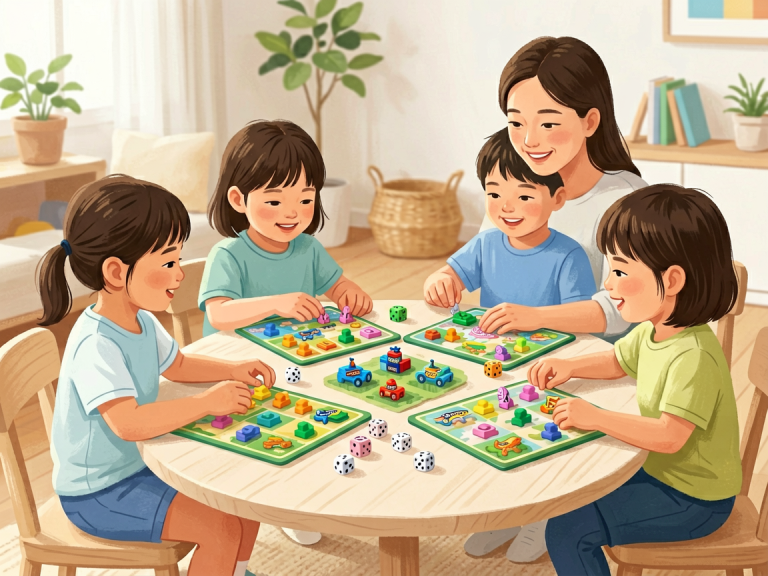
Preschoolers are ready for more complex challenges. Their play becomes increasingly social, narrative-driven, and rule-based. This is the age to introduce toys that promote critical thinking, early literacy, and cooperation. A classic wooden train set with tracks, bridges, and cargo cars is a fantastic gift—it teaches sequencing, planning, and basic physics as children figure out how to connect tracks and make trains travel. For budding artists, a quality easel with washable paints and chalk encourages self-expression and fine motor control. Board games designed for young children, such as “The Sneaky, Snacky Squirrel Game” or “Hoot Owl Hoot!”, teach turn-taking, counting, and strategic thinking in a playful, cooperative format. Storytelling kits—sets of puppets, felt storyboards, or sequencing cards—help develop narrative skills and emotional intelligence by allowing children to act out scenarios. For future scientists, consider a simple magnifying glass, a bug-catching kit, or a set of smooth, colorful gemology stones. These tools invite observation and classification, which are the foundations of scientific inquiry. One often overlooked gem is a set of wooden pattern blocks; these can be used to create geometric designs, practice symmetry, and even explore fractions. The key for preschoolers is to choose toys that can be used in multiple ways and that spark conversation between the child and caregivers.
Tech-Free STEM and Nature Gifts: Encouraging Discovery
While digital tablets and screen-based toys are common, early learning experts consistently recommend hands-on, tech-free gifts that engage the senses and the body. STEM (Science, Technology, Engineering, Math) toys for young children are abundant and wonderful when they emphasize real-world materials. A simple water play table with cups, funnels, and floating toys offers endless lessons in volume, flow, and cause and effect—perfect for outdoor summer fun. A beginner’s woodworking set with a child-safe hammer, nails, and soft wood blocks introduces engineering concepts and fine motor control. Gardening kits with child-sized tools, seeds, and peat pots teach biology, patience, and responsibility. For the nature-loving child, a birdhouse kit (pre-cut pieces ready for assembly with glue) or a butterfly garden habitat provides months of observation and wonder. Don’t underestimate the value of a classic wooden abacus—its beads can be used for counting, pattern creation, and simple addition, all while developing hand-eye coordination. Even a simple collection of natural objects—pinecones, smooth stones, feathers—combined with magnifying tools can become a learning treasure chest. These gifts emphasize discovery over consumption, and they keep children connected to the physical world in an age of increasing digital saturation.
Inclusive and Multicultural Toys: Supporting Social-Emotional Growth
Early learning is not only about cognitive skills; it also involves understanding oneself and others. Thoughtful gift givers can choose toys that reflect diversity, promote empathy, and encourage inclusive play. Dolls and action figures with varying skin tones, abilities, and family structures help children see themselves and others represented in their play world. A set of multicultural play food or a diverse dress-up costume collection (including chef hats, doctor coats, and traditional clothing from different cultures) expands a child’s horizon and normalizes difference. Social-emotional learning toys, such as emotion flashcards or a “feelings” mirror, help children label and articulate their emotions. Cooperative board games where everyone plays together against a shared challenge—rather than against each other—teach collaboration and kindness. Puzzles featuring children with disabilities or families of different compositions introduce diversity in a gentle, natural way. Another powerful gift is a set of “calming” sensory bottles or fidget toys that help children self-regulate when they feel overwhelmed. By choosing inclusive toys, you are sending a subtle but profound message: every child belongs, and learning is richer when we embrace the full spectrum of human experience.
Practical Tips for Choosing and Wrapping the Perfect Gift
No matter which early learning toy gift you select, a few guiding principles will ensure your present is both loved and valued. First, consider the child’s current interests and developmental stage, not just their age. A three-year-old who adores animals will treasure an animal-themed matching game more than a generic building set. Second, prioritize quality over quantity—a well-made wooden toy can be passed down for years, while a cheap plastic gadget might break in hours. Third, look for toys that grow with the child. For example, a set of stacking rings can later be used for counting and sorting, and a simple farm playset can become part of elaborate stories as the child matures. Fourth, include a note or activity suggestion that invites caregivers to participate—a brief description of how to play interactively (e.g., “Ask your child to find the red block,” or “Count the ducks together”) can turn a toy into a learning experience. Finally, embrace the beauty of simple wrapping: use brown paper and fabric ribbons, and consider adding a small card with a favorite nursery rhyme or a personalized message. The best gifts are those that spark joy, connection, and the kind of deep, unhurried play that builds the foundation for a lifelong love of learning. With these ideas in hand, you are ready to give a gift that will not only delight a child but also enrich their developing mind and heart.