The Power of Play: Cultivating Early Learning at Home Through Play-Based Education
Introduction: Rethinking Early Childhood Education in the Home Environment
In recent decades, a quiet yet profound revolution has reshaped our understanding of early childhood development. Parents, educators, and researchers alike have begun to recognize that the most effective learning during the first five years of life does not occur through flashcards, structured worksheets, or formal instruction. Instead, it emerges naturally, joyfully, and powerfully through the simple, universal act of play. Play-based early learning, when intentionally cultivated at home, offers children a foundation not only for academic success but for emotional resilience, social competence, creativity, and lifelong curiosity. This article explores the philosophical underpinnings of play-based learning, provides practical strategies for implementing it at home, and addresses common concerns that parents face when choosing play over more traditional educational approaches.
Understanding Play-Based Learning: More Than Just Fun
Before diving into implementation, it is essential to clarify what play-based learning truly means. At its core, play-based learning is an educational approach that uses children’s natural inclination to explore, experiment, and imagine as the primary vehicle for acquiring knowledge and skills. Unlike unstructured free time, play-based learning is intentional: the adult designs an environment rich in opportunities, observes the child’s interests, and gently scaffolds their discoveries. Yet unlike formal schooling, the child remains the protagonist of their own learning journey.
Play can be categorized into several types, each serving distinct developmental purposes. Physical play—running, climbing, jumping—develops gross motor skills, coordination, and body awareness. Constructive play—building with blocks, assembling puzzles, creating with clay—fosters spatial reasoning, problem-solving, and fine motor control. Pretend or dramatic play—playing house, acting out stories, dressing up—nurtures language development, empathy, and social understanding. Games with rules—board games, tag, hide-and-seek—teaches turn-taking, fairness, and self-regulation. At home, a play-based approach weaves these types of play throughout the day, recognizing that a child stacking blocks is not merely passing time but is actively engaging with concepts of balance, geometry, and gravity.
The Developmental Science Behind Play-Based Learning
Why does play hold such extraordinary educational power? Neuroscientific research provides compelling answers. During the early years, the brain undergoes rapid synaptic pruning and myelination, processes that are profoundly influenced by experience. Play activates multiple neural pathways simultaneously. When a toddler pretends a cardboard box is a spaceship, their brain is literally building connections between language centers, visual processing areas, motor cortex, and the prefrontal cortex responsible for executive function. This integrated neural development is far more robust than what occurs during isolated skill drills.
Furthermore, play engages what psychologist Lev Vygotsky called the "zone of proximal development." In play, children naturally stretch beyond their current capabilities because play is intrinsically motivating. A child who cannot yet write a sentence may spontaneously "write" a menu for their pretend restaurant, scribbling symbols and letters they would never attempt in a worksheet. The low-pressure, joyful context allows them to take risks and persist through challenges. Studies have consistently shown that children in play-based early learning environments demonstrate stronger self-regulation, better social skills, and higher motivation for learning compared to peers in academically focused preschools—and these advantages persist into elementary school and beyond.
Creating a Play-Enriched Home Environment
The home, unlike a classroom, is a space already filled with meaning, routine, and emotional intimacy. Designing a play-based learning environment at home does not require expensive toys or elaborate setups. Instead, it requires thoughtful organization and a philosophy of abundance in simplicity.
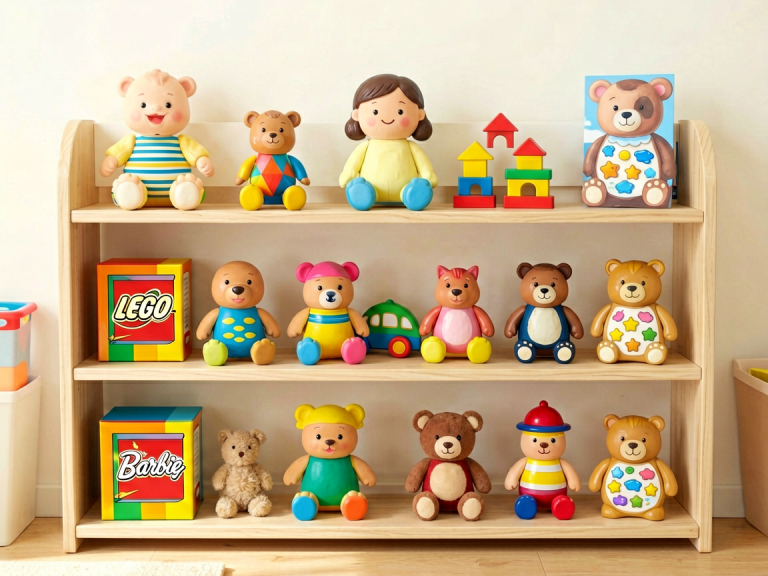
The Open-Ended Toy Principle: Prioritize toys that have no single correct use. Building blocks, wooden planks, fabric scraps, nesting cups, play dough, sand, water, and cardboard boxes are infinitely adaptable. A set of simple wooden blocks can become a castle, a bridge, a counting tool, a cell phone, or a falling tower that teaches physics. Rotate toys periodically to maintain novelty without overwhelming the child. Keep most items accessible on low shelves so children can independently choose what to play with.
Nature as a Classroom: The outdoors offers unparalleled play-based learning opportunities. A backyard or park provides loose parts—sticks, leaves, stones, pinecones, mud—that invite sorting, counting, building, and artistic creation. A puddle becomes a lesson in displacement. A fallen log reveals an ecosystem of insects and fungi. Nature play encourages observation, patience, and a sense of wonder that no indoor activity can replicate. Parents can simply accompany their child outdoors, resist the urge to direct, and follow the child’s curiosity.
Daily Life as Curriculum: Home is not a separate learning environment; it is learning itself. Play-based early learning integrates seamlessly into household routines. Measuring ingredients for cookies teaches fractions and volume. Setting the table practices one-to-one correspondence and patterning. Sorting laundry by color or size develops classification skills. Watering plants introduces biology and responsibility. The key is to invite rather than instruct: "Would you like to help me pour the milk? Watch how we fill the cup exactly to the line." These mundane moments, when framed as play, become powerful lessons.
Practical Play-Based Activities for Different Ages
Tailoring play to developmental stages maximizes its educational impact. For infants (0–12 months), play is sensory and relational. Peek-a-boo teaches object permanence. Mirror play fosters self-recognition. Soft rattles and textured balls stimulate grasping and cause-and-effect understanding. The most important "toy" for an infant is a responsive caregiver who narrates actions, makes eye contact, and responds to coos and babbles.
For toddlers (12–36 months), play becomes more mobile and symbolic. Simple puzzles with large knobs develop hand-eye coordination. Shape sorters introduce geometry and frustration tolerance. Push-and-pull toys support walking and balance. The classic "fill-and-dump" activity—filling a bucket with blocks and dumping them out—is a sophisticated lesson in volume, gravity, and motor planning. During this stage, parents should provide ample time for repetition; toddlers learn through doing the same action dozens of times. Resist the urge to "speed up" learning by moving on too quickly.
For preschoolers (3–5 years), play becomes richly imaginative and social. A "pretend grocery store" set up with empty food boxes, a toy cash register, and play money teaches numeracy, literacy (reading labels), and social roles. Building with magnetic tiles or LEGO Duplo encourages engineering and storytelling. Art with washable paints, markers, and clay develops fine motor skills and emotional expression. Importantly, parents should allow mess and imperfection. A child’s "painting" that looks like brown smudges may represent a deeply felt thunderstorm; the process, not the product, holds the learning.
The Parent’s Role: Observer, Supporter, and Co-Player
Implementing play-based early learning at home requires a shift in the parent’s mindset. Many adults, conditioned by formal education, feel compelled to teach, correct, and evaluate. In play-based learning, the parent’s primary role is that of observer. Watch what your child chooses to play with, notice their questions and struggles, and resist the urge to jump in with answers. Instead, ask open-ended questions: “What do you think will happen if you add another block?” “How could we make the tower taller?” “What is your doll feeling right now?”
Co-playing is another powerful strategy. When a parent enters a child’s play world without taking over, they model language, extend the play, and strengthen the parent-child bond. Follow the child’s lead. If they are driving a toy car, you can drive a car alongside and narrate: “I’m taking my car to the garage because it’s making a funny noise. What is your car doing?” This validates the child’s agency while introducing new vocabulary and concepts.
Scaffolding means providing just enough support to help the child reach the next step. If a child is frustrated trying to put a puzzle piece in the wrong spot, you might say, “Let’s look at the shape together. See how this edge is curved? Can you find a curved space?” But if the child continues struggling, it is acceptable to let them abandon the puzzle. Forced play ceases to be play. Trust that the child will return to the challenge when they are developmentally ready.
Overcoming Common Challenges and Misconceptions
Despite its benefits, many parents face internal and external pressure to adopt more academic approaches. Neighbors may ask, “Isn’t your child ready to learn letters yet?” Social media showcases toddlers reciting alphabets or solving math problems, creating anxiety. It is crucial to remember that early academic instruction often produces short-term gains at the expense of long-term curiosity and love for learning. Research indicates that children who start reading later but with strong oral language and play experiences often surpass early readers by third grade.
Another challenge is finding time. In busy households, structured activities like screen time or scheduled classes can seem more efficient than open-ended play. However, play does not require huge time blocks. Ten minutes of focused, uninterrupted play with a parent can be more valuable than an hour of passive entertainment. Integrate play into transitions: while waiting for dinner, play “I spy” to build vocabulary. While bathing, provide cups and sponges for water play.
Finally, some parents worry about mess. It is indeed true that play-based learning often results in scattered toys, spilled water, and paint-stained fingers. Setting clear boundaries—playdough only on the table, sand only outside—helps manage chaos. Letting go of perfectionism is part of the journey. A slightly messy home is a small price for a child who feels free to explore, experiment, and create.
Conclusion: The Lifelong Gift of Play
Play-based early learning at home is not a curriculum to be completed or a checklist to be marked. It is a philosophy, a way of being with your child that honors their innate drive to learn. When we trust children to play, we give them permission to be curious, to fail safely, to persist joyfully, and to build the neural architecture that will support all future learning. The blocks they stack today become the architectural thinking of tomorrow. The imaginative conversations they have with stuffed animals become the empathy and narrative skills of adulthood. The mud pies they make become the first experimental science.
The most profound gift a parent can offer a young child is not a set of flashcards or a prestigious preschool. It is the gift of time, attention, and a home where play is celebrated as the serious, beautiful, and essential work of childhood. By embracing play-based early learning, we do not merely prepare children for school—we prepare them for life. And we rediscover, through their eyes, the joy of learning itself.