The Ultimate Age-Appropriate Play Guide for Parents: Nurturing Development Through Every Stage
As parents, we often hear that “play is the work of childhood.” But what does that really mean, and how can we choose the right activities for our children at each stage of their growth? The truth is, not all play is created equal—and the kind of play that benefits a six-month-old is vastly different from what engages a six-year-old. Understanding age-appropriate play is not about restricting fun; it’s about unlocking the full potential of your child’s cognitive, physical, social, and emotional development. This guide will walk you through the critical milestones from infancy to early adolescence, offering practical, research-backed advice on how to choose and facilitate play that meets your child exactly where they are.
Why Age-Appropriate Play Matters
Play is the primary vehicle through which children learn about the world. When play aligns with a child’s developmental stage, it challenges them just enough to foster growth without causing frustration or boredom. The wrong type of play—too simple or too complex—can lead to disengagement or anxiety. Moreover, age-appropriate play respects the natural timeline of brain development. For example, a toddler’s prefrontal cortex (responsible for impulse control) is still maturing, so expecting them to follow complex rules in a board game is unrealistic. By tailoring play, you build confidence, strengthen parent-child bonds, and lay a foundation for lifelong learning. Let’s explore the key age bands and what they need most.
Infants (0–12 Months): Sensory Exploration and Bonding
During the first year, play is all about sensory input and attachment. Babies are discovering their own bodies and the world through sight, sound, touch, taste, and smell. At this stage, the most important “toy” is you—your face, your voice, your touch.
Key Play Activities
- Tummy Time: Place your baby on a soft mat for a few minutes each day. This strengthens neck, shoulder, and arm muscles necessary for crawling. Add a crinkly toy or a mirror to engage their attention.
- Rattles and Soft Textures: Offer safe objects that make noise or have varied textures (e.g., a soft cloth book, a wooden teething ring). Let them grasp, shake, and mouth these items—it’s how they learn cause and effect.
- Peek-a-Boo and Singing: Simple games that involve hiding your face and reappearing teach object permanence (the idea that things exist even when out of sight). Sing lullabies or nursery rhymes with exaggerated facial expressions to stimulate auditory and emotional development.
What to Avoid
- Screen Time: The American Academy of Pediatrics recommends no screens before 18 months (except video chatting). Bright, fast-moving digital content can overstimulate a developing brain and hinder real-world interaction.
- Over-Complicated Toys: A baby does not need flashing lights or electronic sounds. They learn best from simple, open-ended objects that respond to their actions.
Toddlers (1–3 Years): Movement, Imitation, and Independence
Toddlers are on the move! This stage is marked by rapid physical growth (walking, running, climbing) and the emergence of symbolic thinking—they begin to pretend. Play becomes more interactive and messy, but still very concrete.
Key Play Activities
- Push-and-Pull Toys: Wagons, shopping carts, or simple wooden pull-along animals help develop gross motor skills and balance. Outdoor play with a ball to kick or chase is ideal.
- Imitation Play: Provide a play kitchen, toy telephone, or dress-up clothes. Toddlers love copying adult actions—cooking, talking on the phone, feeding a doll. This builds social understanding and language.
- Sensory Bins: Fill a shallow container with rice, sand, or water beads (supervised!). Add scoops, cups, and small toys. This promotes fine motor control, problem-solving, and vocabulary (e.g., “pour,” “scoop,” “wet”).
- Simple Puzzles and Shape Sorters: Two- to four-piece puzzles with large knobs help toddlers match shapes and colors. Success builds confidence.
What to Avoid
- Toys with Small Parts: Choking hazards are a real risk. Always check age labels.
- Overly Structured Activities: Toddlers need free exploration, not rigid lessons. Let them lead the play; your role is to provide safe opportunities.
Preschoolers (3–5 Years): Imagination, Social Play, and Early Logic
Preschoolers are masters of make-believe. Their language explodes, and they start to understand rules, turn-taking, and simple cause-and-effect. Play becomes more collaborative and story-driven.
Key Play Activities
- Dramatic Play Center: Set up a “grocery store,” “doctor’s office,” or “restaurant” with props and costumes. This fosters creativity, negotiation, and emotional regulation (you can’t always be the cashier!).
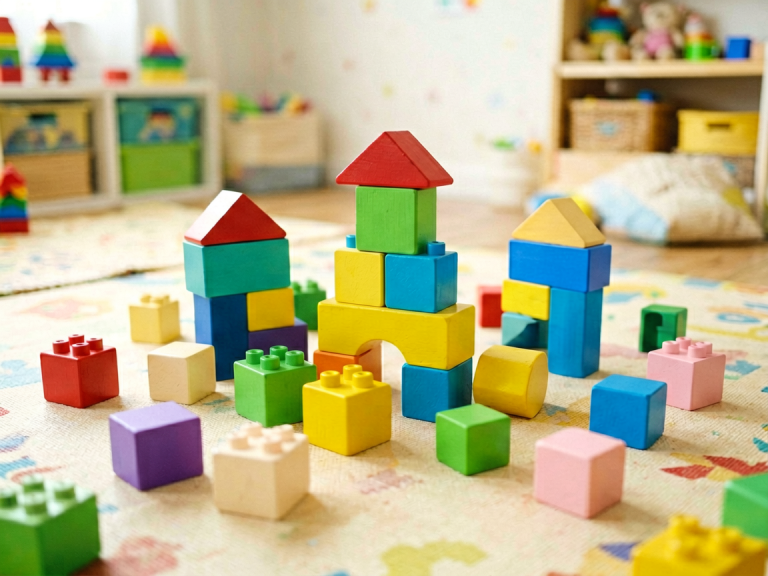
- Building Blocks and Construction: LEGO Duplo, wooden blocks, or magnetic tiles. Building towers, bridges, and houses teaches spatial reasoning, planning, and patience when structures fall.
- Art and Craft: Crayons, child-safe scissors, glue, and playdough. Encourage open-ended creation (no coloring books needed). This develops fine motor skills and self-expression.
- Board Games for Young Children: Games like *Candy Land* or *Hi Ho! Cherry-O* teach turn-taking, counting, and handling winning/losing. Keep sessions short (10–15 minutes).
What to Avoid
- Academic Pressure: Avoid flashcards or forced reading. Research shows that play-based learning in preschool is more effective for later academic success than direct instruction.
- Competition-Focused Activities: Preschoolers are still learning about fairness. Emphasize having fun over winning.
School-Age Children (6–9 Years): Rules, Strategy, and Mastery
Now children begin to think more logically. They love games with clear rules, challenges that require strategy, and opportunities to master skills. Social play becomes more important—friendships are built through shared activities.
Key Play Activities
- Board Games and Card Games: Classics like *Monopoly Junior*, *Uno*, *Chess* (simplified), or *Dixit*. These develop strategic thinking, patience, and sportsmanship.
- Building and Engineering Kits: LEGO Technic, K’NEX, snap circuits, or simple robotics kits. Children follow instructions to create models, reinforcing logical sequencing and spatial skills.
- Outdoor Sports and Free Play: Organized team sports (soccer, basketball) are great, but also value unorganized play: tag, hide-and-seek, obstacle courses. This builds coordination, resilience, and social negotiation.
- Coding and Digital Creativity: Age-appropriate coding apps like *ScratchJr* or *Code.org* can introduce computational thinking. Parental involvement is key to balance screen time.
What to Avoid
- Over-Scheduling: Keep at least one “unscheduled” afternoon per week for free play. Burnout can happen at any age.
- Hyper-Competitive Environment: Focus on effort and learning, not just winning. Praise persistence and creativity.
Tweens (10–12 Years): Complex Logic, Identity, and Social Dynamics
Pre-adolescents are developing abstract thinking and a stronger sense of self. Play often involves social hierarchies, complex rules, and creative expression. They crave autonomy but still need adult support.
Key Play Activities
- Strategy Games: *Settlers of Catan*, *Ticket to Ride*, *Risk*, or *Codenames*. These require negotiation, long-term planning, and flexible thinking.
- Makerspace Activities: Woodworking, sewing, coding (Python, Scratch), or science experiment kits. Hands-on projects build problem-solving and confidence.
- Role-Playing and Collaborative Gaming: Dungeons & Dragons (age-appropriate simplified versions) or online cooperative games (with parental supervision). These foster teamwork, storytelling, and empathy.
- Physical Challenges: Biking, hiking, skateboarding, dance, martial arts. Physical activity is crucial for mental health at this age.
What to Avoid
- Unsupervised Online Multiplayer Games: Many games have open chat with strangers. Use child-friendly platforms and set clear boundaries.
- Pressuring Specific Hobbies: Let your tween explore different interests. Their play should reflect their emerging passions, not your unfulfilled dreams.
A Final Note for Parents
Remember that every child is unique. The age ranges in this guide are general milestones—your child may be ahead in some areas and behind in others. The key is to observe and follow the child’s lead. If they are frustrated, simplify. If they are bored, add a new layer of complexity. Play is not a checklist; it is a relationship between you, your child, and the world.
Above all, join them in their play. Put down your phone, sit on the floor, and enter their world. The games you play today—whether it’s stacking blocks with a toddler or debating strategy in a board game with a preteen—are building memories and skills that will last a lifetime. Play is not a luxury; it is the essential curriculum of childhood. Use this guide not as a rigid map, but as a compass to navigate the beautiful, messy, joyful journey of growing up.