The Ultimate STEM Toys Guide for Parents: Nurturing Future Innovators Through Play
—
Introduction
In an era where technology and science shape nearly every aspect of our lives, parents naturally want to equip their children with the skills they need to thrive. STEM—an acronym for Science, Technology, Engineering, and Mathematics—has become a cornerstone of modern education. But learning doesn’t have to be confined to classrooms or textbooks. Enter STEM toys: playthings designed to spark curiosity, encourage problem-solving, and build foundational knowledge in these critical fields.
Yet with countless options flooding the market—from coding robots to chemistry sets—choosing the right STEM toy can feel overwhelming. This guide aims to demystify the process, helping you understand what makes a toy truly educational, how to match toys to your child’s developmental stage, and how to integrate STEM play into daily life without turning it into a chore. After all, the best learning happens when children are having fun.
—
Why STEM Toys Matter More Than Ever
Building 21st‑Century Skills
STEM toys do more than teach facts; they cultivate essential skills such as critical thinking, creativity, collaboration, and resilience. When a child builds a bridge with magnetic tiles and it collapses, they learn to hypothesize why and try a different design. This iterative process mirrors the scientific method and prepares them for real-world challenges.
Closing the Gender Gap
Research shows that early exposure to STEM activities can help reduce gender stereotypes. By offering both boys and girls toys that involve coding, engineering, and math, parents send a powerful message: these fields are for everyone. A simple robotics kit or a set of geometric puzzles can ignite a lifelong passion, regardless of gender.
Screen‑Free, Hands‑On Learning
While educational apps and videos have their place, many STEM toys offer tactile, hands-on experiences that are crucial for young learners. Manipulating physical objects—gears, circuits, blocks—engages multiple senses and reinforces concepts in ways that screens cannot. This is especially important in an age when children spend increasing amounts of time in front of digital devices.
—
Age‑Based Guide to Choosing STEM Toys
One size does not fit all. A toy that captivates a five‑year‑old may frustrate a toddler or bore a tween. Here’s a breakdown by age group, with specific toy examples and the skills they target.
Ages 3–5: Foundations of Curiosity
At this stage, children are natural explorers. The goal is to introduce basic concepts through sensory play and simple cause‑and‑effect.
- Building Blocks (e.g., Mega Bloks or wooden unit blocks): Teaches spatial awareness, balance, and basic physics.
- Simple Puzzles: Develops pattern recognition and problem-solving.
- Magnetic Tiles (e.g., Magna‑Tiles): Encourages creativity and introduces geometric shapes and magnetism.
- Pop‑Beats or Counting Bears: Early math skills like sorting, counting, and patterning.
*Tip:* Look for toys with no small parts to avoid choking hazards. At this age, adult supervision and guided play are essential.
Ages 6–8: The “How and Why” Phase
Children begin to ask deeper questions and can follow multi‑step instructions. Toys that combine building with simple mechanics or coding work well.
- LEGO Classic or LEGO Technic Kits: Foster engineering design and fine motor skills. Follow‑the‑instructions builds also teach sequential thinking.
- Beginner Coding Robots (e.g., Botley, Code & Go Robot Mouse): Introduce basic programming logic without screens. Children input commands and watch the robot move.
- Simple Circuit Kits (e.g., Snap Circuits Jr.): Explain electricity and circuits through safe, snap‑together components.
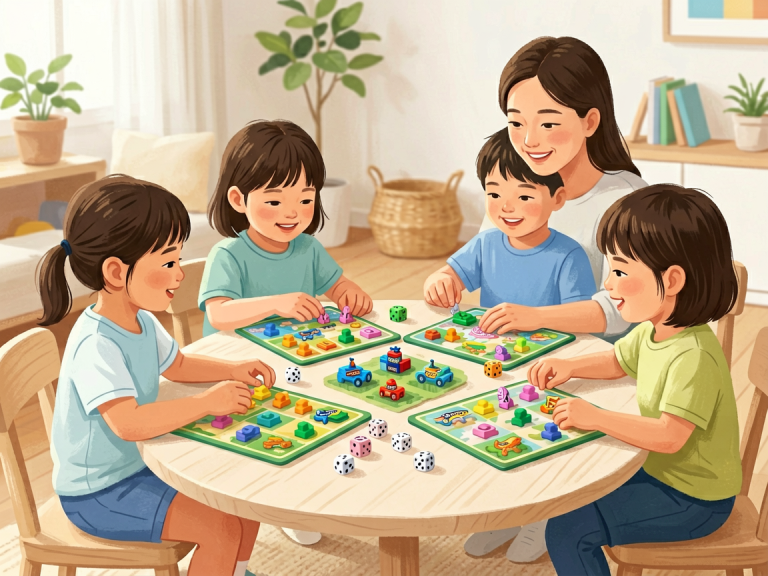
- Math Board Games (e.g., Sum Swamp, Math Dice): Make arithmetic practice fun and social.
*Tip:* Let children deviate from instructions. The real learning often happens when they modify a design or debug a code sequence.
Ages 9–12: Advanced Problem Solving
Pre‑teens can handle more complex projects that require patience and systematic thinking.
- Advanced Coding Kits (e.g., LEGO Mindstorms, Sphero BOLT): Combine building with block‑based or text‑based programming to create autonomous robots.
- Chemistry or Crystal Growing Sets: Hands‑on experiments that teach the scientific method. Choose sets with safe, non‑toxic materials.
- 3D Printing Pens: Allow children to create three‑dimensional objects from scratch, bridging art, design, and engineering.
- Microscopes and Telescopes: Encourage observation and data collection, sparking interest in biology and astronomy.
*Tip:* Encourage independent exploration, but be available to help when frustration arises. Many kits have online communities where kids can share projects.
Ages 13+: Real‑World Applications
Teens are ready for tools used by professionals, but with a playful twist.
- Raspberry Pi or Arduino Starter Kits: Teach electronics and programming through real projects—like building a weather station or a game controller.
- DIY Robotics Kits (e.g., Makeblock mBot): More advanced coding and mechanical assembly.
- STEM‑Themed Escape Room Kits: Combine logic puzzles with collaborative problem‑solving.
- Hydroponics or Solar‑Energy Kits: Introduce sustainable technology and environmental science.
*Tip:* Let teens choose projects that align with their personal interests, whether it’s gaming, music, or environmental activism, to maintain engagement.
—
How to Choose the Right STEM Toy: A Practical Checklist
Even with age guidelines, the perfect toy depends on your child’s unique personality and learning style. Use this checklist when shopping:
- Look for open‑ended play: Toys that can be used in multiple ways encourage creativity. A set of magnetic tiles, for example, can be a house one day and a rocket ship the next.
- Check for a “low floor, high ceiling” design: The toy should be easy to start with but offer increasing complexity. Simple coding robots meet this criterion—a child can begin with one command and later write dozens.
- Prioritize safety and durability: Especially for younger children, ensure materials are non‑toxic, edges are smooth, and batteries are secured. Read reviews for long‑term durability.
- Avoid over‑marketed “STEM” labels: Some toys slap “STEM” on the box with minimal educational value. Look for detailed product descriptions and video demos.
- Balance screen time: While coding apps can be great, prioritize toys that involve physical interaction. A hybrid approach—like a programmable robot that you build with blocks—offers the best of both worlds.
- Consider your child’s interests: If your child loves art, look for STEM toys that incorporate design (e.g., a digital drawing tablet that teaches geometry). If they love sports, try a toy that measures speed or angle.
—
Common Myths About STEM Toys
Myth 1: “STEM toys are only for future scientists.”
Reality: STEM skills are valuable in any career—even in the arts, where understanding technology and data analysis is increasingly important. A child who enjoys building with LEGO may become an architect, a filmmaker (using CGI), or a chef (balancing chemical reactions in recipes).
Myth 2: “My child is too young for STEM.”
Reality: Toddlers are already little scientists—they drop objects to see what happens, stack blocks to test gravity, and sort shapes. Age‑appropriate STEM toys simply channel that innate curiosity.
Myth 3: “Expensive toys are always better.”
Reality: Some of the best STEM toys are simple and affordable. A deck of cards can teach probability. A bucket of water can demonstrate buoyancy. Price does not guarantee educational value.
Myth 4: “STEM toys are only for boys.”
Reality: The gender gap in STEM fields often starts with subtle cultural cues, including toy marketing. Make a conscious effort to offer diverse STEM options to all children. Representation matters: look for toys that feature female and minority role models.
—
Integrating STEM Play into Daily Life
Toys are just one piece of the puzzle. A true STEM mindset develops when learning extends beyond playtime:
- Ask open‑ended questions: While playing with your child, ask “What do you think will happen if…?” or “How could we make this stronger?”
- Encourage documentation: Have your child draw or photograph their creations. This mirrors the scientific process of recording observations.
- Visit museums or maker spaces: Public libraries and community centers often have free STEM programs. Real‑world exposure deepens understanding.
- Model a growth mindset: Let your child see you struggle with a problem (e.g., fixing a broken appliance) and talk through your logic. Celebrate failures as learning opportunities.
—
Conclusion
STEM toys are powerful tools, but they are not magic. The real magic lies in the conversations, questions, and discoveries that happen when a parent and child explore together. By choosing toys that match your child’s age and interests, by avoiding marketing hype, and by weaving STEM thinking into everyday moments, you can nurture a lifelong love of learning.
Remember, the goal is not to create a little engineer or a junior scientist overnight—it is to give your child the confidence to ask “why” and the tools to find out “how.” So go ahead, open that box of magnetic tiles, sit on the floor, and build something amazing. The next great inventor might just be the one holding the blue block.
*(Word count: ~980 words)*