Age-Appropriate Play: Common Mistakes to Avoid for Healthy Child Development
Play is far more than a pastime for children—it is the primary vehicle through which they learn, explore, and make sense of the world. However, not all play is created equal. When the type, complexity, or duration of play does not match a child’s developmental stage, it can lead to frustration, boredom, or even regression. Understanding age-appropriate play is crucial, yet many well-meaning parents, caregivers, and educators inadvertently make mistakes that undermine the very benefits play is meant to provide. Below are the most common pitfalls to avoid, organized by key areas of concern, along with practical strategies to ensure that play remains joyful, safe, and developmentally beneficial.
Mistake #1: Over-Structuring Play and Eliminating Free Exploration
One of the most frequent errors is treating play like a scheduled academic lesson. Adults often feel the need to direct every moment of a child’s free time with structured activities—flashcards for toddlers, organized sports for preschoolers, or art projects with strict outcomes for school-age children. While guided play has its place, an overabundance of adult-led activities robs children of the opportunity for self-directed exploration, which is essential for creativity, problem-solving, and intrinsic motivation.
*Why it’s a mistake:* Young children, especially between ages 1 and 4, learn best through unstructured, repetitive actions like stacking blocks, pouring water, or pushing a toy car back and forth. When adults constantly intervene with “correct” ways to play—for instance, telling a two-year-old how a puzzle piece “must” fit—the child loses the chance to experiment, fail, and try again. This can lead to decreased confidence and a reliance on external validation.
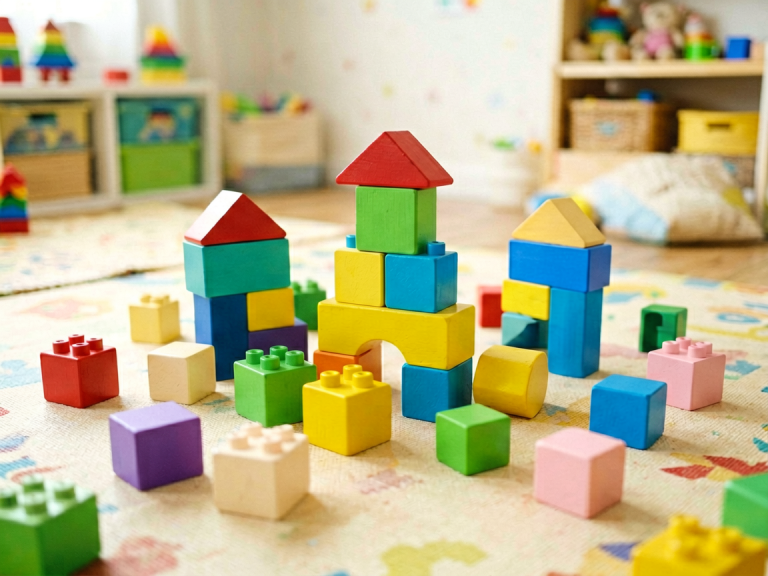
*How to avoid it:* Reserve at least two-thirds of a child’s playtime for free play. Provide open-ended materials such as building blocks, sand, water, dress-up clothes, and art supplies without instructions. For toddlers, simply sit nearby and narrate what they are doing without controlling the outcome. For older children, let them initiate their own games and rules. The goal is to become a facilitator, not a director.
Mistake #2: Using Toys That Are Too Advanced or Too Simple
Another common pitfall is mismatching toy complexity with a child’s actual developmental abilities. This can happen in two directions: giving a baby a rattle designed for an older infant, or giving a five-year-old a complex board game meant for a ten-year-old. Conversely, offering a nine-year-old simple peg puzzles or baby dolls can signal that their interests are not valued, leading to boredom and disengagement.
*Why it’s a mistake:* When a toy is too advanced, a child experiences repeated failure, which can spark frustration and tantrums. For example, a three-year-old who cannot yet grip small pieces may throw a puzzle across the room out of anger. On the other hand, a toy that is too simple fails to challenge a child’s developing cognitive or motor skills. A six-year-old given only basic shape sorters may quickly lose interest and turn to disruptive behaviors out of sheer boredom.
*How to avoid it:* Observe your child’s current abilities, not just their age label on the box. The sweet spot is what developmental psychologist Lev Vygotsky called the “zone of proximal development”—tasks that are just slightly beyond what the child can do independently, but achievable with a little help. For a toddler learning to stack, choose large, lightweight blocks. For a seven-year-old who can count, try a simple card game that requires matching numbers. Rotate toys to maintain novelty, and always be ready to level up when mastery is evident.
Mistake #3: Forcing Social Play Before a Child Is Ready
Many parents worry if their toddler seems uninterested in playing with other children. In response, they might push group playdates, enroll very young children in team sports, or insist that a preschooler share toys before they have developed the concept of ownership. This mistake stems from confusing social readiness with chronological age.
*Why it’s a mistake:* Children under three are typically in the “parallel play” stage—they may sit next to another child but play independently. Forcing cooperative play before the age of four can create anxiety, resentment, and even aggression. A two-year-old who is told to “share” may not understand the concept; they simply see their toy being taken away, which can damage trust in both the adult and the peer.
*How to avoid it:* Respect the natural sequence of social development. For infants and toddlers, focus on one-on-one interactions with a trusted adult. For preschoolers, allow solitary or parallel play with minimal interference. When introducing group play, keep it short and low-pressure. For example, offer duplicate toys so that two children can both have a shovel in the sandbox. Explicitly model sharing by taking turns with the child yourself before expecting them to share with friends. By age five or six, most children naturally begin to engage in cooperative play; until then, let them lead.
Mistake #4: Ignoring Safety in the Name of “Learning Through Risk”
Risk-taking is an important part of play—it helps children develop balance, judgment, and resilience. However, some caregivers swing too far in the direction of either over-protection or under-supervision. The mistake here is ignoring age-appropriate safety boundaries, such as allowing a two-year-old to climb a tall slide alone, or conversely, not allowing a ten-year-old to use age-appropriate tools like scissors or a junior hammer.
*Why it’s a mistake:* Both extremes are harmful. In the first case, a toddler lacks the motor coordination and impulse control to assess danger; a fall from even a moderate height can cause serious injury. In the second, a school-age child who is never trusted with small risks may become overly cautious or, conversely, may seek dangerous thrills in secret because they are not taught how to manage risk properly.
*How to avoid it:* Adjust your supervision based on the child’s developmental stage, not just their age label. For a one-year-old, ensure the play environment is free of choking hazards, sharp edges, and unstable furniture. For a four-year-old, allow supervised climbing on low playground structures, but stand within arm’s reach. For an eight-year-old, introduce safe tools like child-sized screwdrivers or vegetable knives under your guidance. Always explain the “why” behind safety rules so that children internalize them. Remember, the goal is not to eliminate all risk, but to create a safe space for manageable, age-appropriate challenges.
Mistake #5: Overloading the Environment with Stimuli
In an effort to provide variety, some caregivers fill a playroom with dozens of toys, flashing lights, noisy electronic devices, and multiple screens all accessible at once. This overstimulation is especially problematic for infants, toddlers, and children with sensory sensitivities.
*Why it’s a mistake:* A cluttered environment can overwhelm a child’s developing nervous system, making it difficult to focus on any single activity. Research shows that toddlers presented with too many toys tend to play more superficially, moving rapidly from one item to another without deep engagement. This not only reduces the quality of learning but can also contribute to irritability and meltdowns due to sensory overload.
*How to avoid it:* Practice toy rotation. Keep only a small selection of 6–12 items accessible at any given time, and swap them out weekly. Choose toys that engage multiple senses in a calm way—wooden blocks, soft fabric books, musical instruments with gentle sounds. For older children, designate quiet play zones free from screens and television noise. Allow plenty of “blank time” where there is no planned activity, so children can use their imagination without external input.
Mistake #6: Comparing a Child’s Play to Peers or Siblings
Every child develops at their own pace, especially in the realm of imaginative and social play. A common emotional mistake is to worry when a friend’s child of the same age can build complex structures or speak in full sentences while playing, while your own child still prefers simple, repetitive actions.
*Why it’s a mistake:* Comparisons create pressure that can inadvertently communicate to a child that their play is “wrong” or not good enough. A four-year-old who is told “Why can’t you draw like your sister?” may lose interest in drawing altogether. Moreover, children often have unique play preferences—some are drawn to gross motor activities, others to quiet pretend play. Forcing alignment with a peer’s play style ignores the child’s individuality.
*How to avoid it:* Focus on your child’s progress relative to their own past abilities, not to others. Celebrate small milestones, such as a toddler stacking two blocks where before they could only stack one. Document play patterns and look for trends rather than deficits. If you notice a significant lag behind developmental norms (e.g., a three-year-old who does not engage in any pretend play), consult a pediatrician or early childhood specialist—but avoid comparing casually. Remember, the goal of play is joy and growth, not competition.
Mistake #7: Categorizing Certain Kinds of Play as “Wrong” or “Silly”
Adults sometimes dismiss certain forms of play as unproductive or messy—for example, a child who wants to jump in puddles, smear paint with their hands, or engage in rough-and-tumble play. This mistake stems from a narrow view of what constitutes “educational” play.
*Why it’s a mistake:* Messy or boisterous play is not only normal but essential. Sensory play (water, sand, mud, paint) builds neural pathways in the brain for processing touch, texture, and temperature. Rough-and-tumble play, when supervised safely, teaches children about boundaries, body awareness, and self-regulation. Treating such play as off-limits can suppress important developmental experiences.
*How to avoid it:* Designate times and spaces for “messy play” where expectations are clear—for instance, wear old clothes and play in the backyard. Establish simple rules (e.g., no hitting, no throwing sand at faces) rather than banning the activity. For school-age children, allow them to create elaborate pretend scenarios that might seem silly to you, such as acting out a superhero rescue or building a fort out of pillows. Respect their creativity. Play is not about adult logic; it is about a child’s own narrative and exploration.
Conclusion: The Power of Mindful Play
Avoiding these common mistakes does not require a degree in child psychology—it merely asks us to observe, listen, and trust the innate drive that children have to learn through play. When we match the environment, toys, and our expectations to a child’s unique developmental stage, we unlock the full potential of play: a space for joy, resilience, creativity, and deep learning. The next time you watch a child at play, resist the urge to correct, hurry, or compare. Instead, ask yourself: *Is this play respectful of where they are right now?* If the answer is yes, you are already on the right track.