Nurturing Little Minds: Essential Screen-Free Activities for 3-Year-Olds
Introduction
In today’s digital age, screens have become an almost unavoidable part of daily life. Yet for three-year-olds—whose brains are developing at an astonishing rate—excessive screen time can hinder crucial social, cognitive, and physical growth. At this age, children learn best through hands-on, multi-sensory experiences that engage their curiosity and imagination. Screen-free activities not only protect their developing eyes and attention spans but also foster creativity, problem-solving skills, and emotional regulation. This article explores a rich variety of engaging, low-tech activities that parents and caregivers can easily implement at home or outdoors. Each activity is designed to meet the developmental needs of a three-year-old while keeping the experience joyful and stress-free. By intentionally stepping away from screens, we open the door to deeper connection, discovery, and play.
<h2>Sensory Play: Exploring Textures, Colors, and Sounds</h2>
Sensory play is the cornerstone of early childhood development. Three-year-olds are naturally driven to touch, taste, smell, see, and hear everything around them. Creating simple sensory bins can occupy them for long stretches. Fill a shallow plastic bin with dry rice, beans, or sand, and add scoops, small cups, and plastic animals. The tactile feedback helps build neural connections and fine motor control. Another favorite is “cloud dough”—a mixture of flour and oil that holds its shape like wet sand but feels silky. Add a few drops of food coloring for visual interest. For auditory stimulation, fill plastic bottles with different amounts of rice, beans, or bells and seal them tightly. Children can shake, roll, and listen to the varying sounds. Always supervise to prevent ingestion of small parts, but allow freedom to pour, bury, and dig. This unstructured playtime strengthens concentration and lays the foundation for later math and science concepts like volume and cause-and-effect.
<h2>Creative Arts and Crafts: Unleashing Imagination</h2>
Art for a three-year-old is not about the finished product—it’s about the process. Set up a low-mess art station with washable crayons, thick markers, and large sheets of paper. Finger painting is especially rewarding; use edible paints made from yogurt and natural food coloring if you worry about mouthing. Provide old magazines, safety scissors (with supervision), and glue sticks for collage work. Tearing paper is fantastic for hand strength. Another engaging activity is “sticker art”: let your child place colorful dot stickers on a blank paper to create patterns. Playdough with rolling pins, cookie cutters, and plastic knives encourages sculpting and pretend cooking. These activities develop hand-eye coordination, color recognition, and self-expression. Most importantly, they teach that mistakes are part of creation—no eraser needed. Display their artwork on the fridge to celebrate their effort.
<h2>Outdoor Adventures: Connecting with Nature</h2>
The outdoors offers an unmatched sensory playground. A simple walk can become a treasure hunt: collect leaves, pinecones, sticks, and smooth stones. Back home, sort them by size or color. Draw with sidewalk chalk on the driveway—your child can make giant scribbles, trace their shadow, or draw “roads” for toy cars. Water play is a huge hit: fill a small tub with cups, funnels, and waterproof toys. Splashing, pouring, and floating teach early physics concepts. If you have a garden, let your child help water plants or dig in a safe patch of dirt. Even a 15-minute outdoor session can reset their mood and improve sleep. For rainy days, bring nature inside: put a tray of mud (clean soil mixed with water) on the porch and let them squish it. The key is unstructured exploration, not structured lessons. Let them climb small hills, roll down grassy slopes, or simply lie on the ground and watch clouds. These experiences build large motor skills, risk assessment, and a lifelong love of the natural world.
<h2>Building and Construction: Developing Fine Motor Skills</h2>
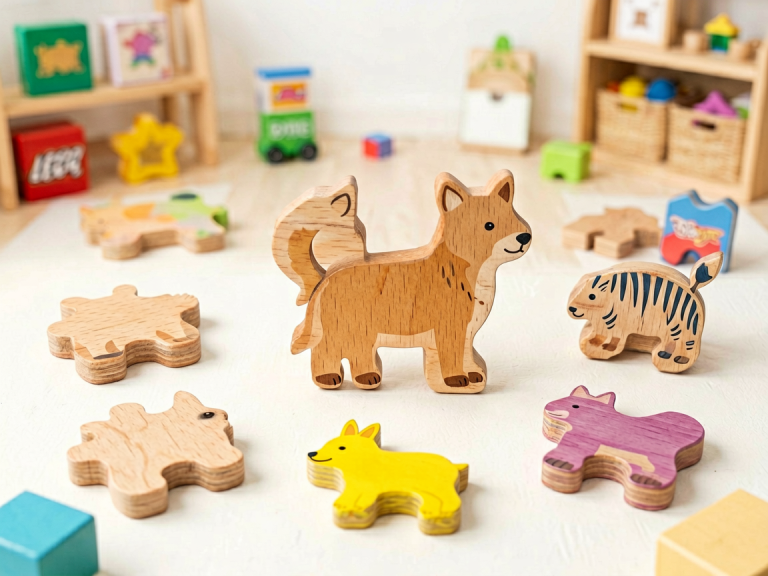
Three-year-olds love to stack, knock down, and rebuild. Wooden blocks are a classic choice: they teach balance, gravity, and spatial reasoning. Start with 10 to 15 blocks and let your child create towers, bridges, or animal enclosures. Magnetic tiles are also excellent—they snap together easily and allow for colorful 3D structures. For a low-cost option, use empty cardboard boxes, toilet paper rolls, and yogurt containers as building materials. Challenge your child to build a “house” for a toy bear or a “garage” for a toy car. You can also introduce simple puzzles with large wooden knobs—these sharpen problem-solving and persistence. Another fine motor activity is threading: give your child large plastic beads and a shoelace with a taped end. They will concentrate intensely as they aim the lace through the hole. These activities strengthen the small muscles of the hands, which are essential for eventual writing. Celebrate their efforts, not their perfection.
<h2>Pretend Play: Encouraging Social and Emotional Growth</h2>
Imaginative play is how a three-year-old makes sense of the world. Provide open-ended props: dress-up clothes (old hats, scarves, shoes), a play kitchen with plastic pots and wooden food, or a simple doctor’s kit. Set up a pretend “restaurant” with a table and paper menus; your child can take your order and “cook” a meal. Or create a “post office” with envelopes and a cardboard box mailbox. This type of play allows children to practice empathy, negotiation, and language. They might reenact a recent trip to the grocery store or mimic a parent putting a baby to sleep. Don’t direct the story—follow their lead. If they hand you a cup of invisible tea, drink it with enthusiasm. Through these scenarios, children process emotions like fear, excitement, and frustration. They also learn turn-taking and cooperation. For an introverted child, pretend play with stuffed animals can be equally valuable. The key is to offer simple, uncluttered props that invite rather than dictate.
<h2>Music and Movement: Rhythmic Fun</h2>
Music is a universal language for preschoolers. Create a homemade band with pots, wooden spoons, and plastic containers. Show your child how to tap different surfaces to create various tones. Dance to upbeat songs—freeze when the music stops, or follow simple movements like “hop like a bunny” or “sway like a tree.” Sing nursery rhymes with exaggerated actions (e.g., “The Wheels on the Bus”). This builds phonemic awareness, which is a precursor to reading. For a quieter activity, give your child two wooden sticks or rhythm sticks and practice tapping patterns. Let them make up their own songs. Another idea: fill a small plastic egg with rice and shake it as a shaker. Moving to music develops gross motor coordination and helps regulate energy. If your child is feeling restless, a five-minute dance party can shift their mood dramatically. Music also strengthens memory and listening skills, as they anticipate repeated verses or sounds.
<h2>Simple Science Experiments: Curiosity and Discovery</h2>
Three-year-olds are natural scientists. Conduct easy, safe experiments that elicit wonder. Fill a clear bowl with water and drop in objects like a cork, a penny, a leaf, and a sponge; ask your child to predict which will float or sink. Color mixing is captivating: put a few drops of blue and yellow food coloring in a glass of water and watch green appear. Use baking soda and vinegar for a fizzy volcano—pour vinegar over a mound of baking soda (with a drop of red food coloring) and watch the eruption. Always explain in simple terms: “The vinegar and soda make bubbles!” Another experiment: place celery stalks in colored water and observe the leaves change color overnight. These activities teach observation, prediction, and cause-and-effect. They also foster vocabulary: “fizz,” “dissolve,” “float.” Keep each session short (10 minutes max) and let your child lead the questions. The goal is not a lesson but a shared moment of awe.
<h2>Reading and Storytelling: Language Development</h2>
Books are the ultimate screen-free tool. At age three, children love repetitive, rhyming stories with bright illustrations. Read with expression, pointing to pictures and asking questions: “Where is the dog?” “What color is the house?” Encourage your child to “read” the story back to you using the pictures. For a multisensory twist, create a story basket: collect small toys that match a favorite book (e.g., a toy tractor for “Little Blue Truck”) and let your child act out the plot. Make your own books by stapling blank paper together and having your child draw pictures while you scribe their words. Storytelling without books is powerful too: tell a simple story about a child and a lost teddy bear, and invite your child to change the ending. These activities build vocabulary, narrative skills, and a love of language. They also strengthen the parent-child bond—snuggling with a book is a calming ritual that signals safety and connection. Aim for at least 15 minutes of shared reading daily.
<h2>Conclusion: Embracing the Joy of Screen-Free Play</h2>
Raising a three-year-old without relying on screens may feel daunting in a hyper-connected world, but the benefits are profound. Sensory bins, art projects, outdoor exploration, building, pretend play, music, simple science, and storytelling all serve as powerful tools for holistic development. These activities don’t require expensive toys or elaborate preparation—just a willing adult, a bit of patience, and a willingness to get messy. More importantly, they create opportunities for genuine connection: a shared laugh over a fallen block tower, a quiet moment of painting together, or the wonder in a child’s eyes as a vinegar volcano erupts. By choosing screen-free moments, we give our children the gift of presence—the space to discover their own abilities, to persist through challenges, and to experience the world in all its tactile, colorful, and noisy glory. Start with one activity today. Watch your child engage, learn, and thrive. The memories you build will far outlast any app.