The Power of Screen-Free Play: Nurturing Toddlers’ Development Through Unplugged Adventures
Introduction
In an era where digital devices have become ubiquitous, the temptation to hand a tablet or smartphone to a fussy toddler is almost irresistible. A few minutes of a colorful cartoon or an interactive app can buy a parent precious moments of calm. Yet, beneath this convenience lies a growing concern among child development experts: the displacement of unstructured, screen-free play. For toddlers—children aged one to three years—the quality of their playtime is not merely a luxury; it is the very engine of their cognitive, social, emotional, and physical growth. Screen-free play, unmediated by glowing pixels and algorithmic feedback, offers a richness that no digital substitute can replicate. This article explores the multifaceted benefits of unplugged play for toddlers, providing evidence-based insights and practical strategies for parents and caregivers. By understanding why a cardboard box, a handful of wooden blocks, or a muddy puddle can be more valuable than the most sophisticated app, we can reclaim the joy and developmental power of childhood’s most natural occupation.
—
Cognitive Development: How Unplugged Play Builds the Thinking Brain
Screen-free play is not just about keeping toddlers busy—it is a profound cognitive workout. When a toddler stacks blocks, she is learning about balance, weight, and cause and effect. When she pretends to feed a doll, she is engaging in symbolic thinking, a precursor to language and abstract reasoning. Unlike screen-based activities, which often present pre-packaged problems with predetermined outcomes, unplugged play allows toddlers to experiment, fail, and try again in an open-ended environment.
Promoting Executive Function Skills
Executive functions—such as working memory, self-control, and cognitive flexibility—are the foundation for future academic success and emotional regulation. Research shows that unstructured play, particularly pretend play, strengthens these skills. For example, when a toddler decides to be a “chef” and “cook” a soup using sand and leaves, she must hold a role in mind (working memory), inhibit the urge to throw the sand (self-control), and adapt when her “ingredients” spill (cognitive flexibility). Screen-based play, by contrast, often provides instant rewards and rigid sequences, which can undermine the development of patience and problem-solving.
Encouraging Curiosity and Exploration
A toddler’s brain is wired to explore the physical world through all five senses. Screen-free play engages touch, smell, sound, and movement in ways that a flat screen cannot. Crushing a fallen leaf, feeling the texture of playdough, or listening to the sound of water splashing provides rich neural stimulation. These sensory experiences build neural connections that support later learning in areas like science, mathematics, and language. For instance, pouring water from one cup to another teaches volume and conservation—concepts that are difficult to grasp through a two-dimensional video. Moreover, the open-ended nature of physical play encourages curiosity: a toddler who wonders what happens when she drops a toy into a puddle is actively hypothesizing and testing, a process that screens often short-circuit by giving ready-made answers.
—
Social and Emotional Growth: Learning to Connect Without a Screen
Toddlers are at a critical stage of developing social awareness and emotional regulation. Screen-free play provides a natural laboratory for practicing these skills. When children play together—or even alongside an attentive adult—they learn to read facial expressions, negotiate turn-taking, and manage frustration.
Building Empathy Through Pretend Play
Pretend play is a cornerstone of emotional development. When a toddler pretends to comfort a crying stuffed animal, she is practicing empathy. She learns that others have feelings and that her actions can affect them. This type of role-playing is difficult to replicate through digital media, where characters are often flat and interactions are scripted. In contrast, unplugged play allows toddlers to experiment with different social roles—parent, doctor, teacher—and to explore emotions in a safe context. A child who bossily tells her doll to go to bed, then gently tucks it in, is learning about power, care, and boundaries.
Managing Frustration and Building Resilience
Screens offer instant gratification: a tap, a swipe, and something exciting happens. Real-world play, however, involves delays, failures, and unexpected outcomes. A tower of blocks falls; a puzzle piece does not fit; a friend grabs a toy. These small disappointments are invaluable for building frustration tolerance. When a toddler learns to try again or to ask for help, she is developing resilience. Moreover, screen-free play often involves physical activity, which helps regulate emotions. Running, jumping, and climbing release endorphins and reduce stress, while a sedentary screen session can leave a toddler irritable and overstimulated.
Strengthening Parent-Child Bonds
Perhaps the most underappreciated benefit of screen-free play is the quality of connection it fosters between a toddler and her caregiver. When a parent puts away the phone and sits on the floor to build a fort or roll a ball, the child receives an unmistakable message: “You are more important than any notification.” This shared attention—what psychologists call “serve and return” interaction—is critical for secure attachment. A toddler who feels seen and responded to develops a sense of trust and confidence. The simple act of a parent commenting, “You’re making that car go very fast!” validates the child’s efforts and encourages language development. Screens, even when used together, often compete for attention; a parent’s eyes may flicker to the screen, breaking the connection. Unplugged play keeps the focus squarely on the child.
—
Physical Development: The Body as a Playground
Toddlers are in a period of explosive physical growth. They are learning to walk, run, climb, throw, and balance. Screen-free play is essential for honing these skills, as it demands whole-body movement and fine motor manipulation.
Gross Motor Skills Through Active Play
Climbing on playground equipment, chasing a bubble, or dancing to a real (not streamed) song all require coordination of large muscle groups. These activities strengthen the core, improve balance, and build cardiovascular health. In contrast, screen time often keeps toddlers sedentary, which can delay motor milestones and contribute to childhood obesity. A toddler who spends an hour pushing a toy shopping cart around the living room is not just playing—she is building spatial awareness, endurance, and muscle strength. Even simple activities like rolling a ball back and forth or stepping over pillows on the floor provide valuable motor practice.
Fine Motor Skills and Hand-Eye Coordination
Manipulating small objects—stacking blocks, fitting shapes into a sorter, threading large beads, or tearing paper—develops the small muscles in the hands and fingers. These skills are crucial for later tasks like writing, buttoning clothes, and using utensils. Screens, even with touch interfaces, offer limited tactile feedback. Poking a screen does not require the same precision as picking up a Cheerio or turning a puzzle piece to fit. Furthermore, screen-free play often involves natural materials like sand, water, and clay, which provide varied resistance and texture, enriching the sensory feedback that guides fine motor control.
Sensory Integration and Body Awareness
Toddlers learn about their bodies and the world through sensory play. Spinning, swinging, and rolling help develop the vestibular system (balance and spatial orientation), while deep pressure from crawling or pushing heavy objects supports proprioception (body awareness). Screens offer almost no vestibular or proprioceptive input. A child who spends time on a tablet may become less aware of her body’s position, leading to clumsiness or difficulty with tasks that require body control. Unplugged play, from messy art projects to simple games of “ring around the rosy,” integrates multiple senses and helps the toddler’s brain organize sensory information effectively.
—
Creativity and Imagination: The Unlimited Canvas of Reality
One of the most magical aspects of toddlerhood is the unfettered imagination—a cardboard box becomes a spaceship, a blanket becomes a cave, a stick becomes a magic wand. Screen-free play fuels this creativity in ways that pre-packaged digital content cannot.
Open-Ended Materials vs. Prescribed Narratives
Digital toys often come with fixed stories and limited choices: an app might only allow a certain sequence of actions. Unplugged play, however, offers endless possibilities. A set of wooden blocks can be a castle one day, a garage the next, and a mountain the day after. This flexibility encourages divergent thinking—the ability to generate multiple solutions to a problem. When a toddler must invent her own game using found objects, she is practicing the kind of creative problem-solving that drives innovation later in life.
The Role of Boredom in Sparking Creativity
Paradoxically, screen-free play often involves moments of apparent boredom. A toddler may wander aimlessly, seem unsure what to do, or simply stare at a pile of toys. These moments are not wasted; they are the incubation periods for creativity. Without a screen dictating entertainment, the child must engage her own resources. She may suddenly decide to line up all her toy cars by color, or to pretend that a spoon is a rocket ship. This self-directed play strengthens intrinsic motivation and a sense of agency. Screens, by constantly providing external stimulation, can inadvertently suppress a toddler’s ability to generate her own ideas.
—
Practical Strategies for Encouraging Screen-Free Play
Knowing the benefits is one thing; implementing screen-free play in a world saturated with digital temptations is another. Here are evidence-based strategies for parents and caregivers.
Create an Inviting Physical Environment
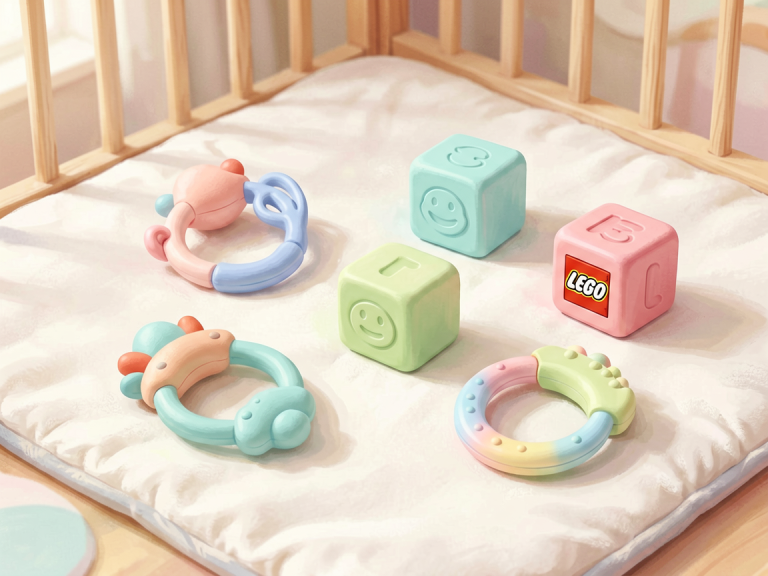
Designate a safe, clutter-free space where the toddler can move freely. Offer a variety of open-ended toys: blocks, stacking cups, dolls, toy vehicles, art supplies (non-toxic crayons, finger paint, playdough), and natural items like pinecones or smooth stones. Rotate toys regularly to maintain novelty. Avoid “electronic toys” that talk, light up, or play music; they tend to dictate the play and limit imagination.
Prioritize Outdoor Time
Nature is the ultimate screen-free playground. Mud, water, sand, leaves, and sticks provide rich sensory experiences. Even a simple walk in the park offers opportunities for discovery: spotting a ladybug, feeling the bark of a tree, or jumping in a puddle. Outdoor play also supports physical activity and vitamin D synthesis. Aim for at least one hour of supervised outdoor time daily.
Be a Present but Non-Directive Partner
Your presence matters more than any toy. Sit on the floor and follow your toddler’s lead. Describe what she is doing without directing it: “You’re putting the red block on top of the blue one.” Ask open-ended questions: “What do you think will happen if we add more water?” Resist the urge to correct or demonstrate the “right” way to play. The process is the learning.
Set Boundaries with Screen Time
The American Academy of Pediatrics recommends avoiding screen time for children under 18 months (with the exception of video chatting) and limiting high-quality programming to one hour per day for children 2–5 years. Be consistent: keep screens out of the bedroom, and turn off the television during meals and playtime. Model screen-free behavior yourself—your toddler will notice if you reach for your phone during play.
Embrace Mess and Imperfection
Screen-free play is often messy. Paint gets on the floor, sand ends up in hair, and blocks scatter everywhere. This mess is a sign of deep engagement. Invest in washable supplies and designate “messy play” areas that are easy to clean. Remember that tidiness is a secondary priority to learning.
—
Conclusion
In a culture that often equates screen time with learning and entertainment, it takes intention and courage to choose screen-free play for a toddler. Yet the rewards are immense: a child who is more creative, more resilient, more physically capable, and more deeply connected to the people and world around her. Unplugged play is not about deprivation; it is about giving toddlers the richest possible foundation for growth—one built on real experiences, real relationships, and real wonder. The next time you are tempted to hand over a tablet, consider offering a cardboard box instead. You might be surprised by the adventure that unfolds.