The Ultimate Guide to the Best Early Learning Toys: Nurturing Development Through Play
The first few years of a child’s life are a whirlwind of discovery. Every rattle grasped, every block stacked, and every puzzle solved is a tiny miracle of cognitive, motor, and social growth. Parents and caregivers often find themselves navigating a vast ocean of plastic, plush, and digital options, all promising to be the best early learning toys. But what truly defines excellence in this category? It is not merely about keeping a toddler occupied; it is about offering tools that spark curiosity, encourage problem-solving, and build foundational skills in a joyful, pressure-free manner. This guide dives deep into the philosophy, criteria, and top picks for early learning toys, helping you choose wisely during these critical developmental windows.
Why Early Learning Toys Matter More Than You Think
Before we explore specific toys, we must understand the profound role they play. A child’s brain forms more than one million neural connections every second during the first three years of life. This period is a unique window of opportunity where experiences literally shape brain architecture. The best early learning toys are not passive entertainers; they are active catalysts for this neural development.
Consider a simple wooden shape sorter. When a toddler tries to fit a square peg into a round hole, they are engaging in spatial reasoning, hand-eye coordination, and persistence. When they fail and try again, they learn emotional regulation and the concept of trial and error. Contrast this with a battery-operated toy that lights up and sings when a button is pressed. While that can be momentarily fun, it often lacks the open-ended exploration that builds deep cognitive connections. Early learning toys should invite interaction, not just reaction. They should stretch a child’s abilities just enough to be challenging but not so much that they cause frustration. This “zone of proximal development” is where genuine learning happens.
Research consistently shows that unstructured, imaginative play with high-quality toys fosters creativity, language development, and executive function skills. Toys that mimic real-world objects—such as play kitchens, tool sets, or doctor kits—allow children to make sense of their environment through role-playing. Meanwhile, manipulatives like building blocks or magnetic tiles encourage mathematical thinking and spatial awareness. In short, the right toys are not luxuries; they are essential tools for laying the groundwork for lifelong learning.
Key Factors in Choosing the Best Early Learning Toys
With thousands of products on shelves, how do you separate the wheat from the chaff? Several critical factors differentiate a truly educational toy from a mere distraction.
Open-Ended Play Potential
The best early learning toys have no single “right” way to play. A set of wooden blocks can become a tower, a castle, a road, or a counting game. Open-ended toys grow with the child, offering new challenges at each developmental stage. They encourage divergent thinking—the ability to generate multiple solutions to a problem—which is a hallmark of creativity. In contrast, toys with fixed outcomes (like a plastic phone that only plays one song) limit imagination. When evaluating a toy, ask yourself: “Can my child use this in ten different ways six months from now?”
Sensory Engagement
Young children learn through their senses. Toys that offer varied textures, sounds, weights, and colors stimulate neural pathways. For infants, contrast patterns and gentle rattles promote visual tracking and auditory discrimination. For toddlers, play dough, sand, water tables, and finger paints provide rich tactile experiences that build fine motor skills and cause-and-effect understanding. Look for toys that engage multiple senses simultaneously, such as a musical instrument that also has a textured surface or a stacking toy with different materials.
Age Appropriateness and Safety
Matching a toy to a child’s developmental stage is crucial. A toy that is too advanced will frustrate; one that is too simple will bore. Manufacturers often label age ranges, but these should be considered guidelines, not rules. More importantly, safety is non-negotiable. The best early learning toys are free from small parts that pose choking hazards, use non-toxic paints and materials, and have no sharp edges. For children under three, avoid toys with long cords or magnets. Always check for recalls and certifications like ASTM (American Society for Testing and Materials) or EN71 (European standard). Wooden toys are often preferable to cheap plastic because they are sturdier and more sustainable, but ensure they are finished with lead-free, water-based paints.
Encouraging Interaction, Not Isolation
While some independent play is healthy, the most powerful learning often occurs through social interaction. Toys that require two or more players—such as simple board games, matching games, or collaborative building sets—teach turn-taking, communication, and empathy. Even a single toy like a toy telephone can become a tool for back-and-forth conversation with a parent. Avoid toys that are primarily designed as digital babysitters, like flashing screens that replace human interaction. The best early learning toys strengthen bonds between child and caregiver rather than replacing them.
Top Categories of Early Learning Toys That Actually Work
Drawing from child development research and real-world experience, here are some of the most effective categories of toys that consistently rank among the best.
Building and Construction Sets
Blocks, magnetic tiles, snap-together connectors, and interlocking bricks are the gold standard for open-ended play. They teach geometry, balance, symmetry, and basic physics. As children build towers and knock them down, they learn about gravity and cause and effect. When they construct a bridge or a house, they practice planning and problem-solving. Wooden unit blocks are especially valuable because they come in precise mathematical ratios (e.g., a double block equals two single blocks), laying a concrete foundation for later math learning. Brands like Melissa & Doug, Magna-Tiles, and LEGO Duplo are popular for good reason.
Puzzles and Shape Sorters
From simple chunky puzzles for one-year-olds to 24-piece jigsaw puzzles for four-year-olds, puzzles are superb for developing spatial reasoning, visual perception, and fine motor precision. The act of matching shapes or aligning pieces strengthens the connection between the eyes and the hands. Start with large knobs and thick pieces, then progress to more complex puzzles. Shape sorters also teach categorization and problem-solving. Look for puzzles that depict real-life objects, animals, or scenes to expand vocabulary.
Imaginative and Role-Play Toys
A child’s imagination is their greatest learning tool. Dress-up clothes, play kitchens, tool benches, doctor kits, and dollhouses allow children to reenact real-world scenarios. This kind of pretend play enhances language development (as children narrate their play), emotional intelligence (as they explore different roles and feelings), and social skills (as they negotiate with playmates). The best early learning toys in this category are simple and realistic rather than overly themed or branded. A plain wooden kitchen set inspires more creativity than one covered with cartoon characters.
Art and Creative Materials
Crayons, washable markers, play dough, scissors (child-safe), glue sticks, and finger paints are essential for creative expression. Art develops fine motor control, color recognition, and decision-making. It also allows children to externalize emotions in a safe way. Importantly, the process matters far more than the product. Resist the urge to correct a child’s “messy” drawing; instead, ask them to tell you about it. This builds confidence and verbal skills. Safety is key: choose non-toxic, washable materials suitable for young children.
Musical Instruments
Simple instruments like maracas, tambourines, xylophones, and drums introduce rhythm, pitch, and tempo. Music-making enhances auditory discrimination, which is linked to early literacy skills. It also provides a fantastic outlet for energy and emotion. Clapping along to a song or shaking a rattle to a beat develops gross motor coordination. Look for instruments that are well-crafted and durable; cheap ones often produce unpleasant sounds that can discourage interest.
Sensory and Fine Motor Toys
For babies and toddlers, toys like stacking rings, nesting cups, textured balls, and busy boards with latches, zippers, and switches are perfect. They strengthen hand muscles and introduce concepts like size, sequence, and cause and effect. Play mats with hanging toys encourage tummy time. For older toddlers, threading beads, lacing cards, and pegboards refine the pincer grip needed for writing. The best early learning toys in this category are those that feel good to touch and manipulate.
Age-Appropriate Recommendations: From Infants to Preschoolers
Selecting toys according to age ensures they are safe and optimally challenging.
0–6 Months: Sensory Exploration
At this stage, babies are learning to focus their vision and grasp objects. Look for black-and-white contrast cards or patterned mobiles, soft rattles with different textures, and unbreakable mirrors. A play gym with hanging toys encourages reaching and kicking. Everything goes in the mouth, so ensure all items are large and securely fastened.
6–12 Months: Cause and Effect and Mobility
As babies start sitting, crawling, and pulling up, they love toys that respond to their actions. Stacking cups, simple shape sorters with large pieces, activity tables with buttons and levers, and push-along walkers are excellent. Soft blocks that can be knocked over teach cause and effect. Musical toys that play sounds when tapped also delight.
12–24 Months: Problem-Solving and Language
Toddlers begin walking, talking, and asserting independence. Puzzles with knobs, wooden train sets, dolls, and simple pretend play items are ideal. Board books with textures or flaps build vocabulary. Sorting toys by color or size introduce early math concepts. Avoid toys with tiny parts; toddlers still explore by mouthing.
2–3 Years: Imagination and Social Play
This is the peak of pretend play. Play kitchens, tool sets, costumes, and dollhouses are wonderful. Building blocks and magnetic tiles become more interesting. Simple board games (like memory matching) teach turn-taking. Art supplies flourish as fine motor skills improve. Look for lacing beads, play dough with tools, and early puzzles with 4–12 pieces.
3–5 Years: Advanced Skills and Cooperation
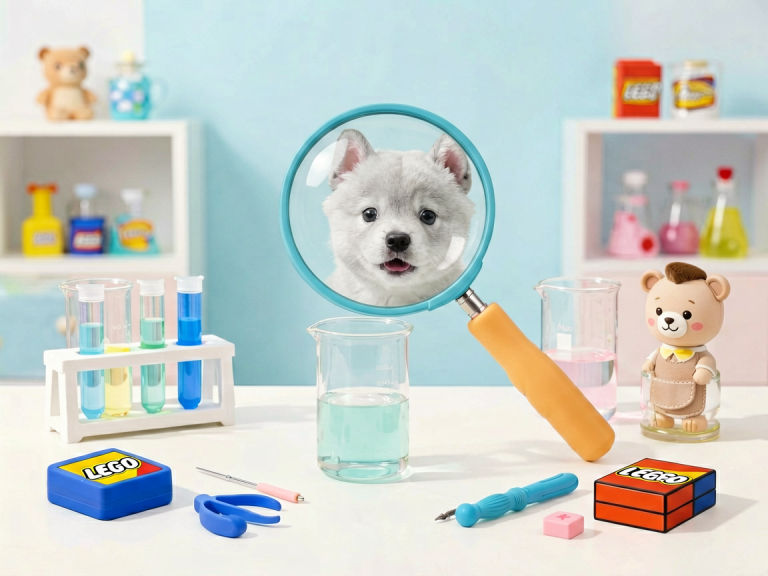
Preschoolers are ready for more complex puzzles (16–48 pieces), LEGO Duplo or small building sets, alphabet and number games, pattern blocks, and science kits (like magnifying glasses or simple magnet sets). Board games with basic rules, cooperative games, and creative art projects (stampers, scissors, watercolors) support school readiness. The best early learning toys for this age encourage counting, letter recognition, and problem-solving in a playful context.
Safety and Quality Considerations: What to Avoid
Not all toys labeled “educational” are created equal. Be wary of excessive batteries, loud noises, and flashing lights. Overstimulating toys can actually hinder focus and creativity. Also avoid toys that claim to “teach” a specific skill too early, such as electronic phonics games for one-year-olds; human interaction is far more effective for language acquisition.
Check for choking hazards: use a toilet paper tube as a gauge—if a toy or part can fit inside, it’s unsafe for children under three. Inspect for loose strings, sharp edges, and toxic materials. Wooden toys should be smooth and splinter-free. Soft toys should be machine-washable. When possible, choose toys made from sustainable materials like FSC-certified wood or recycled plastics.
Finally, remember that the best toy in the world is a present, engaged adult. A cardboard box can become a spaceship if a parent joins in the play. The best early learning toys are those that facilitate connection, wonder, and the joy of discovery. By focusing on quality, open-endedness, and age-appropriate challenge, you can create a play environment that nurtures your child’s growing mind without succumbing to consumer hype. Choose wisely, play wholeheartedly, and watch the magic of early learning unfold.