The Ultimate Guide to the Best Board Games for Babies: Building Brains, Bonding, and Bright Smiles
Introduction
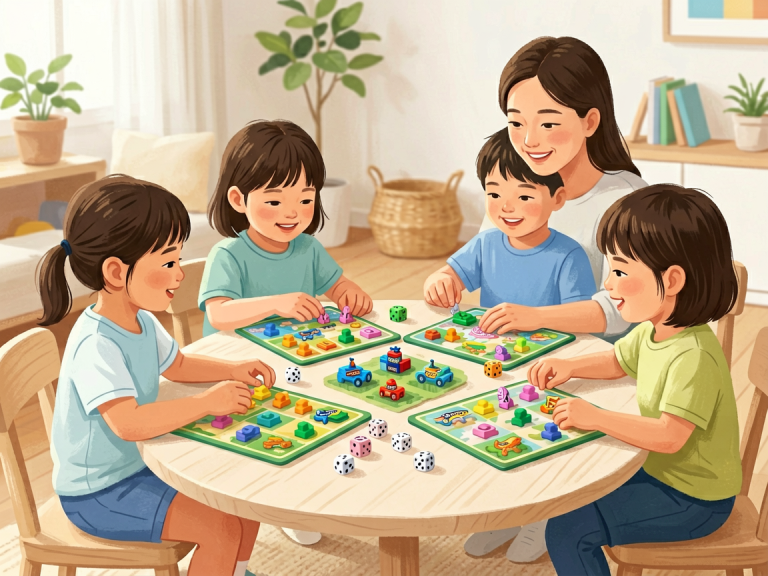
When most people picture board games, they think of intense family Monopoly battles or strategic evenings of Settlers of Catan. But board games aren’t just for older children and adults—they have a wonderful place in the world of babies and toddlers, too. For infants as young as six months, the right type of “board game” can spark curiosity, develop fine motor skills, introduce cause and effect, and most importantly, create precious moments of shared joy between parent and child. However, the term “board game for babies” is a special category. These games are not about complex rules, winning, or losing. Instead, they focus on textures, colors, sounds, simple matching, and the pure delight of discovery.
In this comprehensive guide, I will walk you through the best board games for babies, explain why each one earns a spot on the list, and offer practical tips for playing with your little one. Whether you are a new parent looking for educational playthings or a relative searching for the perfect gift, these recommendations will help you choose games that grow with your baby.
Why Board Games Matter for Babies
At first glance, it might seem unnecessary to introduce structured play so early. But babies’ brains are developing at an astonishing rate—forming over a million neural connections every second in the first few years. Board games designed for babies provide multisensory stimulation that supports this growth. Here are the key developmental areas these games target:
- Fine Motor Skills: Picking up pieces, sliding tokens, and turning pages help strengthen tiny fingers and improve hand-eye coordination.
- Cognitive Development: Simple puzzles, shape sorters, and matching games teach pattern recognition, memory, and problem-solving.
- Language Acquisition: As you describe colors, shapes, and actions, your baby absorbs new vocabulary.
- Social-Emotional Skills: Taking turns, responding to your reactions, and experiencing shared laughter build emotional bonds and early understanding of cooperation.
- Sensory Exploration: Soft fabrics, crinkly materials, wooden textures, and bright colors engage multiple senses, which is crucial for integration.
The best board games for babies are not just toys—they are tools for connection. They invite you to sit face-to-face with your child, make eye contact, and respond to their cues. This interaction is far more valuable than any electronic gadget.
Top 5 Best Board Games for Babies
1. “The Very Hungry Caterpillar” – A Classic Story-Based Game
This game, based on Eric Carle’s beloved book, is a gentle introduction to board game mechanics for babies as young as 12 months. The “board” is actually a colorful, padded mat with large, chunky pieces that represent the foods the caterpillar eats. Babies love the tactile experience: they can grasp the soft fruit tokens, feel the different textures (smooth apple, bumpy strawberry), and place them into the caterpillar’s “tummy” slots.
Why it works: The game encourages matching—your baby can find the fruit that matches the picture on the card. It also reinforces counting (how many pieces did we put in?) and storytelling. The simple action of picking up a token and dropping it through a slot is endlessly fascinating for little ones. Plus, the game has no competitive element; it’s purely cooperative. You guide your baby’s hand, cheer when they succeed, and together you watch the caterpillar “eat” his way through the week.
2. “First 100 Words” Lift-the-Flap Board Game
From the popular “First 100 Words” book series comes a game format that turns vocabulary building into a hands-on activity. This “board game” is actually a large, sturdy board book with flaps that reveal pictures and words. Each page features a scene (the farm, the zoo, the kitchen) and asks a simple question: “Where is the dog?” Your baby lifts the flap to find the answer.
Why it works: The lift-the-flap mechanism is perfect for babies aged 9 months and up because it teaches cause and effect—“I lift this, and something appears!” The game also expands vocabulary in a natural way. You can name the objects as your baby points to them, and the bright photographs hold attention. Unlike a traditional book, this “game” has a playful, interactive structure that feels like a treasure hunt. It’s also durable enough to survive slobber and enthusiastic grabbing.
3. “HABA My First Games: Animal Upon Animal” – The Gentle Stacking Game
HABA is renowned for its high-quality wooden toys, and their “My First Games” line is specifically designed for toddlers. “Animal Upon Animal” for babies is a simplified version of the classic stacking game. Instead of dice and complex rules, this set includes four large wooden animal figures (a cat, a dog, a mouse, and a lion) and a colorful wooden board with small indented spaces.
Why it works: The goal is simply to stack the animals on the board—or stack them on top of each other. Babies love the satisfying clunk of wood on wood. This game develops hand-eye coordination and spatial awareness as your baby learns to balance one animal on another. The pieces are large enough to be safe (no choking hazards) and easy to grip. You can make it even more engaging by pretending the animals are talking or making sounds. The game has no winner or loser; it’s all about exploration and the thrill of the tower staying upright.
4. “Melissa & Doug’s Farm Animals Shape Sorter Board Game”
Melissa & Doug produces some of the best early-learning toys, and their shape-sorter board game is a hit with babies from 10 months onward. This “board” is a wooden base with cutouts of different shapes (circle, square, triangle) each painted to look like a farm animal. The baby’s job is to match the wooden animal-shaped piece to the correct hole.
Why it works: This game is a masterclass in sensory and cognitive development. The pieces are chunky, easy to hold, and feature painted details that invite touching. As your baby tries to fit the square pig into the round hole, they learn about shape recognition and trial-and-error problem solving. The game also introduces animal names and sounds (“Moo! That’s the cow.”). Parents can model the action, then let their baby try—and celebrate when the piece slides in. The wooden construction ensures longevity; this is a game that will stay in your family’s collection for years.
5. “Sassy Stacks of Circles Stacking Ring Game”
Though not a traditional board game, the “Sassy Stacks of Circles” stacking ring toy functions as one of the best “board games” for babies because it has a base, a sequence, and a clear goal. The set includes a sturdy, wobbly base and six colorful rings of different sizes and textures (one is crinkly, one is bumpy, one is smooth). The baby’s mission is to stack the rings onto the central pole in order of size.
Why it works: From about 6 months old, babies are captivated by the cause-and-effect of placing a ring on the pole and watching it slide down. The different textures provide rich tactile input. As your baby gets older (12–18 months), they begin to understand the concept of size sequencing—big first, then smaller. You can turn it into a “board game” by taking turns: you stack one ring, your baby stacks the next. The bright colors and jiggly base add an element of surprise. Plus, it’s lightweight and easy to take on trips.
Tips for Playing Board Games with Your Baby
Playing board games with a baby is not the same as playing with a five-year-old. Here are strategies to make the experience joyful and effective:
- Keep sessions short. A baby’s attention span is measured in minutes. Two to five minutes of focused play is plenty. Stop before they lose interest.
- Follow their lead. If your baby wants to chew on a piece (as long as it’s safe), let them. Sensory exploration through mouthing is normal. If they want to dump all the pieces on the floor, that’s okay—turn it into a pickup game.
- Narrate everything. Describe what you’re doing: “I’m putting the red circle in the hole! Can you find the blue square?” This builds language.
- Celebrate effort, not success. Even if your baby can’t match the shape, clap when they try. The goal is positive association with play.
- Rotate games. Babies thrive on novelty. Have two or three games available and swap them every week to keep engagement high.
Why Commercial “Baby Board Games” Are Often Better Than DIY Options
You might wonder, “Can’t I just make a game with household items?” While DIY play is wonderful, specially designed baby board games have important advantages:
- Safety: They are tested for choking hazards, sharp edges, and toxic materials.
- Durability: They withstand drops, slobber, and hard chewing.
- Educational Intent: The game mechanics are calibrated for specific developmental stages. A professional designer has thought about how a 10-month-old’s hand grasps, how colors should contrast, and how to avoid frustration.
- Social Enjoyment: A dedicated game feels special. The excitement of opening the box, spreading out the board, and playing together creates a ritual that strengthens parent-child bonds.
Conclusion
The best board games for babies are those that prioritize connection, sensory joy, and gentle learning over competition. Games like *The Very Hungry Caterpillar* game, *First 100 Words* lift-the-flap, HABA’s *Animal Upon Animal*, Melissa & Doug’s shape sorter, and the *Sassy Stacks of Circles* stacking set each offer unique opportunities for your baby to explore, laugh, and grow.
Remember: The true value of these games lies not in the toy itself, but in the time you spend engaged with your child. When you sit on the floor, look into their eyes, and share the delight of a ring clicking into place or a flap revealing a hidden dog, you are building the foundation for a lifelong love of learning and connection. So go ahead—pick one of these games, clear a space on the rug, and get ready to play. Your baby is waiting.