The Ultimate Guide to the Best Phonics Toys for Babies: Building Early Literacy Through Play
Introduction: Why Phonics Matters from the Very Beginning
In the bustling world of early childhood development, few topics generate as much excitement—and confusion—as the introduction of literacy skills. Parents and caregivers are bombarded with claims about "brain-boosting" toys, "reading-ready" gadgets, and "phonics-based" playthings, often before a child can even sit up unassisted. But when it comes to babies—those tiny humans between birth and approximately 18 months—the landscape of educational toys is both delicate and critical. The right phonics toys for babies do not teach them to read; rather, they lay the neurological and sensory groundwork for future language acquisition. This article dives deep into the best phonics toys for babies, exploring what makes them effective, how they support developmental milestones, and which specific products (or product categories) stand out in a crowded market.
Before we explore individual recommendations, it is essential to understand what "phonics" means in the context of infancy. Phonics, at its core, is the relationship between sounds and their corresponding written symbols. For a newborn or a six-month-old, direct instruction in letter-sound correspondence is not only impossible but also inappropriate. Instead, the best phonics toys for babies focus on the *phonological awareness* that precedes phonics: the ability to hear, recognize, and manipulate the sounds of spoken language. This includes rhyming, alliteration, syllable segmentation, and, most crucially, the differentiation of individual phonemes (the smallest units of sound). Toys that expose babies to rich, varied, and clear auditory input—whether through musical elements, spoken words, or sound-making objects—are the true champions of early phonics development.
Furthermore, the best phonics toys for babies integrate multiple sensory modalities. Babies learn through their mouths, their hands, their eyes, and their ears. A toy that simply plays a recording of the letter "A" is far less effective than one that combines the sound with a textured surface, a bright image, and an opportunity for the baby to interact physically. The multisensory approach aligns with the principles of Montessori and Piagetian developmental theory, which emphasize that cognition emerges from concrete, hands-on experiences. Therefore, this guide evaluates toys not merely on their educational claims but on their ability to engage a baby’s whole being in the process of sound discovery.
The Foundational Principles: What Makes a Phonics Toy Effective for Babies?
Sensory Integration and Sound Exposure
The first and most critical principle is that the toy must provide high-quality, varied auditory input. Babies are born with the capacity to distinguish all phonemes from all languages, but this ability narrows by around 12 months as they specialize in the sounds of their native language. Toys that expose them to a wide range of phonemes—including those that are less common in English, such as the "ng" sound in "sing" or the short "u" in "cup"—help preserve this neural plasticity. The best phonics toys for babies incorporate clear, slow, and exaggerated pronunciation of sounds, often by human voices rather than synthesized speech. Recordings of parents, caregivers, or professional educators are preferable because they contain the natural prosody (rhythm, stress, and intonation) that babies use to segment speech.
In addition, the toy should offer opportunities for sound discrimination. For example, a toy that plays two different animal sounds and then asks the baby to press the matching button (even if the baby doesn't consciously understand the instruction) trains the ear to detect differences. Over time, this translates into the ability to distinguish "bat" from "pat" or "cat" from "cap." The toys that excel in this area are not necessarily digital or battery-operated; simple objects like rattles, shakers, and bells also contribute to sound differentiation if they are designed with varied pitches and timbres.
Interactive Feedback and Cause-and-Effect Learning
Babies are natural scientists. From the moment they can reach for an object, they experiment with cause and effect. A rattle that produces a sound when shaken teaches the baby that their action has a consequence—a foundational concept for language, where making a sound with one's mouth produces a reaction from others. The best phonics toys for babies capitalize on this by providing immediate, consistent auditory feedback in response to the baby’s touch, grasp, or movement. For instance, a plush toy that plays a gentle "mmm" sound when squeezed (mimicking the phoneme /m/) reinforces the association between action and sound. Over hundreds of repetitions, the baby's brain begins to link the motor pattern of squeezing with the auditory pattern of the phoneme, paving the way for future voluntary production of that sound.
Moreover, interactive toys that require the baby to press a button, turn a wheel, or slide a panel to hear a sound encourage fine motor development in tandem with auditory discrimination. This dual benefit is a hallmark of the best phonics toys for babies. They are not passive listening devices; they demand engagement. However, it is crucial that the feedback is not overwhelming. Toys that blare loud, jarring noises or that play multiple sounds in rapid succession can overstimulate a baby's developing nervous system, leading to avoidance rather than learning. Gentle volume control, soft musical tones, and pauses between sounds are features to prioritize.
Durability, Safety, and Age-Appropriateness
No discussion of the best phonics toys for babies would be complete without addressing safety. Babies explore the world by putting objects in their mouths. Therefore, any toy must be made of non-toxic materials, free from small parts that could become choking hazards, and easy to clean. BPA-free plastics, organic cotton, and sustainably harvested wood are ideal. Additionally, the toy should be designed for the specific developmental stage of the baby. For newborns (0–3 months), high-contrast visual patterns and soft, gentle sounds are appropriate. For infants who can sit (4–8 months), toys that can be grasped, mouthed, and manipulated are key. For mobile babies (8–12 months), toys that encourage crawling, reaching, or standing add a gross motor component to the phonics experience.
It is also worth noting that "educational" does not mean "complicated." Some of the best phonics toys for babies are deceptively simple. A set of wooden blocks with embossed letters, for example, may not make any sound at all, but the tactile experience of tracing the letter shape with tiny fingers, combined with a parent's narration ("This is the letter B. B says /b/ like 'ball'."), can be far more effective than a flashy electronic gadget. The key is that the toy facilitates human interaction, which is the most powerful vehicle for language learning.
Top Categories and Specific Recommendations for Phonics Toys
Sound-Play Plush Toys and Soft Books
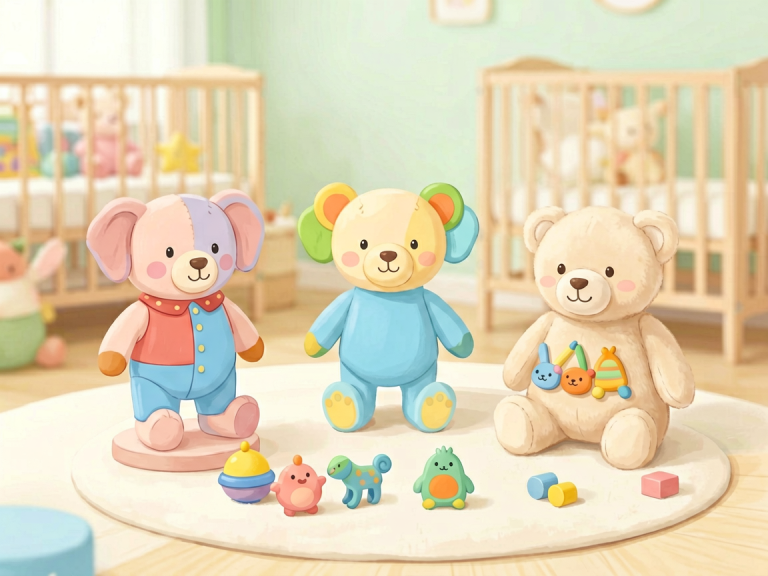
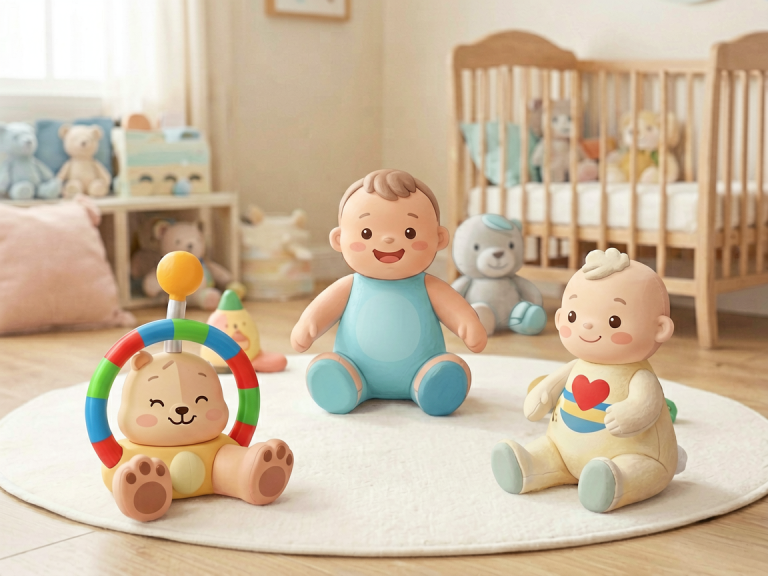
Plush toys that incorporate phonics elements are among the most beloved by babies and parents alike. They are cuddly, safe for mouthing, and often machine-washable. One standout category is soft fabric books with attached sound buttons or crinkle textures that produce phonemic sounds. For example, a book called "My First Sounds: Animals" might have a page with a fluffy sheep and a button that plays a clear, gentle "baa." While this is not a direct phonics lesson, it trains the baby to associate a specific visual image with a specific sound—a precursor to letter-sound association. Another excellent example is the "Phonics Friend" plush toy, a soft stuffed animal with a hidden speaker that plays a single phoneme (such as /s/ or /m/) when its tummy is pressed. The toy is designed to be held close to the baby's ear (at a safe volume) so that the sound is delivered clearly without ambient noise interference. These toys are particularly effective because they combine emotional comfort with auditory input, helping babies form positive associations with sounds.
When selecting a plush phonics toy, look for one that uses real human voices rather than robotic speech. The best options will have recordings by speech-language pathologists or early childhood educators who enunciate sounds slowly and clearly. Avoid toys that play full words or sentences; at the baby stage, single phonemes and simple syllables (like "ma," "ba," "da") are optimal. Also, ensure that the sound button or mechanism is durable and sealed to prevent battery leakage or small parts from becoming exposed.
Musical Instruments and Sound-Making Objects
Surprisingly, some of the best phonics toys for babies are not marketed as educational at all. Simple musical instruments—such as maracas, jingle bells, rain sticks, and xylophones—provide rich auditory experiences that develop sound discrimination and rhythm awareness. Phonics is fundamentally about hearing patterns in sound, and music is the purest form of patterned sound. A baby who shakes a maraca and hears a rhythmic "sh-sh-sh" is practicing the same neural pathways they will later use to detect the difference between "ship" and "chop."
Specifically, percussion instruments with distinct pitches are valuable. For instance, a set of color-coded chime bars (like those used in Montessori infant classrooms) allows a baby to strike a bar and hear a specific note. The caregiver can then vocalize a matching phoneme ("That's the /t/ sound—t-t-t!") to link the musical tone to a speech sound. Wooden rattles with different fillings (rice, beads, sand) produce varying timbres, teaching the baby that identical actions can yield different auditory results. These toys also support the development of hand-eye coordination and proprioception, which are linked to speech motor planning.
For babies who are beginning to crawl or stand, a floor drum or a set of plastic pots and wooden spoons (supervised, of course) can serve as excellent phonics tools. The key is to use them intentionally: instead of letting the baby bang randomly, the caregiver can model a specific rhythmic pattern, such as "b-b-b" (three short taps) or "t-a-p" (one strong, two soft). The baby will mimic the rhythm before they can mimic the actual phoneme, but the neural mapping is identical.
Interactive Phonics Mats and Floor Puzzles
As babies become more mobile, floor-based activities become increasingly relevant. Phonics mats—large, padded play mats with printed letters, images, and embedded sound sensors—are a popular choice. When a baby crawls over a letter "M" on the mat, the mat may play a soft "mmm" sound and show an image of a moon. The best versions use pressure-sensitive zones that react to weight, not just touch, so even a lightweight baby can activate them. However, it is crucial that the sounds are not overly granular: a mat that plays a sound for every inch of crawling can become chaotic and overstimulating. Look for mats with large, clearly demarcated zones and a limited number of sounds (five to ten) that are repeated often enough for the baby to recognize them.
Floor puzzles with phonics elements are another excellent option. For example, a large, chunky puzzle that includes a piece shaped like the letter "S" and a piece shaped like a snake, both of which interlock, encourages the baby to handle the pieces and hear the sound when they are correctly placed. The physical act of fitting the pieces together reinforces the cognitive link between the symbol and the sound. These puzzles also promote spatial awareness and problem-solving, which are ancillary but valuable skills.
Mirror Toys with Sound Feedback
A relatively niche but highly effective category is mirror toys that incorporate sound. Babies are naturally fascinated by their own reflection, and combining that visual interest with auditory input can be powerful. For example, a standing mirror with a silicone frame that has textured buttons around the edge, each producing a different phoneme when pressed. The baby sees themselves in the mirror while pressing a button that says "ma-ma" or "da-da." This dual sensory input (visual and auditory) strengthens the neural connections for self-awareness and sound production. Moreover, these toys encourage vocal imitation: the baby may try to babble back to the mirror, practicing the motor patterns needed for speech.
When choosing a mirror toy, ensure that the mirror is shatterproof (acrylic or polished stainless steel) and that the frame is soft and chewy. The volume should be adjustable, and the toy should have an auto-off feature to conserve batteries and prevent overuse.
How to Maximize the Benefits of Phonics Toys for Babies
The Role of the Caregiver: Modeling and Interaction
No toy, no matter how well-designed, can replace the human connection that fuels language development. The best phonics toys for babies are tools, not teachers. Their effectiveness skyrockets when a caregiver actively engages with the baby during play. For instance, when a baby presses the "mmm" button on a plush toy, the caregiver can respond by looking at the baby, smiling, and repeating the sound: "Mmm! You made the M sound! Mmm like 'mama'!" This serves several purposes: it reinforces the sound, provides emotional validation, and models the social function of communication. Over time, the baby learns that sounds have meaning and that making them leads to positive social interaction.
Similarly, when using a musical instrument, the caregiver can sing nursery rhymes that emphasize consonant sounds. "Baa baa black sheep" highlights the /b/ and /sh/ phonemes. "Twinkle, twinkle, little star" emphasizes the /t/ and /st/ clusters. The combination of the toy's auditory output and the caregiver's live voice creates a layered learning environment that is far more effective than either alone.
Creating a Sound-Rich Environment
Beyond specific toys, caregivers can create a general environment that supports phonics development. This includes speaking clearly and slowly to the baby, using exaggerated intonation (often called "parentese" or "infant-directed speech"), and narrating daily activities. A baby who hears "I'm putting the *bottle* on the *table*" while seeing the caregiver perform the action is absorbing the rhythm and phonemes of English. The best phonics toys for babies complement this natural exposure by providing structured, repetitive sound practice that the baby can control.
It is also important to rotate toys to maintain novelty. A baby who hears the same five sounds from the same mat every day may become habituated and stop paying attention. Introduce new sounds gradually—perhaps one new phoneme per week—and pair it with a new toy. This spaced repetition aligns with the principles of neural consolidation.
Avoiding Common Pitfalls
Several common mistakes can undermine the effectiveness of phonics toys. First, over-scheduling: babies need unstructured time for free play, exploration, and rest. Bombarding them with "educational" toys for hours on end can lead to fatigue and disinterest. The best approach is brief, playful sessions—five to ten minutes a few times a day—interspersed with plenty of floor time, cuddling, and outdoor exploration.
Second, ignoring the baby's cues: if a baby turns away from a toy, cries, or becomes fussy when a sound is played, respect that signal. The toy might be too loud, too fast, or simply not interesting. Trust the baby's innate curiosity; the best phonics toys for babies are those that the baby chooses to engage with voluntarily.
Third, focusing exclusively on consonants at the expense of vowels. English has approximately 15 vowel sounds (depending on dialect), and they are notoriously difficult for non-native speakers and young learners alike. Toys that incorporate vowel sounds (e.g., "ah," "ee," "oo") with clear, sustained production are invaluable. For example, a toy that plays a long "aaaaah" sound (as in "cat") when a baby touches a picture of an apple helps establish the foundation for vowel discrimination.
Conclusion: Play, Patience, and the Path to Literacy
The best phonics toys for babies are not magical keys that unlock reading before age two. Rather, they are catalysts for a journey that begins with the simplest of sounds and unfolds over years of exposure, interaction, and practice. By choosing toys that prioritize clear auditory input, multisensory engagement, interactive feedback, and safety, caregivers can provide their babies with a head start in phonological awareness that will serve them well when formal reading instruction begins. More importantly, these toys foster joy—the joy of discovering that a squeeze produces a sound, that a rattle creates a rhythm, and that a caregiver's voice echoes and expands every noise the baby makes.
In a world saturated with flashy digital devices, the quiet chime of a wooden block, the soft hum of a plush friend, and the warm resonance of a parent's repeating voice remain the most powerful phonics tools ever invented. Invest in toys that invite interaction, not passivity; that encourage babbling, not silence; and that celebrate every small sound as a step toward the magnificent adventure of language. With the right toys—and, most importantly, with you—your baby will embark on a lifelong love affair with words.