Beyond the Screen: A Guide to Screen-Free Play for Six-Month-Olds That Replaces TV Time
—
Introduction: Why Screen-Free Play Matters for Your Six-Month-Old
In the modern home, the television often hums in the background—a constant source of flickering lights, rapid scene changes, and synthetic sounds. For parents of a six-month-old, it can be tempting to let the baby watch a few minutes of a colorful show while you prepare a bottle or catch your breath. Yet pediatricians and child development experts are unanimous: the American Academy of Pediatrics recommends zero screen time for children under 18 months (with the sole exception of live video chatting). At six months, a baby’s brain is forming one million neural connections every second, and those connections are built not through passive absorption but through active, multi-sensory exploration. Screen-free play is not merely a “better alternative” to TV; it is the essential foundation for cognitive, motor, social, and emotional growth. This article explains why replacing TV time with purposeful, engaging, and developmentally appropriate play is one of the most powerful gifts you can give your six-month-old, and it provides a comprehensive toolkit of screen-free activities you can start today.
—
The Hidden Costs of Early Screen Exposure
Before diving into play ideas, it is important to understand what happens when a six-month-old watches a screen. At this age, babies lack the ability to process two-dimensional representations as symbols of real objects. A cartoon dog on a screen does not teach them “dog”; instead, the rapid pacing of images overtaxes their developing attention systems. Studies have shown that even minimal screen time before age one is associated with lower language scores, shorter attention spans, and poorer sleep quality. Furthermore, when a baby watches TV, they are sitting still—missing precious opportunities to practice rolling, reaching, grasping, and other gross and fine motor milestones. The real loss, however, is interactive social engagement. A screen cannot read a baby’s cues, respond with a smile, or adjust its tone of voice based on the baby’s babbling. Only a live human (or, to a lesser degree, a pet) can provide the contingent, back-and-forth interaction that wires the social brain.
Why Screen-Free Play Is Developmentally Superior
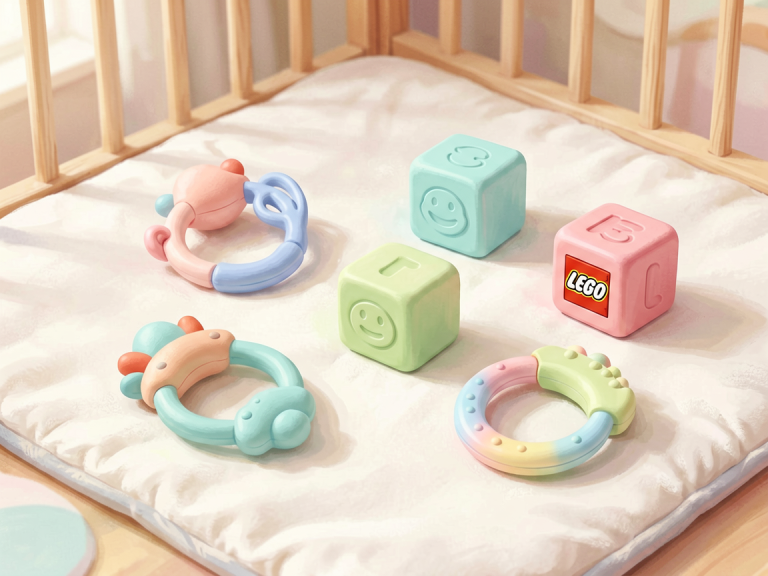
Screen-free play is hands-on, sensorimotor, and relational. It allows the baby to be the active agent: to mouth a wooden ring, to track a rolling ball, to feel the texture of a crinkly fabric, to hear the sound of a rattle they themselves shake. Each of these actions sends a cascade of electrical impulses through the brain, strengthening neural pathways. Moreover, play with an attentive caregiver—face-to-face, with exaggerated facial expressions and rhythmic speech—stimulates the mirror neuron system, which underlies empathy and imitation. When you replace even 10 minutes of TV with a structured play session, you are not just “filling time”; you are building a brain.
—
What to Expect from a Six-Month-Old’s Development
To design effective screen-free play, you must first understand what your baby is capable of and eager to do at this age. Around six months, most babies can:
- Roll from back to tummy and tummy to back
- Sit with support or briefly alone
- Reach for and grasp objects with a raking motion or palmar grip
- Transfer toys from one hand to the other
- Bring objects to the mouth for exploration
- Babble with consonant sounds like “ba,” “da,” and “ma”
- Show interest in cause-and-effect (e.g., dropping a toy to see you pick it up)
Play activities should target these emerging skills, providing just enough challenge to be engaging but not so much as to cause frustration.
—
Section 1: Sensory Play – The Foundation of Learning
Sensory play is not just about fun; it is the primary way a six-month-old gathers information about the world. Because babies learn through their senses, every activity you present should stimulate at least one of them—preferably several at once.
1.1 Texture Treasure Basket
Fill a shallow, open basket (or a clean shoebox) with items of different textures: a silk scarf, a soft woolly pom-pom, a smooth wooden block, a bumpy rubber teether, a piece of crinkly cellophane, and a cool metal spoon. Sit with your baby on the floor or in a supported sitting position, and let them explore freely. Describe what they touch: “You feel the soft silk—so smooth!” or “That spoon is cold!” This not only enriches tactile learning but also builds language. Supervision is essential to ensure nothing small enough to choke on is included.
1.2 Water Play in a Shallow Tray
Place a shallow plastic tray (like a baking pan) with half an inch of lukewarm water on the floor, on a towel. Lay your baby on their tummy or support them in a sitting position. Let them splash, pat, and swirl the water. The resistance of water strengthens arm and hand muscles, and the visual ripple effects are mesmerizing. Add a few floating toys (squeeze toys that are sealed, or plastic cups) for extra engagement. Always stay within arm’s reach and never leave the baby alone with water.
1.3 Sound Exploration with Homemade Shakers
Fill small, clean plastic bottles (with tightly sealed lids) with different materials: rice, dried beans, beads, or a bell. Tape the lids shut for safety. Let your baby grasp and shake them. They will quickly notice that different fillings produce different sounds—a first lesson in cause-and-effect. Sing a simple song like “Shake, shake, shake your bottle, shake it nice and slow,” and shake along with them. This joint attention deepens bonding.
—
Section 2: Gross Motor Play – Strengthening Little Bodies
Movement is brain food. At six months, babies are building core strength, coordination, and balance. Screen-free gross motor play should be fun, gentle, and varied.
2.1 Tummy Time with a Twist
Tummy time is non-negotiable, but many babies resist it. Make it screen-free and appealing by placing a mirror in front of your baby at an angle so they can see their reflection. Babies are fascinated by faces—especially their own. Alternatively, scatter a few toys just out of reach to encourage reaching and pivoting. You can also lie face-to-face with your baby, making silly faces and sounds. If your baby gets frustrated, keep sessions short (2–3 minutes) but frequent, aiming for a total of 15–20 minutes per day.
2.2 Assisted Rolling Games
Lie your baby on a soft mat. Gently guide them through a roll from back to tummy by holding their hip and shoulder, narrating: “Roll, roll, like a little log!” Once they can roll independently, place a favorite toy on one side to motivate them. Rolling strengthens the oblique muscles needed for crawling.
2.3 Supported Sitting Play
When your baby can sit with support, place them in a low, sturdy chair (like a Bumbo) or prop them with pillows behind and on both sides. Place toys on a tray in front of them so they have to reach, twist, and grasp. This develops trunk control and the ability to shift weight—precursors to crawling and walking. Try offering a toy on one side, then the other, to encourage cross-lateral movement.
—
Section 3: Social-Emotional Play – The Heart of Connection
No screen can provide the warmth, responsiveness, and unconditional attention that a caregiver offers. Social play at six months is about building trust, reading cues, and co-regulation.
3.1 Face-to-Face “Conversations”
Hold your baby facing you, at eye level. Babble back and forth, imitating their sounds and waiting for them to respond. This turn-taking is the original form of conversation—it teaches the baby that communication is a two-way street. Exaggerate your facial expressions: open your mouth wide, raise your eyebrows, smile big. Your baby will watch you intently and eventually try to copy you.
3.2 Simple Body-Part Songs
Sing “Head, Shoulders, Knees, and Toes” while gently touching each part of your baby’s body. Or make up your own: “Where is baby’s nose? Here it is!” This reinforces body awareness and vocabulary. The melody and rhythm also soothe the nervous system.
3.3 Peek-a-Boo with Variations
Peek-a-boo is a classic for a reason—it teaches object permanence (the understanding that things still exist even when hidden). Use a lightweight cloth, your hands, or a soft toy. Hide your face, then reappear with a loud “Peek-a-boo!” As your baby grows, they will begin to anticipate the reappearance and may even pull the cloth away themselves—a delightful moment of shared laughter.
—
Section 4: Fine Motor Play – Tiny Hands, Big Skills
The pincer grasp (using thumb and forefinger) emerges around 8–10 months, but at six months your baby is practicing the palmar grasp and transfer. Fine motor play should involve grasping, shaking, banging, and transferring.
4.1 The “Drop-and-Retrieve” Game
Give your baby a set of stacking cups or rings. Show them how to drop a small, safe object (like a wooden ball) into a cup. They will likely bat at it or drop it randomly. When the object rolls away, encourage them to reach for it. This simple game teaches spatial awareness, cause-and-effect, and persistence.
4.2 Clothespin Drop (Supervised)
Snap a few large, plastic clothespins onto the edge of a cardboard box or a plastic container. Let your baby try to pull them off—it requires strength and hand-eye coordination. Always supervise to prevent mouthing of small parts; if the clothespins are too small, use larger wooden pegs designed for baby toys.
4.3 Paper Crumpling
Give your baby a piece of plain white tissue paper (or a clean paper lunch bag) that is soft and crinkly. Show them how to crumple it. The sound delights them, and the action strengthens hand muscles. Be careful that they do not put large pieces in their mouths—tear off small sections and supervise closely.
—
Section 5: Building a Screen-Free Daily Rhythm
Replacing TV time does not mean you need to entertain your baby every waking moment. In fact, downtime is important. The key is to create a predictable rhythm that includes periods of active play, quiet play, and independent exploration.
5.1 Morning Sensory Time
After the first nap and feeding, dedicate 10–15 minutes to a sensory activity (e.g., the texture basket or water tray). Babies are often most alert and receptive in the morning.
5.2 Midday Gross Motor Session
Before lunch, practice tummy time, rolling, or supported sitting. This is also a good time for a walk in the garden or a trip to a baby-safe mirror.
5.3 Afternoon Social Connection
The late afternoon is often fussy—use it for face-to-face games, songs, and stories. Read a simple board book with high-contrast illustrations (nono electronic books, just paper). Let your baby pat the pages, mouth the corners, and hear your voice.
5.4 Evening Wind-Down
In the hour before bed, dim the lights, avoid bright toys, and engage in calm, soothing activities: gentle massage, soft lullabies, and quiet cuddles. This helps distinguish daytime play from nighttime rest.
—
Overcoming Common Challenges
“My baby won’t play independently. They want me to hold them all the time.”
That is normal and healthy. At six months, your baby still sees you as their secure base. Instead of worrying about independence, focus on joint play. Set up play on the floor and lie down beside them. Gradually, as they become absorbed, you can sit up, then move a few inches away. Over weeks, they will tolerate short bouts of solo play while you are nearby.
“I’m bored of the same toys.”
Rotate toys every few days. Store half the toys out of sight and swap them weekly. Novelty is stimulating for babies. Also, everyday household items like wooden spoons, silicone spatulas, and plastic bowls often fascinate babies more than expensive toys.
“What about when I need a break? Can’t I just put on a show for 10 minutes?”
We all need a moment. Instead of turning on the TV, try placing your baby in a bouncy seat or playpen with a few safe objects while you sit right beside them and drink your tea. Or put them in a carrier on your back while you move around. If you truly need a few minutes, a short, calm video call with a grandparent is far better than passive TV viewing.
—
Conclusion: The Screen-Free Advantage
Replacing TV time with screen-free play for your six-month-old is one of the most developmentally sound decisions you can make. It fosters sensory integration, motor skills, language acquisition, social bonding, and emotional security—all of which are the bedrock of later learning. It is not about perfection; there will be messy floors, tearful moments, and days when you feel you have done nothing right. But each time you choose to roll a ball instead of pressing “play,” each time you babble back instead of turning on a show, you are actively wiring your baby’s brain for a lifetime of creativity, connection, and curiosity. The screen is a passive entertainer; you are the active architect of your child’s future. Put down the remote, get down on the floor, and watch the magic of screen-free play unfold.