Beyond the Blue Light: Rediscovering the Power of Screen-Free Learning for Kids
Introduction
In an era where toddlers swipe before they speak and elementary students carry tablets to class, the concept of screen-free learning might seem almost rebellious. Yet, as pediatricians, educators, and neuroscientists raise urgent alarms about the effects of excessive screen time on developing brains, a quiet counter-movement is gaining momentum. Screen-free learning is not a Luddite rejection of technology; it is a deliberate, research-backed approach that prioritizes hands-on experiences, unfiltered social interactions, and the kind of deep concentration that only unplugged activities can foster. This article explores why stepping away from glowing rectangles is one of the most powerful gifts we can give our children, and how parents and educators can create rich, engaging learning environments without a single pixel.
The Hidden Costs of Constant Connectivity
To appreciate the value of screen-free learning, we must first understand what is lost when screens dominate a child’s waking hours. The American Academy of Pediatrics recommends no more than one hour of high-quality screen time per day for children aged two to five, and consistent limits for older children. But many families far exceed these guidelines. The consequences are not merely anecdotal.
Excessive screen exposure has been linked to attention deficits, delayed language development, and reduced capacity for self-regulation. When children watch fast-paced videos or play addictive games, their brains receive a constant stream of low-effort dopamine hits. This trains the neural circuitry to crave instant gratification, making it harder for them to engage in slower, more demanding cognitive tasks—like reading a book, solving a puzzle, or listening patiently to a friend. Moreover, the blue light emitted by screens disrupts melatonin production, impairing sleep quality, which in turn affects memory consolidation and emotional stability.
A 2019 study published in *JAMA Pediatrics* found that higher screen time at age one was associated with poorer performance on developmental screening tests at ages two and four. While correlation is not causation, the pattern is consistent enough to warrant serious reflection. Screen-free learning is not about eliminating technology forever; it is about restoring balance during the critical years when brain architecture is being built.
The Cognitive Benefits of Unplugged Education
When a child’s screen is off, other cognitive faculties turn on. Perhaps the most significant advantage of screen-free learning is the cultivation of sustained attention. Without the pull of notifications, auto-play videos, or multitasking temptations, children can enter a state of "flow"—that immersive, time-forgetting absorption in a challenging activity. This state is crucial for developing executive functions: working memory, cognitive flexibility, and inhibitory control.
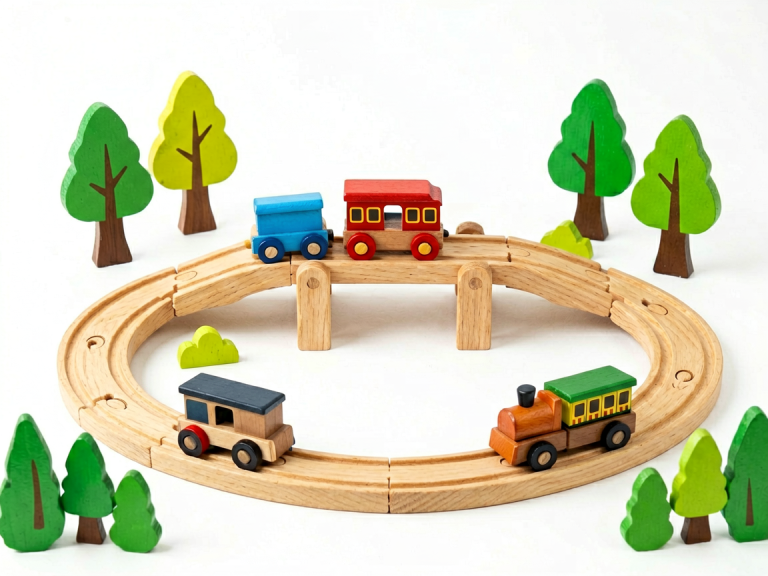
Consider a child building a complex structure with wooden blocks. She must plan, estimate balance, test hypotheses, and adjust when the tower collapses. Each failure is a lesson in problem-solving. Compare that to a digital building game where an algorithm removes the frustration—and with it, the learning opportunity. Screen-free activities naturally require patience, trial and error, and delayed gratification. These are the very skills that predict academic success and life satisfaction more reliably than early literacy or numeracy.
Furthermore, screen-free learning often engages multiple senses simultaneously. When a child kneads dough, smells cinnamon, and feels warmth from the oven, her brain encodes that experience in richer, more durable memory traces. Neuroscientists call this "embodied cognition"—the idea that thinking is not confined to the brain but involves the whole body. Screens, by contrast, primarily engage vision and hearing, leaving touch, smell, and proprioception understimulated. A child who learns about fractions by slicing an apple will internalize the concept far more deeply than one who watches an animated video on fractions.
Fostering Creativity and Imagination Through Hands-On Activities
One of the most heartbreaking casualties of the screen age is unstructured, open-ended play. Digital media, even the "educational" kind, is inherently bounded by pre-programmed possibilities. A drawing app may offer infinite colors, but it cannot replicate the tactile surprise of mixing real paint, the smell of paper, or the thrill of smudging chalk with a wet finger. Screen-free play demands that children become creators rather than consumers.
Take the simple act of building a fort from blankets and chairs. This activity involves spatial reasoning, negotiation (if siblings are involved), and imaginative storytelling. The fort is not just a shelter; it is a spaceship, a castle, a secret cave. The narrative is generated entirely by the child’s mind. No pre-written script, no pre-rendered graphics. This kind of imaginative play is a cornerstone of cognitive development. According to psychologist Lev Vygotsky, imaginative play is the "leading source of development" in preschool years because it allows children to practice abstract thinking, self-regulation, and social roles.
Similarly, outdoor screen-free learning offers a unique canvas for creativity. A pile of leaves becomes a science lesson (why do they change color?), an art project (leaf rubbings), and a physical challenge (jumping into the pile). Nature, with its infinite variability, is a far richer learning environment than any app. The Japanese practice of *shinrin-yoku*, or forest bathing, has been shown to reduce stress hormones and improve focus—benefits that no screen can replicate.
Building Social Skills and Emotional Intelligence
Perhaps the most pressing concern with screen-heavy childhoods is the erosion of face-to-face social skills. Digital communication strips away tone, body language, eye contact, and the subtle rhythms of turn-taking. Children who spend hours on devices may struggle to read facial expressions, manage conflict, or express empathy in real-time conversations. Screen-free learning environments force children to navigate these complex social landscapes directly.
Consider a group of children working together to build a marble run. They must communicate verbally, negotiate roles, handle frustration when the marble derails, and celebrate shared success. These interactions are messy, imperfect, and deeply educational. They teach emotional regulation in a way that no social-emotional learning app can. When a child accidentally knocks over another’s tower, the apology and repair are immediate, physical, and sincere—not a quick "sorry" typed in a chat box.
Screen-free learning also provides more opportunities for intergenerational connection. Cooking with a grandparent, gardening with a parent, or reading aloud to a younger sibling are activities that naturally foster bonding and emotional security. These moments build what psychologists call "secure attachment," which is the foundation of resilience and mental health. Screens, by contrast, often isolate children from the very people who love them most.
Practical Screen-Free Learning Activities for Different Ages
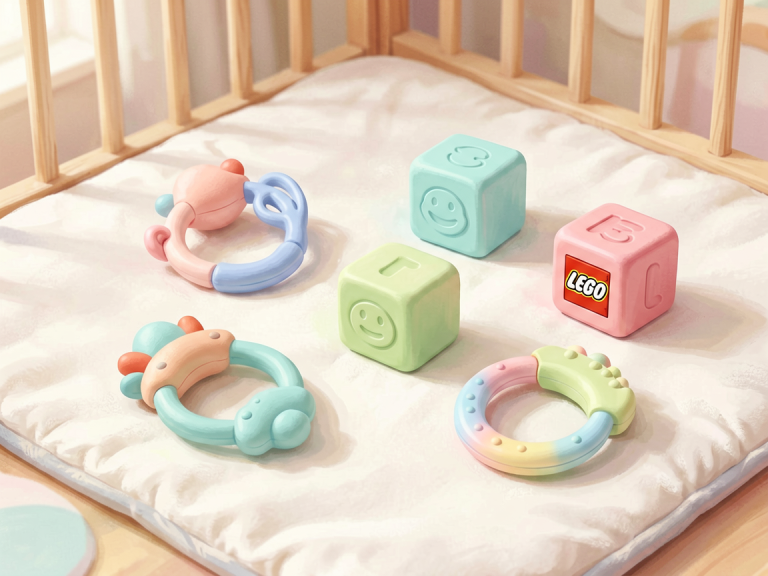
Designing a screen-free learning environment does not require expensive materials or elaborate lesson plans. The key is intentionality. For infants and toddlers (0–2 years), the most valuable "screen-free" activity is simply responsive interaction: talking, singing, making eye contact, and allowing them to explore safe objects with all their senses. High-contrast books, textured toys, and water play are far more beneficial than any baby video.
For preschoolers (3–5 years), focus on fine-motor and imaginative activities. Playdough, finger painting, dress-up, puppet shows, and simple board games that require counting or matching. Nature walks with a "treasure hunt" list (find something smooth, something rough, something yellow) encourage observation and vocabulary building.
For elementary-aged children (6–10 years), introduce more structured projects. Building a birdhouse (measurement, geometry), starting a small garden (biology, responsibility), writing and performing a play (literacy, collaboration), or learning a musical instrument (discipline, pattern recognition). Cooking is an especially rich domain: it incorporates math (fractions), science (chemistry of baking), reading (following recipes), and cultural learning (exploring cuisines).
For preteens and teens (11+ years), screen-free learning can include hands-on tech projects that *build* rather than *consume*, such as taking apart old electronics, building simple circuits, or learning woodworking. They can also engage in debate clubs, journaling, map-reading, orienteering, or volunteering. The goal is to demonstrate that learning happens everywhere, not just through a screen.
Overcoming Challenges: How to Implement Screen-Free Learning at Home and School
The biggest obstacle to screen-free learning is not lack of resources—it is habit. Many parents rely on screens as a digital pacifier because they are exhausted. The solution is not guilt, but gradual substitution. Start by designating certain times or spaces as screen-free: the dinner table, the car (for short trips), the bedroom. Replace the evening screen ritual with a family board game or a read-aloud session.
Schools, too, can adopt screen-free pedagogies. Finland, often celebrated for its education system, integrates substantial outdoor learning and manipulative-based math instruction. Teachers can use Montessori-inspired materials, nature-based curricula, and collaborative projects that require physical manipulation. Classroom libraries should be rich and inviting. Recess should be long and unstructured—not a time to hand out tablets.
Of course, screen-free does not mean resource-free. Parents and educators must be willing to model the behavior. A child whose parent is constantly scrolling will not value unplugged time. Set an example: read a paper book, cook from scratch, build something with your hands. These actions speak louder than any rule.
Conclusion: Reclaiming Childhood in a Digital Age
Screen-free learning is not about nostalgia for a pre-digital past. It is about recognizing that human brains evolved to learn through movement, touch, social interaction, and direct experience with the physical world. Screens are powerful tools, but they are impoverished teachers when used as a substitute for real life.
By intentionally carving out time for screen-free learning, we give children something invaluable: the chance to be bored, to wonder, to fail, to connect, and to create on their own terms. We allow them to develop the patience, creativity, and emotional depth that no algorithm can provide. In a world that increasingly demands instant answers and polished performances, the greatest gift we can offer our children is the messy, magnificent, unplugged process of discovery.
Let us put down the devices—not forever, but often enough that children remember what it feels like to be fully alive in the world. That is the ultimate learning, and it requires no battery at all.