Building Better Learners: The Ultimate Educational Play Checklist
Introduction
Play is the natural language of childhood. It is through play that children explore the world, test hypotheses, develop social bonds, and build cognitive resilience. Yet in an era of screen time saturation and structured extracurriculars, “play” risks being reduced to mere entertainment. To harness its transformative power, educators and parents must ask: *Is this play genuinely educational?* The answer lies in a thoughtful framework—a checklist that transforms spontaneous activity into intentional learning. An educational play checklist is not a rigid rulebook but a flexible guide that ensures every moment of play contributes to a child’s holistic development. From fine motor skills to emotional regulation, from literacy to problem-solving, the checklist helps adults design, select, and evaluate play experiences with clarity and purpose. Below, we unpack ten essential criteria, each serving as a pillar of meaningful, educational play.
—
1. Safety First: The Foundation of Play
No checklist can begin without addressing physical and emotional safety. Play must occur in an environment free from hazards: age-appropriate materials, secure furniture, and adequate supervision. But safety extends beyond the physical. Educational play should also be psychologically safe—spaces where children feel free to experiment, fail, and express themselves without fear of ridicule or punishment. Ask yourself: *Are the toys or activities free from choking hazards? Is the environment clutter-free? Do I allow mistakes without criticism?* A safe setting enables the risk-taking that fuels learning.
—
2. Age-Appropriate Design: Matching Developmental Stages
A checklist item that seems obvious yet is frequently overlooked: the activity must align with the child’s current cognitive, motor, and social abilities. A puzzle designed for a five-year-old frustrates a toddler; a simple stacking game bores an eight-year-old. Educational play respects Vygotsky’s Zone of Proximal Development—challenging just enough to stretch skills without causing overwhelming frustration. For infants, sensory bins with textured objects; for preschoolers, pretend-play costumes with props; for school-age children, board games requiring strategy. Evaluate: *Does this activity match the child’s current developmental level? Can it be easily adapted upward or downward?*
—
3. Clear Learning Objectives: Intentional Play
While self-directed exploration is valuable, educational play benefits from intentionality. Before introducing a play scenario, identify one or two learning outcomes. Is the goal to practice counting? Strengthen fine motor control? Foster cooperation with peers? For example, a simple game of “grocery store” can target mathematics (counting money), literacy (reading product labels), and social skills (turn-taking). The checklist prompts adults to ask: *What specifically do I hope the child will learn or practice?* This does not mean micromanaging—rather, it means designing the environment so that learning occurs naturally.
—
4. Active Engagement Over Passive Consumption
Educational play demands active participation. A child passively watching a video is not playing—they are consuming. True play involves doing: manipulating objects, moving bodies, making decisions, and solving problems. The checklist should include a check for interactivity. Does the activity require the child to think, respond, or create? Building a fort with blankets and pillows is active; watching a pre-recorded fort-building tutorial is not. Even digital tools can qualify if they demand choices, creativity, or physical movement (e.g., dance-along apps). Always ask: *Is the child a participant or a spectator?*
—
5. Open-Endedness: Fueling Creativity
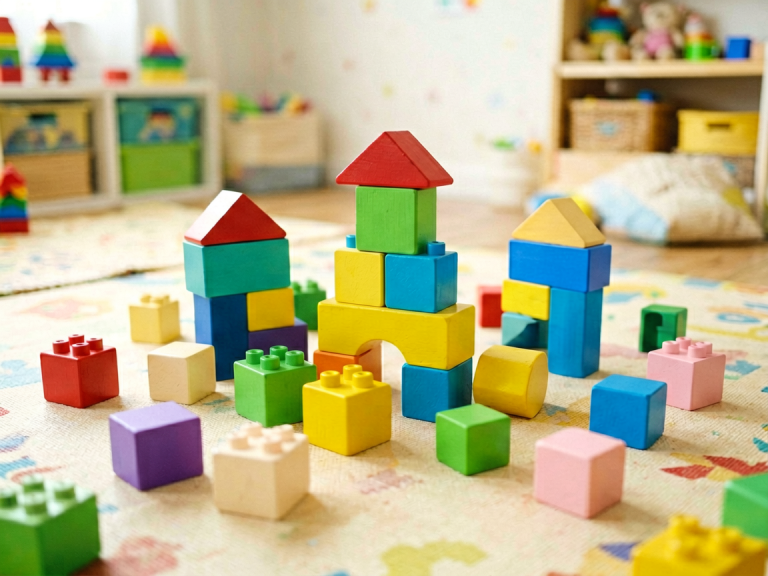
The most powerful educational play materials are those with no single “right” answer. Open-ended toys—blocks, clay, sand, loose parts—invite infinite possibilities. A checklist for educational play must include the open-endedness criterion. Does the activity allow multiple outcomes? Can the child repurpose materials in novel ways? Contrast a paint-by-numbers kit (closed-ended) with a blank canvas and watercolors (open-ended). Open-ended play nurtures divergent thinking, persistence, and executive function. It teaches children that there is often more than one solution to a problem—a lesson that transcends the playroom.
—
6. Social and Emotional Skill Building
Education is not only about facts; it is about relationships. Effective educational play naturally fosters social and emotional competencies such as sharing, negotiating, empathizing, and regulating emotions. The checklist should evaluate whether the play involves interaction with others—peers, siblings, or adults. Cooperative games (building a tower together) and dramatic play (pretending to be a doctor and patient) are prime examples. Even solitary play can teach self-regulation (e.g., focusing on a puzzle). Ask: *Does this activity provide opportunities for turn-taking, conflict resolution, or expressing feelings?*
—
7. Sensory and Motor Integration
Young children learn through their senses. A valuable educational play checklist must include criteria for multisensory stimulation. Does the activity engage touch, sight, sound, smell, and movement? Sensory play—such as playing with kinetic sand, water tables, or musical instruments—strengthens neural connections. Additionally, gross and fine motor skills are honed through climbing, drawing, cutting, and threading. A sedentary, visually-only activity (e.g., swiping a tablet screen) may have limited educational value compared to one that combines movement with cognition, like balancing on a beam while reciting the alphabet.
—
8. Real-World Relevance: Connecting Play to Life
Children learn best when they see the connection between play and their lived experiences. The checklist should ask: *Does this play reflect real-world contexts or skills?* A pretend kitchen teaches measurement and nutrition; a mock post office teaches writing addresses and sorting mail. Even fantasy play (dragons, spaceships) can be educational if it involves problem-solving or narrative development. The key is to embed authentic, meaningful tasks within the play framework, so the child unconsciously internalizes practical knowledge.
—
9. Opportunities for Reflection and Feedback
Learning is cemented when children have the chance to reflect on their play. The educational play checklist should prompt adults to facilitate “after-play” discussions. Did the block tower fall? Why? What could you do differently next time? This meta-cognitive step—often called the “debrief”—transforms play into a lesson. Even a simple question like “What was the hardest part?” encourages analysis. Feedback should be positive and specific (“You tried very hard to balance that top block!”) rather than vague praise. The goal is to help children recognize their own learning processes.
—
10. Adaptability and Child-Led Flexibility
Finally, a robust checklist acknowledges that children are not robots. The same activity may be educational one day and boring the next. Educational play must be adaptable—able to pivot based on the child’s mood, interests, and emerging curiosity. The checklist encourages adults to observe and adjust: if a child abandons a puzzle, offer a different challenge; if they ask “what if,” follow their lead. This criterion also means resisting the urge to over-structure. Sometimes the most educational play is the one that deviates from the original plan entirely. Ask: *Am I willing to let the child take the lead, even if it changes the outcome?*
—
Conclusion
The educational play checklist is not a punitive document but a lens through which to view childhood’s most important work. By evaluating play against these ten criteria—safety, developmental fit, learning objectives, active engagement, open-endedness, social-emotional growth, sensory integration, real-world relevance, reflection, and adaptability—adults become co-creators of powerful learning experiences. The checklist reminds us that play is not a break from education; it *is* education, in its most authentic, joyful form. As you prepare your child’s next play session—whether it involves cardboard boxes, board games, or backyard mud—run through the checklist. You will not only enrich the moment but also build a foundation of curiosity, resilience, and love for learning that lasts a lifetime. Let the play begin.