Building Blocks of Curiosity: The Role of Early Learning Toys in Homeschool Families
Introduction
In the quiet corner of a sunlit living room, a four‑year‑old sits on a rug, stacking wooden blocks in a pattern she invented herself. Her mother, working nearby, glances over with a smile. No bell rings, no rigid schedule demands attention—this is the rhythm of a homeschool day. For families who choose to educate their children at home, early learning toys are far more than playthings. They are the unsung textbooks, the quiet teachers that nurture motor skills, cognitive growth, and a lifelong love for learning. In an age of screens and structured curricula, thoughtfully chosen toys offer something irreplaceable: the freedom to explore at a child’s own pace, guided by curiosity rather than a clock.
Homeschooling parents often wear many hats—teacher, facilitator, cheerleader, and designer of the learning environment. The toys they select must do double duty: entertain while educating, spark questions while building foundational skills. This article explores how early learning toys can transform a homeschool space, what criteria parents should consider, and which open‑ended toys consistently deliver rich learning experiences.
Why Early Learning Toys Matter in a Homeschool Setting
In a traditional classroom, learning is often measured by worksheets, tests, and group activities. At home, learning happens organically, woven into daily life. Early learning toys bridge the gap between structured lessons and free play, allowing children to practice problem‑solving, fine‑motor coordination, and social‑emotional skills without pressure.
For example, when a toddler stacks rings on a cone, she is not merely playing—she is understanding size sequencing, hand‑eye coordination, and cause‑and‑effect. When a preschooler arranges magnetic letters on a refrigerator, he is experimenting with phonics and word formation. These moments are self‑directed, which research shows deepens retention and motivation. In a homeschool environment, where one‑on‑one attention is abundant, toys become tools for differentiation: a child struggling with counting can practice with colorful abacuses, while an advanced learner can explore pattern blocks that introduce fractions.
Furthermore, early learning toys encourage independence. Unlike a teacher‑led lesson, a well‑designed toy invites the child to initiate, fail, and try again. This resilience is a cornerstone of homeschooling philosophy, where mistakes are seen as stepping stones, not setbacks.
Key Criteria for Selecting Homeschool‑Friendly Learning Toys
Not every toy marketed as “educational” deserves a place in a homeschool room. Parents should evaluate toys based on three core principles: openness, durability, and developmental alignment.
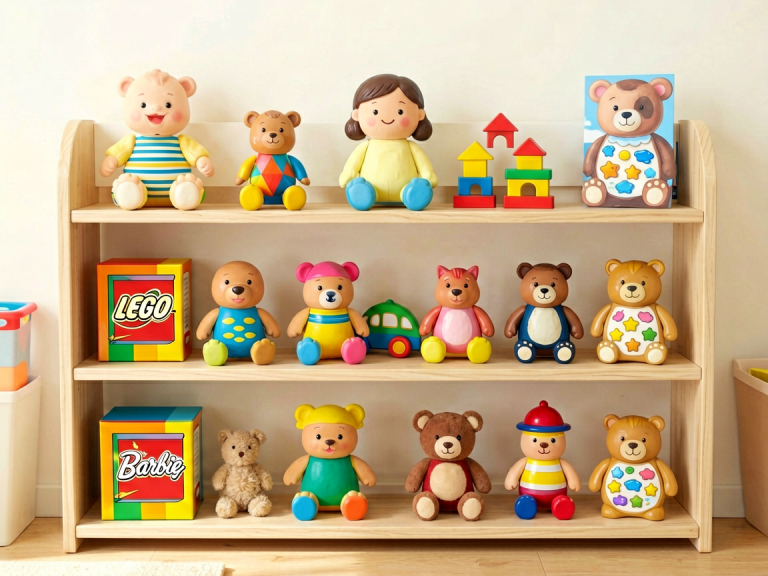
*Open‑endedness* is paramount. A toy that can be used in multiple ways—such as building bricks, play dough, or wooden blocks—grows with the child. A set of plain wooden unit blocks, for instance, might serve a two‑year‑old as a stacking challenge and a five‑year‑old as a tool for exploring balance, symmetry, and early engineering. In contrast, a single‑purpose toy (like a plastic cash register that only says “beep”) loses its appeal after the initial novelty fades.
*Durability* matters both for longevity and safety. Homeschool toys often endure daily, enthusiastic use. Solid wood, non‑toxic paints, and sturdy stitching are wise investments. Many homeschool families also value natural materials for their sensory warmth and reduced environmental footprint.
Finally, toys should align with the child’s current developmental stage, yet offer a slight stretch. A puzzle with ten pieces might frustrate a two‑year‑old but bore a four‑year‑old. Montessori‑inspired materials excel here: they are designed with precise levels of challenge, from simple knobbed cylinders to complex binomial cubes. Observing a child’s interaction with such toys gives parents valuable insights into readiness for new concepts.
Top Categories of Early Learning Toys for Homeschool Families
While every child is unique, certain categories of toys consistently deliver rich learning experiences.
*Fine‑Motor and Sensory Toys*
For infants and toddlers, grasping, squeezing, and manipulating objects builds the neural pathways needed for writing and tool use. Examples include stacking rings, shape sorters, textured balls, and sensory bins filled with rice, beans, or sand. For older preschoolers, lacing beads, sewing cards, and pegboards strengthen hand muscles. These toys also teach focus and patience—qualities that serve children well when they later tackle handwriting or math problems.
*Language and Literacy Tools*
Alphabet puzzles, magnetic letters, and picture books with tactile elements invite early literacy. Some homeschool parents create “literacy baskets” filled with letter stamps, mini whiteboards, and story dice. A child can arrange letters to spell her name, then draw a picture of herself. The key is to keep language play joyful—no drills required.
*Math and Logic Manipulatives*
Abstract concepts become concrete through hands‑on materials. Counters (like animal figurines or colored bears), number rods, base‑ten blocks, and pattern cards all allow children to “see” addition, subtraction, and geometry. For example, a four‑year‑old might sort buttons by color and size, then count them, discovering that ten small buttons take up less space than ten large ones—an early lesson in density.
*Imaginative and Role‑Play Toys*
Dress‑up clothes, play kitchens, tool sets, and dollhouses encourage narrative thinking, empathy, and social language. A child who “cooks” a pretend meal is practicing sequencing (first wash the vegetables, then chop, then cook), vocabulary (names of utensils and ingredients), and cooperation if a sibling or parent joins in. For homeschool families, role‑play can be woven into thematic studies—for instance, setting up a “post office” while learning about community helpers.
*Nature and Science Exploration Kits*
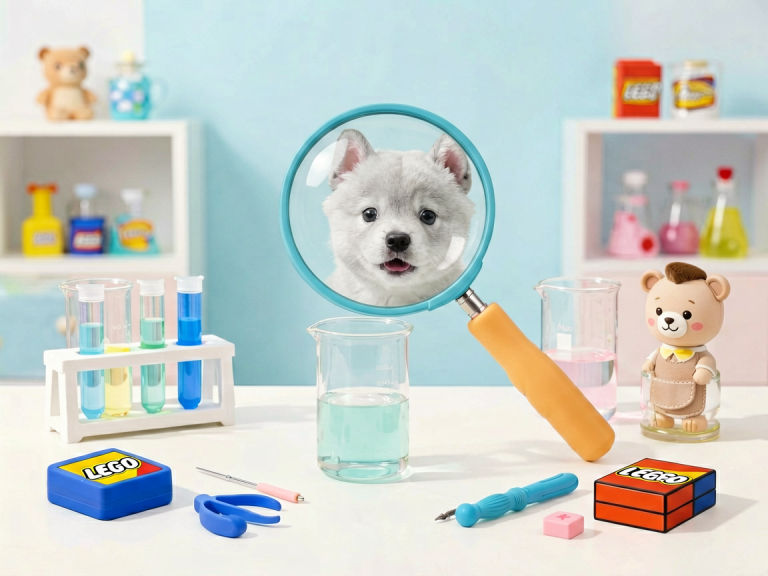
Homeschooling often embraces outdoor learning. Simple tools like magnifying glasses, bug catchers, seed‑planting kits, and rock collections turn the backyard into a science lab. A child who watches a caterpillar become a butterfly is learning about life cycles not from a textbook but from direct observation—a gift that no screen can replicate.
Integrating Toys into a Daily Homeschool Routine
The beauty of early learning toys is that they do not require a formal lesson plan. Many homeschool families use a “free‑play block” each morning, during which children choose from a rotated selection of toys. Parents can observe and subtly guide: “I wonder how many different towers you can build with these blocks?” or “Shall we count the number of red beads you strung?”
Some parents also use toys as “anchor activities” during transition times—for example, a quiet puzzle before lunch or a sensory bin while a sibling finishes a math warm‑up. The key is to resist the urge to turn every toy into a lesson. When play is directed by the child, learning becomes internalized.
Conclusion: Play as the Foundation of Lifelong Learning
In a world that often rushes children toward academic benchmarks, homeschool families have the privilege of honoring the slow, messy, joyful process of discovery. Early learning toys are not shortcuts to early reading or math scores; they are invitations to wonder. A wooden block becomes a bridge, a magnet becomes a mystery, a handful of buttons becomes a treasure hunt.
For the parent teaching at home, the right toys can reduce stress and increase joy. They free the adult from constant instruction, allowing the child’s innate curiosity to lead. In that quiet corner of the living room, the four‑year‑old stacking blocks is not just playing. She is building the confidence to ask questions, the patience to try again, and the conviction that learning is the most natural adventure of all. And that, perhaps, is the greatest gift a homeschool environment can offer.
*(Word count: approximately 1,150)*