Building Brilliance: A Guide to Using Toys for Constructive Play
Introduction
From the moment a toddler stacks two wooden blocks into a wobbly tower, to the moment a ten-year-old engineers a complex magnetic bridge that spans the length of the living room, building play is one of the most powerful and natural forms of childhood learning. At its core, building play involves using toys and materials to construct, assemble, create, and manipulate physical structures. Unlike passive entertainment, building play is an active, hands-on process that engages a child’s mind, body, and imagination simultaneously. Yet many parents and educators wonder: how can we intentionally use toys to foster this kind of play? What toys are best for different ages? And how can we guide children without taking over their creative process? This article explores practical, research-backed strategies for using toys to maximize the developmental benefits of building play, whether at home, in the classroom, or in the playroom. By understanding the principles behind constructive play and selecting the right tools, we can turn simple playtime into a foundation for lifelong skills in problem-solving, spatial reasoning, creativity, and collaboration.
Why Building Play Matters: More Than Just Fun
Before diving into the “how,” it is essential to understand the “why.” Building play is not merely a way to keep children occupied—it is a cornerstone of cognitive and physical development. When children build, they engage multiple domains of learning simultaneously. Spatial awareness develops as they figure out how blocks fit together or why a tower falls over. Fine motor skills strengthen as they grasp, stack, and align small pieces. Executive functions—such as planning, sequencing, and self-regulation—are exercised when a child decides what to build and adjusts their strategy after a collapse. Furthermore, building play naturally introduces foundational STEM concepts: balance, gravity, symmetry, geometry, and cause-and-effect. A child who repeatedly tries to make a bridge stand learns more about physics than any textbook could teach at that age. Beyond academics, building play fosters emotional resilience. The inevitable toppling of a tower teaches patience and persistence. The joy of completing a structure instills pride and confidence. When children build together, they also practice communication, negotiation, and teamwork. In short, building play is a holistic activity that nurtures the whole child. Knowing this, we can approach toy selection and play facilitation with intentionality.
Selecting the Right Toys: Open-Ended vs. Closed-Ended
Not all toys are created equal when it comes to building play. The most valuable toys for constructive play are open-ended—that is, they can be used in multiple ways, have no single “correct” outcome, and allow for limitless creativity. Classic examples include wooden unit blocks, LEGO bricks, magnetic tiles (like Magna-Tiles or Picasso Tiles), Duplo, gears, Lincoln Logs, Tinkertoys, and even recycled materials like cardboard boxes and paper tubes. These toys invite children to experiment, fail, and try again. In contrast, closed-ended toys—such as a puzzle with only one solution, a pre-molded plastic castle that clicks together in one way, or a kit that builds a specific model—can have value for following directions and fine motor precision, but they limit creativity. For true building play, prioritize open-ended resources. Also consider texture, size, and safety. For toddlers, large, lightweight blocks (foam or soft plastic) prevent injury and frustration. For preschoolers, medium-sized wooden blocks and interlocking bricks with moderate friction work well. For school-aged children, smaller LEGO pieces, advanced magnetic sets, and construction kits with gears and pulleys offer deeper engineering challenges. Do not overlook natural materials: sticks, stones, sand, and water can become powerful building tools when combined with toy figures or loose parts. The key is variety: having a mix of shapes, sizes, and connectability encourages diverse building experiences.
Age-Specific Strategies for Building Play
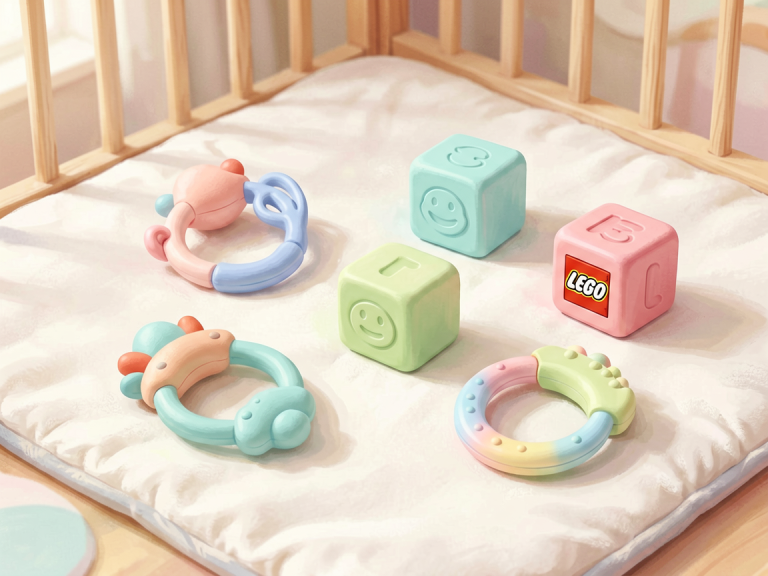
Infants and Toddlers (6 months – 2 years): At this stage, building play is about sensory exploration and cause-and-effect. Choose soft blocks, large stacking cups, and simple nesting toys. Place a few blocks in front of the child and model stacking two on top of each other, then let them knock it down—this is science! Encourage mouthing (it’s how they learn), and provide blocks with different textures, sounds, or colors. Strategy: Sit on the floor with them, narrate what they are doing (“You put the red block on the blue block—boom, it fell!”), and avoid correcting. Let them explore freely. At this age, the process matters far more than the product.
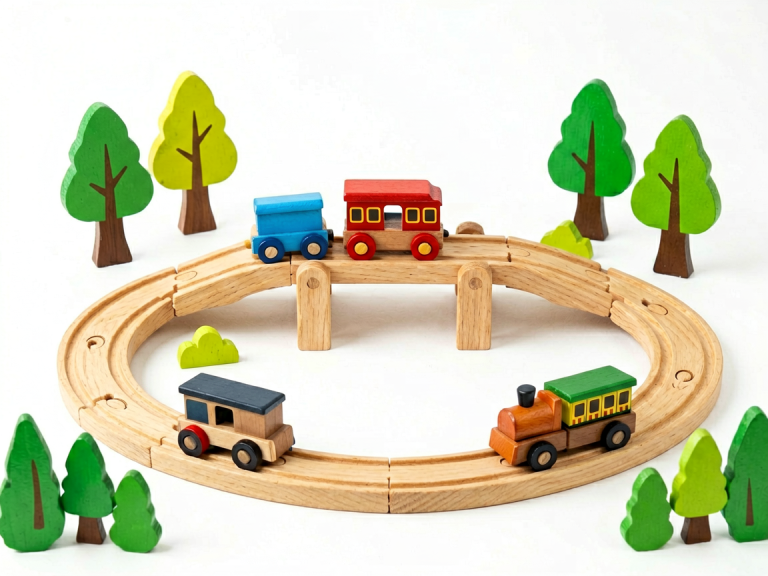
Preschoolers (2 – 5 years): This is the golden age of building play. Children begin to create intentional structures—towers, houses, bridges, and enclosures. Introduce unit blocks (the classic wooden set is ideal), Duplo, large magnetic tiles, and simple gear sets. Strategy: Provide a “provocation”—place a small toy animal next to the blocks and ask, “Can you build a house for this giraffe?” or “Let’s make a bridge for the cars.” Use open-ended questions: “What would happen if we made a wider base?” “How can we make it taller without falling?” Avoid giving step-by-step instructions; instead, let them struggle and problem-solve. Celebrate “beautiful oops” when a structure falls—discuss why it fell and how to improve. Also, introduce building together: take turns adding a block to a shared tower, which teaches cooperation and patience.
School-Aged Children (5 – 12 years): Older children can handle more complex systems. Advanced LEGO sets (with technic gears, axles, and motors), magnetic construction kits (like Geomag or Zometool), wooden architectural blocks, and marble runs are excellent. Strategy: Challenge them with specific design problems: “Build a tower that can hold a book.” “Create a vehicle with a working wheel.” “Design a bridge over this gap using only 20 pieces.” Encourage them to draw plans before building, then compare the plan to the result. Introduce constraints (time limits, material limits) to boost creativity. For group play, assign roles: architect, builder, quality inspector. Also, integrate digital building toys like apps that simulate construction (e.g., TinkerCAD) or programmable robotics kits (LEGO Mindstorms, Sphero) to blend physical and digital building.
Adolescents (12+): Teens can engage in sophisticated engineering and design. Kits that involve pneumatics, hydraulics, or coding with sensors (like VEX Robotics or Arduino-based sets) offer deep challenges. Encourage them to tackle real-world problems: can they build a model of a sustainable house? A replica of a historical landmark? Strategy: Let them lead—give them a budget, a timeline, and a goal. Offer mentorship rather than instruction. Connect building play to hobbies: a teen interested in architecture can use 3D modeling software alongside physical modeling with foam core or Lego. This builds self-directed learning and perseverance.
Facilitating Building Play at Home: The Adult’s Role
Many well-meaning adults either over-direct or under-engage. The ideal role is that of a play partner or scaffolder. Here are concrete tips:
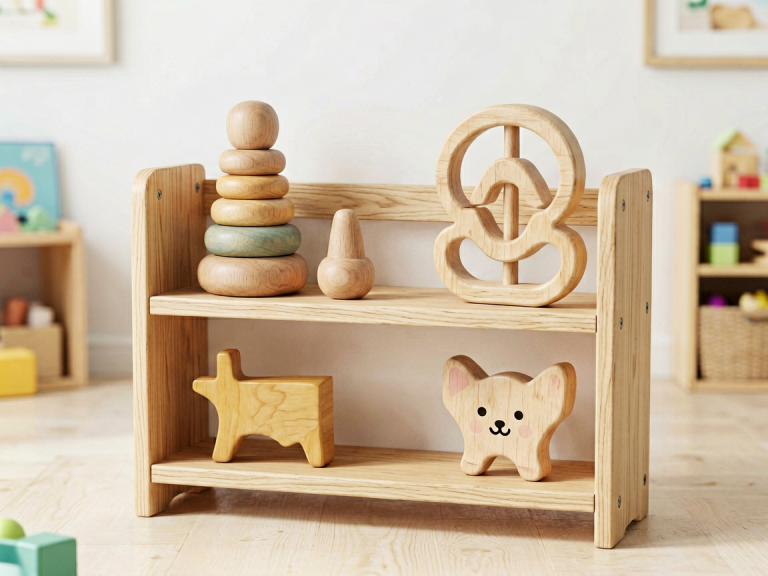
- Set up an inviting space. Designate a low shelf or bin for building toys. Rotate materials every few weeks to maintain novelty. Keep a small rug or tray to contain the blocks and define the play area. Include a “loose parts” collection—bottle caps, fabric scraps, popsicle sticks—to spark creativity.
- Ask strategic questions. Instead of “What are you building?” (which can pressure the child to name something), try “Tell me about your structure,” or “I notice you used a lot of triangles—why did you choose those?” or “What’s your next step?” These questions prompt thinking without imposing a narrative.
- Resist the urge to fix. When a tower is about to fall, let it fall. Do not rush in to stabilize it. The learning happens in the collapse. After the crash, say, “Wow, that was dramatic! What do you think happened?” This builds analytical thinking.
- Model building yourself. Occasionally sit down and build your own creation nearby. Let your child see you try, fail, and adapt. Comment aloud: “Hmm, this arch keeps collapsing. I think I need to make the base wider.” This normalizes struggle and shows that building is a process of iteration.
- Encourage documentation. Take photos or make drawings of completed structures. Create a “planner board” where children can pin their building ideas. This extends the play into literacy and planning.
- Balance solo and collaborative play. While independent building fosters concentration, cooperative building teaches negotiation. Pair siblings or friends together on a common goal (e.g., build the tallest tower possible using only these ten blocks). If arguments arise, guide them to brainstorm solutions: “What could you do so that both of your ideas are included?”
Integrating Building Play into Education: STEM and Beyond
Building play is a natural gateway to STEM education. Teachers can use toys to teach fractions (using blocks to see halves and quarters), geometry (angles in magnetic tiles), physics (levers with gears), and even storytelling (build a scene from a book). In a classroom, set up a “construction center” with a rotating theme: “Fantasy Castle” one week, “Space Station” the next. Provide challenge cards: “Create a structure that has a tunnel and a ramp.” For older students, integrate writing: describe the building process, explain how the structure works, or write a story about the inhabitants of their creation. Digital tools like the LEGO SPIKE Prime or the Makey Makey kit allow students to build circuits and program sensors, combining physical construction with coding. Furthermore, building play supports social-emotional learning (SEL) by requiring perspective-taking and conflict resolution. In early childhood classrooms, teachers can use “building stories” where children act out scenarios with small world figures in their constructions, merging building with dramatic play and literacy.
Conclusion: Building a Future Through Play
Using toys for building play is not complicated—it simply requires a shift from seeing toys as entertainment to seeing them as tools for thinking. The best builder is not the one who follows instructions perfectly, but the one who dares to try something new, fails, learns, and builds again. By choosing open-ended toys, adjusting our strategies to match children’s developmental stages, and stepping into the role of a curious and supportive play partner, we can unlock the full potential of building play. We give children the gift of confidence in their own creative problem-solving abilities—a gift that will serve them in the classroom, in their future careers, and in life. So the next time you see a pile of blocks on the floor, do not think of it as a mess. Think of it as a laboratory, a workshop, a world in the making. Sit down, pick up a brick, and build alongside them. The tower you raise together may just be the start of something extraordinary.