How to Choose STEM Toys: A Parent’s Blueprint for Raising Curious, Creative Thinkers
—
Introduction
In an age where technology shapes nearly every aspect of our lives, parents and educators are increasingly turning to STEM toys—games and kits designed to engage children in science, technology, engineering, and mathematics. The promise is compelling: a toy that not only entertains but also builds critical thinking, problem-solving skills, and a love for discovery. Yet the market is flooded with products bearing the “STEM” label, from simple building blocks to complex robotics kits. Many are genuinely valuable; others are little more than marketing gimmicks. How can a parent or caregiver cut through the noise and choose toys that truly nurture a child’s intellectual growth?
This guide offers a structured, research-based approach to selecting STEM toys. It moves beyond glossy advertisements and instead focuses on developmental appropriateness, toy design principles, and the role of adult engagement. By the end, you will have a clear framework for evaluating any STEM toy and making choices that align with your child’s unique interests, abilities, and learning style.
—
Section 1: Understanding STEM and the Purpose of STEM Toys
Before diving into selection criteria, it is important to define what “STEM” really means in the context of play. STEM is not a single subject but an interdisciplinary approach that integrates science, technology, engineering, and mathematics. A genuine STEM toy encourages children to observe, hypothesize, experiment, analyze data, and iterate on their ideas. For example, a classic wooden block set is not explicitly labeled as a STEM toy, but it inherently teaches structural engineering, balance, and spatial reasoning. Conversely, a tablet app that simply drills math facts may carry the “STEM” badge yet offers little of the exploratory, hands-on thinking that defines true STEM learning.
The purpose of a STEM toy is to provide a low-stakes environment where children can practice the habits of mind that underpin scientific and engineering success: asking questions, making predictions, testing, failing, and trying again. The best STEM toys are therefore open-ended, allowing for multiple solutions and encouraging creative problem-solving. They also connect abstract concepts to tangible, physical experiences—turning a circuit diagram into a working light bulb, or a coding command into a moving robot. When choosing a toy, always ask: *Does this toy invite my child to think like a scientist or engineer, or does it simply reward correct answers?*
—
Section 2: Age-Appropriate Considerations
STEM toys are not one-size-fits-all. A complex chemistry set that delights a ten-year-old will frustrate and possibly endanger a four-year-old. Understanding developmental stages is crucial.
Ages 3–5: Sensory Exploration and Cause-and-Effect
Young children learn best through their senses and through simple, repetitive actions. At this stage, choose toys that emphasize basic cause-and-effect, fine motor skills, and vocabulary building. Examples include large magnetic tiles, simple puzzles with geometric shapes, water tables with funnels and scoops, and oversized interlocking gears. Safety is paramount: avoid small parts that pose choking hazards, and look for non-toxic materials. The goal is not to teach formal science but to plant seeds of curiosity—asking, “What happens if I tilt this ramp?” or “Why does the red magnet stick but the blue one does not?”
Ages 6–8: Building and Simple Programming
Elementary-aged children can handle more complex tasks and begin to grasp logical sequences. This is the golden age for construction sets (LEGO Technic, magnetic building rods), introductory coding toys (like coding caterpillars or simple robot mice that follow command cards), and beginner chemistry or crystal-growing kits with adult supervision. Look for toys that require following step-by-step instructions but also allow free building. Children at this age love to tinker, but they still need guidance to connect their hands-on play to underlying concepts.
Ages 9–12: Advanced Problem-Solving and Abstraction
Pre-teens are ready for programmable robots (Sphero, LEGO Mindstorms), electronics kits (Snap Circuits, littleBits), model rockets, and more sophisticated math or logic puzzles. These toys often involve debugging code, understanding voltage and resistance, or designing and testing prototypes. They also require patience and resilience when things go wrong. When choosing for this age group, consider the toy’s depth: does it offer multiple levels of challenge, or is it a one-hour project that gets shelved forever? The best toys for older children grow with them, offering expansion packs or online communities.
—
Section 3: Key Criteria for Choosing STEM Toys
Beyond age, several design principles can help you separate high-quality STEM toys from superficial ones.
3.1 Open-Ended vs. Closed-Ended Play
A toy’s “play value” often correlates with how many ways it can be used. Open-ended toys—like a set of wooden blocks, a box of gears, or a robotics kit with no fixed project—allow children to build thousands of different structures or programs. Closed-ended toys, such as a pre-assembled volcano that erupts once (“just add baking soda”), provide immediate gratification but little long-term learning. Look for toys that feature multiple challenges, variable complexity, or the ability to combine with other kits. A good rule of thumb: if the toy comes with a single, rigid instruction manual and no room for experimentation, it is probably not a strong STEM investment.
3.2 Scaffolding and the Right Level of Challenge
The concept of “scaffolding” comes from educational psychology: a toy should be challenging enough to keep a child engaged but not so difficult that it leads to frustration and abandonment. The best STEM toys have built-in difficulty progression. For instance, a coding toy might start with simple drag-and-drop commands and later introduce loops and conditional statements. As a parent, look for products that clearly indicate age ranges and skill levels, and be prepared to step in with guidance—not answers, but questions like “What do you think would happen if we changed this gear?” or “How could we measure the height of our tower?”
3.3 Hands-On, Multi-Sensory Engagement
STEM learning is most effective when it involves physical manipulation: building, cutting, pouring, connecting. While digital apps and screen-based games can teach concepts, they often lack the tactile feedback that cements understanding. A child who builds a bridge with popsicle sticks experiences structural failure in a way that a simulation cannot replicate. Choose toys that require hands-on activity—mixing chemicals, assembling circuits, constructing machines. If a toy relies heavily on a smartphone screen, ask whether the physical component is truly integral or just an accessory.
3.4 Gender Neutrality and Inclusivity
Unfortunately, many STEM toys are marketed in gendered ways—pink “science kits” for girls and blue “engineering sets” for boys. These stereotypes can limit children’s curiosity. When selecting a toy, look for packaging and imagery that show diverse children engaged in the activity. Better yet, choose toys that are deliberately neutral or unisex, such as classic building bricks, universal robotics platforms, or nature exploration kits. The goal is to communicate that STEM is for everyone.
3.5 Technology Integration: Balanced and Purposeful
Technology is a powerful tool, but it should not replace creativity. Some STEM toys connect to apps that guide children through lessons (e.g., coding drones, smart microscopes). These can be excellent when the app enhances the physical play rather than substituting for it. However, be cautious of toys where all the “thinking” happens on the screen and the physical part is just a passive prop. A good test: can your child play with the toy meaningfully without the app? If not, the toy might be more about entertainment than genuine STEM engagement.
—
Section 4: How to Assess the “STEM Value” of a Toy
Even after applying the criteria above, you may face a specific product and wonder: *Is this truly a STEM toy, or just a gimmick?* Here is a practical checklist you can use in the store or while browsing online.
- Does it ask questions? A toy that prompts a child to predict, observe, and explain (e.g., “Why do you think the car went farther on the smooth ramp?”) has high STEM value.
- Does it encourage experimentation? Can the child change one variable at a time and see the effect? For example, a pulley system that allows different weights and friction materials invites systematic tinkering.
- Does it incorporate failure positively? The best STEM toys do not break or end the game when something goes wrong; instead, they allow the child to try again. A build-your-own robot that falls apart is frustrating, but a robot that can be reprogrammed after a failed trial is a learning opportunity.
- Does it connect to real-world phenomena? Toys that simulate actual scientific or engineering challenges—like building a bridge that must support a specific load, or coding a robot to navigate a maze—help children transfer skills to everyday life.
- Does it require sustained attention? A toy that can be played with for 20 minutes and then be put away for months is unlikely to produce deep learning. Look for toys that invite returning, improving, and repeating.
To illustrate, compare two popular products: a snap-together circuit kit with over 100 projects, each teaching a different electrical concept, and a single-use “light-up sneaker” craft kit that only produces a predetermined shoe. The circuit kit wins on nearly every dimension: open-ended (you can design your own circuits), multi-level, failure-tolerant, and connected to real-world electronics. The sneaker kit, while fun, teaches very little about how circuits work—it’s just assembly.
—
Section 5: Common Pitfalls to Avoid
Even well-intentioned parents can fall into traps when shopping for STEM toys. Being aware of these pitfalls will save you money and frustration.
Pitfall 1: Buying Based on the “STEM” Label Alone
Marketing departments love to slap “STEM” on toys that have no educational depth. A plastic dinosaur that roars and lights up may claim to teach “paleontology,” but it offers zero scientific process. Always look beyond the label to the actual play experience.
Pitfall 2: Overlooking the Child’s Interests
A state-of-the-art robotics kit will gather dust if your child is passionate about chemistry or astronomy. STEM is broad—lean into topics that already excite your child. If they love animals, a microscope or an ant farm might spark more engagement than a coding robot.
Pitfall 3: Ignoring the Need for Adult Involvement
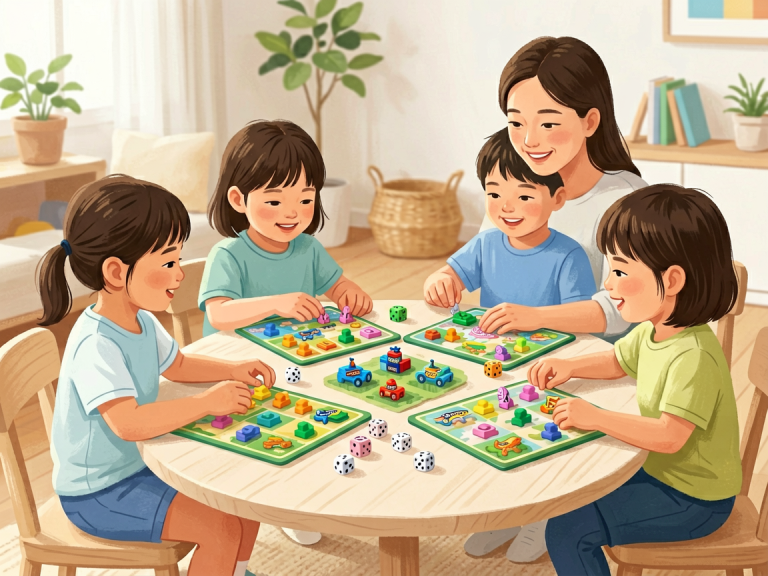
No toy, no matter how well designed, can replace the role of a caring adult. Children need someone to ask “What did you notice?” or “How could you improve that?” STEM toys are tools, not teachers. If you are not prepared to play alongside your child, even the best kit will lose its value.
Pitfall 4: Chasing the Latest Tech Gadget
The newest programmable drone with AI features may seem impressive, but often the simplest toys—like a marble run or a balance scale—teach more fundamental concepts. Complexity does not equal quality. Choose toys that match your child’s current abilities, not the trendiest product.
Pitfall 5: Buying Too Many Toys at Once
Children learn best when they have time to explore a single toy deeply. A cluttered playroom with dozens of partial kits can overwhelm and discourage focus. Instead, invest in a few high-quality, expandable systems and rotate toys to maintain novelty.
—
Section 6: Tips for Engaging with Your Child and Maximizing Learning
Once you have chosen a STEM toy, the real work—and joy—begins. Your role as a parent is not to provide answers but to model curiosity and resilience.
Ask Open-Ended Questions
Instead of saying “Look, the robot is moving,” ask “Why do you think it stops at the edge?” or “How could we make it go faster?” These questions encourage hypothesis formation and observational skills.
Embrace Mistakes
When a structure collapses or a circuit doesn’t light up, resist the urge to fix it. Instead, say, “Interesting! That didn’t work. What could we try differently?” Celebrate the process of trial and error, not just success. This builds a growth mindset.
Connect Play to Real Life
If your child builds a crane with a construction set, point out cranes on a construction site. If they mix colors with a chemistry kit, talk about how paint is made. These connections help children see that STEM is not just a school subject but part of everyday life.
Set Up a “Tinker Space”
Designate a corner of your home or classroom for STEM play—a table with storage bins for bricks, wires, motors, and tools. Keep it accessible so that children can return to their projects spontaneously. A dedicated space signals that this kind of play is valued.
Limit Screen Time During Play
If the toy requires a companion app, set boundaries: use the app for setup and troubleshooting, then encourage offline experimentation. Over-reliance on screens can undermine the hands-on nature of STEM learning.
—
Conclusion: The Bigger Picture
Choosing STEM toys is not about buying the most expensive kit or the one with the flashiest features. It is about understanding how children learn—through curiosity, repetition, failure, and connection to the real world. The best STEM toys are those that ignite a spark: a child who builds a tower that falls, then rebuilds it stronger, is already thinking like an engineer. A child who mixes baking soda and vinegar just to see what happens is already a scientist.
As you navigate the aisles of toy stores or scroll through online listings, keep this framework in mind: prioritize openness over closure, process over product, and engagement over entertainment. Invest in toys that grow with your child, and be willing to sit on the floor and wonder alongside them. The return on that investment is not measured in test scores or future careers, but in the simple, profound joy of a mind discovering that it can understand—and shape—the world. That is the true purpose of a STEM toy, and the greatest gift we can give the next generation.