Building Tomorrow’s Innovators: The Essential Role of STEM Toys for Elementary Kids
Introduction: Why STEM Toys Matter More Than Ever
In a world driven by rapid technological advancement, the foundation for future success is being laid in elementary classrooms and living rooms alike. The acronym STEM—Science, Technology, Engineering, and Mathematics—has become a cornerstone of modern education, but how do we make these abstract disciplines tangible, exciting, and accessible for children aged five to eleven? The answer lies in a powerful, playful tool: STEM toys. These are not merely playthings; they are carefully designed learning instruments that nurture curiosity, critical thinking, and problem-solving skills. For elementary kids, whose brains are at a peak stage of neural plasticity, STEM toys offer a unique bridge between abstract concepts and concrete experience. This article explores why these toys are indispensable, what varieties exist, how to select them wisely, and how parents and educators can maximize their educational impact.
Why STEM Toys Are Crucial for Elementary-Aged Children
Fostering a Growth Mindset from an Early Age
Elementary school is the golden window for shaping attitudes toward learning. Children who encounter failure in a safe, playful environment learn to see setbacks as opportunities rather than defeats. STEM toys, by their very nature, require trial and error. A bridge built with magnetic tiles might collapse, a robot may veer off course, or a chemical reaction might fizzle unexpectedly. Each “failure” becomes a mini-science lesson: *Why did it fall? What can I change?* This iterative process cultivates a growth mindset—the belief that intelligence and skills can be developed through effort. Research shows that children who engage in such open-ended problem-solving activities become more resilient and confident in tackling challenges across all subjects.
Building Foundational Skills for the 21st Century
The skills demanded by tomorrow’s workforce—analytical thinking, creativity, collaboration, and digital literacy—are not easily taught through worksheets alone. STEM toys naturally integrate these competencies. When kids build a simple circuit, they learn cause and effect. When they program a robot to navigate a maze, they practice sequencing and logic. When they collaborate on a marble run, they negotiate roles, share ideas, and learn the value of teamwork. These are not just science skills; they are life skills. Moreover, early exposure to STEM concepts reduces the anxiety that many older students feel toward math and science, laying a confident foundation for future academic pursuits.
Bridging the Gender and Diversity Gap in STEM
Historically, fields like engineering and computer science have suffered from a lack of diversity. However, when children are introduced to STEM through toys at an early age—before stereotypes take hold—they are more likely to pursue these fields later. Gender-neutral STEM toys, such as chemistry sets, coding board games, or building kits that feature diverse role models, help all children see themselves as future scientists and inventors. Elementary school is the ideal time to normalize the idea that anyone can be a programmer, an astronaut, or a biologist.
Key Categories of STEM Toys: A Guided Tour
Not all STEM toys are created equal. To help parents and educators navigate the vast market, it is useful to break down the main categories and understand what each offers.
Engineering and Building Sets: The Architects of Tomorrow
From classic wooden blocks to advanced magnetic construction sets, building toys are the bedrock of spatial reasoning and structural understanding. Products like LEGO® Technic, K’NEX, or magnetic tiles (e.g., Magna-Tiles) allow children to experiment with balance, load distribution, and geometric principles. For elementary kids, complex sets that include gears, pulleys, and motors introduce simple mechanical concepts. A child who builds a working crane or a wind-powered car is not just playing—they are internalizing physics. The tactile nature of these toys also strengthens fine motor skills and hand-eye coordination.
Coding and Robotics Kits: Where Play Meets Programming
In an increasingly digital world, understanding the language of computers is as fundamental as reading and writing. Fortunately, coding toys for elementary kids have become wonderfully accessible. Products like LEGO Boost, Sphero BOLT, or Botley the Robot require no screen-time or only simple tablet apps. Kids learn to sequence commands, use loops and conditionals, and debug their programs—all while watching a physical robot respond. For slightly older elementary students (grades 3–5), kits like Micro:bit or littleBits offer a seamless blend of coding and electronics. These toys demystify technology and empower children to become creators, not just consumers, of digital experiences.
Science Experiment Kits: The Joy of Discovery
Nothing captivates a young mind like a bubbling volcano, a growing crystal, or a homemade lava lamp. Science experiment kits—such as National Geographic’s Earth Science Kits, Thames & Kosmos chemistry sets, or Snap Circuits—transform a kitchen table into a mini laboratory. The best kits are those that include real tools (test tubes, microscopes, measuring beakers) and clear, illustrated instruction booklets that explain the “why” behind each reaction. For elementary kids, the focus should be on safety and wonder. Kits that encourage open-ended exploration beyond the provided experiments are especially valuable, because they ignite the spirit of inquiry that drives all scientific discovery.
Math and Logic Games: Sharpening the Analytical Mind
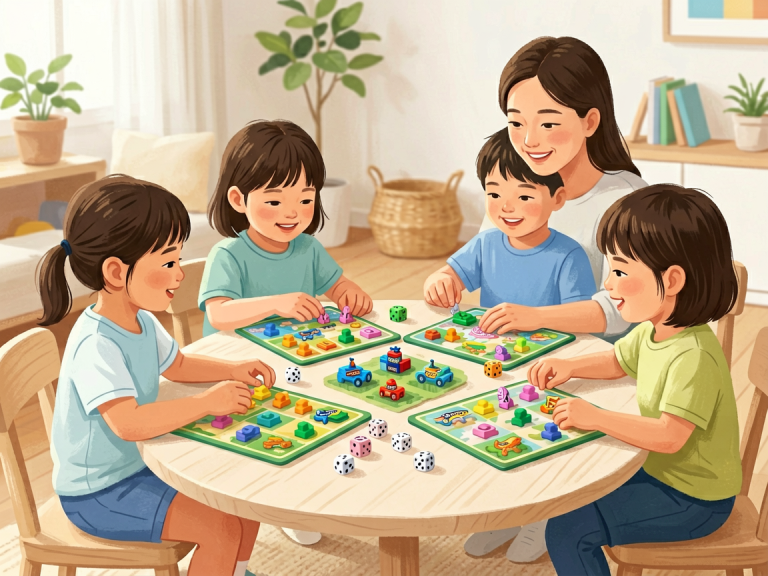
STEM is not complete without mathematics, and luckily, math can be just as playful as building or coding. Board games like Prime Climb, Sum Swamp, or Othello teach number sense, strategy, and probability. Puzzle-based toys like Rush Hour, Gravity Maze, or tangram sets challenge spatial logic and pattern recognition. Card games that involve fractions, multiplication, or mental arithmetic can turn a family game night into a stealth math lesson. These toys build fluency and confidence, ensuring that elementary students see math not as a chore but as an engaging puzzle to be solved.
How to Choose the Right STEM Toy: A Practical Guide
Align with the Child’s Age and Developmental Stage
A toy that is too advanced will frustrate; one that is too simple will bore. For kindergarteners (ages 5–6), focus on large, sensory pieces: Duplo-style building blocks, simple coding robots that use picture cards, or color-mixing science kits. For early elementary (grades 1–2), introduce gears, beginner circuit kits, and board games that require counting and simple strategy. For upper elementary (grades 3–5), advanced robotics, chemistry sets with multiple experiments, and complex coding projects (using Scratch or Python-based toys) become appropriate. Always check the manufacturer’s age recommendation, but also consider the child’s individual maturity and interests.
Emphasize Open-Ended Play Over Prescriptive Kits
While instruction manuals are helpful, the best STEM toys allow for multiple outcomes. A building set that can become a castle one day and a spaceship the next fosters creativity. A coding robot that can be programmed to dance, draw, or solve mazes encourages exploration. Look for toys that include “challenge cards” or expansion packs—they extend the play life and keep children engaged as their skills grow. Avoid toys that have only one correct solution, as they limit the iterative learning process.
Consider Screen Time and Collaborative Potential
Many STEM toys now include apps or digital components. While technology can enhance learning, it is important to balance screen-based and hands-on activities. Opt for toys that use screens minimally or as a complement rather than a requirement. Additionally, prioritize toys that can be used by multiple children or with an adult. Collaborative play not only builds social skills but also allows parents to model scientific thinking: asking questions, making predictions, and celebrating discoveries together.
The Role of Parents and Educators: Nurturing the STEM Mindset
Becoming a “Guide on the Side,” Not a “Sage on the Stage”
Adults often feel pressure to know all the answers, but with STEM toys, the most valuable role is to ask questions. When a child’s structure collapses, a parent might say, *“I wonder why that side fell first. What could you try differently?”* When a robot doesn’t move, an educator can ask, *“What step in your code might be missing?”* This Socratic approach encourages children to think metacognitively—to reflect on their own thinking processes. It also reduces the fear of being “wrong,” because the focus is on exploration, not performance.
Integrating STEM Toys into Daily Routines
STEM play doesn’t have to be scheduled as a separate “lesson.” It can be woven into everyday life. A rainy afternoon can be rescued with a snap-circuit kit. A family game night can feature a math-based board game. A weekend field trip to a park can be enhanced with a nature science kit. Even household objects—pasta and marshmallows for building, empty bottles for creating a water clock—can become impromptu STEM toys. The key is to normalize curiosity and experimentation as part of family culture.
Connecting Toy Play to Real-World STEM Careers
Children often ask, “Why do I have to learn this?” By linking toy experiences to real-world roles, adults make learning relevant. When a child builds a bridge, mention civil engineers. When they code a robot, talk about software developers. When they mix chemicals, discuss pharmacists or environmental scientists. Simple YouTube videos or age-appropriate books about inventors and scientists can reinforce the idea that the playful skills they are developing today are the very same ones used by professionals who shape our world.
Overcoming Common Challenges and Misconceptions
“STEM Toys Are Only for ‘Smart’ Kids”
This is perhaps the most dangerous myth. STEM toys are for every child. They do not require a pre-existing aptitude; they *develop* aptitude. A struggling math student might find confidence through a logic puzzle game. A child who dislikes reading might be captivated by a building manual’s diagrams. STEM toys level the playing field by offering multiple ways to engage—visual, kinesthetic, auditory. The goal is not to create little Einsteins, but to help all children see themselves as capable learners.
“My Child Only Likes Art, Not Science”
Art and STEM are not opposites; they are partners. The “A” in STEAM (adding Arts) recognizes that design, aesthetics, and creativity are essential to innovation. Many STEM toys incorporate artistic elements—coding robots that draw, building kits that allow colorful patterns, or science kits that make beautiful crystals. Encourage your child to decorate their robot, design a colorful bridge, or photograph their experiment results. This fusion of disciplines often sparks the deepest engagement.
“These Toys Are Too Expensive”
Quality STEM toys can be an investment, but they do not have to break the bank. Many excellent options exist at various price points. Furthermore, consider the “cost per use” ratio: a $50 building set that provides hundreds of hours of creative play is more economical than dozens of cheap, single-use toys. Libraries, schools, and community centers often have STEM toy lending programs. Additionally, DIY STEM projects using household items (like baking soda volcanoes, cardboard mazes, or simple circuits with a battery and LED) can be just as effective—and free.
Conclusion: Planting Seeds for a Lifetime of Discovery
STEM toys for elementary kids are far more than the latest educational trend. They are powerful catalysts that transform abstract concepts into tangible, joyful experiences. By encouraging hands-on experimentation, fostering resilience, and building a foundation of skills, these toys equip children to navigate an increasingly complex world with confidence and creativity. For parents and educators, the task is not to teach every scientific fact but to cultivate the mindset of a lifelong learner. When we give a child a set of magnetic rods and tell them to build the tallest tower, we are not just playing—we are planting seeds for future engineers, doctors, programmers, artists, and inventors. And that is the most important investment we can make. So the next time you see a child deeply absorbed in a STEM toy, watch closely. You are witnessing the future being built, one curious question, one wobbly structure, and one tiny robot at a time.