Engaging Indoor Play Activities for 3-Year-Olds: Nurturing Growth Through Creative Fun
Introduction
Three-year-olds are bundles of energy, curiosity, and rapidly developing skills. At this age, children are eager to explore their environment, imitate adults, and master new physical and cognitive abilities. While outdoor play is invaluable, there are many days—due to weather, illness, or safety concerns—when indoor spaces must become the stage for adventure. Thoughtfully designed indoor play activities not only keep a toddler entertained but also support their gross and fine motor skills, language development, social-emotional growth, and problem-solving abilities. This article provides a comprehensive guide to indoor play activities specifically tailored for 3-year-olds, with clear structure and practical ideas that parents, caregivers, and educators can implement at home or in a classroom setting.
—
The Importance of Indoor Play for Toddlers
Before diving into specific activities, it is essential to understand why indoor play matters. For a 3-year-old, play is the primary vehicle for learning. Indoor play offers a controlled environment where adults can supervise closely while still encouraging independence. It allows for activities that require delicate materials or small objects that might be unsafe outdoors. Moreover, indoor play can be structured to target specific developmental milestones: improving hand-eye coordination, expanding vocabulary, practicing social turn-taking, and building muscle strength through safe climbing or crawling. By intentionally setting up indoor play opportunities, adults can turn a rainy afternoon into a rich learning experience.
—
Sensory Play: Engaging the Senses
Sensory play is particularly important for 3-year-olds because it stimulates the brain’s neural connections. At this age, children learn best by touching, smelling, seeing, hearing, and even tasting (with safe materials). Here are several sensory activities ideal for indoors:
- Rice or pasta bins: Fill a shallow plastic bin with uncooked rice or pasta. Add scoops, small cups, spoons, and a few plastic animals or cars. The child can scoop, pour, and dig. This activity enhances tactile perception and fine motor control. Supervise closely to prevent ingestion.
- Playdough fun: Homemade or store-bought playdough is a classic. Provide cookie cutters, a plastic rolling pin, and small beads or buttons (only if the child no longer puts objects in mouth). Encourage the child to roll, pinch, and shape. This strengthens hand muscles needed for writing later.
- Water play: Place a plastic tablecloth on the floor and set up a shallow basin with a few inches of warm water. Add waterproof toys, cups, and a sponge. Practice pouring, squeezing, and floating. Water play is calming and teaches cause-and-effect.
- Scented sensory bags: Seal a few drops of food coloring and a small amount of hair gel in a zip-lock bag. Tape the bag to a window or table. The child can press and squish the gel, watching colors blend. This is mess-free and visually stimulating.
—
Gross Motor Skills: Moving the Whole Body
Three-year-olds need to run, jump, climb, and balance. Indoor spaces can be adapted for safe gross motor activities without requiring a large gym.
- Obstacle course: Use couch cushions, pillows, and a low cardboard box to create a simple course. Have the child crawl under a table, step over pillows, jump on a soft mat, and toss a beanbag into a laundry basket. This builds coordination, planning, and muscle strength.
- Animal walks: Challenge the child to walk like a bear (on hands and feet), hop like a frog (squat and jump), or slither like a snake (belly crawl). This is fun and strengthens different muscle groups.
- Dance party: Put on lively music and encourage free movement. Teach simple moves like spin, stomp, sway, and freeze. Dancing improves rhythm, balance, and gross motor control.
- Balloon keep-up: Inflate a soft balloon (not too tight) and encourage the child to tap it upward with hands or a paper plate. Avoid hard balls that could break items. This activity improves hand-eye coordination and gross motor tracking.
—
Fine Motor Skills: Small Hands, Big Achievements
Fine motor development is crucial for self-care tasks like buttoning, using utensils, and eventually writing. Indoor activities can target these skills in a playful way.
- Pom-pom transfer: Provide a pair of plastic tweezers or a spoon and a bowl of colorful pom-poms. The child transfers poms from one container to another. You can also use a muffin tin for sorting by color.
- Threading beads: Use large beads (around 1 inch wide) and a shoelace or a soft string with a knot at one end. Show the child how to thread beads. This requires focus and hand-eye coordination.
- Sticker peeling and placing: Give the child a sheet of reusable stickers (or small round labels) and let them peel and stick onto a piece of paper or a clean surface. This strengthens the pincer grip.
- Clothespin activity: Clip clothespins onto the edge of a cardboard box or a paper plate. The child can also clip them onto a clothesline (a string tied between two chairs at toddler height). Squeezing the clothespin is excellent finger exercise.
—
Imaginative and Pretend Play: Building Social and Emotional Skills
Pretend play blossoms around age three. Children mimic grown-up roles, experiment with emotions, and practice language in a safe context. Indoor play areas can be transformed into captivating worlds.
- Kitchen corner: Set up a small table with play food, plastic pots, spoons, and cups. The child can “cook” for you. Engage in conversation: “What are you making? Can I have a taste?” This builds vocabulary and social reciprocity.
- Doctor’s office: Use a stuffed animal as a patient. Provide a toy stethoscope, bandages (cotton balls with tape), and a small notebook for prescriptions. This helps children process medical visits and practice empathy.
- Post office or store: Gather empty cardboard boxes, paper bags, and a toy cash register (or a shoe box with a slot). Let the child “sell” items and “mail” letters. This encourages counting, sorting, and role-play.
- Dress-up trunk: Fill a basket with old hats, scarves, vests, sunglasses, and fabric pieces. Let the child choose a character and act out a story. This fuels creativity and narrative skills.
—
Cognitive and Problem-Solving Games: Sharpening the Mind
Three-year-olds are ready for simple puzzles, matching games, and memory challenges. These activities develop concentration, logic, and early math concepts.
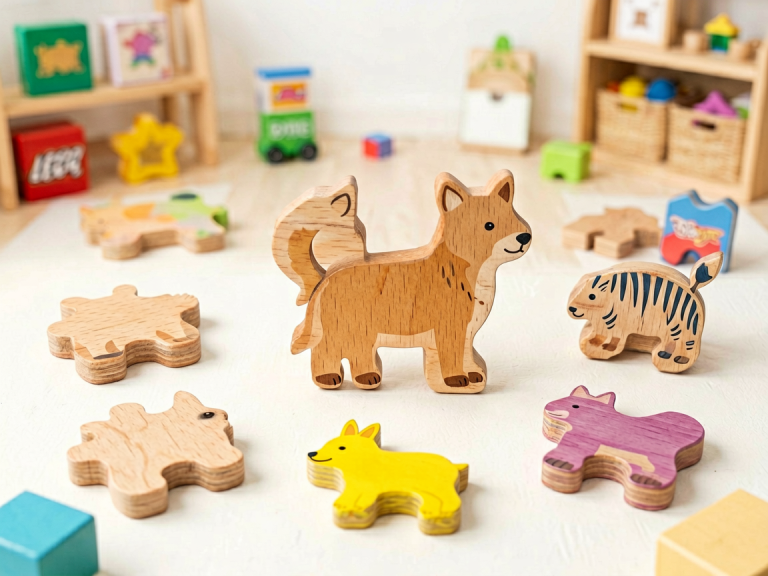
- Simple puzzles: Choose flat puzzles with 4 to 12 large pieces. Lay out the pieces and guide the child to match shapes and images. Praise effort rather than speed.
- Color and shape sorting: Use a muffin tin or a divided tray. Provide colored blocks or buttons (large enough not to be a choking hazard) and ask the child to sort by color or shape. You can also use a pair of tongs for added fine motor challenge.
- Memory game: Place two identical sets of picture cards face down. Take turns flipping two cards at a time to find a match. Start with only 4-6 pairs. This strengthens short-term memory and attention.
- Matching socks: After laundry, give the child a small pile of clean socks and ask them to find pairs. This is a real-life skill that feels like a game. It also involves visual discrimination.
—
Art and Craft Projects: Expressing Creativity
Art activities for 3-year-olds should be process-oriented rather than product-oriented. The goal is exploration, not perfection.
- Finger painting: Spread a large piece of paper on a plastic tablecloth. Give the child non-toxic finger paints in primary colors. Let them swirl, dot, and smear. Talk about colors and textures.
- Collage with safe materials: Provide a glue stick, a sheet of construction paper, and pre-cut shapes (circles, squares, triangles) plus soft tissue paper. The child can arrange and glue. Avoid small glitter or beads that can be swallowed.
- Stamp art: Use vegetable cutters or store-bought foam stamps dipped in washable ink pads. Press onto paper to create patterns. This builds hand strength and pattern recognition.
- Chalk on dark paper: Give the child dark construction paper and bright chalk (or chalk pastels). Chalk creates a satisfying texture and can be smudged for a soft effect. It is less messy than paint.
—
Music and Movement: Rhythm and Language
Music activities combine auditory stimulation with gross and fine motor skills. They also support language development through songs and rhymes.
- Instrument jam: Use simple instruments like a tambourine, maracas, a small drum, or a xylophone. Let the child experiment with loud and soft sounds. Teach a simple rhythm like “tap, tap, rest.”
- Sing-along with actions: Songs like “The Wheels on the Bus,” “If You’re Happy and You Know It,” and “Head, Shoulders, Knees, and Toes” encourage following directions and body awareness.
- Parachute play (indoor version): Use a large bed sheet. Two adults or older siblings can hold corners, and the child can run under it or place a soft ball on top and wiggle it. This is cooperative and joyful.
- Listening game: Play a recording of various sounds (animal sounds, doorbell, rain, etc.) and ask the child to identify them. This sharpens auditory discrimination.
—
Creating a Safe and Supportive Indoor Play Environment
To make the most of these activities, the physical space matters. Designate a play area that is free of sharp corners and breakable objects. Use soft rugs or mats for floor activities. Keep small items out of reach unless directly supervised. Rotate toys and materials every week to maintain novelty. Most importantly, join in the play when possible—a 3-year-old’s best playmate is often a responsive, enthusiastic adult. Narrate what the child is doing (“You are pouring the rice from the big cup into the small cup!”) to build language and reinforce their sense of accomplishment.
—
Conclusion
Indoor play activities for 3-year-olds are far more than time-fillers; they are foundational experiences that shape a child’s cognitive, physical, and emotional development. From sensory bins that awaken the senses to obstacle courses that build strength, from pretend kitchens that spark imagination to puzzle-solving that sharpens logic, the possibilities are endless. By offering a balanced mix of structured and free play, parents and caregivers can turn indoor days into rich opportunities for growth. The key is to follow the child’s interests, keep activities simple and safe, and above all, enjoy the shared joy of discovery. With creativity and a few basic supplies, any indoor space can become a world of adventure for a curious three-year-old.