Essential Toy Safety Tips for Parents: A Comprehensive Guide to Protecting Your Child
Introduction
Toys are more than just playthings; they are tools that spark creativity, encourage learning, and foster emotional growth. However, behind the bright colors and cheerful packaging, hidden dangers can turn a joyful gift into a serious hazard. Every year, thousands of children around the world are treated in emergency rooms for toy-related injuries, ranging from choking and falls to poisoning and strangulation. As a parent, you cannot rely solely on manufacturers’ labels or store displays. The responsibility of ensuring your child’s safety while they explore the world of play falls squarely on your shoulders. This article provides a structured, in-depth guide to toy safety, covering everything from choking hazards to chemical risks, and from battery safety to proper supervision. By following these tips, you can create a safer play environment that allows your child to learn, grow, and have fun without unnecessary risk.
1. Always Follow the Age Recommendations
One of the simplest yet most overlooked safety measures is adhering to the age rating printed on every toy package. Age recommendations are not arbitrary marketing suggestions; they are based on the developmental abilities, behavioral patterns, and physical size of children in specific age groups. For example, a toy designed for children aged three and up may contain small parts that a one-year-old could easily swallow. Even if you believe your child is “advanced” for their age, their airway size and fine motor skills are still developing. Ignoring age labels can lead to choking, strangulation, or injury from sharp edges. When shopping for multi-child families, be especially vigilant. A toy meant for an older sibling can become a dangerous object for a younger one who happens to pick it up. Always separate toys by age group and store them in different bins.
2. Inspect for Small Parts and Choking Hazards
Choking is the leading cause of toy-related deaths among young children. The Consumer Product Safety Commission (CPSC) classifies any object that can fit inside a standard toilet paper tube (approximately 1.25 inches in diameter) as a choking hazard for children under three. Before giving a toy to a toddler, test every detachable piece. Buttons, eyes on stuffed animals, small wheels, plastic screws, and even the squeaker inside a rubber toy can become lodged in a child’s throat. Pay careful attention to toys that have been dropped or broken—a cracked plastic shell can release tiny fragments. Also, be wary of toys that have been passed down from friends or bought at second-hand stores; wear and tear can loosen parts that were once safe. If you find a toy that has already shed small pieces, discard it immediately. Do not attempt to repair it with glue or tape, as the adhesive can fail and create a new hazard.
3. Be Aware of Toxic Materials and Chemical Hazards
Children naturally explore the world by putting objects in their mouths, which makes chemical safety a top priority. While many countries regulate lead, phthalates, and other harmful substances in toys, imported products or older toys may still contain dangerous levels of these chemicals. Lead is especially concerning because it can be found in paint, plastic, and metal components. Even low-level exposure can impair brain development and cause behavioral issues. To reduce risk, choose toys made from natural materials such as solid wood (without flaking paint) or organic cotton. Avoid cheap, shiny plastics that may contain bisphenol A (BPA) or phthalates. Look for labels such as “ASTM F963” (the U.S. safety standard for toy safety) or “CE marking” (for the European market), which indicate that the product has passed chemical testing. Additionally, beware of “slime” and “putty” kits that may contain borax; while typically safe in small amounts, ingestion can cause severe digestive upset. Always supervise children under six when they play with such modeling compounds.
4. Avoid Toys with Long Strings, Cords, and Ribbons
Strangulation is another serious risk that often goes unnoticed until it is too late. Toys with drawstrings, pull-cords, long ribbons, or loose straps can become wrapped around a young child’s neck. The CPSC recommends that any string or cord attached to a toy for a child under 18 months should be no longer than 12 inches. However, even this length can pose a risk inside a crib or playpen, where a child may become entangled during the night. Check pull-toys (such as wooden wagons on a string) and stroller or crib toys that hang overhead. Remove any strings longer than a few inches from stuffed animals or dolls. For older children, such as those using jump ropes or yo-yo-like toys, ensure the play area is clear of furniture or crib bars where the cord could catch. Also, never hang a toy around a child’s neck, even temporarily, as it may tighten accidentally.
5. Ensure Battery Compartments Are Secure
Battery-operated toys are increasingly common, but they introduce unique hazards. Button batteries—the small, flat, coin-shaped cells used in many toys, remote controls, and musical gadgets—are extremely dangerous if swallowed. When a child ingests a button battery, it can cause severe internal burns within two hours, leading to life-threatening injuries or even death. Always check that the battery compartment is secured with a screw or a lock that a child cannot open with their fingers. Do not rely on a simple sliding cover; children have incredible dexterity. Never let children play with loose batteries, and store spare batteries out of reach. Additionally, rechargeable lithium-ion batteries in higher-end toys can overheat or catch fire if damaged. Follow the manufacturer’s charging instructions strictly, and never leave a charging toy unattended overnight. If a toy becomes hot to the touch during use, remove the batteries and discontinue use.
6. Watch for Sharp Edges, Points, and Projectiles
Even a seemingly soft toy can have hidden sharp edges, especially if it is made of hard plastic or has been dropped and cracked. Before allowing your child to play with a new purchase, run your fingertips along all edges, seams, and corners. Look for rough spots that could cut skin or scratch eyes. For action figures, building sets, or toy vehicles, pay special attention to small wheels, axles, and connecting pieces. Projectile toys—such as dart guns, slingshots, or toy bows and arrows—pose an additional risk to eyesight. The CPSC has strict limitations on the kinetic energy of such toys, but cheap off-brand products may not meet these standards. If you allow your child to play with projectiles, ensure that the tips are made of soft, pliable rubber or suction cups, and that the child always wears protective eyewear. Supervise play to prevent aiming at faces, even in fun.
7. Monitor Noise Levels and Hearing Safety
Toys that produce loud sounds, such as rattles, musical instruments, toy phones, or electronic gaming devices, can damage a child’s sensitive hearing. According to the American Academy of Audiology, noise above 85 decibels can cause permanent hearing loss over time. Many toy sirens and toy guns produce sounds in the range of 90 to 120 decibels when held close to the ear. Parents are often unaware that typical “baby rattles” can exceed safe levels. Before buying any noise-making toy, test it in the store by holding it at arm’s length and listening for yourself. If it sounds uncomfortably loud to you, it is too loud for your child. You can also place a piece of clear adhesive tape over the speaker to dampen the volume without permanently altering the toy. For older children, encourage them to use headphones with built-in volume limiters (usually set at 85 dB) when playing with electronic devices.
8. Store Toys Properly to Prevent Accidents
Toy storage is not just about keeping the house tidy; it is a critical safety measure. When toys are left on the floor, they become tripping hazards for both children and adults. Use low, open bins that are easy for children to reach but do not have heavy lids that could slam down on small fingers. Avoid toy chests with hinged lids that can close suddenly and trap a child’s head or fingers; if you do use such a chest, remove the lid or install a safety hinge that supports the lid in any open position. Keep all small-piece toys in separate, labeled containers so that toddlers cannot access them. Store larger toys on sturdy shelves secured to the wall to prevent tip-overs. Additionally, rotate your child’s toy selection every few weeks. Not only does this keep play interesting, but it also allows you to inspect each toy more thoroughly for damage before returning it to circulation.
9. Supervise Playtime Actively
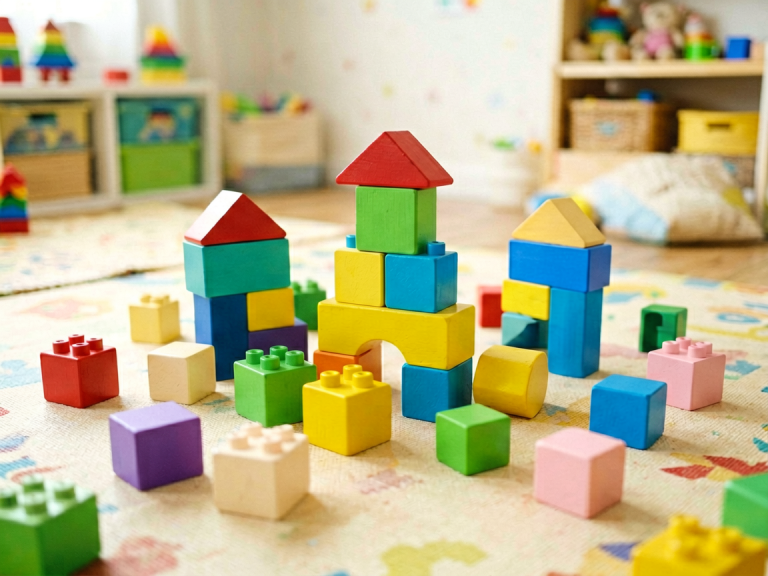
No amount of labeling or product design can replace active parental supervision. Even the safest toys can become dangerous in the wrong context. A child might stand on a rocking horse, pull a heavy block tower onto themselves, or try to chew a piece off a rubber ball. Designate a specific play area that is free from furniture with sharp corners, electrical cords, and hot surfaces. When children of different ages play together, take extra precautions: a six-year-old’s small building set may contain dozens of pieces that a two-year-old can choke on. Teach older children to keep their “big kid” toys away from younger siblings, and model that behavior yourself. For infants and toddlers, stay within arm’s reach during play, especially when they are exploring new toys for the first time.
10. Stay Informed About Recalls and Product Safety Alerts
Finally, even the most careful shopping cannot guarantee that a toy will remain safe after purchase. Manufacturers sometimes discover defects—such as a faulty battery cover, a sharp edge that emerges with wear, or a chemical that fails new testing—and issue recalls. As a parent, you should regularly check websites such as the U.S. Consumer Product Safety Commission (cpsc.gov) or the European Commission’s RAPEX portal for alerts. Sign up for email notifications to receive recall updates directly. When a recall is announced, stop using the toy immediately and follow the manufacturer’s instructions for returning or disposing of it. Keep your purchase receipts and toy packaging for at least a year, as they often contain model numbers and lot codes needed for recall verification. Join online parenting forums or follow child safety advocates on social media to stay abreast of emerging hazards.
Conclusion
Toy safety is a dynamic responsibility that evolves as your child grows. A toy that is perfectly safe for a five-year-old may be deadly for a one-year-old; a well-made plush bear can become dangerous once its seams begin to fray. By integrating the above ten tips into your daily routine—from reading age labels and checking for small parts to monitoring noise levels and staying updated on recalls—you create a robust safety net around your child’s playtime. Remember that the goal is not to eliminate all risks, because controlled risk-taking is essential for development. Rather, the goal is to eliminate preventable, life-altering hazards so that your child can explore, imagine, and discover the world with confidence. After all, the best toy in the world is one that a child can play with safely and happily, and that peace of mind is the greatest gift a parent can give.