Unlocking Young Minds: The Best Toys for Problem Solving for 4-Year-Olds
Introduction
At the age of four, children are in a remarkable phase of cognitive growth. Their curiosity is boundless, their language is blossoming, and they are beginning to understand cause and effect, sequencing, and basic logic. Problem-solving is not just an academic skill—it is a life skill that helps children navigate social situations, handle frustration, and think creatively. The right toys can transform playtime into a rich learning experience, encouraging children to experiment, fail safely, and try again. But with countless options on store shelves, how do parents choose the best toys for problem solving for 4-year-olds? This article explores the most effective toy categories and specific examples that nurture critical thinking, persistence, and flexibility in young minds.
The Role of Play in Cognitive Development
Play is the natural language of childhood. According to developmental psychologists, play allows children to practice executive functions such as working memory, inhibitory control, and cognitive flexibility. When a four-year-old tries to fit a puzzle piece into the wrong spot, realizes it doesn’t work, and tries another angle, they are engaging in the core problem-solving cycle: identify, plan, execute, evaluate, and adjust. Toys that are open-ended, slightly challenging, and require active engagement are particularly powerful. They encourage children to set their own goals, test hypotheses, and develop resilience. Unlike passive entertainment like videos or electronic games with predetermined outcomes, problem-solving toys demand active mental effort and reward creativity.
Criteria for Selecting Problem-Solving Toys
Before diving into specific recommendations, it is important to understand what makes a toy truly effective for developing problem-solving skills in a four-year-old. First, the toy should be age-appropriate—not too simple that it bores the child, nor so complex that it causes chronic frustration. The “zone of proximal development” is key: the toy should stretch the child just beyond their current ability with a little support. Second, open-endedness is crucial. Toys that have multiple solutions or can be used in different ways encourage divergent thinking. Third, tactile and hands-on materials engage multiple senses, which strengthens neural connections. Fourth, opportunities for trial and error are essential. Toys that give immediate feedback (like a block that falls when unbalanced) teach cause and effect naturally. Finally, the toy should be safe, durable, and non-toxic, as four-year-olds still explore with their mouths and are rough on materials.
Top Toy Categories and Examples
1. Building and Construction Toys
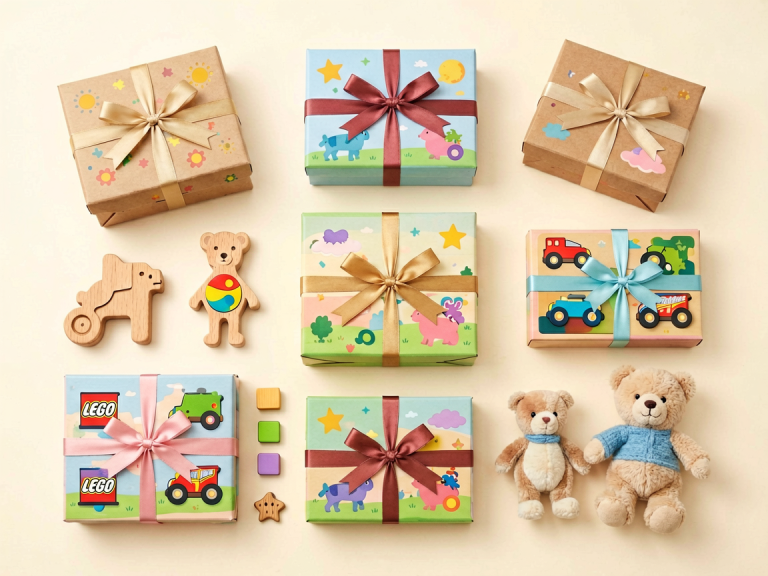
Building toys are arguably the ultimate problem-solving tools for young children. They require planning, spatial reasoning, and fine motor control. LEGO Duplo sets are perfect for four-year-olds because the large bricks are easy to grasp and safe. Unlike smaller LEGO, Duplo allows children to construct simple houses, towers, or vehicles. The challenge lies in making a structure stable—if the base is too narrow, it falls. Children learn to adjust by adding supports or redistributing weight. Another excellent option is wooden unit blocks. These simple, unpainted blocks come in various shapes (rectangles, cylinders, triangles) and encourage children to build bridges, ramps, and enclosures. Because there are no instructions, children must invent their own goals: “I want to build a castle for my toy horse.” They then experiment with balance, symmetry, and gravity. Magnetic tiles (like Magna-Tiles or Magformers) are also a hit. The magnets click together easily, allowing children to create 3D structures like cubes, pyramids, or houses. The translucent tiles also allow light to pass through, adding an aesthetic reward. When a child tries to create a closed box, they must figure out how to attach the fifth side—a classic spatial problem.
2. Puzzles and Pattern Games
Puzzles directly target logical thinking and pattern recognition. For a four-year-old, a 12- to 24-piece jigsaw puzzle with large, sturdy pieces is ideal. The child must match shapes, colors, and edges, and understand that each piece belongs in a specific spot. They learn to use strategies like sorting edge pieces first or looking for distinctive colors. Floor puzzles (often 30–48 pieces) are even better because they spread out on the ground, allowing the child to walk around and see the big picture. Beyond jigsaws, tangrams are a wonderful open-ended puzzle. A set of seven geometric shapes can be rearranged to form countless pictures: animals, houses, people. The child must think about how to rotate and flip the pieces to match a silhouette—a powerful exercise in mental rotation and spatial visualization. Pattern blocks (colorful plastic shapes in standard geometric forms) also encourage problem solving. The child is given a pattern card (e.g., a flower design) and must figure out which blocks fill the spaces. This involves matching shapes and sometimes realizing that a block can be turned differently to fit.
3. Logic and Strategy Games
Simple board games and card games teach turn-taking, planning, and adaptive thinking. Cooperative games (where everyone works together against a common challenge) are especially good for four-year-olds because they remove the pressure of competition. For example, *Hoot Owl Hoot!* requires players to move owls along a path by playing color cards. The group must decide the best order of moves to get all owls home before the sun rises. This encourages discussion, prediction, and flexible thinking. Memory matching games are classic problem-solving tools. A set of 20–30 pairs of cards (with pictures of animals, shapes, or numbers) are placed face down. Children must remember where each card is and make matches. This strengthens working memory and strategic planning—they learn to mentally map the board and prioritize which cards to flip. Another excellent option is *Robot Turtles*, a coding board game designed for preschoolers. Kids program a turtle robot by laying down sequence cards (forward, left, right). They must plan a series of moves to reach a jewel. If the turtle hits a wall, they debug by rearranging cards. This teaches algorithmic thinking and cause-and-effect in a fun, screen-free way.
4. Imaginative and Role-Playing Sets
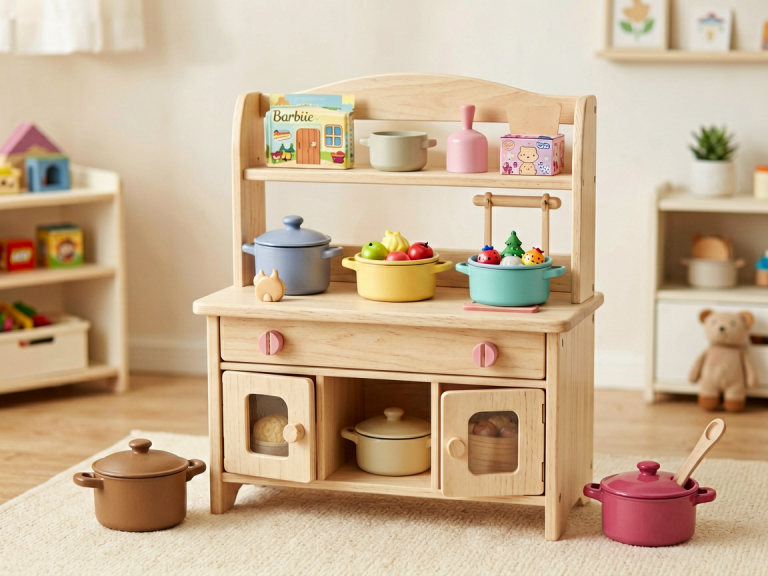
While often overlooked in the “problem-solving” category, imaginative play sets are powerful tools for social and functional problem solving. A play kitchen with pots, pans, and pretend food encourages children to solve “problems” like: “I need to make soup for my teddy bear—what do I put in the pot?” or “The order is too big to carry—how can I serve it all?” Similarly, tool sets with plastic hammers, screwdrivers, and nuts and bolts challenge children to figure out how to assemble a simple wooden “car” or tighten a bolt. These toys require sequencing, fine motor precision, and creative thinking. Dress-up costumes and puppets also foster problem solving through storytelling. A child might pretend a dragon is blocking the castle door; they then have to devise a solution: for example, making a “magic potion” from blocks or building a ladder from pillows. This kind of symbolic play builds narrative thinking and flexible problem-solving strategies that transfer to real-life situations.
5. Open-Ended Creative Toys
Sometimes the best problem-solving toy is the simplest. Play dough (homemade or store-bought) with tools like plastic knives, rolling pins, and cookie cutters invites children to solve engineering problems: “How do I make a ball stay on top of a snake?” or “How can I create a flat circle without cracks?” They learn about texture, pressure, and form. Art supplies—crayons, markers, scissors, glue, and recycled materials (paper tubes, cardboard boxes)—are also excellent. Give a four-year-old a cardboard box and ask them to make a car. They must figure out how to cut holes for windows, attach wheels, and create a steering wheel. This is real-world problem solving: planning, measuring, and adapting. Water play with cups, funnels, and tubes also presents endless problems: “How do I make the water go from one cup to another without spilling?” or “Which funnel pours fastest?” These activities teach physics concepts like gravity, flow, and volume in a playful context.
How Each Toy Promotes Problem Solving
Let’s dive deeper into the specific cognitive skills each type of toy cultivates. Building toys primarily enhance spatial reasoning and causal reasoning. When a child builds a tower and it falls, they realize the base must be wider. They learn to analyze failure and modify their approach. Puzzles strengthen visual discrimination and sequencing. A child solving a 24-piece jigsaw must break a large problem into smaller parts (edges first, then specific sections). This is exactly the strategy used in complex real-world problems. Logic games like *Robot Turtles* teach algorithmic thinking—the ability to break a task into step-by-step instructions. Memory games improve working memory, which is the foundation for holding multiple pieces of information in mind while solving a problem. Imaginative play promotes flexible thinking and social problem solving. When two children argue over who gets the red plate in the play kitchen, they must negotiate or invent a compromise—a critical social skill. Open-ended creative toys foster divergent thinking—the ability to generate multiple solutions. A lump of play dough can become a pancake, a snake, or a mountain; there is no one right answer.
Practical Tips for Parents
To maximize the problem-solving benefits of these toys, parents can take a few intentional steps. First, resist the urge to solve the problem for the child. If a puzzle piece doesn’t fit, ask guiding questions: “What do you notice about that piece? Is it the same shape as the hole?” Let the child struggle for a few minutes—the struggle is where learning happens. Second, rotate toys to keep novelty and challenge. Having too many toys out at once can overwhelm. Set out just a few building sets and puzzles, then swap them after a week. Third, engage in parallel play. Sit alongside your child and build your own creation, narrating your thinking: “I’m going to try putting this block here, but it’s wobbly. Maybe I need a bigger base.” Modeling problem-solving language is powerful. Fourth, celebrate effort, not just success. Praise the process: “I saw you try three different ways to make that piece fit—that’s great persistence!” This builds a growth mindset. Finally, avoid electronic substitutes for these hands-on toys. Many apps claim to teach problem solving, but research shows that screen-based play does not engage the same neural pathways as tactile, three-dimensional manipulation. Real blocks, real puzzles, and real face-to-face play are irreplaceable.
Conclusion
The best toys for problem solving for 4-year-olds are not necessarily the most expensive or flashy ones. They are the ones that invite curiosity, allow for trial and error, and let the child take the lead. Building sets, puzzles, logic games, imaginative play materials, and open-ended creative supplies all offer rich opportunities for developing critical thinking, persistence, and creativity. By carefully selecting these toys and supporting children’s play with thoughtful guidance, parents can lay a strong foundation for lifelong problem-solving skills. Remember: a child who learns to solve problems through play will approach the world with confidence, resilience, and joy. So clear the clutter, set out some blocks, and watch your four-year-old become a tiny engineer, artist, and strategist all at once.