From Blocks to Algorithms: The Art of Toy Progression in Cultivating Problem-Solving Skills
Introduction
The journey of human cognition begins long before formal education. Long before a child learns to read or write, they are already absorbing the world through play. Toys, often dismissed as mere entertainment, are in fact the first tools of intellectual development. Among the most profound skills that can be nurtured through play is problem solving—the ability to identify challenges, break them down, test hypotheses, and iterate toward a solution. Yet not all toys are created equal. The concept of "toy progression" refers to a carefully curated sequence of playthings that, over time, increase in complexity, abstraction, and cognitive demand. This intentional scaffolding mirrors the developmental stages of a child’s brain, gradually building the neural pathways required for advanced reasoning. By understanding how different categories of toys contribute to problem-solving abilities, parents, educators, and toy designers can create environments that transform play into a powerful engine of intellectual growth. This article explores the layered architecture of toy progression, from the simplest manipulative objects to the most sophisticated programmable kits, and explains why each stage is essential for developing a resilient, creative, and systematic problem solver.
1. The Foundations: Sensory and Manipulative Toys (Ages 0–3)
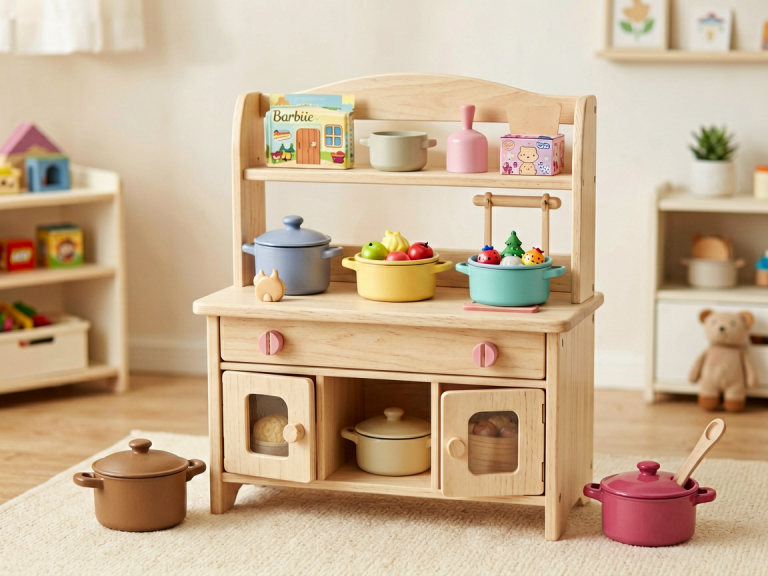
The earliest toys are not about solving problems in the conventional sense; they are about building the sensorimotor scaffolding upon which all later reasoning rests. Infants and toddlers engage with toys that emphasize texture, shape, weight, and cause-and-effect relationships. A simple rattle, for example, introduces the concept of sound produced by motion. A set of stacking cups teaches the relationship between size and order. These toys are the first problem-solving challenges: a baby who tries to fit a square peg into a round hole is engaging in trial-and-error experimentation, the most primitive form of hypothesis testing.
During this stage, toys such as shape sorters, nesting blocks, and textured balls encourage the development of fine motor skills, hand-eye coordination, and object permanence. The problem here is immediate and physical: "How do I make this block go into that hole?" The solution requires persistence, visual discrimination, and motor precision. Crucially, there is no verbal instruction needed; the child learns through direct manipulation. This concrete, embodied cognition forms the basis for later abstract thinking. When a toddler repeatedly fails and then succeeds in placing a triangular block into a triangular slot, they are internalizing the logic of matching attributes—a skill that will later transfer to pattern recognition in mathematics and coding.
The key principle at this foundational stage is that the toy provides immediate, unambiguous feedback. The block either fits or it does not. The tower either stands or falls. This clarity allows the child to self-correct without external guidance, fostering independence and intrinsic motivation. As the child masters each simple task, the toy progression must introduce slight variations—a shape sorter with more shapes, or blocks of different sizes—to challenge the new skill without overwhelming it. This delicate balance between success and struggle is the hallmark of effective problem-solving progression.
2. The Transition: Construction and Logic Toys (Ages 3–6)
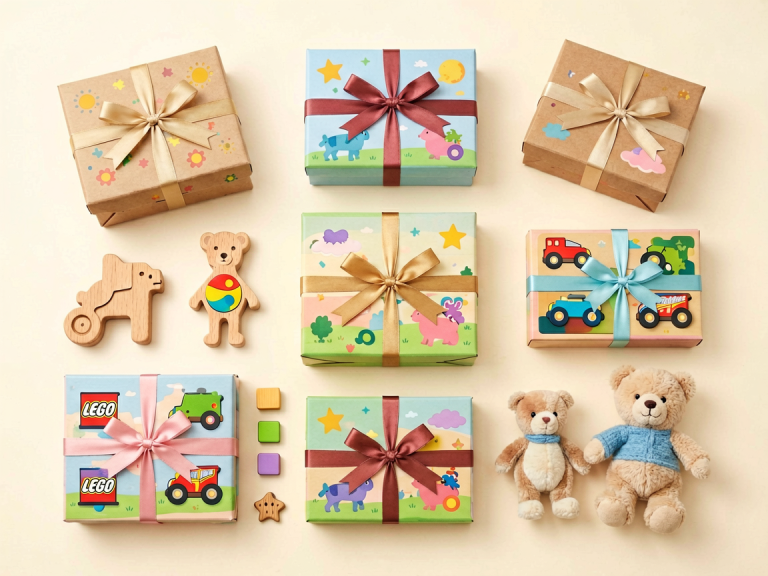
As children enter the preschool years, their cognitive abilities expand rapidly. They begin to understand symbols, sequences, and simple rules. This is the ideal time to introduce construction toys such as interlocking bricks (LEGO Duplo, Mega Bloks), magnetic tiles, and simple puzzles. These toys demand more than physical manipulation; they require planning, spatial reasoning, and the ability to follow a mental model.
Consider a set of magnetic tiles. A child tasked with building a house must first imagine a three-dimensional structure, then select the appropriate pieces, and assemble them in a stable sequence. If the walls collapse, the child must diagnose the failure—was the base too narrow? Were the magnets aligned incorrectly? This iterative process of design, test, and refine is the essence of engineering problem solving. Similarly, jigsaw puzzles of increasing piece count teach the child to sort by color and shape, to identify edge pieces, and to visualize the whole from its parts. These are all problem-solving strategies that apply to any complex task.
At this stage, toys also begin to incorporate basic logic and sequencing. Simple board games like "Candy Land" or "Chutes and Ladders" introduce turn-taking, rule-following, and the concept of chance versus strategy. More structured activities, such as threading beads in a pattern or completing a simple maze, require the child to hold a sequence in working memory and execute it step by step. This is the precursor to algorithmic thinking.
The progression here is twofold: first, the number of steps involved increases; second, the child must rely less on trial-and-error and more on deliberate planning. A child who spends ten minutes attempting to fit a puzzle piece incorrectly learns that brute force is inefficient—and that stepping back to look at the picture on the box provides a better strategy. This shift from impulse to reflection is a critical milestone in problem-solving development.
3. The Next Level: Strategy and Puzzle Games (Ages 6–9)
By early elementary school, children have developed a basic understanding of rules, cause and effect, and sequential logic. Now they are ready for toys that demand sustained attention, multiple-step reasoning, and the ability to consider alternative solutions. This category includes strategy board games (checkers, chess, Settlers of Catan Junior), logic puzzles (Rush Hour, Sudoku for kids), and two-player games that require predicting an opponent’s moves.
Take the classic game of chess. Although it is often considered too advanced for young children, simplified versions (like using only pawns and kings) can be introduced as early as age six. The problem to solve is not just "how do I move my piece?" but "what will my opponent do next?" This introduces the concept of counterfactual thinking—imagining possible futures and selecting the best one. The child learns to evaluate multiple branches of possibilities, weigh trade-offs, and delay gratification (sacrificing a piece now for a positional advantage later).
Puzzle games like "Rush Hour" present a grid-based traffic jam; the player must slide cars and trucks in specific sequences to free a target vehicle. This is a pure logic puzzle that requires the solver to step backward from the goal, a technique known as backward chaining. Children who master such puzzles develop the ability to break a problem into sub-goals, recognize patterns, and avoid unnecessary moves.
The social dimension of strategy games also teaches emotion regulation. Losing a game of checkers can be frustrating, but it provides a safe environment to experience failure and learn from it. The child who asks, "Why did I lose?" and identifies a mistake (e.g., "I didn't protect my king") is engaging in metacognition—thinking about their own thinking. This is one of the highest-order problem-solving skills. At this stage, the toy progression should also include games with variable difficulty levels, allowing the child to choose a challenge that is just difficult enough to be engaging but not so hard as to cause despair. This "zone of proximal development" is where growth happens most efficiently.
4. The Digital Frontier: Coding and Robotic Toys (Ages 9–12)
The advent of affordable programmable toys has revolutionized problem-solving education. At this stage, children are ready to handle abstract symbols, conditional logic, and systems thinking. Toys such as Lego Mindstorms, Sphero robots, and coding apps (Scratch, Code.org) transform problem solving from a physical or board-based activity into a digital one where the child must give explicit instructions to a machine.
Consider a simple task: program a Sphero robot to navigate a maze. The child must decompose the problem: "First go straight, then turn right, then go straight again." But the robot may overshoot due to momentum, or the turn may be too wide. The child must then debug: "Why did the robot hit the wall? Maybe I need to set a shorter duration for the forward movement, or add a delay before the turn." This is debugging in the truest sense—a skill that is directly transferable to programming, mathematics, and even everyday planning.
More advanced kits, like Lego Mindstorms, allow children to build robots with sensors (touch, color, distance) and program them to respond to environmental inputs. For example, a robot that follows a black line. The child must write a loop that checks the color sensor and adjusts the motors accordingly. This introduces concepts of feedback loops, conditional statements, and real-time decision making. The problem is no longer static; it is dynamic and requires adaptive thinking.
What makes these toys especially powerful is that they bridge the physical and digital worlds. A child can see a physical robot move based on their code, which makes abstract logic tangible. This embodiment of computational thinking is far more effective than learning programming syntax alone. Moreover, the open-ended nature of robotic toys encourages creativity: the same set of parts can be used to build a robotic arm, a self-balancing vehicle, or a musical instrument. Each new project presents a novel problem that demands a unique solution, reinforcing the iterative design process.
5. The Ultimate Stage: Open-Ended Maker Kits (Ages 12+)
For adolescents and beyond, the highest level of toy progression involves kits that provide raw materials and tools rather than instructions. These "maker" kits—such as Arduino microcontrollers, Raspberry Pi computers, soldering kits, 3D printing pens, and mechanical construction sets (like Fischertechnik or metal Erector sets)—require the user to define the problem themselves, then design, prototype, test, and iterate entirely on their own.
This is the stage where problem solving becomes truly autonomous. Unlike earlier toys that had a predefined goal (e.g., solve the puzzle, beat the game), maker kits present a blank canvas. A teenager might decide to build a weather station that logs temperature and humidity to an online dashboard. To achieve this, they must learn electronics (sensors, wiring), programming (reading sensor data, sending it via Wi-Fi), and possibly design a 3D-printed enclosure. They will encounter numerous sub-problems: the sensor readings are noisy, the Wi-Fi module disconnects, the code crashes. Each failure is an opportunity to learn.
Crucially, these kits force the problem solver to seek resources independently—reading datasheets, watching tutorials, asking on forums. This develops research skills and the ability to learn from failure without a safety net. The open-ended nature also nurtures intrinsic motivation: the project is personally meaningful, so the effort feels worthwhile.
One particularly valuable aspect is cross-disciplinary integration. A maker project might combine physics (mechanics), computer science (code), design (aesthetics), and even math (calculations for gear ratios). This holistic approach mirrors real-world problem solving, where challenges rarely fall into neat academic categories. The toy progression thus culminates in a toolset that prepares a young person not just for a specific career, but for a life of curious, capable, and confident problem solving.
Conclusion
Toy progression for problem solving is not merely a nice-to-have educational luxury; it is a deliberate, developmental strategy that maps onto the natural growth of human cognition. From the sensory exploration of infancy to the autonomous invention of adolescence, each stage builds upon the previous one, layering complexity without overwhelming the learner. The best toys are those that provide just enough structure to guide exploration, yet enough freedom to allow failure and creativity. They transform mistakes into lessons, and curiosity into competence.
As we look to the future—a world that demands ever more sophisticated problem solving in the face of climate change, technological disruption, and social complexity—the humble toy becomes a profound instrument of human potential. By understanding and implementing a thoughtful toy progression, we can equip the next generation not just with answers, but with the mindset to ask better questions, test braver hypotheses, and persist through setbacks. In the end, the most valuable problem a child will ever solve is the problem of how to think for themselves. And the right toy, at the right time, can be the key that unlocks that lifelong ability.