From Play to Proficiency: The Transformative Role of Learning Toys in Childhood Development
Introduction
In an era dominated by screens and digital distractions, the humble learning toy has never been more important. Parents, educators, and child development specialists have long recognized that play is not merely a pastime—it is the primary vehicle through which children explore the world, acquire new skills, and build the cognitive and emotional foundations for lifelong learning. Learning toys, designed specifically to stimulate curiosity, problem-solving, and creativity, serve as powerful tools that transform unstructured play into meaningful educational experiences. From a toddler stacking colorful blocks to a school-age child assembling a robotics kit, the right learning toys can ignite a passion for discovery that extends far beyond the playroom. This article delves into the multifaceted role of learning toys, exploring their educational benefits, categorizing the most effective types, offering guidance on selection, and emphasizing the crucial partnership between parents, educators, and the toys themselves. Understanding these elements is essential for anyone invested in nurturing a child’s intellectual, social, and emotional growth.
The Educational Value of Learning Toys
Learning toys are far more than shiny distractions. They are carefully engineered instruments that engage a child’s natural inclination to explore, manipulate, and experiment. At their core, these toys are designed to bridge the gap between play and learning, making the acquisition of skills an organic and enjoyable process. The educational value of learning toys manifests across multiple developmental domains.
Cognitive Development is perhaps the most obvious benefit. Puzzles, memory games, and logic-based toys challenge children to think critically, recognize patterns, and develop spatial awareness. For example, a simple jigsaw puzzle requires a child to analyze shapes, colors, and relationships between pieces, thereby enhancing visual perception and problem-solving abilities. More advanced toys, such as coding robots or math manipulatives, introduce abstract concepts in a concrete, hands-on manner. Research in developmental psychology consistently shows that children who engage with such toys demonstrate improved executive functions, including working memory, cognitive flexibility, and inhibitory control.
Language and Communication Skills are also nurtured through learning toys. Alphabet blocks, story cubes, and interactive talking toys encourage vocabulary expansion, phonetic awareness, and narrative construction. When a child plays with a set of animal figurines and creates a story around them, they are practicing sequencing, descriptive language, and social communication. For bilingual or multilingual families, language-specific learning toys can reinforce vocabulary in a second language without the pressure of formal instruction.
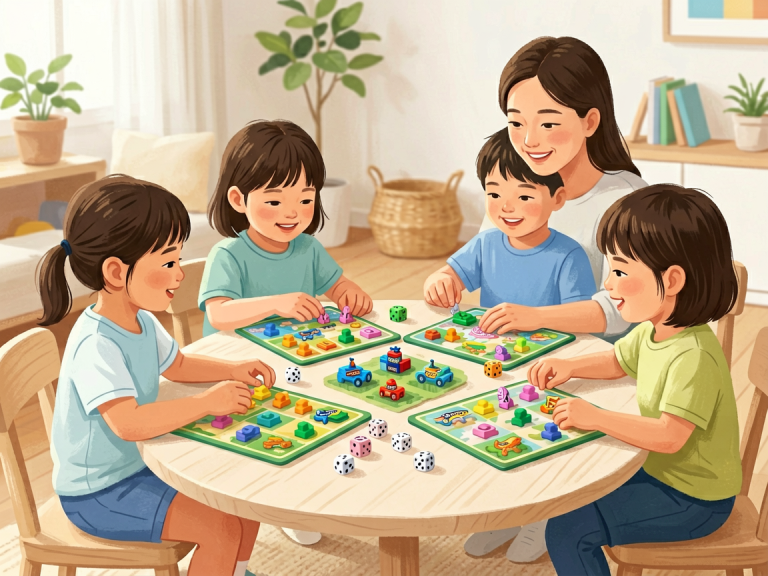
Social and Emotional Growth is another critical dimension. Board games, cooperative building sets, and role-playing kits require children to take turns, negotiate rules, share resources, and manage emotions like frustration or excitement. These interactions teach empathy, patience, and conflict resolution. A child who learns to lose gracefully during a game of “Memory” or to wait for a turn in a group construction project is developing essential life skills that school curricula often struggle to address directly.
Fine and Gross Motor Skills are honed through physical interaction with toys. Threading beads, manipulating small blocks, using scissors, or assembling interlocking pieces strengthens the small muscles in hands and fingers, preparing children for writing and other precise tasks. Larger toys like ride-on vehicles, balance boards, or climbing structures support gross motor development, coordination, and body awareness.
Importantly, learning toys also foster intrinsic motivation. Unlike passive entertainment such as television, a well-designed learning toy invites active participation. The child becomes an agent of their own learning, driven by curiosity and the satisfaction of mastering a challenge. This self-directed engagement builds perseverance and a growth mindset—the belief that abilities can be developed through effort—which is strongly correlated with academic and professional success later in life.
A Spectrum of Learning Toys: Categories and Benefits
The world of learning toys is vast and diverse. Understanding the main categories helps parents and educators make informed choices that align with a child’s age, interests, and developmental needs. Below are some of the most impactful categories, each with illustrative examples and specific benefits.
STEM and Construction Toys
STEM (Science, Technology, Engineering, Mathematics) toys have exploded in popularity, and for good reason. Building blocks, magnetic tiles, gear sets, and robotics kits introduce fundamental principles of physics, engineering, and logical thinking. For instance, a set of magnetic tiles allows a child to experiment with geometry, balance, and structural integrity while constructing towers, bridges, or geometric shapes. More advanced options, such as programmable robots like Botley or LEGO Mindstorms, teach coding basics through hands-on trial and error. The benefits extend beyond technical knowledge: these toys encourage systematic thinking, creativity in design, and resilience when structures collapse or code fails. They also demystify technology, turning children from passive consumers into active creators.
Language and Literacy Toys
Toys that promote reading and writing skills range from alphabet puzzles and phonics flashcards to storytelling kits and electronic readers. Wooden letter tracing boards with a stylus help preschoolers develop pre-writing skills through tactile feedback. Magnetic poetry sets or word-building games turn spelling into a playful activity. Interactive books that read aloud or respond to touch can be particularly effective for early readers, as they provide immediate auditory reinforcement. For older children, board games like “Scrabble Junior” or “Bananagrams” expand vocabulary and strategic thinking. The key benefit is that these toys make literacy a multisensory experience, which is especially valuable for children who struggle with traditional instruction.
Puzzle and Logic Games
Puzzles are timeless learning toys that challenge the mind at every age. Simple peg puzzles for toddlers teach shape recognition and hand-eye coordination. Jigsaw puzzles with increasing piece counts develop patience, visual discrimination, and the ability to focus for extended periods. Logic puzzles, such as Sudoku for kids, maze books, or electronic brain-training games, advance critical thinking and deduction skills. A classic example is the “Rush Hour” traffic jam puzzle, where children must slide cars and trucks to free a red car—an exercise in sequential reasoning and planning. The cognitive load imposed by puzzles strengthens neural connections and improves memory retention.
Creative and Artistic Toys
Creativity is a vital 21st-century skill, and learning toys that foster artistic expression are essential. Modeling clay, play dough, watercolor sets, mosaic kits, and sewing cards allow children to explore texture, color, and form. These activities develop fine motor control while encouraging self-expression and decision-making. More structured creative toys, such as “Spirograph” or “Zen Tangles,” introduce mathematical concepts like symmetry and pattern repetition in an artistic context. Dollhouses, puppets, and dress-up costumes fall into the realm of imaginative play, which is crucial for cognitive flexibility and social understanding. When a child builds a spaceship out of cardboard boxes or directs a puppet show, they are creating narratives, solving problems, and experimenting with different roles—all foundational for emotional intelligence.
Sensory and Exploration Toys
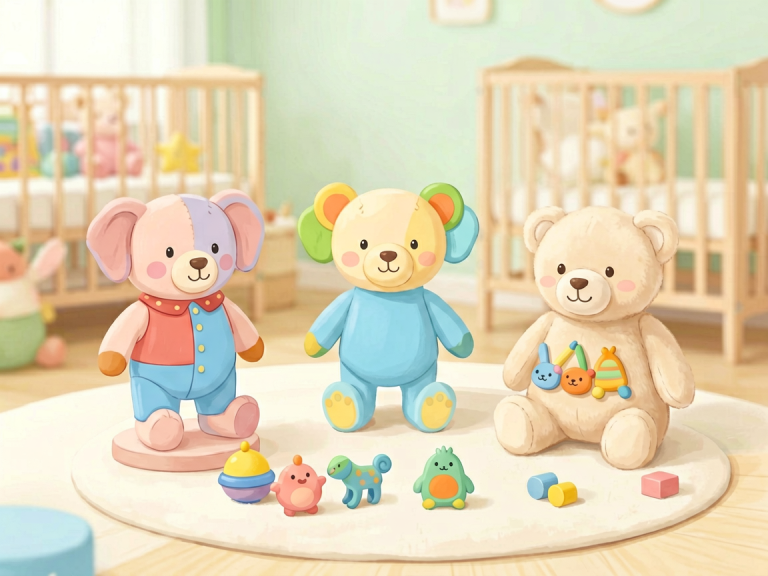
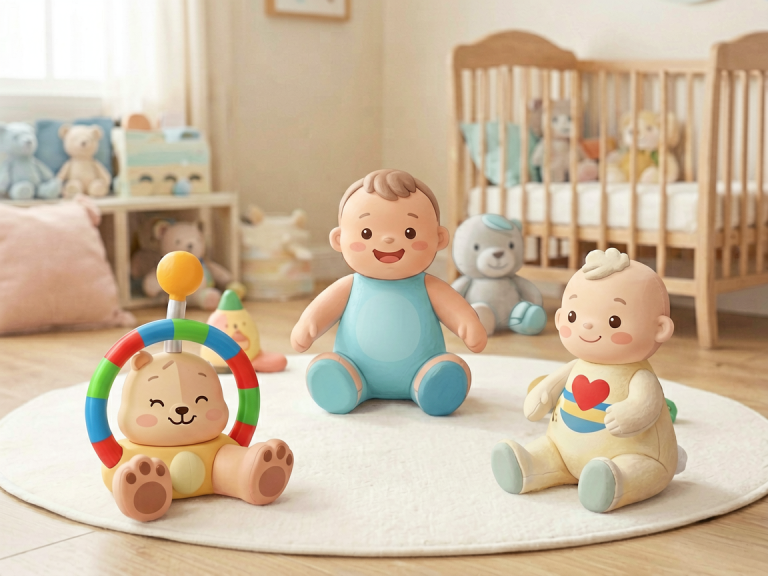
For infants and toddlers, sensory learning is paramount. Toys that engage multiple senses—such as textured balls, musical instruments, water tables, or sandboxes—stimulate neural development. Light-up building sets, sensory bins filled with rice or beans, and cause-and-effect toys (like a spinning top or a pop-up toy) help young children understand the relationship between their actions and the world. Nature-based exploration kits, such as bug catchers, magnifying glasses, or rock and mineral sets, encourage outdoor discovery and scientific observation. These toys build a foundation for curiosity and empirical thinking that will serve children well in later science education.
Key Considerations for Selecting the Right Learning Toys
Choosing learning toys from a marketplace overflowing with options can be overwhelming. However, a few guiding principles can simplify the process and ensure that the toys you select provide maximum educational value.
Age Appropriateness is the first and most critical factor. Toys that are too advanced may frustrate a child, while those that are too simple may bore them. Manufacturers typically label age ranges, but it is important to consider your individual child’s developmental stage. A three-year-old who is already skilled with puzzles may benefit from a four-plus set, while a five-year-old with limited fine motor skills may need simpler options. Always prioritize safety guidelines: small parts pose choking hazards for children under three, and toxic materials should be avoided regardless of age.
Open-Ended Play Value is another hallmark of high-quality learning toys. Open-ended toys—such as building blocks, art supplies, or loose parts (like stones, fabric scraps, or cardboard tubes)—can be used in countless ways, encouraging imagination and adaptability. In contrast, single-purpose toys that only do one thing (like a battery-powered singing toy with limited interaction) may quickly lose appeal. Open-ended toys grow with the child; a set of wooden blocks can be stacked by a toddler, used to build a castle by a preschooler, and incorporated into a geometry lesson by an older child.
Alignment with Interests should not be overlooked. A child who loves dinosaurs will learn more from a dinosaur-themed activity kit than from a generic math game. Capitalizing on existing passions leverages intrinsic motivation. For reluctant learners, finding a toy that connects a challenge subject (like reading or math) to a beloved topic (like space or animals) can be transformative.
Quality and Durability matter both for safety and for long-term use. Well-made toys withstand rough handling and can be passed down to younger siblings or donated. Wooden toys are often more durable than plastic ones and have a timeless feel. Additionally, toys that are easily cleanable and repairable are more sustainable and economical.
Screen-Free Balance is increasingly important in a digital age. While some electronic learning toys are valuable (e.g., coding robots or interactive reading pens), many experts advocate for a predominance of non-digital toys that require physical manipulation and face-to-face interaction. A balance that includes plenty of analog play helps children develop attention spans and real-world social skills.
The Synergy Between Parents, Educators, and Learning Toys
No toy, no matter how well designed, can replace the role of an engaged adult. The true power of learning toys is realized when parents and educators actively participate in the play experience. This does not mean hovering or directing every action, but rather joining the child in their world—asking open-ended questions, offering gentle guidance, and celebrating discoveries.
Parental Involvement enhances learning in several ways. When a parent sits down to do a puzzle with their child, they model strategies like sorting edge pieces first or checking for matching colors. They can also scaffold the difficulty by simplifying a task or providing a hint, then gradually withdrawing support as the child gains confidence. Conversations during play—such as “What do you think will happen if we add another block?” or “How did you figure out where that piece goes?”—promote metacognition and verbalizing thought processes. Such interactions also strengthen the parent-child bond, creating positive associations with learning.
Educators in Formal Settings can integrate learning toys into curricula to make abstract concepts tangible. A preschool teacher might set up a “building center” with various construction toys to teach measurement and balance, or use a “math game” corner to reinforce number recognition. In primary classrooms, manipulatives like base-ten blocks or fraction circles are standard tools, but less conventional toys like board games can be used to teach probability, strategy, and social skills. The most effective educators rotate toys regularly to maintain novelty and align with thematic units, ensuring that learning remains fresh and engaging.
Community and Peer Play adds another layer of benefit. When children play with learning toys in small groups—whether at home, in daycare, or at a friend’s house—they practice collaboration, negotiation, and empathy. A shared building project requires communication and compromise. A cooperative board game (where players work together against the game itself) fosters teamwork rather than competition. These experiences are irreplaceable in developing social competence.
Ultimately, the synergy between adults, children, and learning toys creates an ecosystem where play is both joyful and educational. Adults provide the context and support; children bring curiosity and energy; and toys serve as the catalyst for discovery.
Conclusion
Learning toys for kids are not frivolous expenditures or mere pacifiers—they are investments in a child’s future. By engaging multiple developmental domains simultaneously, these toys turn everyday play into profound learning opportunities. From building cognitive skills and language abilities to nurturing social-emotional growth and creativity, the right toys can shape the trajectory of a child’s intellectual and personal development. However, the magic does not lie in the toy alone. It emerges from the thoughtful selection of age-appropriate, open-ended, and interest-aligned playthings, combined with the active involvement of caring adults. As parents, educators, and community members, we have the privilege and responsibility to curate environments where children can explore, experiment, and grow through play. In a world that increasingly demands adaptability, critical thinking, and collaboration, the simple act of playing with a well-chosen learning toy becomes a profound act of preparation—for school, for life, and for the joy of learning itself.