Fun and Engaging Play Activities for Babies While Traveling: A Parent’s Guide
Traveling with a baby can be both exciting and challenging. While you look forward to exploring new places, your little one still needs stimulation, comfort, and routine. The key to a smooth journey is to incorporate simple, safe, and engaging play activities that keep your baby happy and occupied—whether you’re on a long flight, a road trip, or waiting in a hotel room. In this article, we will explore a variety of play activities designed specifically for babies while traveling. These ideas are easy to prepare, require minimal space, and often use items you already have in your diaper bag or carry-on. By turning travel moments into playful learning experiences, you can reduce fussiness, strengthen your bond, and make the trip memorable for the whole family.
1. Sensory Play on the Go: Engaging Touch, Sight, and Sound
Babies learn about the world through their senses, and travel provides a wealth of novel sensory input. However, unfamiliar environments can also overwhelm them. Controlled sensory play activities can help ground your baby while satisfying their curiosity.
DIY Texture Books and Fabric Swatches
Prepare a small “sensory book” by attaching different fabrics (velvet, corduroy, silk, fleece, crinkly material) to sturdy cardstock or a small ring binder. While sitting on a plane or in a car, let your baby touch each texture. Describe the feeling: “This is soft. This is bumpy.” You can also include a small mirror or a piece of shiny Mylar for visual interest. This activity promotes tactile exploration and language development.
Water Play in a Spill-Proof Container
If you are on a long train ride or sitting at an airport gate, fill a small, sealed plastic container (like a travel-sized snack box) with a few drops of water and some floating objects—a tiny rubber duck, a colorful sponge, or a plastic ring. Tape the lid securely. Your baby can shake, tilt, and watch the objects move. This safe water play provides visual tracking practice and cause-and-effect learning without the mess.
Mess-Free “Painting” with Ziploc Bags
Place a few dollops of washable paint or colored gel inside a quart-sized ziploc bag. Remove excess air, seal it, and tape the edges closed. Let your baby press, squish, and smear the colors from the outside. Lay the bag on a tray table or your lap. The vibrant colors and smooth movement are mesmerizing and help develop hand-eye coordination. Just be sure to supervise so the bag doesn’t get punctured.
Sound Bottles
Fill small, empty plastic bottles (like travel shampoo bottles) with different materials: rice, dry beans, small bells, or even pasta. Glue or tape the lids shut. Your baby can shake them to hear different sounds. This activity introduces auditory discrimination and rhythm. Rotate the bottles to maintain interest.
2. Fine Motor Skills Activities: Grasping, Reaching, and Picking Up
Even in confined spaces, you can encourage your baby to practice grasping and manipulating objects. Fine motor development is crucial for later skills like writing and self-feeding, and travel offers many opportunities to strengthen those tiny muscles.
Stacking Cups and Nesting Toys
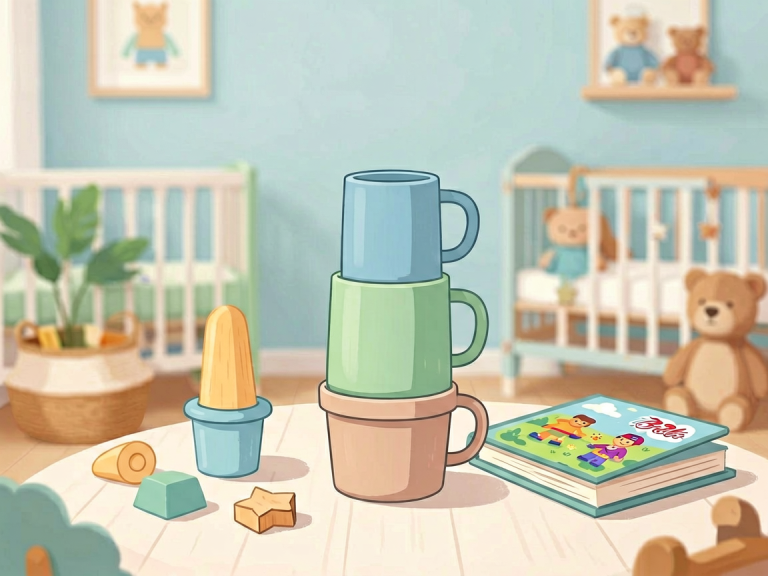
A set of lightweight, collapsible silicone cups or stacking rings is a travel essential. You can stack them, nest them, or hide a small toy under one. Let your baby reach for and grasp each cup. The different sizes and colors encourage problem-solving and hand-eye coordination. On a hotel bed or a clean floor area of an airport lounge, this activity can keep your baby engaged for 15–20 minutes.
Pom-Pom Drop
Use an empty wipe container or a small cardboard box with a hole cut in the top. Give your baby large, colorful pom-poms (safe for babies over 6 months and always supervised) and show them how to drop them through the hole. The sound of the pom-pom landing and the disappearing action fascinate babies. This simple game enhances pincer grasp and object permanence understanding.
Felt or Cloth Flashcards
Create or buy a set of soft, cloth flashcards with high-contrast images (black and white patterns for newborns, bright shapes or animals for older babies). You can clip them together with a ring. Let your baby hold, chew (if safe), and flap the cards. Point to the images and name them: “Look, a red circle!” This activity supports visual development and early vocabulary.
Reusable Sticker Books
Sticker books designed for babies (with large, repositionable vinyl stickers) are perfect for travel. They adhere to the book pages or even to a window or tray table without leaving residue. Your baby can practice peeling stickers off and sticking them back on. This builds finger strength and concentration. Choose themes like animals or vehicles to tie into your travel experience—for example, “Let’s put the car on the road.”
3. Language and Sound Exploration: Listening, Babbling, and Singing
Travel is full of new words and sounds, but you can also create intentional language-rich activities. Even if your baby isn’t speaking yet, they are absorbing intonation, rhythm, and vocabulary.
Singing with Hand Gestures
Sing familiar nursery rhymes like “The Wheels on the Bus” or “Itsy Bitsy Spider” and do the hand motions. While traveling, this can be a calming and interactive routine. You can adapt the lyrics to your trip: “The car on the road goes vroom, vroom, vroom.” Babies love repetition and the predictability of songs. Pairing movements with words helps with memory and motor imitation.
Picture Books with Real Photos
Bring a small board book featuring everyday objects—especially ones your baby might see on the trip, like a suitcase, a train, a tree, or a cup. Point to the pictures and then to the real thing if possible. For example, on a plane, show the book image of an airplane and then look out the window together. This builds cognitive connections and makes travel a learning adventure.
Simple Peek-a-Boo Variations
Peek-a-boo never gets old. Use a burp cloth, a travel blanket, or your hands to cover and reveal your face. You can also hide a small toy under a cup and lift it. This game supports social-emotional development and the concept of object permanence. For an extra twist, hold a lightweight scarf and let your baby pull it off your head while you say “Peek-a-boo!”
Animal Sound Mimicking
If you have a soft toy animal or a picture card, make the animal sound and encourage your baby to copy. Even if they only coo or babble, they are practicing vocalization. For older babies (8–12 months), you can take turns making sounds. This simple back-and-forth interaction is a foundational step toward conversation.
4. Movement and Gross Motor Activities: Wiggling, Rolling, and Kicking
Being confined to a car seat, stroller, or airplane seat for long periods can make babies restless. While safety always comes first, you can incorporate gentle movement activities that let them stretch and build strength.
Tummy Time on a Soft Surface
Whenever you have a clean, soft area—like a hotel carpet, a picnic blanket at a rest stop, or a changing pad on the floor of a quiet airport gate—lay your baby on their tummy. Place a toy or a mirror just out of reach to encourage lifting their head and pushing up. Even a few minutes of tummy time every few hours prevents flat spots and strengthens neck and shoulder muscles. If you’re on a plane, you can do tummy time on the floor of the galley area (ask the flight attendant first) or on a clean changing table in the lavatory.
Kicking and Reaching in a Carrier or Wrap
If your baby is in a front carrier or wrap, you can walk a little faster or do gentle side-to-side sways to activate their leg muscles. Let their feet dangle freely and touch different surfaces—a soft footrest, a textured wall, or your own leg. You can also dangle a toy in front of them so they reach out and grab it. This builds core strength and coordination.
Rolling Practice
On a large hotel bed or a soft rug, encourage your baby to roll from back to tummy and back again by placing a favorite toy to the side. Rolling is a major milestone, and travel often disrupts the usual practice time. Use waiting periods (like before a flight or after check-in) to give your baby that chance to move freely.
Leg Bicycles and Gentle Bouncing
While holding your baby on your lap, gently bicycle their legs or bounce them on your knees while singing a rhythmic song. This can help relieve gas, soothe fussiness, and provide vestibular stimulation. For car rides, you can pause at a rest stop, take your baby out, and do a few gentle squats with them in your arms to get the blood flowing.
5. Quiet Time and Calming Activities: Reducing Overstimulation
Travel can be overstimulating for babies due to crowds, noise, and disrupted routines. It’s essential to have soothing activities to help them wind down, especially before naps or bedtime.
Baby-Safe Massage with Lavender Lotion
Before a nap on the plane or in the hotel, give your baby a gentle massage using a travel-sized bottle of baby-safe lotion (scented with lavender or chamomile if your baby tolerates it). Focus on their arms, legs, and back. The rhythmic touch releases oxytocin, lowers stress, and signals bedtime. This can be done discreetly on your lap or on the hotel bed.
Soft Night-Light or Projector
A small, battery-operated night-light that projects stars or animals onto the ceiling can be a magical calming tool. While staying in unfamiliar rooms, the soft light provides comfort and a visual focus. You can even bring a small scarf to create a dark “tent” over the car seat or stroller and let your baby gaze at the lights.
White Noise or Lullabies via a Travel Speaker
Download white noise (rain, ocean waves, or a heartbeat) or a playlist of lullabies onto your phone. Use a portable Bluetooth speaker at a low volume to drown out sudden travel noises. Play it during feeding or before sleep. The consistent sound is a powerful cue that it’s time to relax.
Calming Sensory Bag with Lavender Scent
Prepare a small fabric bag filled with dried lavender (sewn into a mesh pouch to prevent ingestion) and a few smooth, cool stones. While supervising, let your baby hold and pat the bag. The scent and texture can be very grounding. Alternatively, use a soft, crinkly fabric square that your baby can rub against their cheek.
6. Safety Tips and Practical Considerations for Travel Play
No matter how creative your play activities are, safety must always come first, especially in unfamiliar environments.
Avoid Choking Hazards
Always check that any toy or object you give your baby is too large to fit through a toilet paper roll (a standard choking hazard test). Avoid detachable small parts. For sensory bags and bottles, ensure seals are indestructible or glued shut.
Sanitize Regularly
Travel exposes babies to germs. Wipe down toys and surfaces with baby-safe disinfecting wipes before handing them over. Keep hand sanitizer handy for yourself, and wash your baby’s hands after play (or use a wipe).
Respect Your Baby’s Cues
If your baby is fussy, turning away, or rubbing their eyes, they may be overstimulated. Put away the activity and offer a calm cuddle, a feed, or a nap. Play should be fun, not forced.
Adapt to the Environment
On an airplane, check with the flight crew before setting up anything on the floor. In a car, never give your baby hard or heavy toys that could become projectiles in a sudden stop. Use soft toys and secure everything.
Keep a Travel Play Kit
Assemble a small pouch or zippered bag containing 3–5 rotating toys, a board book, a sensory bag, and a soft blanket. Rotate items during the trip to maintain novelty. This kit will become your go-to resource for quick, safe, and engaging play.
Conclusion
Traveling with a baby doesn’t have to be a constant battle against boredom and fussiness. With a little planning and creativity, you can turn every leg of your journey into a playful, learning-rich experience. From sensory bags that captivate attention to simple songs that soothe, the activities described above are designed to fit into tight spaces and busy schedules. Remember that the goal is not to entertain your baby every second, but to provide them with flexible, safe opportunities to explore and connect with you. The next time you pack for a trip, slip a few of these ideas into your bag—and watch your baby discover the joy of travel through play.