The Gift That Keeps on Giving: Why Early Learning Toys Are the Perfect Choice for Christmas
Christmas is a season of wonder, warmth, and the joy of giving. For parents, grandparents, and caregivers, choosing the right gift for a young child is both an exciting and weighty responsibility. Amid the sea of flashing lights, plastic trinkets, and noisy gadgets, one category of gift stands out for its lasting value: early learning toys. These are not merely playthings; they are tools for cognitive, social, emotional, and physical development. Carefully selected early learning toys can nurture curiosity, build foundational skills, and create joyful moments of discovery long after the holiday wrappings have been discarded. This article explores why early learning toys make exceptional Christmas gifts, how to choose them wisely, and what specific types benefit children from infancy through the preschool years.
The Educational Power of Play
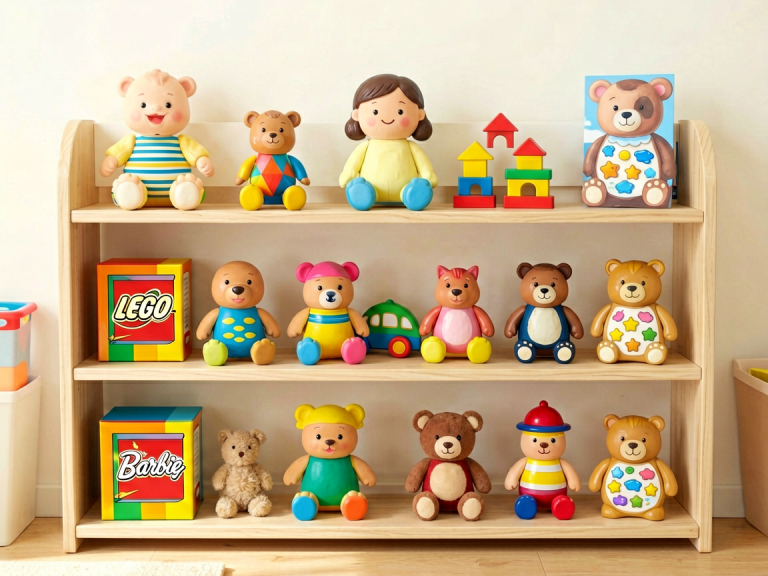
Play is the language of childhood. Through play, children make sense of the world, experiment with cause and effect, develop language, and practice problem-solving. Early learning toys are designed to harness this natural drive, turning playtime into a rich learning experience. Unlike passive entertainment—such as watching videos—these toys actively engage a child’s mind and body. A simple wooden stacking ring, for instance, teaches hand-eye coordination, spatial awareness, and concepts of size and order. A set of chunky animal puzzles builds fine motor skills, memory, and vocabulary. When a child fits the elephant piece into its slot, they are not just playing; they are exercising logic and persistence.
Moreover, early learning toys often encourage open-ended exploration. A set of colorful building blocks can become a tower, a bridge, a castle, or a spaceship, depending on the child’s imagination. This flexibility fosters creativity and divergent thinking—abilities that are invaluable in later academic and life settings. Research consistently shows that children who engage in constructive, self-directed play develop stronger executive function skills, including attention control, working memory, and cognitive flexibility. By giving an early learning toy as a Christmas gift, you are providing a foundation for lifelong learning.
Choosing the Right Toy for Each Developmental Stage
Not all learning toys are created equal, and what works for a nine-month-old will frustrate a three-year-old. Understanding developmental milestones is key to selecting a gift that challenges without overwhelming. Here is a stage-by-stage guide to help you shop with confidence.
For Infants (0–12 months): Sensory and Cause-and-Effect Toys
Babies are busy building basic neural connections. Their world is a symphony of sights, sounds, textures, and tastes. The best early learning toys for this age engage multiple senses. Soft fabric books with crinkly pages, high-contrast black-and-white patterns, and attached teethers invite exploration. A simple rattle helps an infant learn that their actions produce sound. Activity gyms with dangling toys encourage reaching and grasping, strengthening neck and arm muscles. For older infants, stacking cups and nesting bowls introduce early math concepts like size and sequence. When choosing a Christmas gift for a baby, prioritize safety: no small parts, non-toxic materials, and smooth edges. Also look for toys that grow with the child, such as a wooden shape sorter that will be revisited as fine motor skills improve.
For Toddlers (12–24 months): Language, Movement, and Pretend Play
Toddlers are on the move. They walk, climb, and chatter. Their attention spans are short, but their curiosity is boundless. Early learning toys for this stage should encourage language development, gross motor skills, and the beginning of imaginative play. Push-and-pull toys, such as a wooden animal on wheels, help with balance and coordination. Simple puzzles with large pegs or knobs enhance fine motor control. Musical instruments—a xylophone, a drum, a set of maracas—teach rhythm and cause-and-effect while providing sensory delight. Language-rich toys are also excellent: picture books with sturdy pages, flashcards with real animal photos, and talking toys that sing simple songs. Perhaps most beloved are pretend-play sets: a play kitchen with plastic food, a doctor’s kit, or a set of animal figures. These allow toddlers to mimic adult behaviors, expanding their vocabulary and social understanding. A Christmas gift of a wooden train set, for instance, offers endless opportunities for storytelling, problem-solving, and collaborative play with siblings or parents.
For Preschoolers (3–5 years): Logic, Letters, Numbers, and Social Skills
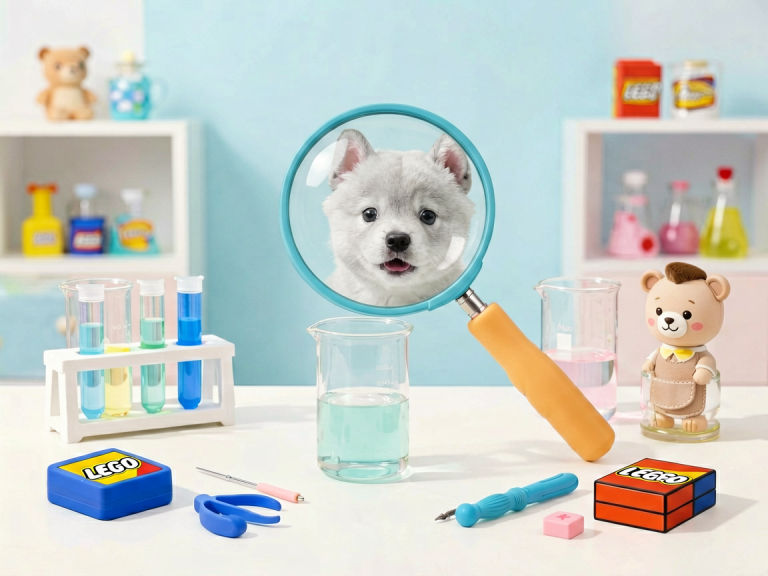
Preschool children are ready for more complex challenges. They are learning to count, recognize letters, share with friends, and control their emotions. Early learning toys for this age should support pre-academic skills while still being fun. Magnetic letters and numbers can be used on a refrigerator or a whiteboard for spelling and simple arithmetic. Board games that require taking turns, counting spaces, and following rules—such as a simple memory game or “Candy Land”—teach patience and social cooperation. Construction sets with interlocking pieces, like Duplo or wooden blocks, develop spatial reasoning and planning. Art supplies—washable markers, play dough, safety scissors—encourage creativity and fine motor dexterity. Science kits for young children, such as a simple magnifying glass or a bug-catching kit, foster observation and a love for nature. Remember that the best toy for a preschooler is often one that they can use in multiple ways. A set of colorful pattern blocks can be used for sorting, counting, making pictures, and later for understanding fractions. When you give such a toy for Christmas, you are giving the gift of discovery.
Beyond Academics: Social and Emotional Growth
Early learning toys are not solely about ABCs and 123s. They play a vital role in social and emotional development. Dolls, stuffed animals, and action figures become companions for imaginary play, where children rehearse real-life scenarios—feeding a baby, taking a pet to the vet, comforting a sad friend. This type of play builds empathy, emotional vocabulary, and self-regulation. Cooperative games (not competitive) teach children to work toward a common goal, manage frustration, and celebrate shared success. Even simple toys like a ball can be a social bridge: rolling a ball back and forth with a parent or peer teaches turn-taking, eye contact, and the joy of interaction.
For children who may feel anxious about a new sibling or a change in routine, a familiar learning toy can provide comfort and a sense of control. The predictability of a puzzle piece fitting into its spot, or the satisfaction of stacking blocks just right, can be soothing. As a Christmas gift, an early learning toy carries a deeper message: “I believe in your ability to learn and grow. I see you. I love you.”
Practical Considerations for Christmas Shopping
When purchasing early learning toys for Christmas, keep a few practical tips in mind. First, look for toys made from sustainable materials—wood, organic cotton, non-toxic paints. These are safer for children and kinder to the planet. Second, consider the child’s current interests. A toddler obsessed with animals will treasure a set of wooden animal figures more than a shape sorter. Third, avoid overstimulation. Toys with too many lights, sounds, and buttons can overwhelm a young brain, leading to short attention spans and frustration. Simplicity often invites deeper engagement. Fourth, think about longevity. Can the toy be used in different ways as the child matures? A set of plain wooden blocks, for example, serves a child from infancy to elementary school. Finally, involve the parent if possible. A quick conversation about the child’s current abilities and favorite activities can guide you to a perfect, cherished gift.
Conclusion
In a world saturated with disposable, flash-in-the-pan toys, early learning toys offer a meaningful alternative. They honor the child’s innate drive to learn, create, and connect. They transform Christmas morning into a launchpad for exploration. A baby grasping a textured ball, a toddler triumphantly fitting a puzzle piece, a preschooler proudly spelling her name with magnetic letters—these are the moments that matter. As you wrap that wooden train set or those colorful stacking cups, remember that you are not just giving a toy. You are giving hours of focused play, sparks of curiosity, and the confidence that comes with mastering a new skill. This Christmas, choose a gift that grows with the child—an early learning toy that will be remembered long after the tinsel is put away.