Playful Minds: The Transformative Power of Educational Learning Through Play for Kids
Introduction
In a world increasingly dominated by standardized tests, digital screens, and structured curricula, the simple act of play is often dismissed as a frivolous pastime. Yet a growing body of research in child development, neuroscience, and education suggests that play is far from trivial—it is, in fact, one of the most powerful vehicles for genuine, lasting learning. Educational learning through play for kids is not a luxury or an add-on; it is a fundamental approach that nurtures curiosity, creativity, problem-solving, and social-emotional skills. This article explores the science behind play-based learning, the various forms it takes, its cognitive and emotional benefits, and practical strategies for parents, educators, and caregivers to integrate playful learning into children’s daily lives.
The Science Behind Play-Based Learning
Play is often described as the “work of childhood,” a phrase coined by pioneering psychologist Jean Piaget. Piaget observed that children actively construct knowledge through their interactions with the environment, and play provides a natural context for this construction. When a child builds a tower of blocks, she is not merely stacking objects; she is experimenting with physics (gravity, balance, symmetry), developing fine motor skills, and learning to persist through failure. Similarly, Lev Vygotsky emphasized the social dimension of play, arguing that imaginative play, in particular, creates a “zone of proximal development” where children stretch beyond their current abilities with the support of peers or adults.
Neuroscientific studies have confirmed that play stimulates the prefrontal cortex, the brain region responsible for executive functions like planning, impulse control, and flexible thinking. During play, the brain releases dopamine, a neurotransmitter associated with motivation and reward, which enhances memory consolidation. In short, play primes the brain for learning. This is why educational learning through play for kids is not merely “fun”—it is biologically efficient.
Types of Play and Their Educational Benefits
Not all play is identical, and different types of play nurture distinct skills. Understanding these categories helps parents and educators design richer learning experiences.
Physical Play: Building Bodies and Brains
Running, jumping, climbing, and rough-and-tumble play may seem purely physical, but they teach children body awareness, coordination, and risk assessment. Outdoor play, in particular, exposes children to natural variables—uneven terrain, changing weather, living creatures—that challenge their adaptability. Moreover, physical activity improves blood flow to the brain, directly enhancing cognitive performance. Educational learning through play for kids must therefore include unstructured physical time, not just organized sports.
Constructive Play: Engineering with Blocks, Sand, and Art
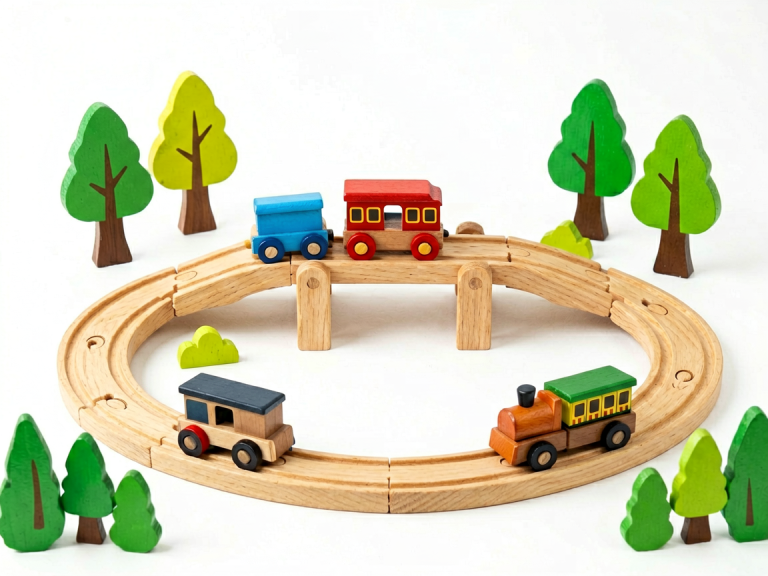
When children build with LEGO, mold clay, or create sandcastles, they engage in constructive play. This form of play teaches spatial reasoning, cause-and-effect, and iterative design. A child who attempts to build a bridge that keeps collapsing learns to hypothesize why it fails (too narrow base? too heavy top?) and modifies her approach. These are the same problem-solving cycles used by engineers and scientists.
Imaginative and Pretend Play: The Theater of Learning
Pretend play—whether playing house, doctor, or superhero—is perhaps the richest educational domain. It requires children to adopt roles, negotiate rules, and invent narratives. This strengthens language development, empathy (by stepping into another’s shoes), and self-regulation. A child playing “teacher” organizes a classroom, uses vocabulary she has heard, and practices leadership. Research by psychologist Sandra Russ shows that imaginative play correlates with higher creativity and coping skills later in life.
Games with Rules: Learning Fairness and Strategy
Board games, card games, and sports introduce formal rules, turn-taking, and strategy. Monopoly teaches resource management and addition; chess develops planning and pattern recognition; simple games like “Duck, Duck, Goose” teach social anticipation. These games also provide safe arenas for learning to lose gracefully—a critical emotional skill often overlooked in traditional education.
Cognitive Development Through Play
One of the most compelling arguments for educational learning through play for kids is its impact on cognitive skills that go beyond rote memorization.
Executive Function Skills
Executive functions—working memory, inhibitory control, and cognitive flexibility—are the foundation of academic success. Games like Simon Says require children to suppress the urge to mimic and instead follow only when instructed. Complex pretend play demands holding multiple roles in working memory. A child organizing a tea party must remember who is the host, what characters are present, and what the “story” is. This is mental juggling that strengthens the brain.
Language and Literacy
Play is a natural language laboratory. When children narrate their block towers, negotiate roles in pretend play, or describe a drawing, they practice vocabulary, syntax, and narrative structure. Research indicates that children who engage in rich pretend play have larger vocabularies and better reading comprehension by kindergarten. Moreover, play-based literacy activities—like writing a menu for a pretend restaurant or reading a treasure map—make letters and words meaningful rather than abstract symbols.
Mathematical and Scientific Thinking
A child pouring water from a short, wide cup into a tall, thin cup learns about conservation of volume—long before the term is taught in school. Building with blocks involves geometry and symmetry. Sorting toys by color or size is classification, a precursor to set theory. Cooking together (measuring ingredients) teaches fractions and ratios. These everyday play experiences build intuitive understanding that makes later formal instruction more accessible.
Social and Emotional Growth
Educational learning through play for kids is not only about academic skills; it is fundamentally about becoming a well-rounded human being.
Cooperation and Conflict Resolution
Play with peers inevitably involves disagreements: “I wanted to be the princess!” “You’re not sharing the blocks!” These moments are learning opportunities. With gentle adult guidance, children practice negotiation, compromise, and empathy. They learn that winning isn’t everything and that relationships matter. Studies show that children who engage in cooperative play have better social skills and lower rates of aggression.
Emotional Self-Regulation
Play can be intensely emotional—the frustration of a tower falling, the joy of a pretend birthday party. Through play, children learn to manage these feelings. A child who feels angry after losing a game can be encouraged to take a breath and try again. Imagination also provides a safe outlet: a child who is afraid of the dark can play “monster hunter” to gain mastery over fear. This builds resilience.
Motivation and Love of Learning
Perhaps the greatest gift of play-based education is intrinsic motivation. When learning is embedded in a playful context—a math game instead of a worksheet, a science experiment disguised as a messy kitchen activity—children develop a positive association with learning itself. They become curious and self-directed, seeking knowledge not for a grade but for the joy of discovery. This mindset is essential for lifelong learning.
Implementing Playful Learning at Home and School
Given the overwhelming evidence, how can parents and educators practically integrate educational learning through play for kids?
At Home: Creating a Play-Rich Environment
- Unstructured time: Resist the urge to overschedule. Leave ample time for free play, both alone and with siblings or friends.
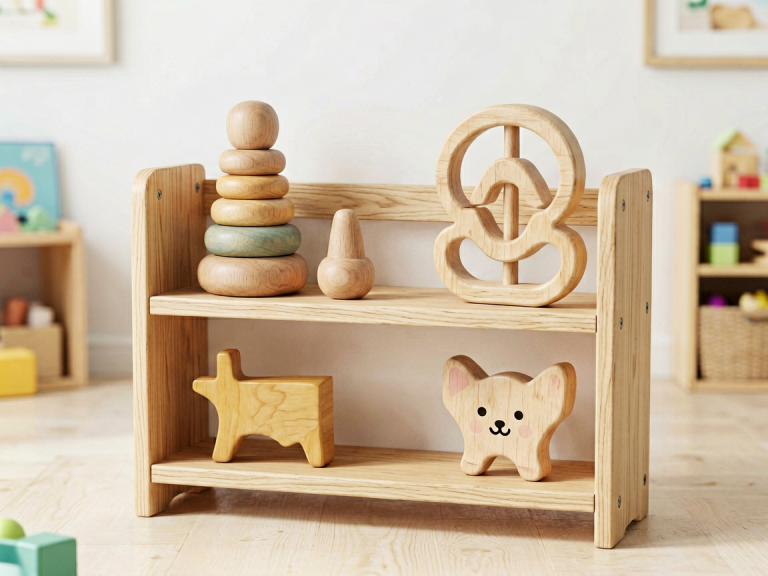
- Open-ended toys: Blocks, art supplies, dolls, dress-up clothes, sand, water, and simple tools (magnifying glasses, measuring cups) encourage creativity. Avoid toys that do all the work (battery-operated talking toys often limit imagination).
- Playful family habits: Cook together, build blanket forts, invent silly songs, play board games on Friday nights. Let children see you playing too—your enthusiasm is contagious.
- Limit screen time: While some digital games can be educational, passive screen consumption does not offer the same cognitive benefits as active, hands-on play.
In Schools: Rethinking the Classroom
- Learning centers: Instead of rows of desks, organize the classroom into areas: a construction zone, a reading nook, an art station, a dramatic play corner, a science table with magnifying glasses and natural objects. Children rotate through these centers, learning through hands-on exploration.
- Integrated play: Even traditional subjects can be playful. Teach math through games, writing through creating a class newspaper, science through outdoor investigations. Finland’s education system, often lauded for its success, emphasizes play through middle school.
- Recess is non-negotiable: Research by the American Academy of Pediatrics states that recess is a critical part of the school day, supporting cognitive function and social development. Cutting recess to fit more instruction is counterproductive.
Overcoming Challenges
Despite strong evidence, many parents and educators worry that play-based learning is not “rigorous” enough. They worry their children will fall behind academically. But the opposite is true: children who learn through play often outperform peers in later grades because they have stronger foundational skills and a positive attitude toward learning.
Another challenge is societal pressure. In competitive cultures, parents may feel they must enroll children in academic enrichment classes at young ages. However, many of these classes are actually less effective than free play. A 2018 study from the University of Denver found that children in play-based preschools performed equally well in reading and math by second grade as those in direct-instruction preschools—and had better social skills and less anxiety.
Finally, time constraints in modern life make it hard to prioritize play. But even small changes—20 minutes of unstructured play after school, a family board game night, a weekend nature walk—can make a difference.
Conclusion: Let Them Play
Educational learning through play for kids is not a trend or a theory; it is a biological, psychological, and pedagogical reality. Play is the way children naturally learn about the world, about others, and about themselves. It builds the cognitive, social, and emotional muscles that will serve them for a lifetime—far beyond any single test or worksheet. As parents, educators, and policymakers, our task is not to replace play with “learning” but to recognize that they are one and the same. The next time you see a child lost in play, know that you are witnessing learning in its richest, most joyful form. Protect that time, nurture it, and trust that it is enough. After all, as the child builds a castle in the sand, she is also building a mind.