Hands-On Activities for Babies: Unlocking the World Through Touch and Play
From the moment a baby enters the world, their tiny hands become the most powerful tools for discovery. While adults often rely on sight and sound to understand their environment, babies learn primarily through touch, movement, and hands-on engagement. This is not merely a charming stage of development—it is the very foundation upon which cognitive, motor, and emotional growth are built. In this comprehensive guide, we will explore why hands-on activities are essential for babies, and provide a rich array of practical, safe, and developmentally appropriate activities that parents and caregivers can implement from birth through the first year and beyond.
The Science Behind Hands-On Learning for Infants
Babies are born with an innate drive to explore. Their brains contain about 100 billion neurons, but the connections between these neurons—the synapses—are formed through experience. Every time a baby grasps a rattle, pats a puddle of water, or squishes a handful of cooked spaghetti, their brain is literally wiring itself for future learning. This process, known as synaptic pruning and strengthening, is most active in the first three years of life.
Touch is the first sense to develop in utero, and it remains the most immediate and reliable way for infants to gather information. When a baby engages in hands-on activities, multiple brain regions are activated simultaneously: the somatosensory cortex processes tactile information, the motor cortex coordinates movement, and the prefrontal cortex begins to build connections related to cause and effect. Moreover, hands-on play stimulates the release of oxytocin and endorphins, which promote bonding and a sense of security.
Hands-on activities also support the development of fine motor skills—the small muscle movements in the fingers, hands, and wrists that are essential for later tasks like writing, buttoning, and using utensils. Gross motor skills, such as reaching, crawling, and sitting, are also enhanced when babies are given opportunities to manipulate objects. Ultimately, hands-on learning is not a luxury; it is a biological necessity.
Sensory Bins and Textured Play: A Foundation for Discovery
One of the most beloved hands-on activities for babies is the sensory bin. A sensory bin is simply a container filled with materials that invite touching, scooping, pouring, and exploring. The key is to use safe, non-toxic, and age-appropriate items. For babies who are not yet mouthing objects excessively (typically under six months), a simple sensory bag can be created by sealing items inside a sturdy zip-lock bag. For example, fill a bag with hair gel and a few drops of food coloring, then tape it to the floor or a highchair tray. Babies will delight in pressing and patting the squishy surface, watching the colors swirl.
For older babies who are sitting independently and exploring with their mouths (around 6 to 12 months), edible sensory bins are ideal. Cooked and cooled spaghetti, dyed with beet juice or turmeric, offers a slippery, twisty, and utterly fascinating experience. Fill a shallow plastic bin with the pasta and let your baby squish, pull, and taste (supervised, of course). Another excellent option is a bin filled with dry oatmeal or ground rice cereal. Add a few scoops, cups, and spoons, and your baby will practice transferring, scooping, and dumping—actions that build hand-eye coordination and problem-solving skills.
Textured play can also be incorporated into daily routines. During bath time, provide a variety of washcloths with different textures: a soft flannel, a bumpy terry cloth, a silky piece of fabric. Let your baby rub these against their skin. Similarly, create a "texture book" by gluing squares of velvet, sandpaper, bubble wrap, and felt onto sturdy cardboard pages. As your baby touches each one, describe the sensation: "This feels bumpy. This feels smooth." This simple activity builds vocabulary as well as tactile discrimination.
Fine Motor Play: Grasping, Pinching, and Manipulating
Around the age of four to six months, babies begin to develop the ability to grasp objects deliberately. This is the ideal time to introduce hands-on activities that challenge their emerging fine motor skills. One classic activity is the "take and put" game. Place a few large, lightweight objects—such as plastic measuring spoons, fabric balls, or wooden rings—into a shallow bowl or basket. Show your baby how to pick one up and then drop it back in. The repetition of grasping and releasing strengthens the muscles in the hand and teaches the concept of object permanence.
As babies approach their first birthday, they develop the pincer grasp, using the thumb and forefinger to pick up small items. This is a critical milestone for self-feeding and later for writing. To practice, offer safe, baby-friendly finger foods like Cheerios, small pieces of soft fruit (such as banana or avocado), or puffs. Scatter a few on a highchair tray and let your baby work to pick them up. The challenge of getting that tiny piece of food into their mouth is both rewarding and instructive.
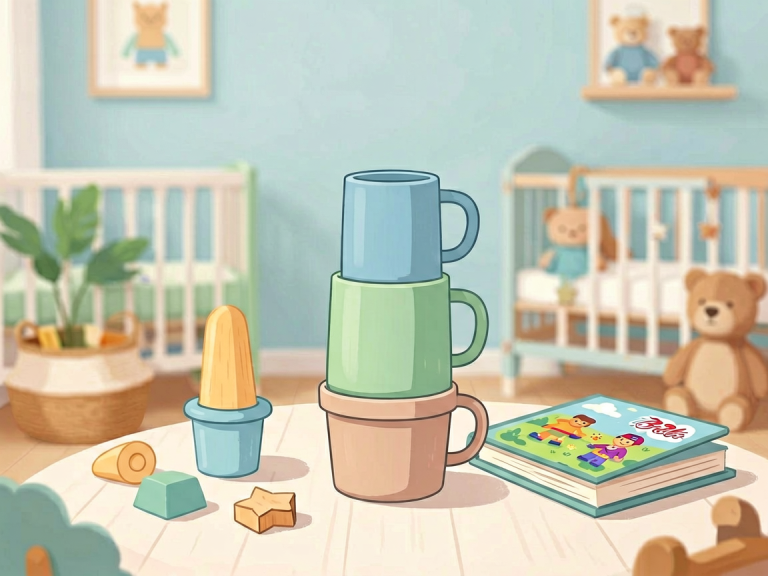
Another engaging fine motor activity is "pull and push" play. Attach a lightweight toy to a short ribbon or string (always supervised, as strings can be a choking hazard if long). Let your baby pull the toy toward them, or push it away. This action helps babies understand spatial relationships and the concept of force. Similarly, provide a basket of silicone cupcake liners or stacking cups. Babies love to pull them apart and attempt to stack them again. The trial-and-error process of stacking builds persistence and logical thinking.
Creative and Messy Play: Art, Water, and Exploration
As babies grow, they become increasingly curious about cause and effect. Messy play provides a perfect avenue for this exploration while engaging multiple senses. One of the simplest and most enjoyable messy activities is finger painting—but not with standard paint, which may contain harmful chemicals. Instead, create edible finger paint using yogurt or pureed fruit mixed with a little cornstarch. Spread a large piece of paper on a highchair tray or a washable floor mat. Let your baby smear, dot, and drag their fingers through the colorful goo. The tactile sensation is wildly stimulating, and the visual result—a masterpiece of smears—is deeply satisfying.
Water play is another hands-on favorite that can be introduced as soon as your baby can sit upright. Fill a shallow plastic tub with a few inches of lukewarm water. Add floating toys, cups, spoons, and a small strainer. Let your baby splash, pour, and scoop. The resistance of water provides feedback to the muscles, and the sight of water moving through a strainer teaches basic physics concepts like flow and containment. Always supervise water play closely, and consider doing it in the bathtub or outdoors to contain the mess.
For babies who enjoy patting and pounding, a "dough station" is a wonderful option. Make a simple playdough using flour, salt, water, and a little vegetable oil. (Or use a commercial non-toxic dough.) Set out a tray with the dough and a few safe tools: a plastic knife, a small rolling pin, cookie cutters. Babies can poke, pull, flatten, and roll. This activity strengthens hand muscles and fosters creativity. Even if your baby just squishes the dough into a ball and then tears it apart, that is exactly the kind of hands-on learning that builds motor control.
Outdoor and Natural Hands-On Activities
Nature offers an endless supply of hands-on learning opportunities. Even a simple walk outside can be transformed into a sensory adventure. Collect a few safe natural objects—a smooth stone, a pinecone, a large leaf, a sturdy stick—and place them in a basket for your baby to explore. Describe the textures, shapes, and smells. Let your baby hold the pinecone and feel its prickly surface, then offer the smooth stone to feel the contrast.
If you have access to a safe patch of grass or dirt, let your baby sit and pat the ground with their hands. Feeling the cool, damp earth or the tickle of grass blades is a grounding experience that connects babies to the natural world. On a warm day, set up a small wading pool with a few inches of water and some floating toys. Or take a bucket of sand (or clean, play-grade sand) and let your baby sift it through their fingers. Be mindful of mouthing—if your baby puts sand in their mouth, simply redirect them and ensure the sand is clean and free of sharp objects.
In the garden, allow your baby to help with gentle tasks. Under close supervision, let them pull up a few weeds (if they are not harmful), or pat the soil around a plant. The act of digging and scooping with a small trowel or their bare hands builds gross motor coordination. Even smelling a flower (and perhaps gently touching its petals) is a hands-on learning experience.
Incorporating Hands-On Activities into Daily Routines
One of the greatest challenges for busy parents is finding time to set up elaborate activities. The good news is that hands-on learning can be seamlessly integrated into everyday moments. During diaper changes, give your baby a clean, damp washcloth to hold and squeeze. The water dripping and the sensation of wringing out the cloth is a fascinating tactile experience. While preparing meals, let your baby hold a large wooden spoon, a silicone spatula, or a metal measuring cup. Let them bang it against the highchair tray; the sound and vibration provide valuable feedback.
At reading time, choose board books with textures, flaps, or cut-out shapes. Encourage your baby to turn the pages (even if they are rough) and point at pictures. Books that include a mirror are especially engaging—your baby will touch their reflection with wonder. Bath time is naturally rich in hands-on opportunity; provide foam letters, water-safe stacking cups, and toys that squirt water.
Even dressing can become a hands-on activity. Offer your baby a sock or a mitten to try to pull on their own hand. Yes, it will take longer, and yes, they may get frustrated. But the act of trying to manipulate fabric onto a limb builds body awareness and fine motor coordination. Celebrate every small success with enthusiasm.
Safety Considerations and Age Appropriateness
While hands-on activities are invaluable, safety must always come first. The golden rule is to supervise all activities, especially those involving small objects, water, or messy materials. Choking hazards include items smaller than a 1.25-inch diameter or objects that can fit entirely into a baby's mouth. Always inspect toys and materials for loose parts. For babies under six months, keep activities simple and focus on large, safe items like soft blocks, textured balls, and fabric squares.
For edible sensory play, ensure that all ingredients are safe and that your baby is not allergic. Avoid raw eggs, honey (risk of botulism for babies under one year), and overly salty or sugary substances. If your baby insists on mouthing everything, opt for edible play materials. Finally, respect your baby's cues. If they seem overwhelmed, fussy, or disinterested, stop the activity and try again later. Hands-on play should be joyful, not forced.
Conclusion: The Lifelong Gift of Hands-On Play
The hands-on activities we share with our babies are far more than pastimes. They are the building blocks of intelligence, creativity, and emotional resilience. Each time a baby grasps a rattle, pats a puddle, or smears yogurt on a tray, they are engaging in the deepest form of learning—learning that comes directly through their bodies and senses. The touch of a caregiver's hand guiding a baby's fingers through a sensory bin is not just a moment of play; it is a moment of connection, trust, and discovery.
As parents and caregivers, we have the privilege and responsibility to nurture this natural curiosity. By providing hands-on activities that are safe, stimulating, and lovingly supervised, we give our babies the tools they need to become confident explorers of their world. Every squish, every scoop, every tiny triumph of grasping a single Cheerio is a step toward independence, problem-solving, and joy. So embrace the mess, celebrate the chaos, and remember that in the hands of a baby, the simplest object becomes a universe of wonder. The journey of discovery begins with a single touch—and it lasts a lifetime.