Introduction: Why a Buying Guide Matters
Title: The Ultimate Educational Toys Buying Guide: Choosing the Right Tools to Nurture Your Child’s Cognitive, Social and Physical Growth
—
Every parent, educator or caregiver has faced the overwhelming toy aisle—endless rows of flashing lights, plastic gadgets and “educational” labels plastered on boxes promising to turn your toddler into a genius. But not all toys that claim to be educational actually deliver meaningful learning. In fact, many overstimulating, passive toys can hinder creativity and problem‑solving rather than encourage them.
An educational toy, at its core, is designed to stimulate a child’s natural curiosity, develop specific skills (cognitive, motor, social or emotional) and provide open‑ended play opportunities that grow with the child. This comprehensive buying guide will help you cut through marketing hype, understand what truly makes a toy educational, and make informed choices that align with your child’s developmental stage, interests and your budget.
—
## Why Educational Toys Are More Than “Just Play”
Children learn best through active, hands‑on experiences. Educational toys serve as tools that transform abstract concepts into concrete, tangible discoveries. For example, a set of wooden blocks isn’t just about stacking—it teaches balance, gravity, spatial reasoning and even early engineering principles. A simple puzzle develops fine motor control, pattern recognition and perseverance.
Moreover, the right educational toy can foster executive function skills such as planning, self‑regulation and working memory. When a child builds a complex structure with magnetic tiles, she must plan ahead, test hypotheses and adapt when something falls. This trial‑and‑error process mirrors the scientific method and builds resilience.
Research also shows that high‑quality educational toys can reduce screen time, encourage cooperative play with siblings or friends, and support language development when adults engage in “serve and return” conversations during play. In short, the toys you choose are not just purchases—they are investments in your child’s future learning habits.
—
## Age‑Based Guidelines: What to Look for at Every Stage
Children’s developmental needs change rapidly. A toy that engages a 1‑year‑old may bore or frustrate a 4‑year‑old. Here is a breakdown of recommended toy types and skill areas for each age group.
### Infants (0–12 Months): Sensory Exploration and Cause‑Effect
At this stage, babies are discovering their world through senses. The best educational toys are those that stimulate sight, sound, touch and even taste (safely).
- What to look for: High‑contrast black‑and‑white cards, soft rattles, textured balls, unbreakable mirrors and simple activity gyms.
- Key skills: Visual tracking, grasping, hand‑eye coordination and auditory discrimination.
- Avoid: Toys with small parts that pose a choking hazard, or those with loud, jarring noises that can overstimulate an infant.
### Toddlers (1–3 Years): Language, Movement and Pretend Play
Toddlers are on the move—they climb, run and talk. Toys should support gross motor development, vocabulary expansion and symbolic thinking.
- What to look for: Shape sorters, stacking cups, push‑and‑pull toys, simple puzzles with large knobs, chunky crayons, play food and dress‑up items.
- Key skills: Balance, problem‑solving, first words, social imitation and fine motor control.
- Pro tip: Open‑ended toys like play dough and building blocks are especially valuable because they allow for multiple uses and grow with the child.
### Preschoolers (3–5 Years): Imagination, Logic and Early Academics
This is a golden age for educational toys. Children begin to understand rules, count objects, recognize letters and engage in elaborate pretend scenarios.
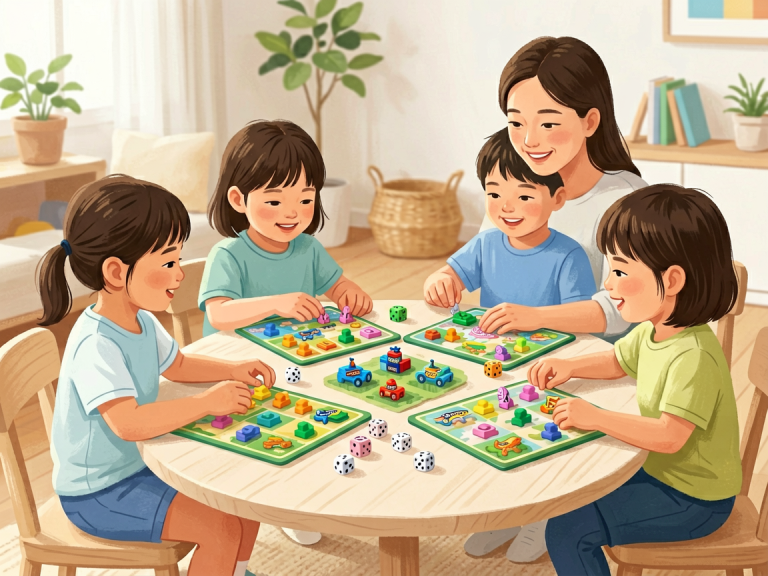
- What to look for: Construction sets (LEGO Duplo, magnetic tiles), simple board games (cooperative ones are best), counting bears, alphabet puzzles, art supplies, nature exploration kits and pretend play sets (kitchens, tool benches).
- Key skills: Number sense, phonological awareness, sequencing, sharing, turn‑taking, creativity and fine motor dexterity.
- Caution: Many “preschool workbooks” and electronic devices claim to teach reading, but research suggests that hands‑on manipulative toys (like letter tiles) are far more effective for skill retention.
### School‑Age Children (5–8 Years): STEM, Strategy and Social Collaboration
As children enter formal schooling, they benefit from toys that reinforce classroom concepts and encourage deeper thinking.
- What to look for: Science experiment kits, coding robots (like Botley or Code‑a‑pillar), advanced construction sets (K’Nex, Lego Technic), logic puzzles, geography games, math card games and multi‑player strategy games (e.g., Ticket to Ride, Catan Junior).
- Key skills: Experimentation, critical thinking, collaboration, reading comprehension, basic engineering and perseverance.
- Important note: Avoid toys that rely heavily on screens. Instead, look for tangible, hands‑on STEM kits that require building, testing and recording results.
### Tweens (8+ Years): Real‑World Application and Self‑Directed Learning
Older children crave complexity and autonomy. The best educational toys challenge them to apply knowledge to real‑world problems.
- What to look for: Robotics kits (LEGO Mindstorms, Arduino starter kits), chemistry sets, coding platforms (Scratch, Python via programmable devices), 3D puzzles, strategy board games (Settlers of Catan, Chess), language‑learning games and model‑building kits (architecture, airplanes).
- Key skills: Systems thinking, coding logic, advanced problem‑solving, patience and self‑directed project management.
—
## Key Factors to Evaluate Before Buying
Not every toy that says “educational” deserves the label. Use this checklist to assess any potential purchase.
### 1. Open‑Endedness vs. Single‑Purpose Play
Open‑ended toys (blocks, art supplies, loose parts, magnetic tiles) can be used in endless ways, encouraging creativity and long‑term engagement. Single‑purpose toys (a toy that only makes one sound when you press a button) quickly lose appeal and teach very little. Prioritise open‑ended play.
### 2. Active vs. Passive Engagement
A truly educational toy requires the child to do something—manipulate, build, sort, think. Beware of “educational” apps or battery‑operated toys that simply flash lights and repeat phrases. Passive toys turn children into spectators, not participants.
### 3. Safety and Material Quality
Check for non‑toxic materials (BPA‑free plastic, water‑based paints, lead‑free). After age three, avoid toys with small magnets or button batteries. Wooden toys are often safer and more durable than cheap plastic. Always buy from reputable brands that comply with ASTM or EN71 safety standards.
### 4. Age Appropriateness and Difficulty Level
A toy that is too easy will bore the child; one that is too hard will frustrate them. Look for a “zone of proximal development”—the toy should challenge the child just enough that they can succeed with a little effort or adult guidance. Many high‑quality toys offer multi‑level challenge cards or expansion packs.
### 5. Stimulus for Multiple Skills
The best educational toys engage more than one domain. A simple board game, for example, can teach counting (math), turn‑taking (social), strategic thinking (logic) and hand‑eye coordination (physical). Avoid toys that focus on only one narrow skill.
### 6. Durability and Longevity
Children can be rough on toys. Look for reinforced stitching, solid wood, robust hinges and parts that can be replaced. A toy that survives multiple children pays for itself many times over.
—
## Budgeting for Educational Toys: Quality Over Quantity
You do not need to break the bank to provide excellent learning tools. A few well‑chosen, high‑quality toys will outperform a closet full of cheap, fleeting novelties.
- Start small: Invest in a single versatile open‑ended toy (e.g., a set of wooden unit blocks) instead of five single‑purpose items.
- Rotate toys: Keep only 10–15 toys accessible at a time; rotate them every few weeks to renew interest. This strategy stretches your budget and prevents overwhelm.
- Buy second‑hand: Thrift stores, Facebook Marketplace and yard sales often have high‑quality wooden toys at a fraction of the retail price. Just clean and sanitise thoroughly.
- Consider subscriptions: Some companies offer monthly STEM or art kits tailored to age groups (KiwiCo, Little Passports). These can be cost‑effective if you value variety and convenience.
Avoid “educational” toy bundles that promise everything—they often contain filler items. Instead, make a list of the specific skills you want to support (e.g., fine motor, spatial reasoning, early literacy) and choose one or two targeted toys per area.
—
## Common Mistakes Parents Make—and How to Avoid Them
Even well‑intentioned adults can fall into traps. Here are the most frequent pitfalls:
- Over‑valuing “smart” electronics. A toy that talks, counts and sings “ABCs” might seem impressive, but children learn best through reciprocal interaction, not passive listening. Use these gadgets sparingly.
- Forgetting the role of the adult. No toy, no matter how sophisticated, replaces a parent or caregiver who plays alongside the child, asks questions and extends the learning. For example, while playing with blocks, you can ask, “What happens if we put the biggest block on top?”
- Buying too far ahead. A toy intended for a 5‑year‑old may end up ignored or broken if bought for a 2‑year‑old. Stick to current developmental needs.
- Ignoring the child’s interests. A child who loves dinosaurs will learn far more from a dinosaur excavation kit than from a generic math workbook. Leverage their passions.
- Equating price with quality. Some expensive toys are poorly designed. Read reviews from objective sources (e.g., parenting blogs, educator recommendations) rather than relying solely on brand reputation.
—
## Conclusion: The Best Educational Toy Is the One That Gets Played With
Ultimately, the most effective learning tool is one that captures a child’s attention, sparks curiosity and invites repeated exploration. Great educational toys are simple, durable and open‑ended; they ask questions instead of giving answers. Use this guide to become a discerning shopper—and remember that your engagement, your questions, and your willingness to sit on the floor and play are the most valuable educational “toys” of all.
Before you buy, take a moment to ask: *“Will this toy help my child think, create, collaborate or persevere?”* If the answer is yes, you’ve chosen wisely.