The Joy of Screen-Free Play: Nurturing Babies Through Hands-On Activities
In a world increasingly dominated by glowing screens, it is easy for parents to feel pressured to introduce digital media to their babies as early as possible. Yet research consistently shows that the first three years of life are a critical window for brain development, during which real-world, sensory-rich interactions far outweigh any benefits of passive screen time. Babies learn best through touch, movement, sound, and human connection—none of which can be replicated by a tablet or smartphone. This article explores a wide range of engaging, developmentally appropriate play activities for babies that require no screens at all. These activities are designed to stimulate the senses, build motor skills, encourage social bonding, and ignite a lifelong love of discovery.
Why Screen-Free Play Matters
The American Academy of Pediatrics recommends avoiding screen media for children under 18 months (with the exception of video chatting) because early brain development depends on back‑and‑forth interactions with caregivers. When a baby bangs a wooden spoon on a pot and hears you laugh, they learn cause and effect, social cues, and emotional connection. Screens, by contrast, offer a one‑way stream of stimuli that can overstimulate an infant while limiting active participation. Screen‑free play allows babies to explore at their own pace, repeat actions to master skills, and engage multiple senses simultaneously. Moreover, it fosters creativity: a cardboard box becomes a car, a tunnel, or a drum, while a screen offers only fixed images. By prioritizing hands‑on play, parents lay the foundation for problem‑solving, self‑regulation, and physical health.
Sensory Play Activities
Sensory play is any activity that engages a baby’s senses: touch, sight, sound, smell, and taste. For newborns and young infants, simple sensory experiences are incredibly stimulating.
Texture Exploration. Lay your baby on a soft blanket and offer different safe objects to feel. A clean feather, a piece of velvet, a crinkly piece of paper, a smooth wooden block, and a cold metal spoon—each offers a distinct tactile experience. Let your baby grasp and mouth these items under supervision. You can also create a “texture board” by gluing fabric scraps of different textures (fleece, corduroy, burlap, satin) onto a sturdy piece of cardboard and propping it up for tummy time.
Water Play. Fill a shallow baking dish with a half‑inch of lukewarm water and place it on a towel on the floor. For a sitting baby, let them splash with their hands or dip a silicone cup. Add a few floating bath toys or a washcloth. Always stay within arm’s reach. Water play teaches concepts like wet/dry, floating/sinking, and cause and effect.
Sound Hunt. Fill small, sealed plastic containers with different materials: rice, dried beans, bells, or sand. Shake them near your baby’s ear (not too close) and watch their eyes light up as they turn toward the sound. For older babies, let them hold and shake the containers themselves. You can also sing simple songs while tapping a rhythm on your knee or a table—babies love the predictability of a beat.
Edible Finger Paint. For babies older than six months who are already eating solids, mix a little plain yogurt with a drop of natural food coloring (beet juice for red, turmeric for yellow). Spread a dollop on the high‑chair tray and let your baby smear and taste it. This safe, messy play is perfect for sensory exploration and fine motor practice.
Gross Motor Skill Development
Gross motor skills involve the large muscles of the arms, legs, and torso. These activities strengthen muscles and help babies learn to roll, sit, crawl, and eventually walk.
Tummy Time with Obstacles. Place your baby on their tummy over a rolled‑up towel or a small cushion to lift their chest. Position a colorful toy just out of reach so they have to stretch or push up. Adding a mirror in front of them can also encourage them to lift their head. Do this several times a day for short periods.
Reaching and Grasping from Above. Hang a baby gym or simply tie a few soft toys to a string suspended from a doorway (ensure it’s secure and at a safe height). Lay your baby underneath and watch them bat at the toys. This strengthens shoulder and arm muscles and improves hand‑eye coordination.
Crawling Tunnels. Once your baby begins to scoot or crawl, create a tunnel by draping a sheet over two chairs. Place a favorite toy at the far end and encourage your baby to crawl through. You can also sit at the opposite end and call their name. Crawling through a confined space builds spatial awareness and core strength.
Push‑To‑Walk Toys. When your baby is pulling up to stand, provide a sturdy push toy, such as a wooden wagon or a block cart (make sure it has a wide base to prevent tipping). Let them push it while walking along furniture. You can also hold one end of a towel and let your baby pull it—resistance play builds leg and core muscles.
Bouncing and Rocking. Sit on an exercise ball with your baby securely held on your lap and gently bounce. Or, for a younger baby, lie on your back with your knees up and balance your baby on your shins, holding their hands, and gently move your legs in a rocking motion. This develops vestibular (balance) sense and builds trust.
Fine Motor and Hand‑Eye Coordination
Fine motor skills involve the small muscles of the hands and fingers. These activities are particularly engaging for babies as they learn to pinch, grab, and manipulate objects.
Picking Up Small Objects. Once your baby can sit unsupported and has passed the mouth‑everything stage, offer large, safe objects to pick up: wooden rings, large buttons (sewn into fabric), or plastic measuring spoons. At around nine months, you can introduce puff cereal or soft cooked peas (supervised) for pincer grasp practice. The repetition of picking up tiny items builds finger strength.
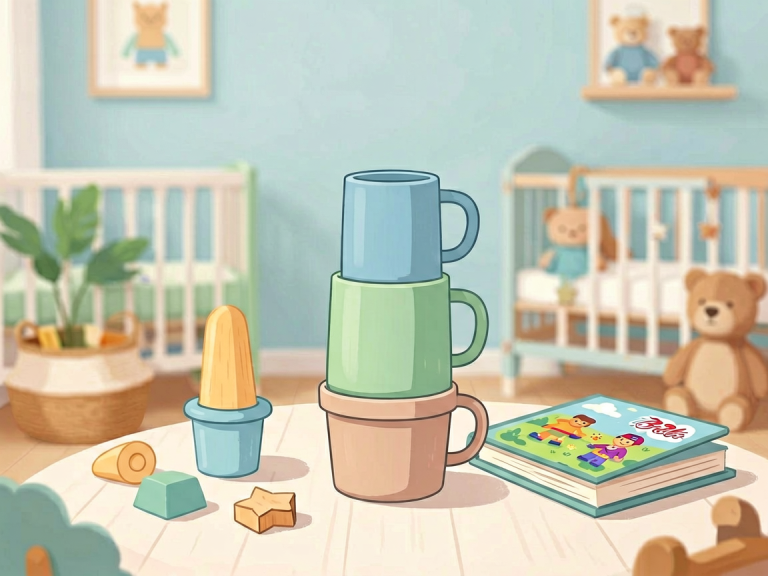
Stacking and Nesting. Wooden blocks, nesting cups, and stacking rings are classics for a reason. At first, your baby will only knock down what you stack; that is a valuable cause‑and‑effect lesson. Eventually, they will attempt to stack themselves. Talk to them about color, size, and “up/down” as they play.
Pulling and Dropping. Attach a short string to a lightweight toy (like a small car or a wadded‑up scarf) and let your baby pull it across the floor. Alternatively, offer a set of plastic cups and encourage your baby to drop a small ball or a wooden egg into them. The act of releasing an object into a container is a major fine‑motor achievement.
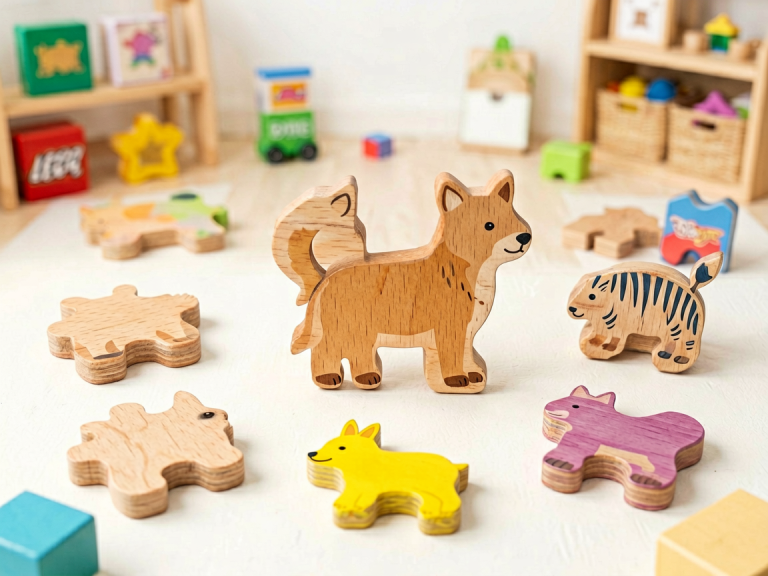
Pegboards and Puzzles. For babies around 12 months, a simple pegboard with large pegs (or a shape‑sorter box) is excellent. They learn to align the peg with the hole and press it in. Wooden puzzles with knobs also encourage grasping and matching. Start with only one or two pieces and add more as they master the skill.
Social and Emotional Play
Babies are inherently social creatures. Play that involves human connection builds attachment, empathy, and emotional regulation.
Peek‑a‑Boo Variations. Peek‑a‑boo is not just a game; it teaches object permanence and social anticipation. For variation, hide behind a pillow, then pop up and say “Peek‑a‑boo!” Let your baby pull a blanket off your head. For an older baby, use your hands to cover your face and make silly sounds. They will laugh and try to copy you.
Mirror Play. Sit with your baby in front of a large, unbreakable mirror. Point to your nose, your baby’s nose, and your reflection. Make faces—happy, sad, surprised—and name the emotions. Mirror play helps babies develop self‑awareness and learn to read facial expressions.
Lap Songs and Rhymes. Sing songs like “The Wheels on the Bus,” “Itsy Bitsy Spider,” or “Pat‑a‑Cake” with hand motions. Let your baby sit on your lap and guide their hands to clap or make the gestures. These shared routines create strong emotional bonds and introduce rhythm and language.
Joint Attention Games. Hold a toy up and say, “Look! A red ball!” Then look at the ball and back at your baby, ensuring they follow your gaze. This “joint attention” is a crucial pre‑language skill. After a while, your baby will point at objects and look to you for your reaction, forming the basis for conversation.
Turn‑Taking. Roll a soft ball back and forth with a sitting baby. At first, you may have to place the ball in their hands and encourage them to push it back. Even if they don’t fully roll it, the idea of taking turns is powerful. Similarly, you can stack a block and gesture for them to knock it down, then stack it again—a simple turn‑taking routine.
Language and Cognitive Play
Even before babies speak, they are absorbing the sounds and patterns of language. Play that combines movement, objects, and words accelerates cognitive growth.
Labeling Everything. Narrate your baby’s play. “You are holding the blue square block. It is smooth. Now you are dropping it! Pop!” This constant verbal stream builds vocabulary and comprehension. Use simple, repetitive phrases.
Object Permanence Games. Hide a small toy under a cup or a cloth while your baby watches. Ask, “Where did it go?” and then lift the cover to reveal the toy. For added challenge, use two or three cups and shuffle them. This develops memory and cognitive flexibility.
Treasure Baskets. Fill a low basket with everyday, safe objects: a wooden spoon, a silicone whisk, a clean pinecone, a fabric scarf, a large key ring, a metal measuring cup. Let your baby explore freely, shaking, banging, and mouthing each item. Talk about each object: “This spoon is cold. The scarf is soft.” Treasure baskets encourage curiosity and problem‑solving as babies figure out how to use each object.
Cause‑and‑Effect Toys. Homemade toys are excellent: a box with a slot cut in the lid and a set of large cardboard discs to drop through, or a plastic bottle filled with dry rice and a few beads (lid tightly glued) that makes a rattle. You can also show your baby how pressing a button on a pop‑up toy makes an animal spring out. These experiences teach that actions have consequences.
Pretend Play. Around 12 months, babies begin to imitate real life. Offer a toy phone and pretend to talk to Grandma. Give them a doll and a small blanket, and show them how to cover the doll. Use a play teacup and pretend to drink. This symbolic play is the foundation of imagination and later storytelling.
Conclusion
Screen‑free play is not just a avoidance of digital devices; it is an active, intentional embrace of the rich, tactile, and relational world that babies are wired to explore. From the simplest game of peek‑a‑boo to the complex coordination of stacking blocks, each activity supports a unique facet of development. Parents and caregivers do not need expensive toys or elaborate setups—everyday objects, a bit of creativity, and above all, your presence and attention are the most powerful tools. As you engage in these activities, remember that the goal is not to teach, but to connect. The laughter, the babbling, the reaching hands—these are the true milestones. By putting away the screens and getting down on the floor, you are giving your baby the best possible start: a childhood of wonder, movement, and love.