Learning Through Play Under $25: Unlocking Educational Joy Without Breaking the Bank
Introduction: The Power of Playful Learning on a Shoestring Budget
In an era where educational toys and digital learning apps often come with hefty price tags, the notion that meaningful learning can happen through play for less than twenty-five dollars might seem almost utopian. Yet the truth is that some of the most profound educational experiences are not measured by the cost of materials but by the creativity, curiosity, and connection they inspire. Learning through play is not a luxury reserved for those who can afford expensive STEM kits or subscription-based learning platforms. It is a fundamental human activity, one that children and adults have engaged in for centuries using sticks, stones, conversations, and imagination. This article explores how to harness the power of play for educational purposes without spending more than the price of a modest dinner out. We will examine the psychological and pedagogical principles behind playful learning, offer concrete, budget-friendly activity ideas, and discuss how to design an environment where discovery and enjoyment coexist naturally. Whether you are a parent, a teacher, a caregiver, or a lifelong learner yourself, the strategies outlined here will demonstrate that the most valuable educational currency is not money but intention, interaction, and open-ended exploration. By the end of this article, you will have a toolkit of ideas that cost less than a typical video game or a single museum admission, yet can yield hours of deep learning in areas such as science, mathematics, literacy, social skills, and creative thinking. Learning through play under $25 is not only possible—it is a powerful reminder that the best things in education are, quite literally, free or nearly free.
The Science Behind Play-Based Learning: Why It Works
Before diving into specific activities, it is essential to understand why learning through play is so effective, especially when resources are limited. Research in developmental psychology and neuroscience consistently shows that play activates multiple brain regions simultaneously, fostering neural connections that support problem-solving, emotional regulation, and executive function. When children (and adults) play, they enter a state of “flow”—a mental state of complete absorption and enjoyment. In this state, learning occurs effortlessly because the brain is fully engaged and motivated. Crucially, play does not require expensive tools. A simple game of “I spy” builds vocabulary and observational skills. A homemade cardboard box can become a spaceship, teaching physics concepts like gravity and trajectory through imaginative play. A deck of cards can teach probability, strategic thinking, and even basic arithmetic. The key is that play is intrinsically rewarding. Unlike forced instruction, play encourages repeated practice because it is fun. This repetition is the bedrock of skill acquisition. Furthermore, low-cost play often necessitates improvisation, which itself is a higher-order cognitive skill. When children cannot rely on pre-programmed responses from a toy, they must invent rules, negotiate with peers, and adapt to changing circumstances. These are exactly the “21st-century skills” that educators and employers value: creativity, collaboration, communication, and critical thinking. So, while a $100 robotics kit might teach coding, a $5 pack of index cards can teach logic, negotiation, and storytelling. The budget constraint does not diminish the learning; it often enhances it by forcing participants to be more active and imaginative.
Activity 1: The 25-Cent Math Game – Card and Dice Challenges
Perhaps the most versatile learning tools under $25 are a standard deck of playing cards and a set of dice. Both can be purchased for under $5 combined, yet they offer endless mathematical possibilities. For young children, simple card games like “War” teach number comparison and one-to-one correspondence. For older students, games like “24 Game” (using the numbers on cards to reach 24 through addition, subtraction, multiplication, and division) develop mental arithmetic fluency. Dice can be used for probability experiments: roll two dice 100 times, record the sums, and create a bar graph to visualize which sums are most common. This teaches data collection and basic statistics. Another powerful activity is “Dice Multiplication Bingo”: create a grid of products (e.g., 2–12) and roll two dice, then mark the product. This builds multiplication recall in a competitive, engaging context. The total cost for these activities? Under $10. Moreover, the learning is not limited to math. Use cards to create story prompts (e.g., draw three cards and create a story involving a character (King), a setting (Heart), and a conflict (number 7). This integrates literacy and imagination. The beauty of these tools is that they are reusable, portable, and adaptable to any age or skill level. A single deck of cards can teach fractions (by dividing the deck into halves or fourths), strategy (through games like Poker or Rummy), and even social-emotional skills like taking turns and handling winning or losing gracefully. With a small investment of time and a tiny budget, card and dice games can replace expensive math workbooks entirely.
Activity 2: Nature as the Ultimate Classroom – Outdoor Exploration on a Budget
The natural world is arguably the most underutilized, yet utterly free, learning environment. A walk in a local park, a backyard, or even a city sidewalk can become a rich educational experience for under $25. Start by equipping a “nature explorer kit” that costs less than $15: a magnifying glass (under $5), a small notebook, a pencil, and a collection bag (all found at dollar stores). With these simple tools, children can observe insects, compare leaf shapes, collect rocks, and document their findings. This is hands-on science: hypothesis testing (will this rock float?), classification (sort leaves by shape or color), and observation (draw the details of a spider web). For a few dollars more, you can buy a simple field guide to local birds or plants, or even print free identification sheets from the internet. The learning extends beyond biology. A nature scavenger hunt can include math challenges: “Find three objects that are symmetrical” or “Collect ten items and make a graph of their lengths.” Language arts can be integrated by asking children to write a poem about a tree they observed or to describe the sound of wind through leaves using sensory words. Social studies emerge when you discuss how indigenous peoples used plants for medicine or food. The key is to frame the outdoor experience as an open-ended investigation rather than a structured lesson. The child’s natural curiosity will drive the learning. A single acorn can spark a discussion about oak trees, life cycles, squirrels, and even fractions (if you break it open to see the two cotyledons). The only expense is time and attention—both free.
Activity 3: The Art of Conversation – Storytelling and Role-Play
One of the most powerful learning tools is the human voice and a willingness to imagine together. Storytelling requires no props at all, though a few inexpensive puppets or costumes (a scarf, a hat, a paper bag mask) can be made or bought for under $10. The educational benefits are immense. When children create and tell stories, they practice narrative structure (beginning, middle, end), character development, vocabulary, and cause-and-effect reasoning. Role-playing historical events or fictional scenarios develops empathy and perspective-taking. For example, a simple activity like “pretend we are settlers on a new planet” can involve science (what do we need to survive?), math (how much food for 30 days?), and social studies (how do we create rules and a government?). This is project-based learning at its finest, costing nothing. You can also use a set of inexpensive flashcards (like those from a dollar store) with images to spark story ideas. Alternatively, use a free online “story dice” generator or simply write random words on pieces of paper. The act of combining unrelated elements to form a coherent narrative exercises divergent thinking and logic. For older children or even adults, try “What If” scenarios: “What if gravity suddenly reversed for one hour?” This leads to physics discussions, creative writing, and ethical dilemmas. The entire activity costs $0 to $5. Moreover, storytelling builds crucial oral language skills that are foundational for reading comprehension and academic success. In many cultures, oral tradition is the primary mode of learning. By reviving this ancient practice, we tap into a powerful, free educational method.
Activity 4: DIY Science Experiments Using Household Items
Many classic science experiments can be conducted with items found in any kitchen or bathroom, costing well under $5 total for multiple activities. For example, a simple baking soda and vinegar volcano teaches chemical reactions. But you can go further: create a “lava lamp” using oil, water, food coloring, and an Alka-Seltzer tablet (all cheap or free if you already have them). This demonstrates density, polarity, and gas formation. Another experiment: fill a glass with water, cover it with a card, and invert it—the card stays, demonstrating air pressure. This can lead to discussions about atmospheric pressure and vacuums. Making a compass with a magnetized needle and a bowl of water introduces magnetism and the Earth’s magnetic field. These experiments do not require expensive kits; they require only curiosity and a willingness to ask “why?” A small investment in a few basic supplies—like a magnet, a thermometer, a measuring cup, and a magnifying glass—can enable dozens of experiments. A $10 investment in a simple microscope (plastic, handheld models are available for under $15) opens a world of microbiology: examining onion skin, pond water, or dust. The learning is self-directed and inquiry-based. Children can record their observations in a free notebook, draw conclusions, and ask new questions. This mirrors the scientific method without the pressure of a formal curriculum. The only additional cost might be a few books from the library (free) to research the science behind the experiments. Under $25, you can provide a semester’s worth of engaging scientific exploration.
Activity 5: The Power of Board Games and Puzzle Design
Rather than buying expensive educational board games, why not create your own? With a piece of cardboard, markers, index cards, and dice (total cost under $10), you can design a board game that targets any subject. For example, a “Math Quest” game where players must solve arithmetic problems to advance through a fantasy map. Or a “Geography Race” where players answer questions about capitals and landmarks. The process of designing the game itself is a powerful learning experience: it requires planning, rule creation, balance, and iteration. If you prefer ready-made options, many classic board games cost under $25 and are deeply educational. “Checkers” teaches strategy and spatial reasoning. “Uno” reinforces number recognition and color matching, as well as patience and turn-taking. “Scrabble” (junior versions exist) builds vocabulary and spelling. “Set” is a card game that develops pattern recognition and logical reasoning, and it can be found for around $15. Alternatively, puzzles (jigsaw puzzles, tangrams, logic puzzles) enhance visual-spatial skills and persistence. A single 500-piece jigsaw puzzle can cost under $10 and provide hours of collaborative problem-solving. Additionally, free online resources like printable puzzles (mazes, word searches, cryptograms) can be accessed and printed for pennies. The key is to rotate activities to maintain freshness. The total budget for a collection of two or three games and puzzle materials can easily stay under $25, especially if you shop at thrift stores or garage sales where used games are often a dollar or two. The learning outcomes include not only subject knowledge but also executive function skills: planning, self-control, flexibility, and working memory.
Activity 6: Digital Freebies and Library Resources
While technology can be expensive, there are abundant free or nearly free digital resources that support learning through play. Many educational websites and apps offer free tiers with quality content. For example, “Khan Academy Kids” is entirely free and provides interactive games in reading, math, and social-emotional learning. “Prodigy Math” is a fantasy role-playing game that teaches math standards, and while it has premium options, the free version is extensive. “Scratch” is a free coding platform where children can create their own animations and games, learning logic and design in the process. All of these require only an internet connection and a device you likely already own. The cost is $0. Additionally, public libraries are treasure troves of free learning: they lend books, board games, puzzles, and even educational kits. Many libraries also offer free programming like storytimes, coding clubs, and craft sessions. A library card costs nothing, yet the value of the resources is enormous. You can borrow a stack of non-fiction books about dinosaurs, space, or insects, then create a “fact hunt” game where children find answers to questions you write. This combines reading comprehension with research skills. Under $25, you could invest in a small dry-erase board or a pack of sticky notes to use with these library books for note-taking and summarizing. The combination of free digital tools and library resources means that a family or classroom with a tight budget can still provide a rich, play-based learning environment.
Creating a Sustainable Learning-Through-Play Culture
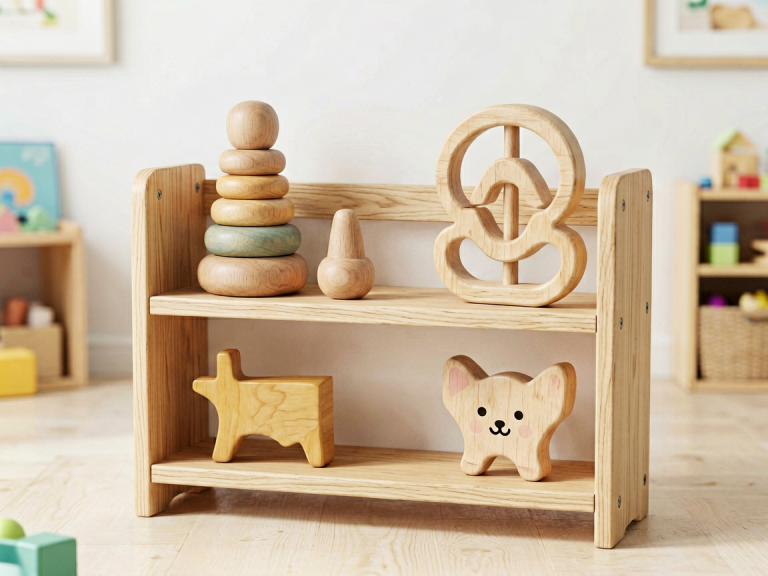
The activities described above are not one-off solutions; they can be woven into a daily or weekly routine. To sustain this approach, it helps to set up a “play stimulus” corner in your home or classroom—a low shelf or a small box containing the materials: a deck of cards, dice, a magnifying glass, a few notebooks, and a list of suggested activities. Rotate the items regularly to maintain novelty. Encourage children to invent their own games and write down the rules. Celebrate their creativity. Most importantly, model playful learning yourself. When adults engage in these activities with genuine curiosity and enjoyment, children internalize the message that learning is fun and valuable. You can also involve children in the budgeting process: give them a $25 limit and let them plan a “play learning afternoon” where they choose materials from a store or from household items. This teaches financial literacy, decision-making, and prioritization. They might choose a $5 box of crayons, a $2 bag of marbles, and a $1 pack of balloons, then discover that balloons can be used to learn about static electricity, air pressure, and even respiratory system modeling. The budget constraint becomes a creative constraint, not a limitation.
Conclusion: The True Cost of Playful Learning
In conclusion, learning through play under $25 is not a compromise; it is an opportunity to strip away the commercial noise and focus on what truly matters in education: curiosity, interaction, imagination, and joy. The activities outlined here—card and dice games, nature exploration, storytelling, DIY science, board game design, and free digital resources—demonstrate that a small investment can yield rich and lasting educational outcomes. The research is clear: play is not a break from learning; it is a sophisticated form of learning that builds both foundational knowledge and higher-order thinking. By embracing low-cost play, we also teach children an invaluable lesson: that you do not need money to be smart, creative, or engaged. Resourcefulness itself becomes a skill they will carry into adulthood. So, the next time you think you need to spend hundreds of dollars on the latest learning gadget, remember the deck of cards in your drawer, the rocks in your garden, and the stories waiting to be told. The best education is often the one that costs the least—but requires the most imagination. With a budget of $25 and a commitment to playful exploration, you can unlock a world of discovery.