Low-Mess Play Activities for Babies: Simple Supplies, Big Developmental Benefits
Introduction
Playing with babies is one of the most joyful and essential parts of early childhood development. However, many parents shy away from frequent play sessions because they dread the inevitable mess: spilled water, crushed food, scattered toys, and sticky hands that somehow end up on every surface. The good news is that you do not need to choose between a clean home and a stimulated baby. With a little creativity and the right supplies, you can offer your baby rich, engaging, and developmentally appropriate play activities that produce almost no mess at all. Low-mess play does not mean low-quality play. In fact, many of the most beneficial sensory, motor, and cognitive experiences for babies can be delivered using simple household items that are easy to set up, easy to clean, and gentle on your sanity. This article will guide you through a variety of play activities designed for babies from about 3 months to 12 months, all using low-mess supplies. Each activity is described in detail, including the materials needed, the step-by-step process, the developmental benefits, and practical tips for keeping the mess to an absolute minimum.
Sensory Play Without the Slippery Floor
Sensory play is crucial for babies because it helps them build neural connections and understand the world through their senses. Traditional sensory bins filled with rice, sand, or water can be delightful but often result in a trail of grain across the kitchen floor or an impromptu puddle in the living room. Fortunately, there are many ways to provide rich sensory input without the cleanup headache.
Sealed Sensory Bags
One of the simplest low-mess sensory activities is the sealed sensory bag. You will need a heavy-duty re-sealable zip-top bag (gallon size works best), duct tape, and a variety of safe small items. Fill the bag with a mixture of hair gel (clear or colored), a few drops of food coloring, and small objects like pom-poms, plastic buttons, or beads (ensure they are large enough not to be a choking hazard for older babies). Squeeze out as much air as possible, seal the bag, and reinforce the seal with duct tape along the top edge. Then place the bag on a flat surface or tape it to a highchair tray. Your baby can press, pat, and squish the gel, watching the objects float and move. The bag contains everything, so there is zero mess. This activity strengthens hand-eye coordination and introduces cause-and-effect reasoning. For variation, you can freeze the gel bag for a cool texture, or add glitter for visual interest. Always supervise your baby during this play, as even taped bags can eventually leak if punctured.
Fabric Sensory Scarf Play
Babies love exploring different textures, and fabric scarves are a perfect low-mess tool. Collect several scarves made of different materials: a silky polyester scarf, a soft cotton bandana, a fuzzy fleece square, and a ribbed knit piece. You can also use clean socks or pieces of fabric with different weaves. Simply scatter them on a clean blanket on the floor, and let your baby lie on their tummy or sit and reach for them. The scarves do not produce crumbs, stains, or spills. As your baby grasps, pulls, and shakes each scarf, they experience varied tactile input. You can also play peek-a-boo by covering your face or the baby’s face with a scarf, which supports early social-emotional development and object permanence. If the scarves get a little drool on them, you can toss them directly into the laundry. No scrubbing required.
Fine Motor Activities That Stay in Place
Babies are naturally driven to practice their fine motor skills—reaching, grasping, transferring objects from one hand to another, and eventually using their pincer grasp. Many fine motor activities involve small items that can easily fall onto the floor and roll under furniture. The following activities use larger objects or containment strategies to keep everything tidy.
Pom-Pom Drop Through a Toilet Paper Tube
This activity requires only a cardboard tube (like a toilet paper roll or paper towel tube), a small empty plastic container with a lid (a yogurt cup works well), and a handful of large pom-poms (at least 2 inches in diameter to avoid choking risk). Use scissors to cut a hole in the lid of the container large enough for a pom-pom to pass through. Tape the cardboard tube vertically onto the lid, aligning the top of the tube with the hole. Now you have a simple drop game. Show your baby how to pick up a pom-pom, hold it over the top of the tube, and let it fall. The pom-pom will slide through the tube and into the container. Your baby will love the sound and the surprise of disappearance and reappearance (when you open the lid). Pom-poms are soft and do not roll away aggressively like balls. They also do not stain or leave residue. If one rolls off the table, it is easy to retrieve. This activity promotes hand-eye coordination, concentration, and the understanding of object permanence. You can also use colored pom-poms and name the colors as your baby plays.
Plastic Cup Stacking and Nesting
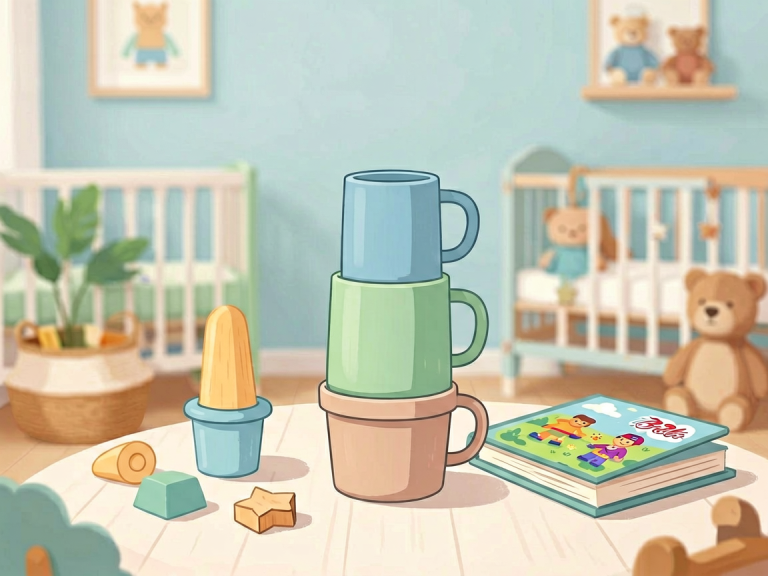
A set of lightweight plastic cups (the disposable kind is fine, but sturdy reusable ones are better) is a fantastic low-mess manipulative. Give your baby three or four cups and show them how to stack one on top of another. Naturally, the towers will tumble, which is half the fun. Babies love the cause-and-effect of knocking them down. You can also nest cups inside each other. Plastic cups are easy to wash, dry quickly, and do not create crumbs or sticky residue. For extra engagement, you can place a small toy (like a rattle or a wooden block) under one cup and let your baby lift it to find the hidden object. This game practices the pincer grasp, wrist rotation, and problem-solving skills. The only potential mess is if your baby decides to chew on a cup, but plastic cups are easily rinsed. Avoid paper cups, as they can become soggy and disintegrate.
Gross Motor Play That Won’t Require Mopping
Babies need plenty of large muscle movement: rolling, crawling, cruising, and eventually walking. While outdoor play is wonderful, indoor gross motor play can be just as effective—and it does not have to involve muddy shoes or sticky sweat. Here are two activities that use soft, contained, and easy-to-clean supplies.
Tummy Time with a Mirror and Soft Books
Tummy time is essential for strengthening a baby’s neck, shoulders, and back muscles, but many babies resist it. To make it engaging with minimal mess, place a large, unbreakable mirror (or two small ones) on the floor in front of your baby. Babies are fascinated by their own reflections. Next to the mirror, lay down a few soft cloth books or crinkle toys. Soft books made of fabric are completely mess-free: they can be chewed, drooled on, and thrown, and they dry quickly. The mirror might get some drool or handprints, but a quick wipe with a cloth solves that. As your baby lifts their head and looks at the mirror, they develop visual tracking and self-awareness. You can also hold a squeaky toy or a jingle bell near the mirror to encourage reaching. There is no spilled liquid, no scattered food, and no laundry emergency.
Ball Rolling on a Blanket
For a baby who can sit upright with support or independently, rolling a ball back and forth is a classic low-mess activity. Use a soft, lightweight ball such as a fabric ball or a squishy foam ball. Sit across from your baby with a soft blanket underneath both of you. Roll the ball gently toward your baby, and encourage them to push it back to you. The blanket catches any missed rolls, so the ball does not bounce away into a corner. It also catches any drool or spilled water. After play, simply shake the blanket and toss it in the laundry. This activity strengthens trunk control, hand-eye coordination, and social turn-taking. For added fun, you can use a ball that makes a soft jingle sound when moved. No paint, no sand, no glue needed.
Cognitive and Language Play With Zero Cleanup
Cognitive development in babies is stimulated by routines, repetition, and interactive conversation. These activities use only your voice, your face, and a few low-mess props.
Peek-a-Boo with a Muslin Cloth
Peek-a-boo is a timeless game that teaches object permanence, attention, and social bonding. The mess? Almost none. All you need is a thin muslin cloth or a clean diaper cloth. Hold the cloth in front of your face, then lower it and say “Peek-a-boo!” with a big smile. As your baby grows, they will start to pull the cloth away themselves. The cloth might get a little damp from your breath or drool, but it will dry quickly. You can also hide a favorite soft toy under the cloth and let your baby discover it. This activity requires no batteries, no plastic parts, and no cleanup beyond tossing the cloth in the laundry once a week.
Finger Rhymes and Songs
Finger rhymes like “Itsy Bitsy Spider” or “Pat-a-Cake” are perhaps the ultimate low-mess play. No supplies are needed except your hands and your voice. Singing and moving your fingers helps babies develop auditory discrimination, rhythm, and fine motor imitation. As your baby becomes more mobile, they might try to grab your hands, but that is harmless. You can do this anywhere: on the changing table, during a diaper change, or while waiting for food. There is literally nothing to clean up. For extra sensory input, you can add a simple prop like a small rattle to shake during the song, but even that is optional. This activity also strengthens the parent-baby bond through eye contact and expressive interaction.
DIY Low-Mess Toys From Household Items
You do not need to buy expensive toys. Many household items serve perfectly as low-mess play materials. The key is choosing items that are safe, washable, and non-staining.
The Tissue Box Pull
Take an empty tissue box (the rectangular kind with a plastic opening) and stuff it with several colorful scarves, ribbons, or strips of fabric. Make sure the ends are sticking out of the opening. Show your baby how to pull one scarf out, then another. This game is incredibly satisfying for babies because each pull reveals a new surprise. The materials do not leave residue, and the tissue box is disposable or can be reused with different items. If your baby mouths the fabric, it is safe as long as it is clean and free of loose threads. This activity supports problem-solving, fine motor pulling, and the concept of object permanence. The entire setup fits in a small basket and takes seconds to pack away.
Sock Rattle
Take a clean baby sock and fill it with a small amount of dry rice or a few bells. Tie a tight knot at the open end to secure the contents. Now you have a soft, squeezable rattle that is much gentler than a plastic one. Your baby can shake it, chew on it (rice is non-toxic, though it could leak if the sock splits, so check for holes), and throw it without causing damage. The sock can be washed in the washing machine. If you are worried about the rice leaking, use jingle bells inside a second sock. This toy is zero-mess until the sock wears out, and even then the rice is easily swept up. Making the rattle together with your baby (let them watch as you fill the sock) can be a fun bonding moment.
Tips for Maintaining a Low-Mess Play Environment
Even with the best low-mess activities, some minimal cleanup is inevitable—a few drops of drool, a stray pom-pom, or a crinkle toy that gets tossed into the water cup. Here are a few practical strategies to keep your play sessions truly low-mess:
- Designate a play blanket: Lay a large, washable blanket or a waterproof mat on the floor before starting any activity. This contains any small spills or bits and makes cleanup as simple as shaking the blanket outside or tossing it in the wash.
- Use a highchair tray for confined play: Babies who can sit up can use their highchair tray as a perfect play surface. The tray is easy to wipe down, and fallen items stay on the tray or on the floor directly below.
- Keep wipes handy: A pack of baby wipes or a damp cloth allows you to clean hands, faces, or surfaces immediately, preventing mess from spreading.
- Rotate activities: When you do only one or two activities per session, the mess stays small. Rotate toys and supplies to keep interest high without overwhelming your space.
- Dress for success: Put your baby in a simple, washable outfit (or just a diaper) before messy play. A bib can catch drool and spills.
Conclusion
Low-mess play activities for babies are not only possible—they are abundant and incredibly beneficial. By choosing supplies that are easy to contain, washable, and non-staining, you can offer your baby a rich sensory, motor, cognitive, and social experience without turning your home into a disaster zone. From sealed sensory bags and pom-pom drops to tummy time mirrors and sock rattles, each activity is designed to be simple to set up, engaging for your baby, and gentle on your cleaning routine. Remember that the goal of play is connection and development, not perfection. A little mess is part of the journey, but with these strategies, you can keep it to a minimum while maximizing the joy. So go ahead—pull out that tissue box, fill a sock with rice, and let the low-mess fun begin. Your baby will learn, grow, and smile, and your living room will thank you.