The Magic of Make-Believe: Essential Pretend Play Activities for Kids
Pretend play, also known as imaginative play or role-playing, is far more than just child’s amusement. It is a cornerstone of childhood development, a vibrant laboratory where young minds experiment with social roles, emotional regulation, language, and creative problem-solving. In an era increasingly dominated by screens and structured schedules, the unstructured, self-directed nature of pretend play has become more precious—and more endangered—than ever. This article explores a rich variety of pretend play activities for kids, organized by theme and developmental purpose, to help parents, educators, and caregivers rekindle the timeless joy of make-believe.
Why Pretend Play Matters
Before diving into specific activities, it is crucial to understand why pretend play deserves a central place in a child’s daily life. Neuroscientific research shows that when children engage in fantasy scenarios, they activate multiple brain regions simultaneously. They practice executive functions like impulse control (waiting for their turn to be the doctor), working memory (remembering the rules of the game), and cognitive flexibility (switching between being a baby bear and a parent bear). Emotionally, pretend play allows children to safely explore frightening or confusing situations—a trip to the hospital, a family argument, or the arrival of a new sibling—by replaying them in a controlled, playful context. Socially, children learn negotiation, cooperation, and empathy as they decide who will be the mom, the baby, the shopkeeper, or the monster. In short, pretend play is not a break from learning; it is one of the most sophisticated forms of learning a child can experience.
Imaginative Kitchen and Restaurant Play
One of the most universal and accessible forms of pretend play is the kitchen or restaurant scenario. Children naturally gravitate toward imitating the adults they see preparing meals. To set up a simple kitchen corner, you need only a few basic props: plastic or wooden food items, pots and pans, a play stove (or a cardboard box painted to resemble one), and small plates and cups. Encourage children to create menus, take orders from stuffed animals or family members, and "cook" elaborate dishes. This activity builds vocabulary (names of foods, cooking verbs like chop, stir, and bake), early math skills (counting portions, measuring imaginary ingredients), and social scripts (taking turns as chef and customer). For older preschoolers, you can introduce a real-world twist by making simple snacks together using real ingredients, then having them pretend to run a café for their dolls.
Doctor’s Office and Hospital Play
Doctor and hospital pretend play is a classic because it addresses a universal childhood experience: visits to the doctor. Children often feel powerless during medical checkups; by reversing the role and becoming the doctor, they regain a sense of control. Props can include a toy stethoscope (or a simple piece of string with a button attached), a small flashlight, bandages, a play syringe, and a stuffed animal patient. Add check-in forms (even blank paper and a pencil), a waiting room with chairs, and a reception area. Children can practice medical vocabulary, learn about the body, and overcome common fears. A child who pretends to give a doll a shot is processing his or her own memory of receiving one. This activity also fosters empathy: the child must "comfort" the crying patient, listen to symptoms, and provide care.
Supermarket and Shopping Play
Shopping is another everyday ritual that children love to imitate. Gather empty food boxes, cans, cartons, and plastic fruit; set up a small shop on a table or the floor. Use play money or simply have children write "receipts" on scrap paper. Take turns being the cashier, the shopper, and the bagger. This activity naturally incorporates counting, simple addition and subtraction, classification (putting produce in one basket, dairy in another), and social language (greetings, requests, thanking). Extend the play by making shopping lists together before "going to the store," which introduces pre-literacy skills as children draw or scribble items they need.
Superhero and Fantasy Adventure Play
Not all pretend play needs to mirror real life. Fantasy scenarios—being a superhero, a princess, a pirate, or a space explorer—allow children to explore power, bravery, and moral dilemmas. A simple cape (an old towel pinned at the neck) and a mask can transform a shy child into a confident hero. Create an obstacle course using pillows and chairs to represent mountains and lava pits; assign missions like rescuing a teddy bear from the "evil villain" (which could be a sibling or a parent playing along). This type of play encourages physical activity, creative storytelling, and emotional catharsis. A child who feels small in the real world can be tall and mighty in the land of pretend. It also provides a safe space to talk about good and evil, fairness, and helping others.
Animal and Nature-Themed Pretend Play
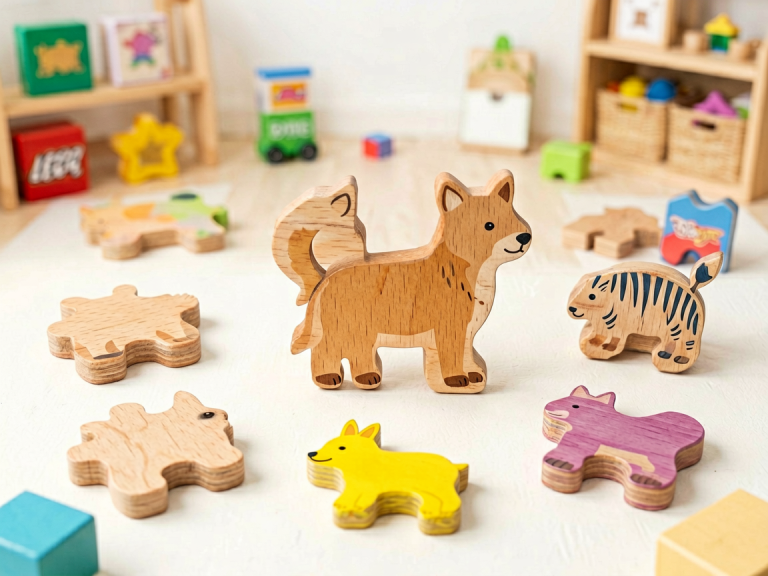
Young children especially love pretending to be animals. They crawl like bears, hop like frogs, and roar like lions. This is not just cute—it is a powerful way for children to embody different physical sensations and emotional states. Set up a "vet clinic" where children treat stuffed animals; create a "jungle" with blankets draped over chairs; go on a pretend safari with binoculars made from toilet paper rolls. For older children, extend this into a more elaborate ecosystem: they can decide which animal eats which plant, build a "den" for hibernation, or act out migration. This builds scientific thinking, empathy for living creatures, and gross motor skills.
Construction and Building Play
Construction workers, architects, and engineers come to life in pretend play with blocks, cardboard boxes, and toy tools. Provide a hard hat, a toy tape measure, and a pile of cardboard tubes and boxes. Children can "build" a house, a tower, a bridge, or a rocket ship. This activity blends pretend play with STEM learning: they must figure out how to balance blocks, which shapes make sturdy walls, and how to fix a "broken" structure. Encourage them to draw blueprints first, then follow their own designs. Playing alongside to ask questions—"What room is this? How will the people get upstairs?"—deepens their thinking.
School and Teacher Play
After children start attending preschool or elementary school, they often reenact the classroom experience. Set up a small desk, a whiteboard or paper on the wall, books, and a pointer. The child becomes the teacher, and you or stuffed animals become the students. This play helps children process the social dynamics of school—rules, authority, group activities—and reinforces what they have learned. It also allows them to be in charge, which can be particularly empowering for children who feel bossed around during the actual school day. You can use this opportunity to practice letters, numbers, or songs in a low-pressure, fun way.
Tips for Encouraging Pretend Play
While children naturally gravitate toward make-believe, adults can gently nurture it. First, provide a "loose parts" environment: open-ended materials like scarves, blocks, cardboard boxes, and fabric scraps are more versatile than single-purpose toys. Second, resist the urge to direct the play. Your role is to be a supportive audience member or an involved play partner who follows the child’s lead. Third, allow plenty of unstructured time. A schedule packed with extracurricular activities leaves little room for the deep immersion that true pretend play requires. Finally, model playful behavior. When you pick up a spoon and pretend it is a microphone, or speak in a silly voice for a doll, you send a powerful message that imagination is valued.
The Lifelong Gift of Imagination
Pretend play activities for kids are not merely an innocent pastime. They are the training ground for life itself. Through these joyful, messy, and deeply meaningful interactions, children build the cognitive, emotional, and social muscles they will need to navigate the complexities of adulthood. They learn that the world is not only what it is, but also what they can imagine it to be. They discover that they have agency, creativity, and a voice. Whether your child is a pirate sailing the living-room seas or a doctor mending a teddy bear’s bruised ear, know that they are doing something profound: they are practicing being human. So clear a space, gather a few simple props, and invite your child into the endless, magical world of pretend play. The only limit is their—and your—imagination.