The Minimalist Playroom: A Parent’s Guide to Preventing Toy Clutter for 7-Year-Olds
—
Introduction: Why Toy Clutter Is a Real Problem
By the time a child turns seven, the toy landscape has shifted dramatically. Gone are the soft rattles and simple stacking rings; in their place are intricate Lego sets, action figures with countless accessories, board games with dozens of pieces, and a rising tide of digital gadgets. What once fit neatly into a single basket now threatens to engulf the living room, the bedroom, and even the hallway. Toy clutter is not just an eyesore—it can overwhelm a child’s developing brain, increase parental stress, and actually reduce the quality of play. Studies in developmental psychology have shown that an overabundance of toys can shorten attention spans and stifle creativity, because children become unable to focus on any single activity. For a seven-year-old, who is at a crucial stage of learning independence, organization, and sustained play, a cluttered environment can be counterproductive. This guide offers practical, research-backed strategies to help parents keep toy chaos under control without turning into the "toy police." The goal is not a sterile, toy-free home, but a curated, intentional play space that encourages imagination, responsibility, and joy.
—
Understanding the Seven-Year-Old’s Play Needs
Cognitive and Emotional Development at Age Seven
A seven-year-old is no longer a preschooler. Their play has become more complex, rule-based, and social. They are capable of following multi-step instructions, building elaborate structures, and engaging in pretend scenarios that last for hours. At the same time, they are developing a stronger sense of ownership and attachment to their possessions. They may resist giving away toys, even those they haven’t touched in months. This emotional bond makes decluttering a delicate task. Understanding that their attachment is real—often tied to memories or a sense of identity—will help you approach the process with empathy.
The Connection Between Clutter and Play Quality
Research from the University of Toledo found that toddlers in a less cluttered environment played for longer periods and with greater focus. The same principle applies to older children. When a seven-year-old’s room is filled with dozens of bins, scattered figures, and half-finished craft projects, their brain is constantly processing visual noise. They may flit from one activity to another, never deeply engaging. Conversely, a well-organized space with a limited selection of toys encourages deeper immersion. For example, leaving out only a few construction sets, a single dollhouse, or a designated art area invites the child to explore one type of play fully, rather than bouncing between ten options. The key is quality over quantity—a lesson that will serve them well into adulthood.
—
The Core Principles of Toy Clutter Prevention
Principle 1: Adopt a “Less Is More” Mindset
The most effective way to avoid toy clutter is to stop acquiring toys in the first place. This sounds simple, but it goes against every birthday-party, holiday, and grandparent instinct we have. As a parent, you must consciously shift your own mindset. Instead of thinking, “More toys mean more fun,” remind yourself that a carefully curated selection of toys actually leads to more fun. A seven-year-old does not need fifty action figures—they need five that they truly love and can invent stories around. They do not need every Lego set ever released—they need a few versatile sets that can be combined. This principle extends to gifts from relatives and friends. Politely request that family members contribute to experiences (tickets to a museum, a subscription to a craft kit, a contribution to a savings fund) rather than physical items. When a physical toy is necessary, ask for something that aligns with your child’s current passions and is unlikely to be abandoned after a week.
Principle 2: Create a “One In, One Out” Rule
This is the golden rule of clutter control. For every new toy that enters the house, one old toy must leave. This can be challenging for a seven-year-old who is emotionally attached to everything, so frame it as a positive decision: “Would you like to choose a toy that another child could enjoy, so you can make room for this exciting new one?” Let the child be part of the decision-making process. Over time, this rule becomes a habit. It also teaches an invaluable lesson about priorities and letting go. If the child refuses to part with anything, that’s a sign they are not ready for the new toy—it can sit in a “holding area” for a week while they decide. Often, the novelty fades, or they realize they can give up a lesser-loved item.
Principle 3: Use the “Play Rotation” System
A play rotation is a game-changer for families with children of any age, but especially for seven-year-olds who have a wide range of interests. The idea is simple: you keep only a subset of toys accessible at any given time, while the rest are stored away in bins or in the basement. Every two to four weeks, you swap out the available toys. This has several benefits: First, it dramatically reduces visible clutter. Second, it makes old toys feel new again when they reappear. Third, it forces the child to focus on the toys at hand, preventing the overwhelmed state that leads to dumping everything on the floor.
For a seven-year-old, you can involve them in the rotation. Let them help select which toys will be “active” for the next rotation. You might set up three bins: “Active,” “Storage,” and “Donate/Retire.” The active bin holds the toys for the current period. The storage bin contains the toys that will be rotated in later. The donate/retire bin is for toys they have genuinely outgrown. Rotations work beautifully because they honor the child’s need for novelty without accumulating more stuff.
—
Practical Strategies to Implement at Home
Step 1: Conduct a Thorough Decluttering First
You cannot maintain a clutter-free system if you start with a mountain of toys. Set aside a weekend to go through every toy in your home. Do this with your child, but be prepared for resistance. Use a gentle but firm approach: “We are going to make your playroom a place where you can actually play, not a place where you can’t find anything.” Sort toys into four piles: Keep, Store, Donate, and Trash. Be honest about broken or incomplete toys—get rid of them. For toys that are still good but no longer played with, explain that they will make another child happy. For sentimental items, take a photo before letting them go; the memory remains without the physical object. This initial purge is essential; trying to organize a cluttered collection is like rearranging deck chairs on a sinking ship.
Step 2: Designate Specific Zones for Different Types of Play
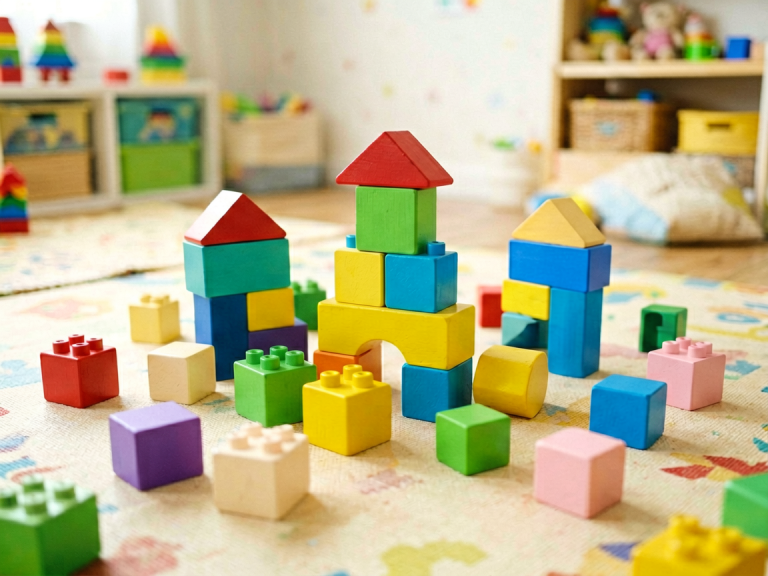
Seven-year-olds benefit from clear boundaries. In their room or playroom, create zones: a building zone (with blocks, Lego, magnetic tiles), a creative zone (with art supplies, clay, paper), a quiet zone (with books, puzzles, calm toys), and a gross motor zone (with sports equipment, jump ropes, or a small trampoline if space allows). Each zone should have its own storage solution—bins, shelves, or drawers—that are clearly labeled with pictures or words (your child can help label them). This zoning not only organizes the toys but also encourages the child to choose a type of play. When they finish, they know exactly where each item goes because the system is intuitive. The rule: one zone at a time. If they want to move to a different zone, they must clean up the first zone entirely. This prevents the dreaded “toy explosion” across the entire room.
Step 3: Implement a Daily 10-Minute Reset
Toy clutter accumulates because of the simple fact that cleaning up feels overwhelming to a seven-year-old. Instead of expecting a full room tidy-up at the end of the day, institute a “10-minute reset” before dinner or bedtime. Set a timer. During those ten minutes, the entire family participates in returning stray toys to their correct zones. Make it a game: “Can we beat the timer?” or “Let’s see who can put away the most toys.” Within a week, this becomes a non-negotiable habit. The key is consistency and positivity—no scolding or threats. The reset ensures that the room remains mostly tidy day-to-day, even if a messy construction project is allowed to stay out for a couple of days.
Step 4: Manage Gift-Giving Events with a Strategy
Birthdays and holidays are the biggest sources of toy influx. Proactive planning is crucial. Before the event, talk to relatives and friends about your family’s “toy philosophy.” You can create a wish list that focuses on consumables (craft supplies, bubbles, chalk), experiences (gift cards to indoor play centers, zoo memberships), or cash for a savings account. For physical toys, ask for open-ended items that have longevity: quality wooden blocks, a set of magnatiles, a few good books, or a board game the whole family can play. When the big day arrives, do not let the child unwrap everything at once. Space out the opening over a few days. This reduces the shock of abundance and allows the child to appreciate each gift. After the celebration, apply the “one in, one out” rule. Donate or store the least-liked old toys to make room for the new ones.
Step 5: Use Vertical Storage and Clear Containers
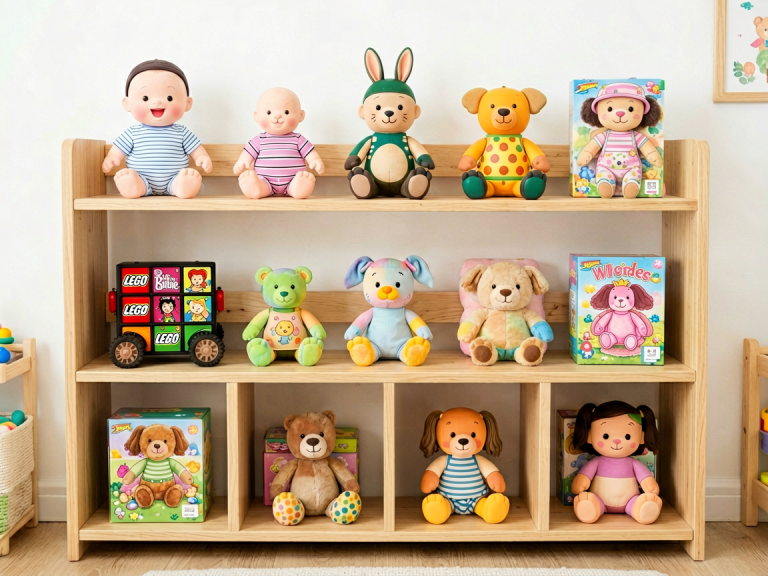
The faster and easier it is to put away a toy, the more likely a child will do it. Opt for open shelving rather than deep, dark bins where toys get lost. Clear plastic containers allow the child to see what’s inside without dumping everything out. Use baskets for larger items like stuffed animals or dress-up clothes. Label each container with a photo or word so the child knows exactly where the dinosaurs go versus the cars. Vertical storage is a space-saver: pegboards on walls can hold art supplies, small action figures, and craft tools. Hanging organizers on the back of doors can store small board games or dolls. The rule of thumb: every toy should have a home, and that home should be easily accessible to a seven-year-old. If they need to ask for help to reach a bin, they will not clean up.
—
Maintaining the System Long-Term
Monthly Audit and Adjustment
Even the best system will drift over time. Schedule a monthly 15-minute audit with your child. Go through the active toys together. Ask: “Have you played with this in the last two weeks?” If not, move it to the storage bin or donate pile. Check for broken pieces and discard them. This monthly ritual reinforces the child’s sense of ownership and responsibility. It also prevents the accumulation of “closet clutter” that silently grows in corners.
Embracing Minimalism as a Family Value
Finally, remember that the goal is not perfection. There will be days when the floor is covered in Lego, and that’s okay—it means they are playing deeply. The difference between a cluttered home and a well-managed one is the ability to reset. By establishing clear systems, involving the child in decisions, and prioritizing quality over quantity, you are not just reducing clutter. You are teaching your seven-year-old lifelong skills: organization, decision-making, and the value of intentional living. A playroom with fewer toys but more opportunities for creativity is a gift that keeps on giving—for both the child and the parent.
—
*Word count: 1,506*