A Parent’s Guide to Choosing Age-Appropriate Toys for Preschool Girls
Choosing the right toys for a preschool girl can feel overwhelming. Shelves overflow with pink boxes, flashing lights, and character-branded playsets, yet many of these items do little to support her development. Preschoolers (ages 3–5) are in a golden period of rapid cognitive, physical, and social-emotional growth. The toys they play with should nurture curiosity, creativity, problem-solving, and cooperation—not just keep them occupied. This guide will help you navigate the toy aisle with confidence, focusing on developmental appropriateness, safety, and enduring play value.
Understanding the Developmental Needs of Preschool Girls
Before selecting any toy, it’s essential to recognize what a preschool girl is capable of and what she needs to practice. At this stage, children are refining their fine motor skills (e.g., using scissors, buttoning shirts), developing language and narrative abilities, learning to share and take turns, and beginning to understand cause and effect. They also engage in “parallel play” that gradually turns into cooperative play with peers.
A common misconception is that preschool girls “naturally” prefer dolls and kitchens while boys prefer trucks and blocks. Research shows that play preferences are heavily shaped by environment and marketing, not biology. Therefore, age-appropriate toys should not be limited by gender stereotypes. A preschool girl may adore construction sets, science kits, or puzzles just as much as a dollhouse. The key is to choose toys that match her individual interests and developmental stage, regardless of packaging color.
Types of Toys That Promote Cognitive Growth
Cognitive development at this age involves memory, attention span, classification, and early math and literacy concepts. The best toys for stimulating the mind are open-ended and require active participation.
Building and Construction Sets
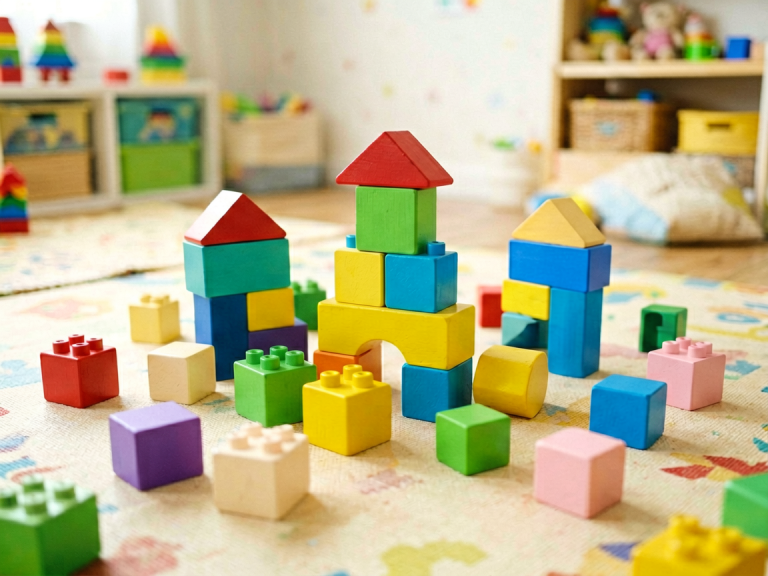
Large wooden blocks, magnetic tiles, or interlocking plastic bricks (like LEGO Duplo) encourage spatial reasoning, planning, and problem-solving. A preschool girl might build a tower for her toy animals or design a “castle” with windows and doors. These toys also teach basic physics—what makes a structure stable or why it falls—without a single screen.
Puzzles and Matching Games
Jigsaw puzzles with 12 to 24 large pieces help develop hand-eye coordination and pattern recognition. Sound puzzles that produce animal noises or alphabet puzzles that introduce letter shapes add a layer of fun. Memory card games (matching pairs of pictures) train working memory and concentration, and they can be played alone or with a sibling.
Simple Board and Card Games
Games like “Candy Land” or “First Orchard” teach turn-taking, counting, and following rules. They also introduce the concept of winning and losing in a gentle, low-pressure setting. For a preschool girl, the process of moving a piece along a path and celebrating small victories is more important than the outcome.
Fostering Creativity and Imaginative Play
Imagination is the engine of childhood. Preschool girls craft elaborate narratives, assign roles, and transform everyday objects into magical props. Toys that support this kind of play are invaluable for language development and emotional intelligence.
Dress-Up Costumes and Role-Play Sets
A simple collection of scarves, hats, and a child-sized doctor’s kit can unlock hours of pretend play. Instead of buying an entire licensed princess wardrobe, consider neutral items like a chef’s apron, a firefighter hat, or a pair of fairy wings. These allow her to experiment with different identities—a veterinarian, a superhero, a baker—without being locked into a single commercial character.
Dolls and Stuffed Animals with Accessories
Dolls are classic for a reason. They encourage nurturing behavior, empathy, and storytelling. Look for dolls with simple, washable bodies and changeable clothes. Avoid dolls with overly sexualized features or loud electronic voices. A simple doll bed, a blanket, and a tiny teacup set provide endless possibilities for caregiving scenarios.
Art and Craft Supplies
Preschool girls love to create. Offer a variety of materials: washable markers, crayons, watercolor paints, play-dough, safety scissors, glue sticks, and collage items like feathers and buttons. The process is more important than the finished product. Let her mix colors, tear paper, and squish dough. This not only builds fine motor skills but also gives her a sense of agency and pride in her work.
Encouraging Physical Activity and Gross Motor Skills
Preschoolers have boundless energy. Physical play strengthens muscles, improves coordination, and supports a healthy lifestyle. Unfortunately, many toys marketed to girls emphasize static indoor activities. Actively seek out options that get her moving.
Ride-On Toys and Tricycles
A sturdy tricycle or a balance bike helps develop leg strength and balance. For indoor fun, a small scooter or a push car can transform a hallway into a racetrack. Outdoor toys like a soccer ball, a Hula Hoop, or a colorful parachute can be used for games that involve running, hopping, and throwing.
Climbing Structures and Obstacle Courses
If you have a backyard, a low climbing dome or a simple swinging rope ladder provides a safe challenge. Indoors, cushions and blankets can be arranged into an obstacle course where she crawls under tables and jumps over pillows. Such play improves body awareness and risk assessment.
Dance and Movement Props
Ribbon wands, scarves, and musical instruments (shakers, drums, xylophones) turn any room into a dance studio. Encourage her to move to different rhythms—fast, slow, stomping, tip-toeing. This kind of play supports rhythm, coordination, and self-expression.
Social-Emotional Learning Through Collaborative Play
Preschool is when children begin to form friendships and navigate complex social dynamics. Toys that require two or more participants teach negotiation, empathy, and emotional regulation.
Cooperative Games (Non-Competitive)
Traditional board games often crown a single winner, which can be frustrating for a preschooler. Instead, choose cooperative games where everyone works together toward a common goal. For example, “Hoot Owl Hoot!” has players help owls fly home before the sun rises. Such games reduce anxiety and encourage teamwork.
Kitchen and Play Food Sets
A play kitchen becomes a social hub. Two or three children can cook a pretend meal, serve it, and clean up. In the process, they practice language (ordering food), turn-taking (waiting for the pot to boil), and compromise (who gets the red plate). Realistic but simple accessories like a wooden pizza or a set of pots and pans are ideal.
Puppets and Puppet Theaters
Puppets allow a child to project feelings onto a character. A preschool girl might use a bunny puppet to express sadness about not wanting to share, or a dragon puppet to roar about frustration. This safe outlet helps her process emotions and practice social scripts.
Safety Considerations: What to Look For and What to Avoid
No matter how educational a toy seems, it is useless (and dangerous) if it does not meet safety standards. Always check labels and design features.
Choking Hazards and Small Parts
Preschoolers still put objects in their mouths occasionally. Avoid toys with small detachable parts that could fit through a toilet paper tube. A useful rule: if a part can fit inside a standard choke tube (1.25 inches in diameter), it is not safe for children under 3. However, even for preschool girls aged 4–5, be cautious with items like beads, marbles, or tiny doll accessories.
Toxic Materials and Sharp Edges
Look for toys labeled “non-toxic” and “BPA-free.” Avoid painted toys that might chip or peel, especially if she still mouths toys occasionally. Check for smooth edges on plastic or wooden items. For art supplies, ensure that markers and paints are labeled “washable” and “safe for children.”
Battery-Operated vs. Manual Toys
Toys with loud, jarring sounds or flashing lights can overstimulate a preschooler. They also tend to limit creative play because the toy “does the work.” Whenever possible, choose manual toys that require the child to push, pull, build, or imagine. If you do buy a battery-operated toy, make sure the battery compartment is secured with a screwdriver—not just a latch—to prevent accidental access to batteries.
Durability and Cleanability
Preschool toys get dropped, thrown, and covered in everything from Cheerios to finger paint. Choose materials that can be wiped clean or thrown in the wash. Wooden toys are long-lasting, while cheap plastic often breaks and creates sharp shards. Fabric dolls should have removable, machine-washable clothing.
Balancing Screen Time with Tangible Play
In today’s digital world, many parents wonder if tablets and apps have a place. While educational apps can teach letter recognition or simple math, they should never replace hands-on play. The American Academy of Pediatrics recommends no more than one hour of high-quality screen time per day for preschoolers, and that time should be shared with a caregiver.
If you choose a digital toy (like a child’s camera or a simple coding robot like the “Code-a-Pillar”), use it as a springboard for offline activities. For example, after using a robot, she can draw a path on paper for her teddy bear to follow. The real learning happens when the screen is off.
Tips for Choosing Toys That Grow with Your Child
Preschool girls develop quickly, and a toy that fascinates a 3-year-old may bore a 5-year-old. However, you can maximize value by selecting toys that have multiple levels of complexity.
- Stackable or expandable sets: A set of magnetic tiles can be used to build a simple tower at age 3, and a complex castle with arches at age 5.
- Open-ended materials: Plain wooden blocks, play-dough, and art supplies never go out of style. They adapt to whatever stage your child is in.
- Role-play items with variety: Instead of one firefighter set, invest in neutral costumes that can be mixed and matched. A simple white lab coat works for a doctor, a scientist, or a chef.
- Books that encourage interaction: Look for lift-the-flap books, touch-and-feel textures, or storybooks that prompt her to find objects on the page. As she grows, she can “read” these books aloud, building literacy confidence.
Final Thoughts: Less Is More
It is easy to fall into the trap of buying more and more toys, thinking that more means better learning. In reality, a preschool girl benefits most from a small collection of high-quality, versatile toys that she can explore deeply. Too many options overwhelm her and lead to short attention spans. Instead, rotate toys every few weeks: put some away in a closet and bring out others. This keeps the “new” feeling alive without continuous spending.
Remember that you, as a parent, are the most important “toy” in her life. When you sit down on the floor and build a block tower together, or serve a pretend meal, you are modeling language, patience, and creativity. The toy is merely a tool. Choose wisely, play together, and watch her grow.