A Parent’s Guide to Choosing Age-Appropriate Toys for Toddler Girls
Introduction
The toddler years—roughly from ages one to three—are a whirlwind of discovery, growth, and boundless energy. For parents of toddler girls, selecting the right toys can feel overwhelming. The market is flooded with pink, glittery options that promise educational value, but not all toys are created equal. The right toy can spark creativity, build motor skills, and foster emotional development, while an inappropriate one can frustrate a child or even pose a safety hazard. This guide will walk you through the key principles of choosing age-appropriate toys for toddler girls, focusing on developmental milestones, safety considerations, and the importance of open-ended play. By understanding what your child needs at each stage, you can build a toy collection that supports her growth without breaking the bank—or your sanity.
Understanding Toddler Development: The Foundation of Toy Selection
Before diving into specific toy categories, it is essential to grasp the developmental landscape of a toddler girl. Between 12 and 36 months, a child undergoes rapid changes in physical, cognitive, and social-emotional domains.
- Physical development: Gross motor skills progress from unsteady walking to running, jumping, and climbing. Fine motor skills evolve from a whole-hand grasp to using pincer movements for picking up small objects.
- Cognitive development: A toddler begins to understand cause and effect, engages in simple problem-solving, and develops memory. Language explodes from a few words to short sentences.
- Social-emotional development: Parallel play (playing alongside others) gradually shifts to interactive play. Emotions are intense, and the child learns to express feelings, share (with difficulty), and imitate adult behaviors.
Age-appropriate toys should match these emerging abilities. A toy that is too advanced will cause frustration; one that is too simple will bore her. The sweet spot lies in what developmental psychologist Lev Vygotsky called the “zone of proximal development”—toys that challenge her just enough with a little support from a caregiver.
1–2 Years: Sensory Exploration and Motor Mastery
For toddler girls in their second year, the world is a sensory feast. They are learning to walk, climb, and manipulate objects with increasing precision. Toys at this stage should emphasize hands-on exploration, cause-and-effect, and movement.
Recommended toy types:
- Push and pull toys: A sturdy wooden cart with blocks or a pull-along animal encourages walking and balance. Girls often love toys that make sounds, like a pull-along drum or a butterfly with flapping wings.
- Stacking and nesting toys: Simple rings on a cone, nesting cups, or shape sorters help develop hand-eye coordination and spatial awareness. Look for sets with bright colors and different textures.
- Sensory balls and blocks: Soft cloth balls with crinkly sounds, textured rubber balls, or large foam blocks invite throwing, rolling, and stacking. These build gross motor skills and tactile awareness.
- Simple puzzles: Chunky wooden puzzles with large knobs, featuring familiar images like animals or fruits, teach matching and problem-solving. Avoid puzzles with many tiny pieces.
- Musical instruments: Shakers, bells, and small drums allow her to explore sound and rhythm. A xylophone with a mallet encourages grip strength and hand-eye coordination.
What to avoid: At this age, avoid toys with small parts that can become choking hazards. Also steer clear of toys that require fine motor skills beyond her ability, such as threading beads or building intricate Legos. Electronic toys with flashing lights and loud sounds can overstimulate and often limit imaginative play.
Safety note: Ensure all toys are made of non-toxic materials and have no sharp edges. Check for stability—a ride-on toy should be low to the ground and wide enough to prevent tipping. Always supervise play, especially with items that have strings or cords longer than 12 inches.
2–3 Years: Imagination, Language, and Social Play
Around age two, a toddler girl’s imagination takes flight. She begins to engage in pretend play, imitating the adults and routines she observes. Her language skills bloom, and she starts to enjoy simple games with others. This is the golden age for role-playing toys, creative materials, and more interactive games.
Recommended toy types:
- Pretend play sets: A play kitchen with pots, pans, and plastic food; a dollhouse with furniture and mini figures; a doctor’s kit with a stethoscope and bandages. These toys encourage storytelling, empathy, and language development. For a toddler girl, a baby doll with a bottle and blanket can nurture nurturing behaviors.
- Dress-up clothes: Hats, scarves, simple costumes (like a princess dress or a firefighter jacket), and child-safe jewelry allow her to experiment with different roles. Look for items that are easy to put on and take off, with Velcro or large buttons.
- Art supplies: Thick crayons, washable markers, finger paints, and play dough. At this age, the process is more important than the product. Scribbling strengthens fine motor muscles and expresses emotion. Avoid tiny art pieces like beads or sequins.
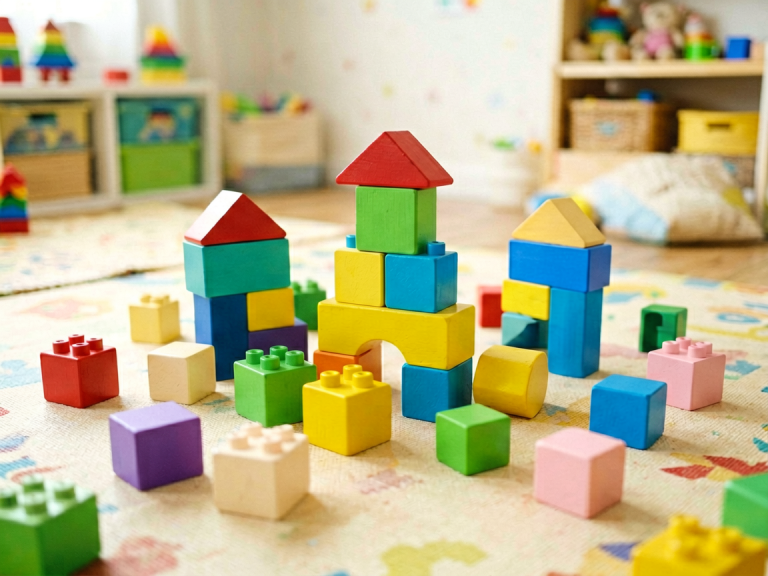
- Building blocks and magnetic tiles: Larger Duplo blocks or magnetic building sets (Magnatiles are popular) teach spatial reasoning, geometry, and creativity. She might build a tower for her dolls or a “stable” for toy animals.
- Simple board games: Games like Memory (with large cards), “Simon Says,” or cooperative games like “The Sneaky, Snacky Squirrel” help with turn-taking, following rules, and social skills. Choose games with few steps and short attention spans in mind.
- Ride-on toys and trikes: A balance bike or a low tricycle with a push handle gives her independence while building leg strength and coordination. Always ensure she wears a helmet.
What to avoid: Resist the urge to buy “educational” tablets or phones for a two- or three-year-old. The American Academy of Pediatrics discourages screen time for children under 18 months (with the exception of video chatting) and recommends no more than one hour per day of high-quality programming for older toddlers. Passive screen time does not offer the same developmental benefits as hands-on play. Also avoid toys with complex rules or many pieces that require adult assembly—the frustration is not worth it.
Safety note: At this age, choking hazards remain a concern, but also watch for pinch points in play sets and tripping hazards from scattered blocks. Ensure art supplies are labeled non-toxic. For dress-up, avoid capes or strings that could strangle; choose costumes that fit snugly.
Beyond the Toy Box: Open-Ended Play and Diversity
While specific toys are helpful, the most valuable items you can offer your toddler girl are open-ended play materials that invite creativity. A simple cardboard box becomes a car, a castle, or a cave. A set of wooden blocks can be anything she imagines. Prioritize toys that do not dictate a single outcome—a doll can be fed, bathed, or put to bed; crayons can draw a rainbow or a scribble.
It is also important to offer a variety of toys that break gender stereotypes. While your daughter may love pink tutus and princesses, she should also have access to trucks, tools, animal figurines, and science kits (like a simple bug viewer or a magnet set). Research shows that children learn best when they explore a wide range of experiences. A toddler girl who builds with blocks develops spatial skills; one who plays with dinosaurs learns about animal names and habitats. Parental guidance matters: play together, ask questions, and follow her lead.
Safety and Quality: The Uncompromising Factors
No matter how perfect a toy seems developmentally, safety must come first. Here is a checklist:
- Age labels: Follow manufacturer age recommendations, but also use your judgment. A “3+” label means the toy contains small parts or a design that could be dangerous for a younger child.
- Material checks: Avoid toxic plastics, phthalates, and BPA. Look for wood finished with water-based paint, organic cotton, or silicone for teething toys.
- Construction: Test durability. Can the toy survive being thrown? Are wheels or joints securely attached? Loose batteries or broken parts are hazards.
- Noise levels: Some electronic toys produce sounds above 85 decibels, which can damage hearing. Test the volume or opt for non-musical alternatives.
- Cleanability: Toddlers put everything in their mouths. Toys should be easy to wipe down or machine-wash (like stuffed animals with removable covers).
Conclusion: Trust Your Child and Your Instincts
Choosing age-appropriate toys for your toddler girl does not require a degree in child development. Observe her play: What does she gravitate toward? What frustrates her? She will tell you, through her actions, what she is ready for. A good rule of thumb is to rotate toys weekly to maintain interest and reduce clutter. Fewer, higher-quality toys that encourage open-ended play beat a room full of plastic noise-makers every time.
Remember, you are not just buying a toy; you are creating an environment for learning, connection, and joy. When you sit on the floor and push a toy car with her, or hold a doll’s hand and pretend to give it a sip of tea, you are offering the greatest gift of all: your attention. The best toy in the world is a parent who plays. So relax, follow the guidelines, and enjoy the messy, magical journey of toddlerhood. Your little girl will thank you—with giggles, hugs, and a world of imagination.