A Parents Guide to Reducing Screen Time for Toddlers
In today’s digital age, screens are everywhere—tablets, smartphones, televisions, and even smart toys. For many parents, handing a toddler a phone to watch cartoons during a busy moment feels like a lifesaver. However, mounting evidence from pediatric research warns that excessive screen time in early childhood can hinder language development, disrupt sleep, reduce attention span, and limit opportunities for physical play and social interaction. The American Academy of Pediatrics recommends that children aged 18 to 24 months should only be exposed to high-quality programming (and only when a parent is present to co-view and explain), while toddlers aged 2 to 5 should have no more than one hour per day of screen time. Yet, many families far exceed these limits. This guide will walk you through practical, evidence-based strategies to reduce your toddler’s screen time without turning your home into a battlefield. Remember, your goal is not to eliminate screens entirely—that’s nearly impossible in the modern world—but to create a healthy balance that prioritizes real-world exploration, connection, and creativity.
—
Understanding the Risks of Excessive Screen Time
Before diving into solutions, it helps to understand why reducing screen time matters for toddlers. Between birth and age three, a child’s brain develops at an astonishing rate, forming more than one million neural connections every second. These connections are built through hands-on experiences: touching, tasting, moving, babbling, and interacting with caregivers. Screens, by contrast, provide passive, two-dimensional stimulation that does not engage the same neural pathways.
Research shows that for every additional hour of daily screen time a toddler experiences, there is a measurable decrease in the activity of brain regions responsible for language and literacy. Excessive screen use is also linked to delays in expressive language skills, reduced parent-child verbal interaction, poorer sleep quality (due to blue light suppression of melatonin), and increased risk of childhood obesity from sedentary behavior. Furthermore, toddlers who spend more time on screens tend to have shorter attention spans and more difficulty self-soothing, because they become dependent on rapid visual rewards rather than learning to calm themselves through play or connection.
Understanding these risks does not mean you should feel guilty—parenting is full of trade-offs, and sometimes a screen is the only way to get through a doctor’s appointment or a long car ride. But knowledge empowers you to make intentional choices. When you know that every minute of screen time is a minute not spent climbing, pretending, or snuggling, it becomes easier to set limits.
—
Setting Clear and Consistent Screen Time Rules
Toddlers thrive on predictability and routine. Vague guidelines like “less TV” won’t work—they need concrete, visible rules. Start by establishing a family media plan. Decide where and when screens are allowed. For example:
- No screens during meals (including parents’ phones)—this protects family conversation and mindful eating.
- No screens in the bedroom—the bedroom should be a sanctuary for sleep and quiet play.
- Screen time only after certain activities—e.g., after outdoor play, after a nap, or after finishing a puzzle. This reinforces that screens are a privilege, not an entitlement.
- Set a daily time limit—for toddlers, 30–60 minutes total is a reasonable goal. Use a visual timer (like a Time Timer) so your child can see the time counting down. When the timer rings, the screen goes off—no negotiation. Consistency is key: if you give in once, your toddler learns that crying or pleading can extend screen time.
It’s also helpful to decide what content is acceptable. Prioritize slow-paced, educational, and interactive programs (e.g., “Sesame Street” or “Bluey”) over fast-paced, flashy cartoons that overstimulate the brain. Co-view whenever possible; even five minutes of talking about what’s on screen builds language and comprehension skills.
—
Creating a Screen-Free Environment
One of the easiest ways to reduce screen time is to make screens less accessible. When the TV is always on in the background, toddlers learn to ignore it—but also become conditioned to constant auditory stimulation. Turn off the TV when no one is actively watching it. Keep tablets and phones out of sight and out of reach unless you are deliberately using them for a call or a scheduled screen session. Designate a “charging station” in a room that is not the living room or playroom, and charge all devices there overnight.
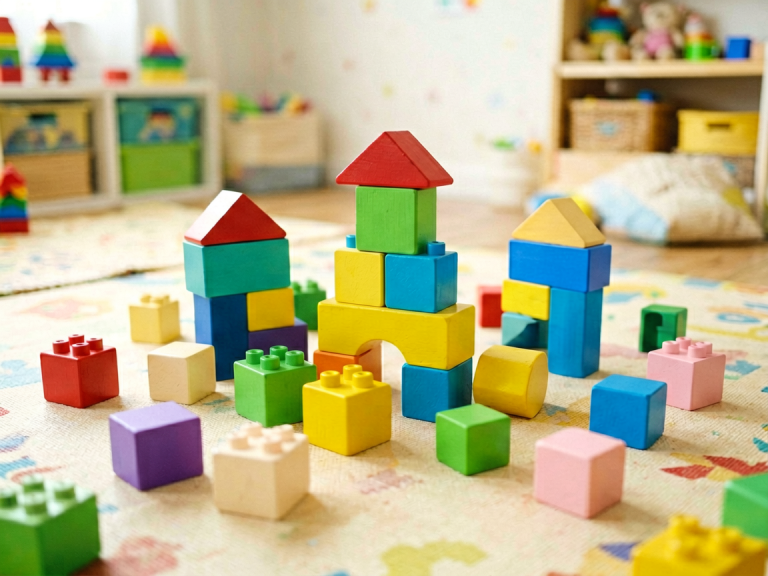
At the same time, create an environment that invites screen-free play. Rotate toys so that only a few are available at a time—too many options can overwhelm a toddler and drive them back to the simplicity of a screen. Focus on open-ended toys: blocks, play dough, cardboard boxes, stacking cups, simple puzzles, dress-up clothes, and art supplies. Place a low shelf with books within reach, and keep a basket of small musical instruments nearby. When a child sees inviting, accessible play materials, they are far more likely to choose them over a screen.
Consider also the physical layout of your home. If your toddler’s play area is in the same room as the television, cover the TV with a cloth when not in use. Remove the remote from the coffee table. Small environmental cues make a big difference in daily habits.
—
Engaging in Screen-Free Activities Together
The most powerful alternative to screens is you. Toddlers crave connection with their parents. When you offer your full presence—putting down your own phone, making eye contact, and following their lead—you become the most engaging “app” they could ever have. Here are some screen-free activities that actively build skills and strengthen your bond:
- Outdoor adventures: Even 20 minutes outside reduces stress and improves mood for both of you. Go to a park, collect leaves, stomp in puddles, chase bubbles, or simply sit on a blanket and watch clouds. Nature provides an endless source of wonder.
- Sensory play: Fill a shallow bin with dry rice, beans, or sand; add scoops, cups, and small toys. Let your toddler pour, dig, and explore. (Supervision required to avoid mouthing.) Sensory play calms the nervous system and develops fine motor skills.
- Art and crafts: Crayons, washable markers, stickers, finger paints, and play dough allow self-expression. Don’t worry about the mess—cover the table with newspaper and dress your child in an old T-shirt.
- Pretend play: A cardboard box becomes a rocket ship, a blanket becomes a fort, a wooden spoon becomes a microphone. Join in! Follow your toddler’s script. This type of play builds creativity, empathy, and problem-solving.
- Reading together: Aim for at least 10–15 minutes of shared reading every day. Let your toddler turn the pages, point at pictures, and “read” along. Use expression and funny voices. Reading is the single most effective activity for language development.
- Music and movement: Put on a simple song and dance together. Clap, stomp, spin, and wiggle. This helps with gross motor skills, rhythm, and emotional regulation.
When you initiate these activities with enthusiasm, your toddler will naturally gravitate toward them. Over time, they will learn that screens are just one of many fun options, not the default.
—
Modeling Healthy Screen Habits
Toddlers are keen observers. They learn more from what you do than from what you say. If you constantly check your phone while sitting next to them, you are teaching them that screens are more interesting than people. On the other hand, if you put your phone away during playtime and meals, you model that real interaction is valuable.
Make a conscious effort to be present. When you are with your toddler, keep your phone in another room or on silent. If you need to take a call, explain briefly: “Mommy needs to talk on the phone for two minutes, then I will be right back to play with you.” Designate “no-screen zones” for the whole family—for example, the dinner table and the bedroom. When your toddler sees you reading a book, gardening, or cooking without a screen, they internalize that there are many ways to enjoy life.
It’s also important to talk about screens openly. Even a two-year-old can understand simple statements: “The iPad is for special times. Now we are going to play blocks.” Avoid using screens as a reward for good behavior, because that increases their perceived value. Instead, treat screen time neutrally, like brushing teeth—a routine part of the day, not a prize.
—
Gradual Reduction and Handling Resistance
If your toddler is already accustomed to several hours of screen time per day, cutting it abruptly can lead to intense tantrums. Instead, use a gradual approach:
- Week one: Reduce screen time by 15 minutes per day. Replace that 15 minutes with a high-interest activity you do together (e.g., blowing bubbles or reading a favorite book).
- Week two: Remove one screen session entirely (e.g., skip the afternoon cartoon) and replace it with a snack and a walk.
- Week three: Rearrange the daily schedule to front-load active play, so that screen time comes later in the day when your child is already tired and less likely to fight.
During the transition, expect resistance. Your toddler may cry, whine, or beg. Stay calm and empathetic. Acknowledge their feelings: “I know you wanted to watch another show. It’s hard to stop when you’re having fun. Let’s go find your dump truck and make a big road instead.” Then follow through with warmth and firmness. Do not give in to a tantrum—if you do, you teach your child that screaming gets them more screen time.
Use the “when-then” frame: “When we finish cleaning up the blocks, then you can have 10 minutes of iPad.” This gives your toddler a sense of control and a clear expectation. Also, avoid using screens as a pacifier. If your child is cranky, try offering a cuddle, a drink of water, or a quiet activity like a puzzle instead of automatically reaching for the phone.
—
Conclusion: Patience and Persistence Pay Off
Reducing screen time for your toddler is not about perfection—it’s about progress. There will be days when you are exhausted, the baby is teething, and the only way to get dinner on the table is to turn on a video. That is okay. The goal is not zero screen time; it is to be intentional about when and how screens are used, so that they don’t crowd out the rich, messy, beautiful world of real play.
By understanding the risks, setting clear rules, creating an inviting screen-free environment, engaging in hands-on activities, modeling healthy habits, and handling resistance with patience, you are giving your toddler a gift that no app can provide: the freedom to explore, imagine, and connect. These early years are fleeting. Every moment you spend building with blocks, digging in the dirt, or laughing over a silly song is an investment in your child’s brain, heart, and future. You’ve got this.