Playful Adventures in Cozy Corners: Engaging Activities for Babies in Small Spaces
Introduction
Living in a compact apartment or a nursery with limited floor space does not mean your baby’s development has to be cramped. In fact, small spaces can foster creativity, closeness, and focused interaction between you and your little one. The key is to choose activities that maximize every square foot while respecting your baby’s safety and natural curiosity. Babies are masters of turning the ordinary into the extraordinary—a laundry basket becomes a boat, a cushion becomes a mountain, and a parent’s lap becomes a world of discovery. This article offers a comprehensive guide to play activities specifically designed for babies in small spaces, covering sensory stimulation, motor development, cognitive growth, and social bonding. Each activity is easy to set up, requires minimal equipment, and fits comfortably into a corner of your living room, bedroom, or even a hallway. Let’s explore how to turn every inch of your home into a playground for your baby’s growing mind and body.
—
Sensory Play in Tight Quarters
Sensory exploration is foundational for babies, and small spaces can actually enhance it by reducing distractions. When you limit the visual and auditory chaos, your baby can focus deeply on textures, sounds, and smells.
*Texture Treasure Basket*
Fill a shallow basket (or even a sturdy cardboard box) with safe, varied objects: a soft silk scarf, a crinkly piece of parchment paper, a smooth wooden spoon, a rubber teether, a faux-fur fabric square, and a stainless-steel measuring cup. Place the basket on a blanket on the floor. Let your baby sit and explore each item. The basket contains the mess and keeps everything within arm’s reach. For younger babies who are not yet sitting, lay them on their back and dangle items above them, or hold the basket at their chest while they lie on a playmat. This activity stimulates tactile and auditory senses without requiring any movement around the room.
*Sound Bottles*
Take small, sealable plastic bottles (baby-safe, no sharp edges). Fill one with dried rice, another with beans, a third with a few jingle bells, and a fourth with water and a drop of blue food coloring (ensure the lid is super-glued shut). Let your baby shake, roll, and mouth the bottles. The different sounds and weights provide auditory and proprioceptive feedback. In a small space, you can keep the bottles in a small, accessible bin. Rotate them weekly to maintain novelty.
*Smell and Touch Sensory Bags*
Use heavy-duty ziplock bags. Add a small amount of hair gel or clear soap, then drop in a few rose petals, a sprig of mint, or a cinnamon stick (sealed inside a smaller mesh bag to prevent choking). Tape the bag to the floor or to a low window where your baby can pat it. The squishy texture and gentle scents engage multiple senses at once. This activity is perfect for a tiny corner because it takes up almost no floor space.
—
Gross Motor Development Without Moving Furniture
Even in a room where you can’t fit a full-sized play gym, you can still encourage crawling, rolling, and strengthening.
*Tummy Time on an Incline*
Use a nursing pillow or a rolled-up blanket to create a slight incline on the floor. Place your baby belly-down on the incline, with their head slightly elevated. Put a mirror or a brightly patterned toy just out of reach. The incline helps babies who dislike flat tummy time by reducing neck strain, and it builds upper body strength. You can even do this on a sofa cushion (with constant supervision) to save floor space.
*Crawling Through a Tunnel*
Buy or make a simple fabric tunnel (or use a large cardboard box open at both ends). Place it in a doorway or between two pieces of furniture. This creates a defined crawling path that doesn’t require much room. If your baby is just learning to crawl, you can sit at one end and call them, while your partner sits at the other end. The tunnel confines the movement, making it easier for your baby to focus on forward propulsion. Alternatively, arrange a row of cushions or pillows to form a narrow “path” across the room.
*Standing Practice at the Sofa*
Clear a small area next to a sturdy sofa or a low coffee table. Place a few toys on the seat of the sofa to encourage your baby to pull up to standing. The sofa provides stable support. For added fun, attach a few suction-cup spinners or a small activity panel to the side of the sofa at baby’s eye level. This encourages cruising—moving sideways while holding on. Cruising is a critical pre-walking skill, and it requires only the length of a couch.
—
Fine Motor Fun on a Lap or Table
When floor space is scarce, your lap, a high chair tray, or a small side table becomes the perfect arena for fine motor practice.
*Edible Finger Paint*
Mix plain yogurt with a few drops of natural food coloring. Spoon a tiny dollop onto a high chair tray or a large plastic plate. Let your baby smear, swipe, and taste (ensure yogurt is safe for your baby’s age). For older babies, add a few O-shaped cereal pieces to pick up and place on the paint. This activity is contained and easy to clean.
*Pincer Grasp Board*
Create a simple busy board using a small piece of cardboard or a plastic lid. Use strong tape to attach a few different items: a large button, a loop of ribbon, a pom-pom, and a plastic key ring. Show your baby how to pick up the pom-pom or push the button. The limited number of items prevents overwhelming your baby, and the small surface area fits perfectly on a lap.
*Stacking and Nesting Cups*
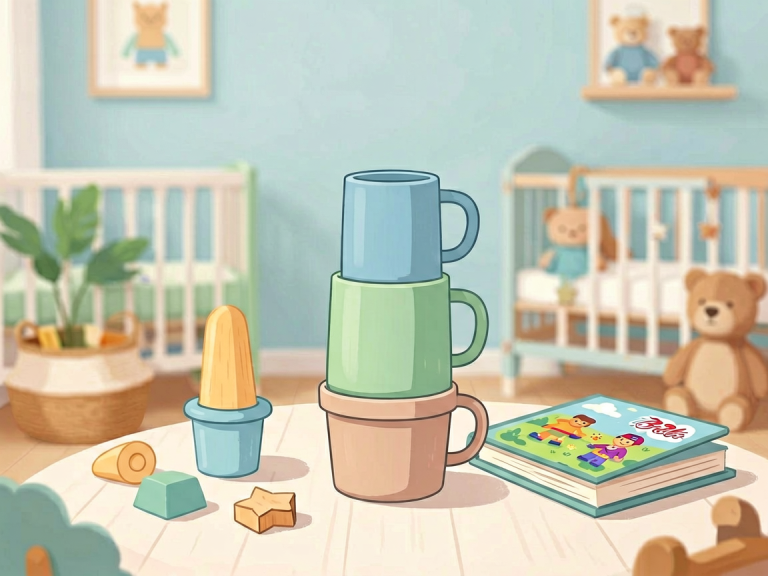
A classic toy that scales perfectly for small spaces. A set of five or six colorful cups can be stacked on a rug, knocked down, nested inside each other, and even used for water play during bath time. For babies under six months, hold a single cup and let them grasp it. For older babies, place the cups in a row on a sofa cushion and let them reach.
—
Cognitive and Social Games in a Small Area
Learning cause-and-effect, object permanence, and social interaction does not require a large room. In fact, closeness enhances communication.
*Peek-a-Boo with a Scarf*
Sit face-to-face with your baby on the floor or on a bed. Take a lightweight, see-through scarf. Cover your face, then pull it away, saying “Peek-a-boo!” Then cover your baby’s face and gently remove the scarf. The small space allows you to maintain eye contact and hear each other’s laughter clearly. This game teaches object permanence and turn-taking.
*Mirror Play*
Attach a baby-safe, unbreakable mirror to the wall at floor level or prop it against a bookcase. Sit your baby in front of the mirror. They will be fascinated by their own reflection. Add a few props: a hat, a rattle, or a stuffed animal. The mirror provides endless opportunities for self-recognition and emotional expression. It also doubles as a way to “enlarge” the visual space, making the room feel bigger.
*Sound and Shake Games*
Sit cross-legged on the floor and place your baby in your lap. Hold a small drum (or an empty plastic container) and show your baby how to tap it. Then give them a rattle or maraca. Sing simple songs like “Row, Row, Row Your Boat” and move your baby’s hands in rhythm. This activity strengthens bonding and introduces rhythm and sequencing.
—
Creative Use of Vertical Space
When the floor is limited, look up! Vertical surfaces offer a wealth of play opportunities without consuming precious ground area.
*Wall-Mounted Activity Panels*
Purchase or DIY a small wooden or felt board that you can attach to the wall at your baby’s reach. Include elements like a zipper, a latch, a textured patch, and a spinning wheel. Many parents install these near the changing table or the crib. Your baby can engage with the panel during diaper changes or while standing.
*Sensory Bottles Hung on a String*
Tie a strong cord between two hooks or between a doorframe and a shelf. Hang a few lightweight sensory bottles or colorful scarves at different lengths. Your baby will reach up, bat, and grab, developing eye-hand coordination. This is especially useful for babies who are starting to stand—they can practice reaching upward while holding onto furniture.
*Felt Board Stories*
Use a large piece of felt pinned to the wall (or a store-bought felt board). Cut out simple shapes—animals, circles, stars—from felt. Let your baby pull them off and put them back. Felt shapes stick without glue, so the activity is noise-free and easy to reset. This vertical play keeps toys off the floor and encourages standing or supported kneeling.
—
Safety Considerations for Play in Small Spaces
Even in tight quarters, safety remains the top priority. Small spaces can pose unique risks if not carefully managed.
*Secure Furniture*
Ensure that any furniture your baby might pull up on—such as a sofa, bookshelf, or dresser—is anchored to the wall. In a small room, a falling piece of furniture can cause serious injury. Also, remove any heavy objects from low shelves that could be pulled down.
*Avoid Overstimulation*
Because small spaces can feel intense, limit the number of toys available. Rotate them weekly. Too many options can overwhelm a baby and lead to frustration. A clean, simple environment encourages deep focus.
*Check for Floor Hazards*
In a small area, you may be tempted to store items under the sofa or behind a chair. Make sure there are no small, swallowable objects, electrical cords, or sharp corners within your baby’s reach. Use corner guards and cord shorteners.
*Always Supervise*
Never leave a baby unattended during any of these activities, especially those involving water, small parts, or elevated surfaces like a sofa or bed. In a small space, it’s easy to assume you’re close enough, but a baby can quickly get into trouble.
—
Conclusion
Small spaces do not have to limit your baby’s world of play. With a bit of creativity and intentionality, every nook and cranny can become a learning environment. From sensory baskets on a blanket to vertical felt boards on a wall, the activities described here prove that less space can actually mean more connection. The intimacy of a cozy corner encourages focused parent-baby interaction, and the simplicity of a clutter-free environment helps babies concentrate on what truly matters: exploration, discovery, and joy. So embrace your compact home—it might just be the perfect playground for your little one’s first adventures.