Playful Pathways: Engaging Play Ideas for 3-Year-Olds to Boost Language Development
Introduction
The third year of life is a remarkable window of linguistic growth. At age three, children typically possess a vocabulary of 300 to 1,000 words, begin forming three- to five-word sentences, and start asking endless “why” questions. Yet the most effective catalyst for this explosion of language is not a worksheet or a screen—it is play. Play is the natural language of childhood; it is inherently motivating, repetitive, and socially rich. When we design intentional play experiences for three-year-olds, we can seamlessly weave language development into moments of joy, creativity, and discovery. This article presents a collection of research-backed play ideas that specifically target vocabulary expansion, sentence structure, narrative skills, and conversational turn-taking. Each activity is simple to set up, requires minimal materials, and can be adapted to suit your child’s interests. Let’s explore how ordinary play can unlock extraordinary language.
—
1. Pretend Play and Storytelling: Building Narratives and Social Language
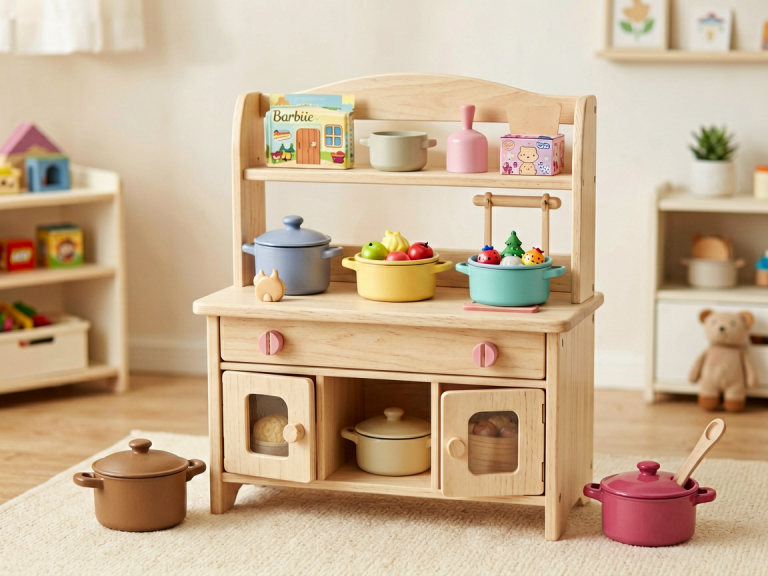
Pretend play, also known as dramatic or imaginative play, is one of the most powerful tools for language development in three-year-olds. When children take on roles—such as a doctor, a chef, a parent, or a shopkeeper—they naturally practice dialogue, negotiate meaning, and construct mini-narratives. To encourage this, create a simple “play scenario” corner. For example, set up a pretend grocery store with empty food boxes, a toy cash register, and play money. As your child plays the role of the cashier, prompt them with open-ended questions: “What would you like to buy today?” “How much does this apple cost?” “Can I have two bananas, please?” This back-and-forth interaction forces the child to listen, formulate a response, and use new vocabulary like “total,” “change,” or “checkout.”
Storytelling can be explicitly woven into pretend play. After a few minutes of grocery store play, sit down with your child and say, “Let’s tell a story about a little bear who goes to the grocery store. What does he see first?” Encourage your child to add details. You might record their story or draw simple pictures together. This activity not only expands vocabulary (nouns, verbs, adjectives) but also introduces narrative structure: beginning, middle, end. Three-year-olds thrive on repetition, so repeating the same story with slight variations reinforces language patterns. Over time, you will notice your child using more complex sentences like “The bear bought a big, red apple because he was hungry.”
—
2. Interactive Reading and Picture Books: From Passive Listening to Active Conversation
Reading aloud is a cornerstone of early literacy, but for three-year-olds, passive listening is not enough. To maximize language development, make reading an interactive, two-way experience. Choose picture books with vibrant illustrations, simple plots, and repetitive phrases—classics like *Brown Bear, Brown Bear, What Do You See?* or *The Very Hungry Caterpillar* are perfect. As you read, pause frequently to ask questions: “What color is the bear?” “What do you think happens next?” “Can you point to the caterpillar?” These questions encourage your child to produce language rather than just absorb it.
A particularly effective technique is “dialogic reading,” where you become the listener and your child becomes the storyteller. After reading a page, say, “Now you tell me what’s happening in this picture.” Let your child describe the scene using their own words. Even if their sentences are fragmented, resist the urge to correct. Instead, expand on their utterance: if they say “Dog run,” you can model back, “Yes, the big brown dog is running fast.” This “recasting” gently introduces grammar and vocabulary without interrupting the flow. Additionally, choose books that feature characters of diverse backgrounds and everyday routines—mealtime, bath time, going to the park—so children can connect the language to their own experiences. Over repeated readings, three-year-olds will begin to “read” along, memorizing phrases and internalizing sentence structures.
—
3. Songs, Rhymes, and Finger Plays: Phonological Awareness and Vocabulary Through Rhythm
Music and rhyme are natural language tutors for young children. The predictable patterns, rhythms, and repetitions in songs help three-year-olds hear the individual sounds of words—a skill called phonological awareness, which is a strong predictor of later reading success. Simple finger plays like “The Itsy Bitsy Spider,” “Five Little Monkeys Jumping on the Bed,” or “Open, Shut Them” combine movement with language, making abstract words concrete. When a child sings “climb up the water spout” while moving their fingers, they connect the verb “climb” to a physical action, deepening comprehension.
To make the most of these activities, sing slowly and clearly, emphasizing key vocabulary. Pause before a familiar word and let your child fill it in: “The itsy bitsy spider ______ up the water spout.” This “cloze” technique builds anticipation and active recall. You can also invent your own simple songs about daily routines—for example, a “Handwashing Song” to the tune of “Twinkle, Twinkle, Little Star.” In addition, encourage your child to make up new verses. If they sing “Five little monkeys jumping on the bed,” ask, “What if they were jumping on the couch?” This small change prompts creative language use. Over time, the rhythmic nature of songs helps children memorize multi-word phrases, which they can then transfer into everyday speech.
—
4. Building and Construction Play: Spatial Language, Prepositions, and Descriptive Words
Blocks, Legos, and other construction toys are often seen as purely motor or spatial activities, but they are rich with language opportunities. As you and your child build together, use language to describe what you are doing: “I am putting the red block on top of the blue one.” “Can you slide the green block under the bridge?” “This tower is taller than the other one.” These sentences naturally introduce prepositions (on, under, behind, in front of), comparatives (taller, bigger), and spatial vocabulary (corner, edge, middle). Three-year-olds learn these abstract words best when they see and touch the physical objects.
To take it further, create a “build and describe” challenge. Have your child build a simple structure, then ask them to tell you what they made. Encourage them to use describing words: “I made a castle with a long, bumpy wall and a shiny tower.” If they struggle, model a sentence for them: “Oh, you made a castle with a bumpy wall? And is that a round, blue tower?” This modeling fills their linguistic toolbox. You can also hide a small toy inside a block structure and give positional clues: “The teddy bear is behind the yellow block and under the green roof.” Your child must listen carefully and then retrace the clues, reinforcing both receptive and expressive language. Construction play also naturally invites negotiation and problem-solving talk: “We need another block. Where should we put this one?” Such exchanges build conversational skills.
—
5. Sensory Play and Descriptive Language: Exploring Textures, Colors, and Actions
Sensory play—activities that engage touch, smell, sight, and sound—is irresistible to three-year-olds and provides a perfect context for expanding descriptive language. Set up a simple sensory bin filled with rice, sand, water beads, or cooked pasta. Add scoops, cups, and small toys. As your child explores, describe what they are experiencing: “The rice feels dry and grainy.” “The water beads are slippery and squishy.” “You are pouring the sand through the funnel—it makes a rustling sound.” The rich sensory input gives children a concrete reason to learn new adjectives and verbs.
Encourage your child to describe their own sensations. Ask, “How does that feel?” “What color is the water bead?” “Do you hear the crunch when you squeeze the pasta?” If they use a simple word like “soft,” you can expand: “Yes, the cotton ball is very soft and fluffy. It feels like a cloud.” This technique, called “expansion,” adds new vocabulary without correction. You can also introduce “sensory vocabulary cards” with pictures of textures (bumpy, smooth, fuzzy, sticky). While playing, hold up a card and ask, “Is the play dough smooth or bumpy?” Such games make language learning explicit. Moreover, sensory play often leads to pretend scenarios—making “soup” with colored water and herbs—which further integrate narrative language. The key is to talk continuously, describing, questioning, and narrating the child’s actions.
—
6. Outdoor Play and Vocabulary Building: Nature Walks, Scavenger Hunts, and Action Games
The outdoors is a living dictionary for a three-year-old. A simple walk around the block can introduce dozens of new words: oak tree, acorn, sidewalk, mailbox, fire hydrant, squirrel, dandelion. To make language development more deliberate, turn a walk into a “nature scavenger hunt.” Create a simple list with pictures (or read it aloud): “Find something yellow. Find something that makes a sound. Find a leaf bigger than your hand.” As your child searches, you will naturally talk about colors, sizes, textures, and sounds. “That leaf is enormous! It is bigger than your hand. What does it feel like—smooth or bumpy?” This fills the child’s vocabulary with comparative and descriptive words.
Action games like “Follow the Leader” or “Simon Says” are equally valuable. “Simon says: run to the big tree. Simon says: hop on one foot like a bunny.” These commands require careful listening and understanding of action verbs (run, hop, skip, crawl). You can also play “I Spy” using environmental features: “I spy with my little eye something green and tall.” Your child must listen for the adjectives (green, tall) and then name the object. This game sharpens both auditory discrimination and vocabulary retrieval. Outdoor play also encourages social language when multiple children are involved—sharing, taking turns, and negotiating roles in a game of tag or hide-and-seek. The combination of physical movement and language cements learning through embodied cognition.
—
7. Simple Board Games and Card Games: Turn-Taking, Questioning, and Early Literacy
While competitive games may seem too advanced for three-year-olds, simple cooperative or low-competition games are excellent for language development. Games like “Memory” (with picture cards), “Candy Land” (color-matching), or “Go Fish” (with animal pictures) require children to take turns, ask questions, and use complete sentences. For example, in a modified “Go Fish,” a child must say, “Do you have a cat?” instead of just pointing. This forces sentence formulation and polite questioning. If your child struggles, model: “I have a dog. Do you have a dog? No? Okay, go fish!” Over repeated rounds, the language becomes automatic.
Even simpler dice games work: roll a die that has pictures instead of numbers, and have your child describe what they see: “It’s a red apple. I’m going to move my elephant to the apple space.” You can create your own “story dice” with images of characters, objects, and actions. Roll three dice and encourage your child to tell a mini-story: “The girl rode a bike to the castle.” This narrative practice builds sequencing language (“first,” “then,” “finally”) and cause-effect reasoning. Importantly, board games also teach pragmatic language skills—waiting for a turn, listening to instructions, expressing disappointment (“Oh no, I didn’t get the card!”) and celebrating others. All of these are crucial for social communication.
—
Conclusion
Language development in three-year-olds does not require flashcards or structured lessons. It requires a caring adult who is willing to get down on the floor, follow the child’s lead, and talk—talk about everything, everywhere. The play ideas outlined above—pretend play, interactive reading, songs, construction, sensory bins, outdoor adventures, and simple games—all share a common thread: they create authentic, joyful reasons for children to listen, speak, and think. Every question a parent asks, every descriptive word they model, and every story they co-create builds a richer linguistic foundation. As you implement these activities, remember that the goal is not perfection but connection. Let your child’s curiosity guide the play. Pause, listen, and expand. The words will come naturally, woven into the fabric of laughter and discovery. Play is not just fun—it is the most profound language lesson a child can ever receive.