The Power of Less: How Parents Can Use Choosing Fewer Toys to Foster Child Development
Introduction
In the modern era of consumer abundance, children’s bedrooms often resemble miniature toy stores—shelves overflowing with action figures, plastic gadgets, electronic games, and plush animals. The average American child owns over 200 toys, yet plays with only a fraction of them regularly. This phenomenon is not merely a matter of clutter; it carries profound implications for cognitive development, emotional well-being, and family dynamics. Parents who consciously choose to limit the number of toys available to their children are not depriving them of happiness. On the contrary, they are employing a powerful pedagogical tool that encourages deeper engagement, creativity, gratitude, and responsibility. This article explores how parents can use the strategy of choosing fewer toys to nurture resilient, imaginative, and focused children, while also simplifying family life.
—
The Overwhelming Toy Problem: Why Less Is More
The first step in understanding the value of fewer toys is recognizing the negative effects of abundance. Research in developmental psychology suggests that when children are surrounded by too many options, they suffer from “choice overload.” Instead of playing deeply with one item, they flit from toy to toy, their attention span fragmented. A study by the University of Toledo found that toddlers given fewer toys (four versus sixteen) played twice as long with each toy, demonstrating higher quality exploration and problem-solving. The key mechanism is cognitive load: an excess of stimuli overwhelms a child’s developing executive functions, leading to shorter engagement and reduced creativity.
Moreover, an avalanche of toys often leads to entitlement. Children come to expect constant novelty, and their appreciation for individual items diminishes. The cycle of wanting, receiving, and discarding breeds a consumerist mindset that can persist into adulthood. Parents who intentionally choose fewer toys are not being frugal or restrictive; they are creating an environment where each object is given space to matter. By limiting quantity, they open the door to quality—both in play and in emotional connection.
—
Cultivating Deeper Engagement and Creativity
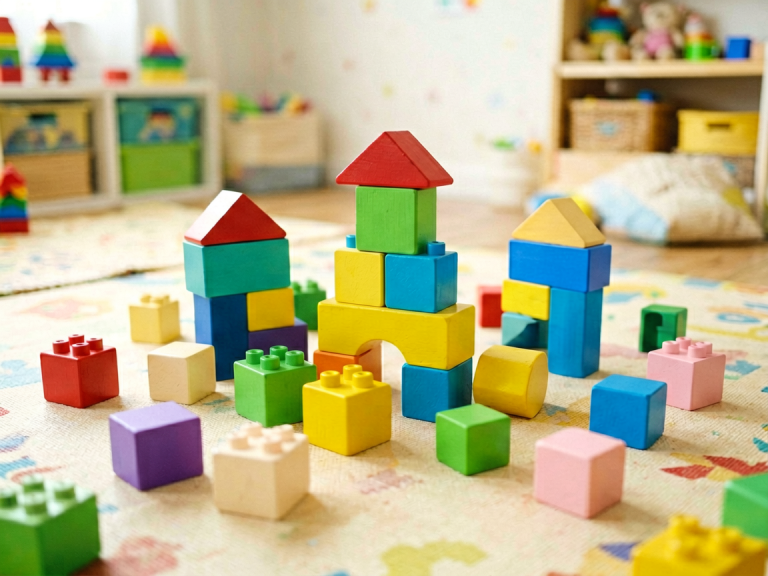
One of the most powerful outcomes of toy reduction is the dramatic increase in imaginative play. When a child has only a few open-ended toys—such as wooden blocks, a set of dolls, or art supplies—they must rely on their own inventiveness to create scenarios. A single cardboard box can become a spaceship, a castle, or a time machine when there is no pre-programmed electronic toy dictating its purpose. This type of play is crucial for developing divergent thinking, the foundation of creativity.
Parents can facilitate this by selecting toys that are “slow” rather than “fast.” Fast toys (flashy, battery-operated, with predetermined functions) tend to entertain passively, while slow toys require the child to actively construct meaning. For example, a set of simple building bricks offers endless possibilities, whereas a singing, dancing robot soon becomes boring once its novelty fades. By choosing fewer, high-quality toys that encourage manipulation, construction, and storytelling, parents are essentially training their children to be creators rather than consumers.
A practical strategy is the “toy rotation” system. Instead of eliminating all toys at once, parents can store most toys out of sight and rotate a small selection every two to four weeks. This not only keeps the environment clutter-free but also rekindles interest when previously stored toys reappear. Children approach each rotation with fresh eyes and renewed curiosity. This method teaches them that novel experiences can come from within their own belongings, not just from new purchases.
—
Teaching Value and Gratitude
Another profound benefit of choosing fewer toys is the opportunity it provides to instill a sense of gratitude and appreciation. When children receive a toy, whether as a gift or a reward, its significance is magnified if it is one of only a few. They learn to care for it, to remember its origin, and to recognize that possessions have worth. In contrast, a child drowning in toys never gets the chance to miss anything, and gratitude withers in the shade of abundance.
Parents can use this principle intentionally. For instance, during birthdays and holidays, they can limit the number of gifts and instead focus on experiences—a trip to the zoo, a cooking class, or a family camping trip. When a new toy does enter the house, parents can involve the child in a “one in, one out” policy: for every new item, an old one must be donated or recycled. This simple ritual teaches children about making choices and letting go. It also connects them to a larger lesson: that happiness does not come from accumulation but from mindful engagement with what we have.
Furthermore, parents can talk openly with their children about why they are choosing fewer toys. Even young children can understand concepts like “we have enough,” “other children might need this more,” or “let’s take care of what we own.” These conversations build emotional intelligence and a sense of social responsibility. The child learns that their parents’ decisions are driven by love and wisdom, not deprivation.
—
Encouraging Organizational Skills and Responsibility
With fewer toys, children are better able to manage their own belongings. Clean-up time becomes a manageable task rather than a herculean chore that overwhelms both parent and child. A child who owns only ten or fifteen toys can easily sort them into designated bins, developing early organizational skills. This sense of order reduces daily friction and teaches accountability—if a child loses a piece of a puzzle, it is immediately noticed because there are only a few puzzles.
Parents can leverage this by creating a designated “play space” with clear systems. For example, use transparent containers labeled with pictures for younger children. When the number of items is small, children can take responsibility for putting things away independently. This autonomy boosts their self-esteem and reduces the power struggles that often accompany clutter.
Moreover, the habit of caring for fewer possessions translates into broader life skills. Children learn that maintenance is a natural part of ownership. They become more careful with their toys because they know replacements are not automatic. This stands in sharp contrast to the “disposable” mentality that arises when toys are treated as infinite consumables.
—
Reducing Environmental Impact and Consumerism
From an ecological perspective, the choice of fewer toys aligns with sustainability. The toy industry is a major contributor to plastic waste and resource depletion. Many toys are made from non-recyclable materials, shipped across the globe, and discarded within months. By consciously choosing fewer, higher-quality toys—preferably made from wood, fabric, or recycled materials—parents model environmental stewardship for their children.
Children who grow up with a “less is more” mindset are less likely to become compulsive shoppers as adults. They learn to question advertisements and to resist the pressure of peer consumption. Parents can reinforce this by discussing the lifecycle of a toy: where it came from, who made it, and where it will go when it is no longer loved. This fosters a sense of global citizenship and an understanding that every purchase has consequences.
In practice, parents can seek out second-hand toys, participate in toy libraries, or organize toy swaps with other families. These activities not only reduce waste but also build community. The child learns that joy does not come from a store shelf but from sharing and reusing.
—
Practical Tips for Implementing a “Fewer Toys” Approach
Implementing a toy-reduction strategy does not require a dramatic, overnight purge. The following steps can help parents ease into a more minimalistic approach:
- Audit the current collection. With your child, sort toys into three piles: keep, donate, and discard. Keep only those that are actively played with, open-ended, or hold significant sentimental value. Aim for a curated collection of 10–20 items for a young child, adjusting for age and interests.
- Adopt a one-in, one-out rule. For every new toy that enters the house (whether purchased or gifted), an old one must leave. This maintains balance and prevents re-accumulation.
- Invest in quality over quantity. Choose timeless, durable toys that can be used in multiple ways: wooden blocks, craft supplies, dress-up clothes, musical instruments, and books. Avoid cheap, flimsy plastic toys that break quickly.
- Create a rotation system. Store 70–80% of toys in a closet or attic and rotate them every few weeks. This keeps the environment fresh without constant buying.
- Focus on experiences. When holidays or birthdays approach, encourage family and friends to give gifts of time—tickets to a show, a subscription to a nature magazine, or a promise of a special outing.
- Model the behavior. Children learn by watching. If parents themselves practice mindful consumption—avoiding impulse buys, caring for their belongings, and prioritizing experiences—children will internalize those values.
- Communicate the “why.” Explain to your child, in age-appropriate language, that having fewer toys allows more room for imagination, less time cleaning up, and more appreciation for each item. Many children embrace the idea once they experience the benefits.
—
Conclusion
Choosing fewer toys is not an act of deprivation; it is an act of intention. It is a parenting strategy that nurtures creativity, gratitude, responsibility, and ecological awareness. In a world that constantly shouts “more,” parents who whisper “less” give their children a profound gift: the space to think, to imagine, and to value what truly matters. By carefully selecting a small number of high-quality toys and managing them with mindfulness, parents can transform the nursery from a cluttered warehouse into a wonderland of possibility. The power of less is, in the end, the power of more—more depth, more joy, and more connection.
(Word count: approximately 1,050)