The Power of Play: Choosing the Right Early Learning Toys for 5-Year-Olds
Introduction: Why Toys Matter at Age Five
At the age of five, children stand at a remarkable crossroads in their development. They have outgrown the simple cause-and-effect toys of toddlerhood, yet they are not quite ready for the abstract, rule-heavy games of older children. This is the age of imagination, discovery, and foundational skill-building. The right early learning toys for 5-year-olds can transform playtime into a rich educational experience, fostering cognitive, social, emotional, and physical growth. But with shelves overflowing with colorful boxes and "educational" claims, how can parents and educators make informed choices? This article explores the essential qualities of high-quality early learning toys for five-year-olds, examines specific categories that support development, and provides practical guidance for selecting the best tools for growth.
The Developmental Landscape of a Five-Year-Old
Before diving into specific toys, it is crucial to understand what is happening inside a five-year-old's mind and body. At this age, children typically exhibit remarkable language growth—they can speak in complex sentences, tell stories, and ask endless "why" questions. Their fine motor skills have improved significantly, allowing them to draw recognizable shapes, use scissors with relative accuracy, and manipulate small objects. Cognitively, they are moving from preoperational to concrete operational thinking: they can understand simple logic, classify objects by multiple attributes, and begin to grasp concepts like time, quantity, and sequence.
Socially, five-year-olds crave peer interaction. They engage in cooperative play, negotiate roles, and often imitate adult behaviors. Emotionally, they are learning to manage frustration, share, and express feelings with words rather than tantrums—though this is still a work in progress. The best early learning toys for this age group meet these developmental milestones head-on, challenging children just enough to keep them engaged without causing overwhelming frustration.
Category One: Construction and Building Toys
Encouraging Spatial Reasoning and Problem-Solving
Construction toys remain a cornerstone of early learning for five-year-olds. Classic wooden blocks, interlocking plastic bricks, magnetic tiles, and even simple snap-together sets offer endless possibilities. When children build a tower, a bridge, or a castle, they are not merely stacking—they are experimenting with physics, balance, and geometry. They learn that a wide base supports more weight, that two triangles can form a square, and that adding a ramp changes the trajectory of a rolling marble.
Beyond spatial skills, construction toys promote executive function. A five-year-old who decides to build a spaceship must plan the steps, hold the goal in mind, and adjust when pieces don’t fit. This iterative process teaches resilience and flexible thinking. Moreover, building together with a sibling or friend naturally fosters communication, turn-taking, and collaboration. For parents, these toys are a wise investment because they grow with the child—what starts as simple stacking can evolve into complex, symmetrical structures or even motorized creations when combined with gears or wheels.
Choosing the Right Construction Set
Not all building toys are equal. For five-year-olds, look for sets that are sturdy, safe (no sharp edges or small choking hazards), and open-ended. Avoid kits that prescribe exactly one model; instead, opt for sets with many pieces in various shapes and colors. Brands that offer interlocking systems with connectors (such as K'NEX or LEGO Duplo for younger fives) work well. Also consider magnetic tiles—they are exceptionally satisfying because they click together easily and allow for bold, stable structures. The key is that the toy should invite exploration rather than dictate outcomes.
Category Two: Pretend Play and Role-Playing Sets
Building Social Skills and Emotional Intelligence
At five, children are masterful pretenders. A cardboard box becomes a rocket ship; a blanket transforms into a magical cape; a plastic phone connects them to an imaginary office. Pretend play toys that support this natural inclination are some of the most powerful early learning tools. Play kitchens, doctor kits, tool benches, cash registers, and dress-up costumes allow children to rehearse real-world roles and experiment with social dynamics.
When a child plays "restaurant," they practice sequencing (take order, cook, serve, clean), mathematics (counting money, measuring ingredients), and social conventions (greeting customers, saying "please" and "thank you"). More importantly, they develop empathy by putting themselves in another's shoes. A child who pretends to be a doctor learns to comfort a sick stuffed animal, which in turn builds emotional vocabulary and care-taking instincts. Role-playing also provides a safe space to process experiences—a five-year-old who recently visited the dentist may reenact the visit, gaining mastery over a potentially scary event.
Selecting Open-Ended Pretend Play Items
The best pretend play toys are those that invite multiple scenarios. A simple set of play fruits and vegetables can be used for a grocery store, a restaurant, a farmer's market, or a picnic. Avoid electronic toys that dictate the script (like a toy phone that only says pre-recorded phrases). Instead, choose items that require imagination: blank wooden food to be "cut," unprinted play currency, plain fabric for costumes. Also consider multicultural dolls and toys that represent diverse professions and family structures, as these enrich a child's understanding of the world.
Category Three: Art, Craft, and Fine Motor Materials
Cultivating Creativity and Pre-Writing Skills
Five-year-olds are developmentally ready for more sophisticated art supplies. While toddlers may scribble, five-year-olds often draw recognizable people with limbs, houses with windows, and letters (though often backwards). Early learning toys that support this transition include high-quality crayons, washable markers, child-safe scissors, glue sticks, modeling clay, and painting sets. More structured art activities—such as bead threading, lacing cards, pegboards, and sticker mosaics—specifically target fine motor dexterity, which is essential for handwriting.
Art is not merely about the finished product; it is a process of self-expression and decision-making. When a child chooses colors, decides where to place a sticker, or rolls clay into a snake, they are making creative choices. This builds confidence and a sense of agency. Additionally, art activities often involve following multi-step instructions ("first draw the circle, then add the eyes"), which strengthens working memory and attention span.
Safety and Variety in Art Toys
For five-year-olds, prioritize non-toxic, washable materials. Avoid products with small parts that could be swallowed, and ensure scissors are blunt-tipped. Offer a rotating selection of materials to prevent boredom—one week focus on watercolors, the next on collage with fabric scraps, the next on modeling dough. The goal is to provide tools, not templates. A coloring book with pre-printed pictures is fine, but open-ended blank paper is even better.
Category Four: Puzzles, Games, and Logic Toys
Developing Critical Thinking and Patience
Puzzles have long been celebrated for their developmental benefits, and for good reason. For a five-year-old, a 24- to 48-piece jigsaw puzzle challenges pattern recognition, spatial orientation, and visual discrimination. As children sort edge pieces from middle pieces, they practice categorization. As they try a piece in multiple orientations, they learn trial and error—a fundamental scientific thinking skill.
Beyond traditional jigsaw puzzles, consider board games designed for ages five and up. Simple matching games, memory card games, cooperative games, and early strategy games (like "Hoot Owl Hoot!" or "My First Carcassonne") teach turn-taking, following rules, counting, and sportsmanship. Losing a game gracefully is a tough but essential emotional lesson. Also, logic-based puzzles—such as pattern blocks, tangrams, or simple engineering challenges— encourage systematic reasoning.
Choosing Age-Appropriate Games
The key is to match the game's complexity to the child's attention span. Games that take more than 20 minutes may frustrate a five-year-old. Look for games with clear, simple rules and minimal reading. Cooperative games, where players work together against the game itself rather than against each other, are excellent for this age because they reduce competition stress and build teamwork. Also, consider travel-sized versions or magnetic puzzles for on-the-go learning.
Category Five: STEM and Science Exploration Kits
Sparking Curiosity About the Natural World
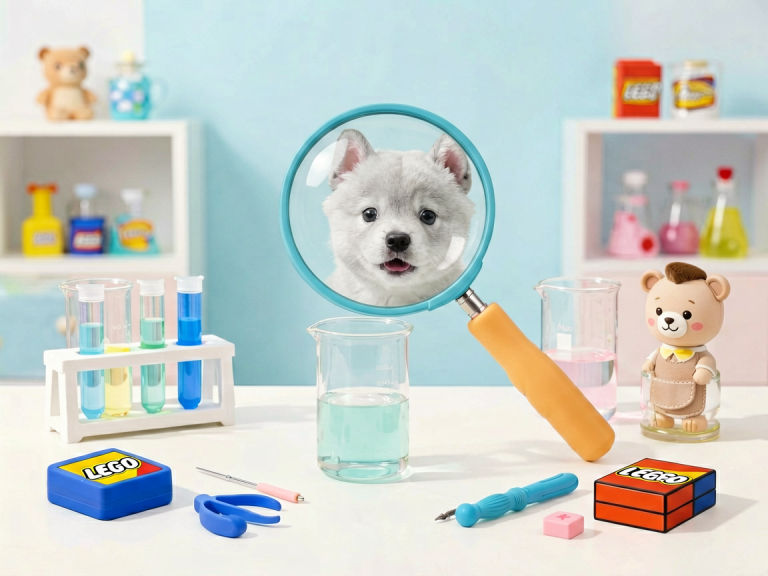
Five-year-olds are natural scientists. They observe ants on the sidewalk, ask why the sky is blue, and mix colors in puddles. Early learning toys that tap into this curiosity can foster a lifelong love for science, technology, engineering, and mathematics. Simple science kits—such as bug observation containers, magnet sets, simple microscopes (with large, sturdy lenses), and sink-or-float experiments—provide hands-on discovery.
Other excellent options include gears and pulleys sets, marble runs, water play tables with pumps and tubes, and light tables for shadow play. These toys teach cause and effect, introduce basic physics concepts (gravity, motion, friction), and encourage hypothesis testing. For example, a child might ask, "What happens if I put the marble on this track instead of that one?"—a question that leads to experimentation and conclusion-drawing.
Safety Considerations in STEM Kits
Always check that science kits are designed for the appropriate age group and are free of chemicals, sharp instruments, or small electrical components. Kits that require adult supervision should clearly state this. The best STEM toys for five-year-olds are those that use everyday materials (water, sand, magnets) and encourage open-ended exploration rather than a prescribed experiment with a single "correct" answer.
How to Choose: Practical Tips for Parents
With so many options, selecting early learning toys can feel overwhelming. Here are a few guiding principles. First, follow the child's interests. A child who loves dinosaurs will engage more deeply with a dinosaur excavation kit than with a generic building set. Second, prioritize open-endedness. Toys that can be used in multiple ways usually have longer play value and more educational benefit. Third, resist the urge to over-stimulate. Too many toys at once can overwhelm a five-year-old, leading to shallow play. A few high-quality, rotating options are better than a mountain of plastic. Fourth, look for toys that invite interaction—either with adults, siblings, or peers. The richest learning often happens in conversation: "How did you make that tower so tall?" "What would happen if we added one more block?" Finally, remember that the toy is only a tool. A simple set of wooden blocks in the hands of an engaged adult or an enthusiastic friend can teach far more than the most expensive electronic gadget left on a shelf.
Conclusion: Investing in Play
Early learning toys for five-year-olds are not just about keeping children busy—they are investments in the architecture of the developing brain. The best toys are those that respect the child's innate drive to explore, create, and connect. They challenge without overwhelming, they inspire without dictating, and they invite interaction with the real world—not just a screen. By choosing wisely, parents and educators can turn every play session into a small adventure in learning, preparing children not only for kindergarten but for a lifetime of curiosity. So the next time you reach for a toy, ask yourself: Will this spark a story? Will it invite a question? Will it build a bridge to another child or to a new idea? If the answer is yes, you have found a treasure.