The Power of Play: How Early Learning Toys Shape the Minds of Preschoolers
Introduction
The first five years of a child’s life are a whirlwind of growth, discovery, and wonder. During this period, the brain forms more than one million neural connections every second—a pace that will never be matched again. For parents, caregivers, and educators, this presents both an exhilarating opportunity and a profound responsibility. Among the most effective tools for nurturing these developing minds are early learning toys for preschoolers. These are not mere distractions or pacifiers; they are carefully designed instruments that blend fun with fundamental skill-building. From stacking blocks to shape sorters, from alphabet puzzles to pretend-play kits, the right toys can ignite curiosity, foster problem-solving abilities, and lay a sturdy foundation for lifelong learning. However, with an overwhelming array of options on the market, understanding what makes a toy truly “educational” and how to integrate it meaningfully into a preschooler’s daily routine is essential. This article explores the critical role of early learning toys, examines the most beneficial categories, offers practical guidance for selection, and emphasizes the delicate balance between structured learning and unstructured play.
—
The Cognitive Foundations: Why Early Learning Toys Matter for Brain Development
The preschool years, typically ages three to five, are a golden window for cognitive growth. At this stage, children transition from sensorimotor exploration to symbolic thinking, language explosion, and early reasoning. Early learning toys serve as catalysts for these developments. For instance, a simple set of wooden blocks might seem unremarkable, but when a child stacks, balances, and rearranges them, they are unconsciously engaging in spatial reasoning, cause-and-effect experimentation, and even basic physics. Research in developmental psychology, notably the work of Jean Piaget and Lev Vygotsky, underscores that children learn best through active, hands-on interaction with their environment. Toys that encourage manipulation, trial and error, and open-ended exploration stimulate the prefrontal cortex—the brain region responsible for executive functions like planning, attention, and self-control. Moreover, early learning toys often incorporate elements of numeracy (counting beads), literacy (letter puzzles), or logic (matching games). When used consistently, they help strengthen neural pathways, enhance memory retention, and build the cognitive scaffolding necessary for later academic success. A study published in the journal *Child Development* found that children who engaged regularly with construction toys like LEGO Duplo or magnetic tiles scored higher on spatial visualization tests, which correlate with later achievement in STEM fields. Thus, the humble toy is far more than a pastime; it is a brain-building tool.
—
Types of Early Learning Toys That Deliver Real Educational Value
Not all toys marketed as “educational” are created equal. The most effective early learning toys for preschoolers fall into several distinct categories, each targeting specific developmental domains.
1. Construction and Building Toys
Building blocks, magnetic tiles, interlocking bricks, and stacking rings are timeless classics for a reason. They promote fine motor skills, hand-eye coordination, and spatial awareness. More importantly, they teach persistence: a tower that falls becomes a lesson in gravity and structural integrity. Preschoolers learn to plan, adjust, and try again—a mindset that underpins resilience. For example, a set of wooden unit blocks (like those from brands such as Melissa & Doug or Grimm’s) allows children to create bridges, castles, and enclosures, all while experimenting with balance and symmetry.
2. Puzzles and Problem-Solving Games
Jigsaw puzzles, shape sorters, and matching games are superb for cognitive development. They require children to recognize patterns, compare sizes and colors, and engage in logical deduction. A simple four-piece animal puzzle teaches a toddler about part-whole relationships; a more complex 24-piece puzzle challenges a four-year-old’s memory and sequencing abilities. Additionally, puzzles with letters and numbers introduce pre-literacy and pre-math concepts in a non-intimidating way.
3. Pretend Play and Role-Playing Sets
Play kitchens, tool benches, doctor kits, and dollhouses unlock the world of imaginative play. This type of activity is crucial for social-emotional growth. When a preschooler pretends to cook a meal or care for a stuffed animal, they are practicing empathy, language skills, and narrative thinking. They also learn to negotiate roles (“You be the patient, I’ll be the doctor”) which fosters cooperation and conflict resolution. High-quality pretend play toys, such as wooden food sets or fabric dress-up costumes, encourage open-ended storytelling rather than scripted outcomes.
4. Art and Creative Expression Materials
Crayons, finger paints, play dough, and modeling clay are essential for developing creativity and fine motor control. More than just artistic outlets, these materials allow children to express emotions, explore textures, and experiment with cause and effect (e.g., mixing colors). Early learning toys that involve art also support the development of pincer grasp and hand strength, which are precursors to writing.
5. Musical Instruments and Sound Toys
Simple instruments like xylophones, maracas, drums, and rainsticks introduce rhythm, pitch, and auditory discrimination. Studies have shown that musical training in early childhood enhances phonological awareness, which is a strong predictor of reading success. Even banging on a toy drum helps a preschooler understand tempo and volume control.
Each of these categories contributes a unique piece to the developmental puzzle. The best early learning environment offers a variety of such toys, rotated regularly to sustain novelty and challenge.
—
Choosing the Right Toys: A Practical Guide for Parents and Educators
Navigating the toy aisle can be overwhelming, especially with bright packaging and bold claims of “educational” superiority. To choose effectively, consider the following criteria.
Age Appropriateness
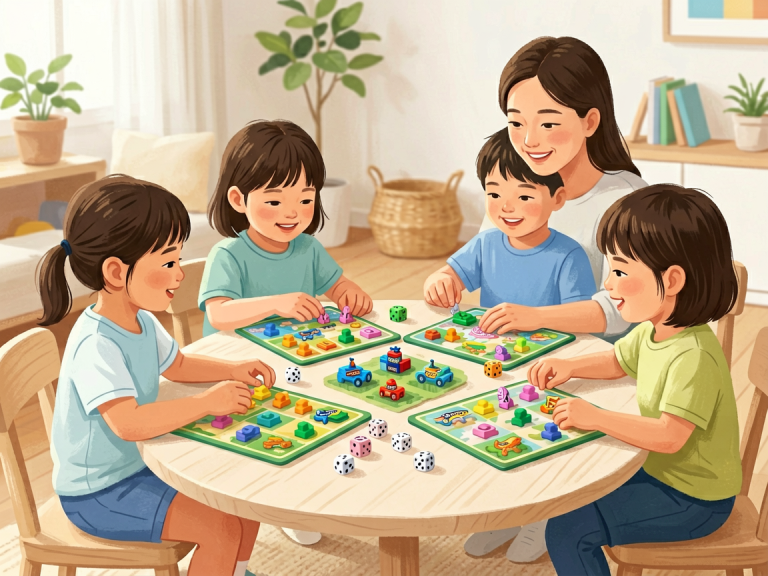
Toys should match the child’s developmental stage, not just their chronological age. A three-year-old may enjoy a simple peg puzzle, whereas a five-year-old might be ready for a board game that involves counting or reading simple words. Mismatched toys can lead to frustration (too difficult) or boredom (too easy). Look for age ranges on packaging, but also observe the child’s current interests and abilities.
Open-Endedness
The most valuable early learning toys are those that can be used in multiple ways. A set of plain wooden blocks can become a tower, a bridge, a race track, or a fence. An electronic toy that only says one phrase when a button is pressed offers limited interaction. Open-ended toys encourage creativity and prolonged engagement. They also grow with the child: a magnetic tile set can be used for simple stacking at age three and for building geometric structures at age six.
Safety and Durability
Preschoolers are notorious for putting toys in their mouths, throwing them, and dropping them. Ensure toys are made from non-toxic materials (water-based paints, BPA-free plastics, sustainably sourced wood) and have no small parts that could pose a choking hazard. Rounded edges are preferable. Durability also matters—a well-made toy can be passed down to younger siblings, reinforcing sustainability.
Sensory Engagement
Toys that appeal to multiple senses—sight, sound, touch, and sometimes smell (like scented play dough)—are more engaging. Textured blocks, brightly colored beads, and toys that produce gentle sounds (e.g., a wooden rattle) help integrate sensory processing, which is especially important for children with sensory sensitivities.
Avoid Over-Stimulation
Battery-operated toys that light up, talk, and play music simultaneously may seem exciting, but they often do the thinking for the child. Passive toys that require the child to initiate action (e.g., rolling a ball, stacking rings) are more beneficial for active learning. The Montessori philosophy, which champions simple, natural materials, aligns well with this principle.
Finally, involve the child in the selection process when possible. A toy that a preschooler has chosen themselves is more likely to capture their sustained attention.
—
Balancing Play and Instruction: The Pedagogy of Early Learning Toys
Even the best toys cannot replace the role of a responsive adult. Early learning toys are most effective when combined with guided interaction. This does not mean hovering or directing every moment; rather, it means observing, asking open-ended questions, and scaffolding the child’s learning. For example, if a child is building with blocks, a caregiver might say, “I notice your tower is wobbling. What do you think would happen if you placed this block here?” Such prompts encourage critical thinking without robbing the child of autonomy.
Moreover, the concept of “play-based learning” is central to early childhood education. Organizations like the National Association for the Education of Young Children (NAEYC) emphasize that play is the primary vehicle for learning in the preschool years. Early learning toys should therefore be integrated into daily routines—not as a scheduled “lesson,” but as opportunities for joyful discovery. A child who plays with a counting bear set during free time is learning math, but they are also learning patience, focus, and self-regulation.
It is also important to limit screen-based toys. While some apps and digital games claim to teach letters or numbers, research indicates that hands-on, three-dimensional interaction is far superior for brain development in this age group. The tactile feedback of manipulating physical objects helps solidify concepts in a way that screen swipes cannot replicate.
Ultimately, the goal is to create a rich toy environment that invites exploration, supports diverse learning styles, and respects the child’s natural pace. Too much structured instruction can extinguish intrinsic motivation; too little can leave gaps in foundational skills. The sweet spot is a balance—a home or classroom where toys are thoughtfully chosen, regularly refreshed, and used as tools for connection between the child and the caring adults in their life.
—
Conclusion: Investing in the Future, One Toy at a Time
Early learning toys for preschoolers are far more than consumer goods—they are instruments of potential. Through blocks, puzzles, pretend play, and art, young children build the cognitive, social, emotional, and physical skills that will serve them throughout their lives. The choices we make today, whether selecting a simple set of wooden cubes or a complex magnetic building kit, echo into tomorrow’s classrooms, workplaces, and relationships.
Yet the most important ingredient is not the toy itself but the context in which it is used. A toy becomes educational when a child is free to explore, when a caregiver engages with curiosity and patience, and when play is respected as the serious work of childhood. As the pioneering educator Friedrich Froebel, inventor of kindergarten, once said: “Play is the highest expression of human development in childhood, for it alone is the free expression of what is in a child’s soul.”
Let us choose our toys wisely, and let us play with our children wholeheartedly. In doing so, we give them the greatest gift: the confidence that learning is joyful, endless, and theirs to discover.
*(Word count: approximately 1,250 words)*