The Power of Play: A Comprehensive Guide to Early Learning Toys for Toddlers
Introduction: The First Classroom
The world of a toddler is a realm of boundless curiosity, where every object is a mystery to be solved and every sound a new language to be learned. Between the ages of one and three, the human brain undergoes an explosive period of growth, forming more than one million new neural connections every second. This is the critical window for cognitive, physical, and emotional development. While parents often feel pressure to enroll their children in structured “enrichment” programs, the most powerful learning tool is often right in the living room: a well-chosen toy.
However, not all toys are created equal. The brightly colored, plastic, battery-operated toy that sings, lights up, and moves on its own may entertain a child for a few minutes, but it often turns the child into a passive spectator. In contrast, a carefully selected early learning toy engages the toddler as an active participant—a builder, a problem-solver, and a storyteller. This article explores the fundamental categories of early learning toys for toddlers, focusing on how they stimulate development, the specific skills they target, and why they are superior to passive entertainment.
1. The Architects of Thought: Building and Stacking Toys
One of the most venerable and effective categories of early learning toys is building and stacking blocks. While seemingly simple, a set of wooden blocks is a complex educational tool that grows with the child.
Cognitive Development and Spatial Reasoning
When a toddler attempts to stack a square block on top of a triangular one, they are engaging in high-level geometric reasoning. They are learning about balance, gravity, and cause and effect. Each time a tower tumbles, the child is not failing; they are gathering data. They learn that a wide base supports a taller structure than a narrow one, and that placing a heavy block on an uneven surface invites disaster. This process lays the foundational framework for understanding physics and mathematics.
Fine Motor Skills and Hand-Eye Coordination
Grasping a block, rotating it to find the correct angle, and carefully placing it without knocking over the rest of the tower requires a controlled interplay between the eyes and the small muscles of the hands. These fine motor skills are essential for later tasks such as writing, drawing, and using utensils. Unlike passive toys that mechanize the action, building toys force the toddler to be the engineer of the motion.
Recommendations for Parents:
Choose uncoated, natural wood blocks for sensory feedback, or colored blocks to introduce pattern recognition. Avoid sets that only click together in one specific way; open-ended blocks that can be stacked, rolled, or used as imaginary objects offer far more developmental value.
2. The Senses and the Mind: Sensory and Manipulative Toys
Toddlers are sensory-motor learners. They understand the world not through abstract concepts but through touch, taste, sight, and sound. Sensory toys are specifically designed to stimulate these neural pathways.
The Montessori Influence
The Montessori philosophy heavily emphasizes “sensorial materials.” Toys like nesting cups, shape sorters, and texture boards allow a toddler to isolate a single quality—such as size, weight, or texture—and focus on it. For example, a cylinder block where the child must fit the correct cylinder into the correct hole requires visual discrimination. A toddler must analyze differences
in diameter so subtle that an adult might miss them. This sharpens the ability to categorize and organize information.
Fine Motor Precision and Grip Strength
Manipulative toys, such as wooden puzzles with knobs or threading beads, demand digital dexterity. The “pincer grip” (using the thumb and index finger) is a crucial developmental milestone. Toys that require a child to pick up a small object and place it precisely—like a pegboard or a lacing card—are preparing the hand for writing. Furthermore, the repetitive motion of sorting shapes or opening latches (found on busy boards) provides a calming, focused activity that can help regulate a toddler’s energy.
Why it Matters:
These toys teach the concept of "problema-solution." A shape sorter presents a clear problem (the triangle piece won't fit in the square hole). The toddler must persist through frustration, trial, and error to find the solution. This grit is a far more valuable life skill than knowing the alphabet at age two.
3. The Vocal Stagecoach: Language and Imitative Toys
Language acquisition in toddlers is explosive. Between 18 and 24 months, most children experience a “naming explosion,” learning dozens of new words per month. Early learning toys that encourage vocalization and imitation are critical during this phase.
Role-Playing and Vocabulary Building
Toys that mimic the adult world—such as play kitchens, tool sets, and dollhouses—are powerhouses for language development. When a toddler “cooks” you a meal, they are practicing narrative structure. They might say, “Mama eat soup. Hot. Blow.” This is the grammar of their world. Parents who participate in this play can naturally expand the child’s vocabulary. “Oh, you are stirring the soup with a big spoon? Is it a wooden spoon or a metal one?”
Pretend Play and Social-Emotional Intelligence
Role-playing toys teach social norms and empathy. A toddler who feeds a doll and puts it to bed is acting out the care they receive. This is not just cute; it is a rehearsal for understanding the needs of others. Dolls, puppets, and animal figurines allow the child to project emotions onto a third party. “Why is the bear crying? He dropped his ice cream.” This dialogue builds the neural architecture for emotional regulation.
The Role of Books
While not a “toy” in the traditional sense, interactive board books with flaps, textures, and mirrors are essential. They connect the visual image with the spoken word and the tactile experience. A book that says “touch the soft bunny” allows the toddler to synchronize language with touch, creating a multi-sensory learning loop.
4. The Great Connectors: Cause-and-Effect and STEM Toys
Contrary to popular belief, the foundations of Science, Technology, Engineering, and Mathematics (STEM) begin in toddlerhood. The key is to use toys that teach mechanical logic without screens.
A Better Kind of “High-Tech”
Rather than a tablet that provides instant passive gratification, early learning STEM toys introduce the concept of mechanism. A simple car ramp where a car rolls down only if the ramp is tilted, or a wooden marble run where the marble drops through a series of holes, teaches a toddler about trajectory, speed, and gravity. A “pop-up” toy where the child presses a lever to make a character pop up teaches the principle of cause and effect (Action A → Reaction B).
Problem-Solving Sequences
More advanced toys for the older toddler (around 2.5 to 3 years) include simple “puzzle locks” and gears. When a child turns a gear, they see that the adjacent gear turns in the opposite direction. This is a rudimentary lesson in physics and mechanics. These toys also promote sequential thinking (Step 1: Lift the latch; Step 2: Turn the wheel; Step 3: The door opens). This ability to sequence actions is the precursor to logical reasoning.
What to Avoid:
Avoid any electronic toy that "plays" for the child. If a toy requires the child to simply press a button to hear a song, the learning is shallow. The real learning happens when the child has to figure out *why* the song plays (e.g., I have to put the disc in the slot and push the red button—because the red button completes the circuit).
5. The Importance of Loose Parts and Open-Ended Play
The single most important principle for selecting early learning toys is “open-endedness.” An open-ended toy can be used in multiple ways. A cardboard box can be a car, a castle, a hat, or a drum. This is the ultimate learning toy, yet it is free.
Fostering Creativity Over Compliance
Toys that have a single “correct” use (like a click-and-connect toy that only makes one specific shape) teach compliance. Open-ended toys teach creativity. Sets of wooden blocks, silk scarves, play dough, and water play toys have no fixed outcome. The child’s imagination becomes the driver. This type of play strengthens the prefrontal cortex, the brain’s “control center” responsible for planning, focus, and self-control.
Sensory Bins and Thematic Baskets
Parents can create a simple early learning kit using a “sensory bin.” Fill a small plastic tub with rice, beans, or sand. Add scoops, cups, funnels, and small animal figurines. The toddler will spend an hour pouring, scooping, and burying. This strengthens hand muscles, teaches the physics of pouring (how full is full?), and provides deep sensory integration. It is far more valuable than a toy that “teaches” the alphabet by repeating letters.
Conclusion: The Best Toy is a Present Parent
Ultimately, a toy is just an object. Its educational value is unlocked through interaction—specifically, interaction with a caring adult who narrates the play, asks questions, and celebrates discoveries. While the market is flooded with products claiming to turn your toddler into a genius, the science is clear: the best early learning toys for toddlers are those that are simple, sensory-rich, and open-ended. They invite the child to be an active participant in their own learning.
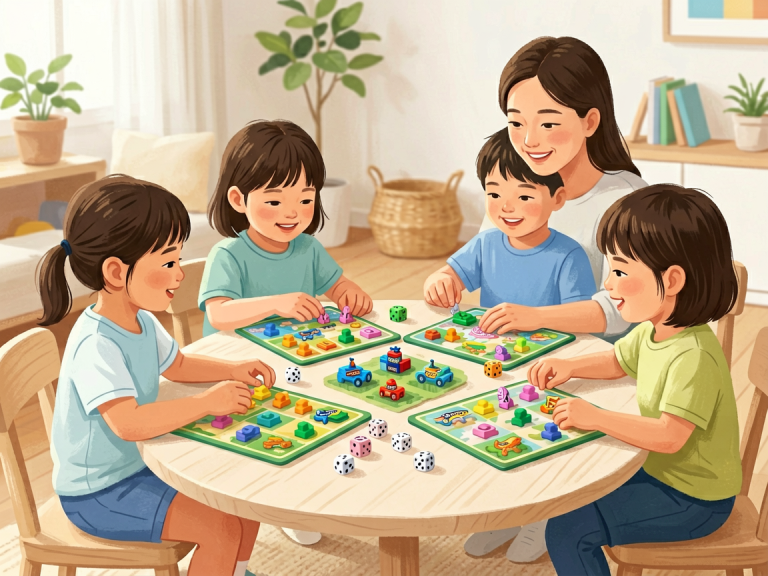
A toddler building a wobbly tower of blocks is learning architecture. A toddler pouring water from a cup is learning fluid dynamics. A toddler pretending to feed a teddy bear is learning empathy. Buy the blocks, buy the play dough, and get the puzzles. But most importantly, sit on the floor and play with them. In that moment of shared play, the toy becomes a bridge to a larger world of understanding, connection, and joy. And that is the most profound lesson of all.