The Power of Play: How Educational Toys Shape Memory in Babies
Introduction
From the moment a baby enters the world, every interaction, sound, and texture becomes a building block for cognitive development. Among the most powerful tools for nurturing this growth are educational toys—objects designed not just to amuse but to challenge, stimulate, and teach. While parents often focus on motor skills or language acquisition, one critical area that deserves equal attention is memory. In the first three years of life, the human brain undergoes an extraordinary transformation, forming neural connections at a rate of more than one million per second. Educational toys tailored to this stage can harness that plasticity, turning play into a structured exercise in remembering, recognizing, and recalling. This article explores the science behind memory development in infants, the design principles of effective memory-building toys, and practical ways parents can integrate them into daily routines.
—
The Science of Infant Memory: More Than Mere Recall
To understand how toys build memory, we must first appreciate the complexity of memory itself in babies. Contrary to the old belief that infants “forget everything,” modern neuroscience reveals that even newborns possess primitive forms of memory. Procedural memory—the ability to remember how to do things, such as sucking or grasping—emerges first, followed by recognition memory (familiarity with faces, voices, or objects) around two to four months. By six to twelve months, babies develop explicit memory, allowing them to recall specific events, though this memory is still fragile and context-dependent.
The hippocampus, a seahorse-shaped region deep in the brain, plays a central role in forming these memories. It matures rapidly during the first year, and its growth is heavily influenced by sensory input and repetition. Educational toys that engage multiple senses—sight, sound, touch, and even taste (within safety limits)—activate the hippocampus and associated cortical networks. For example, a rattle that produces a consistent sound when shaken not only entertains but also teaches cause-and-effect relationships, a foundation for episodic memory. Repetition, pattern recognition, and novelty are the three pillars that toys leverage to strengthen neural pathways. Without these elements, a toy may be merely distracting rather than developmentally enriching.
—
Key Principles of Memory-Building Toys: Design with Purpose
Not all toys marketed as “educational” truly support memory. Effective memory-building toys share several core characteristics rooted in developmental psychology and neuroscience.
1. Multi-Sensory Feedback
Babies learn best when information arrives through multiple channels. A toy that combines visual patterns, auditory cues, and tactile textures forces the brain to integrate these inputs, a process called multisensory integration. This enhances the depth of encoding, making memories stronger and easier to retrieve. For instance, a soft fabric block with a bell inside, bright contrasting colors, and different surface textures (smooth, bumpy, fuzzy) provides rich data that the infant’s brain can categorize and store.
2. Graduated Complexity
Memory development is not linear. A toy that remains static will quickly lose its power. The best educational toys offer adjustable difficulty levels. Take shape-sorters: a simple version with three large shapes (circle, square, triangle) helps a six-month-old practice recognition and matching. As the baby grows, a sorter with smaller, more complex shapes (hexagons, stars) and a timer or sound reward challenges working memory and problem-solving. This scaffolded approach prevents frustration while continuously pushing the child’s memory capacity.
3. Repetition with Variation
Repetition is essential for memory consolidation, but pure repetition can bore both baby and caregiver. Educational toys designed for memory-building incorporate subtle variations within a repeated framework. A musical toy that plays the same melody but changes the instrument or tempo each time, for example, encourages the baby to recall the tune while attending to the new element. This “repetition with novelty” strengthens pattern recognition—a key component of long-term memory.
4. Social Interaction
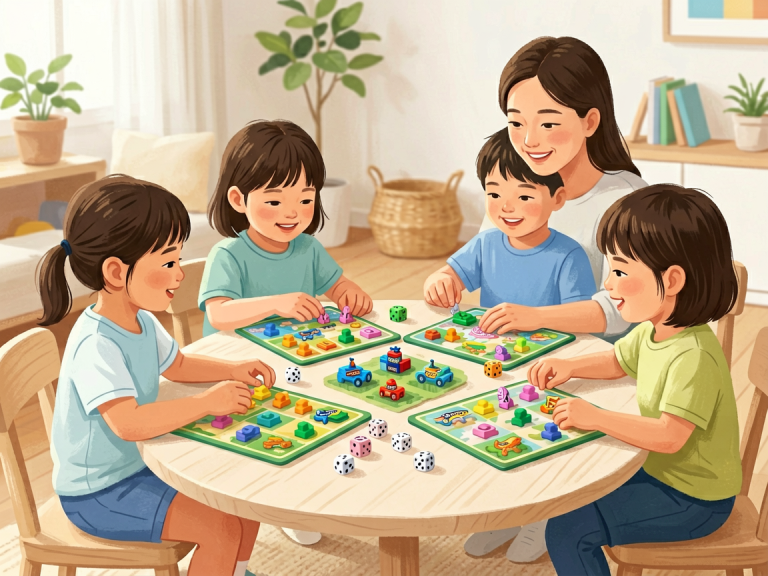
Memory is inherently social. When a parent or caregiver interacts with the toy alongside the baby, the shared experience becomes more memorable. Toys that facilitate turn-taking, imitation, or simple games like peek-a-boo (using a toy that hides and reappears) tap into social memory. Studies show that infants remember actions performed by a caregiver twice as long as actions they observe in isolation. Therefore, any toy that encourages joint attention—such as a puppet that “talks” or a book with flaps—will indirectly boost memory.
—
Types of Educational Toys That Build Memory in Babies
With the above principles in mind, several categories of toys have proven especially effective in strengthening memory during infancy and toddlerhood.
Sensory Play Mats and Activity Gyms
From birth to around six months, babies rely heavily on sensory input. Activity gyms with hanging toys that dangle at different heights, featuring contrasting patterns (black and white for newborns, later bright primary colors), and textures that can be touched or mouthed encourage the development of recognition memory. A baby who repeatedly bats at a specific toy and hears a chime begins to associate the action with the sound, forming a simple memory trace. The gym’s overhead mirror also supports self-recognition, a milestone tied to autobiographical memory.
Stacking and Nesting Toys
The classic stacking ring or nesting cups is a powerhouse for memory. Each ring must be placed in a specific order (largest to smallest), requiring the baby to remember the sequence. Initially, a baby may only succeed by trial and error, but as they repeat the activity, their working memory improves. Some advanced stacking toys include color-matching cues or numbered rings, adding an extra layer of association. The act of stacking also reinforces spatial memory, helping the brain map relationships between objects in space.
Memory Matching Games for Toddlers
Once a baby reaches about 12 months and shows signs of picture recognition, simple memory games become suitable. However, traditional card matching is too advanced. Instead, consider three-dimensional matching toys: small wooden tiles with raised animal figures that fit into corresponding recessed boards. The tactile and visual cues together make it easier for a toddler to remember where each piece belongs. Electronic versions that light up when a correct match is made provide immediate feedback, reinforcing the memory loop. These games directly target what psychologists call “recognition memory,” a precursor to recall memory.
Musical Instruments and Sound Toys
Music and memory are deeply intertwined. Simple instruments like drums, xylophones, and maracas allow babies to create sounds and later remember which actions produce them. A drum that plays different notes depending on where it is hit (e.g., a touch-sensitive drum pad) encourages the baby to experiment and remember patterns. More sophisticated toys, such as electronic pianos that play a sequence of notes and then ask the baby to repeat them, are excellent for developing auditory short-term memory. Even a rattle with multiple chambers containing different materials (rice, beads, sand) helps the baby differentiate and remember sounds, building auditory recognition.
Cause-and-Effect Toys
Toys that require a specific action to produce a result teach the baby to remember sequences. Examples include pop-up toys where pressing a button makes a character jump, or activity centers with levers, knobs, and sliding doors. The baby must recall: “If I slide this piece to the left, the door opens.” This is a form of procedural memory. Over time, as the baby encounters similar mechanisms in different toys, they transfer that memory—a process called cross-context generalization, which is a hallmark of advanced memory development.
Interactive Books with Flaps, Textures, and Sounds
While often classified as reading materials, many modern baby books function as toys. Books with flaps that hide images encourage the baby to remember what is underneath—a direct memory exercise. Books with textured patches (furry, rough, shiny) help create tactile memories that anchor the visual content. Some include buttons that play animal sounds or short melodies, allowing the baby to pair the sound with the picture. Repetitive reading of the same book (a parent’s favorite, perhaps) is actually highly beneficial; familiarity strengthens recall, and pointing to objects and naming them builds vocabulary alongside memory.
—
Practical Tips for Parents: Maximizing Memory Gains Through Play
Even the best educational toy is only as effective as the way it is used. Parents can amplify memory-building by following a few evidence-based practices.
1. Introduce One Toy at a Time
Overstimulation is a real risk. When a baby is surrounded by many toys, attention scatters, and memory formation suffers. Present one or two toys during a play session and allow deep exploration. Once the baby shows mastery (e.g., completing a shape-sorter without help), rotate in a new toy to maintain novelty while reinforcing previously learned skills.
2. Narrate the Play
Language supports memory. As your baby plays, describe what they are doing: “You’re putting the red ring on the peg! Now the blue one.” This verbal labeling creates multiple memory traces—visual, motor, and auditory—making the experience more memorable. Research in cognitive science shows that children remember actions better when they are accompanied by rich narrative commentary.
3. Create Predictable Routines Around Toys
Memory thrives on patterns. If a certain toy is always brought out during diaper changes or before naptime, the baby begins to associate the toy with the context. Over time, they may anticipate the toy’s appearance and even recall what to do with it. This routine-based learning strengthens the hippocampus under natural conditions.
4. Observe and Adjust
Each baby develops memory at their own pace. Some babies may become frustrated by a toy that is too difficult or bored by one that is too easy. Watch for signs: if a baby repeatedly fails the same memory task, simplify the toy (e.g., remove one piece). If they master it quickly, add a challenge (e.g., time them, or introduce an element of surprise). The goal is to keep the baby in the “zone of proximal development”—where the task is just hard enough to require effort but not so hard that they give up.
5. Encourage Repetition Without Forcing
Babies naturally want to repeat actions that bring them pleasure. Instead of interrupting their repetitive play, allow it to continue. Each repetition reinforces the neural circuit. If the baby wants to read the same book ten times in a row, great—they are building strong recognition memories. However, if they lose interest, gently redirect to a different toy that still targets similar memory skills.
—
Conclusion: Small Toys, Big Brains
Memory is not a static capacity but a skill that can be nurtured from the very first months of life. Educational toys specifically designed to challenge and support memory—through multisensory feedback, graduated complexity, repetition with variation, and social interaction—offer a powerful, joyful way to prime a baby’s brain for future learning. From the simple rattle that teaches cause-and-effect to the shape-sorter that demands problem-solving, each play experience leaves a trace in the developing hippocampus.
As parents and caregivers, we have the privilege of being the architects of these early experiences. By choosing toys wisely, playing intentionally, and following the baby’s lead, we can transform ordinary playtime into a memory-building adventure. The toys themselves may be made of wood, plastic, or fabric, but the memories they help create will last a lifetime—not just in the baby’s mind, but in the moments shared between child and caregiver. After all, the most powerful educational toy is the one that brings a smile to a baby’s face and a spark to their eyes, inviting them to remember again and again.