The Power of Play: Essential Educational Toys for Your 3-Year-Old’s Early Learning Journey
The age of three is a magical window of development. At this stage, a child’s brain is forming neural connections at an astonishing rate—about 1 million new synapses every second. Every giggle, every curious question, every attempt to stack blocks or scribble with a crayon is part of a profound learning process. While formal education is still years away, the foundation for lifelong cognitive, social, and emotional skills is being laid through the single most important activity of early childhood: play. For parents and caregivers, selecting the right educational toys can transform everyday play into powerful learning experiences. But what makes a toy truly “educational” for a three-year-old? It is not about flashy screens or pre-programmed responses. Rather, the best educational toys for early learning age 3 are those that invite open-ended exploration, nurture natural curiosity, and engage multiple senses. This article explores the key developmental domains that toys can support, offers concrete examples of high-quality playthings, and provides guidance on how to integrate them into a child’s daily routine.
Cognitive Development: Building Blocks of Learning
At age three, children are moving from simple sensorimotor exploration to more symbolic thinking. They begin to understand cause and effect, recognize patterns, and solve simple problems. Toys that stimulate cognitive growth should encourage logical reasoning, memory, and early math concepts without pressure or formal instruction.
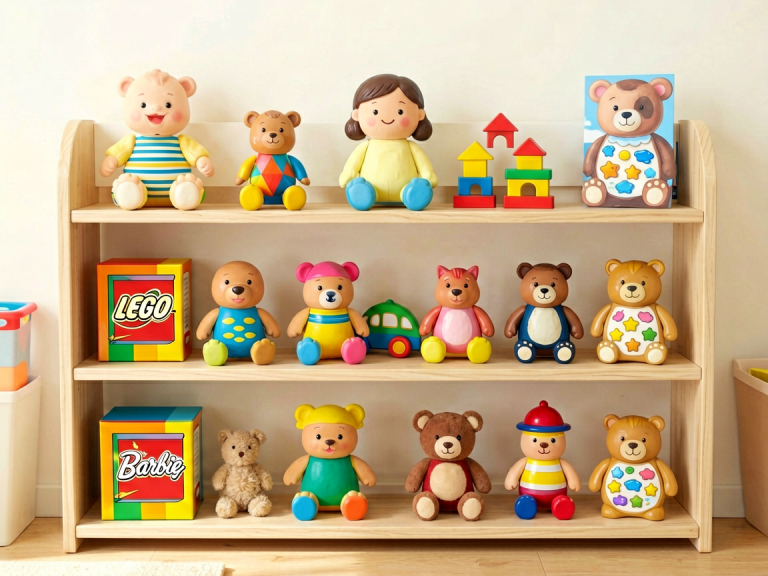
One of the most timeless educational toys for this age is a set of building blocks. Whether made of wood, plastic, or foam, blocks allow a child to experiment with balance, gravity, symmetry, and spatial relationships. When a three-year-old tries to build a tower that does not topple, they are engaging in hypothesis testing: “If I place this larger block on top, will it stay?” Repetition and failure become natural teachers. Moreover, blocks can be used to introduce basic counting, color recognition, and classification (“Let’s put all the red blocks together”). Similarly, simple jigsaw puzzles with four to twelve large pieces challenge a child to match shapes and complete a picture, fostering visual-spatial reasoning and concentration.
Another excellent cognitive toy is a set of nesting cups or stacking rings. These seemingly simple objects teach size sequencing, order, and the concept of “inside” and “outside.” When a child tries to fit a cup into the wrong slot, they learn through trial and error—a foundational cognitive process. Memory games with picture cards (starting with just a few pairs) also work wonderfully at this age, helping to strengthen short-term recall and attention span. Importantly, all these toys should be used without adult “teaching.” The child discovers naturally; the parent’s role is to provide the materials, observe, and occasionally ask open-ended questions like “What happens if you try this?” rather than giving direct answers.
Language and Communication: Words Come Alive
Language acquisition explodes between the ages of two and four. A typical three-year-old may know 300 to 1,000 words and is beginning to form short sentences. Educational toys that promote language development do so by creating rich contexts for conversation, storytelling, and vocabulary building. They should encourage the child to name objects, describe actions, and express feelings.
Picture books with simple, repetitive text and bright illustrations remain the gold standard. But beyond passive reading, interactive books with flaps, textures, or sound buttons invite a child to participate. For example, a “lift-the-flap” book about animals allows the child to name each animal before revealing it, reinforcing word-object connection. Puppets and finger puppets are another powerful tool. When a child uses a puppet to “talk” to a parent or to another child, they practice role-playing, dialogue, and narrative skills. The puppet can ask questions, make mistakes, and model turn-taking in conversation.
Pretend-play sets—such as a toy kitchen, a doctor’s kit, or a simple tool bench—are also tremendous for language growth. As a three-year-old “cooks” a meal or “fixes” a toy car, they narrate their actions: “I am stirring the soup. It’s hot!” This self-talk, known as private speech, is a critical bridge to internalized thought and later literacy. Parents can extend the language by joining the play and asking, “What would you like for dessert?” or “How does the patient feel today?” The key is to follow the child’s lead and avoid drilling vocabulary. Instead, embed new words naturally into the play scenario. For instance, while playing with a toy farm, a parent might say, “The pig is wallowing in the mud. Do you think he is happy?”—introducing the word “wallowing” in a context that makes sense.
Fine Motor Skills: Little Hands, Big Achievements
Three-year-olds are refining their hand-eye coordination and developing the small muscles in their fingers, which are essential for later tasks such as writing, buttoning, and using scissors. Educational toys that target fine motor skills should be engaging enough to sustain a child’s interest while providing just the right level of challenge.
Playdough is an almost perfect fine-motor toy. Squeezing, rolling, pinching, and flattening the dough strengthens hand muscles and improves dexterity. Adding simple tools like plastic knives, cookie cutters, and rolling pins introduces cutting and shaping motions. Another fantastic toy is a stringing beads set. Threading large beads onto a shoelace requires precise pincer grip and bilateral coordination (using both hands together). The beads can also be sorted by color or shape, adding a cognitive layer.
Lacing boards—cardboard shapes with holes and a lace—serve a similar purpose. So do pegboard sets where children insert pegs into holes. For a three-year-old, using a pegboard to create a pattern (e.g., red, blue, red, blue) combines fine motor practice with early math skills. Sticker books and simple art activities like drawing with thick crayons or chunky chalk also promote finger strength and control. Even the act of turning the pages of a board book or trying to zip a jacket can be considered fine-motor practice. The most effective toys in this category are those that allow for repetition without boredom. A child may string beads ten times in a row, each time gaining a little more control. This pattern of practice is exactly what the developing brain needs.
Social and Emotional Growth: Learning Together
At age three, children are beginning to understand that they are separate individuals with their own wants and feelings, yet they still rely heavily on adults for emotional regulation. Educational toys can support social and emotional learning by encouraging cooperation, empathy, and self-expression. This domain is often overlooked in favor of “academic” readiness, but it is arguably the most important foundation for success in school and life.
Simple board games designed for preschoolers, such as “Candy Land” or “The Sneaky Snacky Squirrel Game,” teach turn-taking, patience, and how to handle winning and losing. The game itself is not about complex strategy; it is about the social experience. When a child waits for their turn, they practice impulse control. When they lose, they learn to manage disappointment—a skill that requires adult modeling and soothing. Cooperative games where everyone wins together are also excellent for reducing competition anxiety.
Dollhouses, toy cars, and animal figurines offer opportunities for role-playing social scenarios. A three-year-old who makes a toy dinosaur “cry” because it is lost is practicing empathy. A child who sets up a tea party for stuffed animals is rehearsing social rituals of hospitality and conversation. Parents can gently guide this play by offering emotional vocabulary: “The bear looks sad. How can we help him?” This scaffolds the child’s ability to name and manage their own emotions. Additionally, toys that encourage physical movement with a partner, like a simple parachute or a large ball to roll back and forth, promote joint attention and shared joy—both crucial for social bonding.
Fostering Creativity and Imagination
Perhaps the most important quality of educational toys for a three-year-old is that they leave room for the child’s own imagination. In a world filled with electronic toys that dictate how to play, open-ended materials are a breath of fresh air. Creativity is not just about art; it is about flexible thinking, problem-solving, and the ability to see multiple possibilities.
A set of colorful scarves, for example, can become a superhero cape, a blanket for a doll, a river to jump over, or a tent roof. Simple wooden blocks can transform into a castle, a parking garage, or a spaceship. The best toys do not come with a single “correct” way to play. They are “loose parts” that invite endless combinations. Art supplies—crayons, washable markers, finger paints, collage materials—also feed creativity. At age three, the process is far more important than the product. A scribble that the child calls “a rainbow snake” is a triumph of symbolic thinking. Parents should resist the urge to correct or “improve” the art. Instead, ask open-ended questions: “Tell me about your drawing!”
Musical instruments, such as a xylophone, a tambourine, or a set of maracas, allow a child to experiment with rhythm, volume, and cause-and-effect. Making music is inherently creative and also supports auditory discrimination, which is linked to early reading skills. The key is to provide a variety of simple instruments and let the child explore without instruction. They may bang a drum loudly, then softly; they may stop and listen. All of it is learning.
Choosing the Right Toys: Safety and Engagement
With so many options on the market, parents may feel overwhelmed. A few principles can guide the selection of educational toys for a three-year-old. First and foremost, safety. Every toy should be non-toxic, free of small parts that could be choking hazards, and sturdy enough to withstand rough handling. Look for labels like ASTM (American Society for Testing and Materials) or CE (European Conformity). Avoid toys with long strings or cords that could pose strangulation risks.
Second, consider the toy’s “open-endedness.” A toy that can be used in multiple ways will outlast a toy with a single function. A shape sorter is good, but building blocks are better because they grow with the child. Third, think about the child’s current interests. If a three-year-old is fascinated by vehicles, a set of assorted trucks and a simple road mat will engage them far more than a generic puzzle. Follow their lead. Fourth, avoid over-stimulation. Many electronic toys have flashing lights and loud sounds that can overwhelm a young child’s nervous system. Quieter, simpler toys often encourage deeper focus and creativity.
Finally, remember that the toy is only half the equation. The most educational play happens when an adult is present, attentive, and responsive. A parent who sits on the floor, models language, asks questions, and allows the child to take the lead turns an ordinary toy into an extraordinary learning tool. Put away your phone. Get down on the rug. Watch your three-year-old discover the world through play. That is the real magic.
Conclusion
Educational toys for early learning age 3 are not about accelerating academic achievement or creating a “genius.” They are about honoring the natural drive of a child to explore, create, and connect. Through blocks, puzzles, puppets, playdough, and open-ended art materials, a three-year-old builds the cognitive, linguistic, motor, social, and emotional skills that will serve them for a lifetime. The best toy is one that sparks curiosity, invites interaction, and leaves room for the child’s own imagination to take flight. As parents, we have the privilege of providing these tools and then stepping back to watch the beautiful, messy, joyful learning unfold. In the end, the most powerful educational toy of all is simply a loving, attentive adult who believes that play is learning—and that every block stacked, every word spoken, every bead threaded is a small but mighty step on the journey of growing up.