The Power of Play: Toys That Build Curiosity and Inspire Lifelong Learning
Introduction
Curiosity is the engine of intellectual growth. It drives children to ask “why,” to explore the unknown, and to persist in the face of confusion. Yet in an age of passive entertainment and standardized testing, genuine curiosity can easily be stifled. The most effective antidote is not a lecture or a worksheet, but a well-designed toy. Toys that build curiosity do more than entertain; they create small worlds of wonder where children feel safe to experiment, fail, and discover. This article explores the characteristics of such toys, the psychological principles behind their effectiveness, and specific categories that have proven to spark enduring inquisitiveness. By understanding how play shapes the curious mind, parents, educators, and toy designers can better nurture the next generation of thinkers, inventors, and explorers.
—
What Makes a Toy Curiosity-Building?
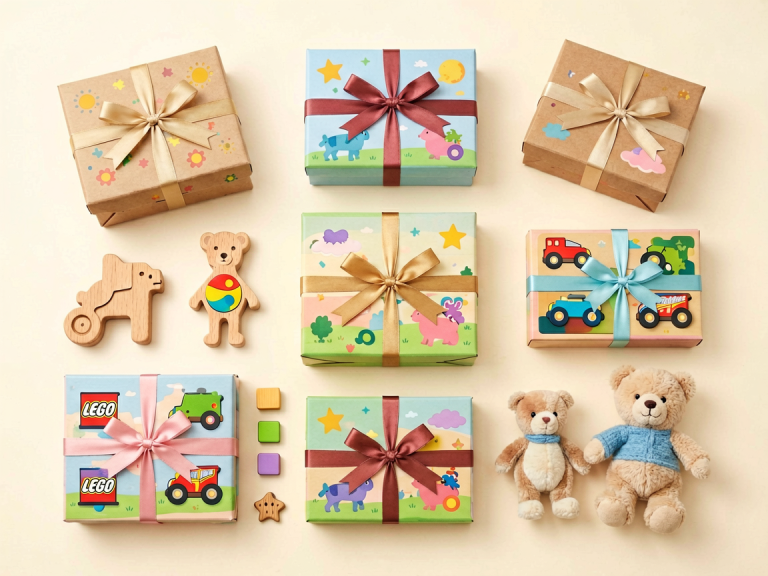
Not every toy is created equal when it comes to cultivating curiosity. A toy that builds curiosity possesses several hallmark traits. First, it is open-ended—it does not dictate a single correct outcome. A set of wooden blocks, for example, can become a tower, a bridge, a castle, or a spaceship, depending on the child’s imagination. This open-endedness invites repeated experimentation because each play session offers new possibilities.
Second, curiosity-building toys provide scaffolded challenge. They are neither too easy (which leads to boredom) nor too difficult (which leads to frustration). The best toys operate in what psychologist Lev Vygotsky called the “zone of proximal development”—the sweet spot where a child can succeed with a small amount of effort or guidance, gradually building competence and confidence. A puzzle with increasing complexity, or a construction kit that introduces new mechanisms step by step, exemplifies this principle.
Third, such toys encourage sensory engagement. Curiosity is rooted in the senses—seeing a surprising color change, hearing an unexpected sound, feeling a texture that defies expectation. Toys that stimulate multiple senses (touch, sight, sound, even smell) naturally draw children into deeper investigation. Finally, the most powerful curiosity toys invite social interaction. When a child shares a discovery with a peer or an adult, the act of explaining and debating reinforces the learning and fuels further questioning.
—
Classic Building Blocks: Foundations of Exploration
One of the oldest and most effective categories of curiosity-building toys is the humble building block. From Froebel’s original “gifts” in the 19th century to modern interlocking bricks, blocks have never lost their power. Why? Because they embody the core principles of open-endedness and physical experimentation.
A child stacking blocks learns about gravity, balance, and structural integrity through direct, trial-and-error experience. When a tower collapses, the child does not feel defeat—instead, a new question arises: “Why did it fall?” The answer might be that the base was too narrow, or that a block was placed off-center. In attempting to rebuild a taller or more stable structure, the child engages in iterative hypothesis testing, a process remarkably similar to the scientific method.
Moreover, blocks come in many forms—wooden cubes, magnetic tiles, snap-together rods, and even soft foam shapes for toddlers. Each variation introduces different physical constraints. Magnetic tiles, for instance, allow for cantilevers and arches that would be impossible with simple stacked wood, prompting questions about magnetic force and geometry. The simplicity of blocks belies their profound ability to nurture spatial reasoning, problem-solving, and a sense of agency. A child who builds a block city is not just playing; she is constructing a mental model of how the world fits together.
—
Science Kits and Experimental Play: Unleashing the Scientist Within
Perhaps nothing ignites curiosity more directly than a toy that mimics real scientific experimentation. Chemistry sets, crystal-growing kits, DIY volcano packs, and electronics breadboards have been staple curiosity builders for generations. Their magic lies in the element of surprise. When a child mixes baking soda and vinegar and sees a frothy eruption, the immediate reaction is wonder—and then the question: “What just happened? Can I make it bigger? What if I use lemon juice instead?”
Modern science kits have evolved to be safer, more accessible, and more inclusive. Many now include guided experiment cards that encourage children to change one variable at a time, record observations, and predict outcomes. This structured exploration not only teaches specific scientific facts but, more importantly, instills a mindset of systematic inquiry.
Consider the example of a simple circuit kit. A child connects a battery, wires, and a light bulb. The bulb lights up—satisfying. But then the child wonders: “What if I add another bulb? Will it be dimmer? What if I use a longer wire?” By answering these questions through hands-on manipulation, the child internalizes concepts of voltage, resistance, and parallel versus series circuits. Such toys demystify the world and empower children to see themselves as capable of understanding it.
The best science kits also embrace messiness and unpredictability. A perfectly controlled outcome teaches little; it is the accidental fizz, the unexpected spark, the failed attempt that sticks in memory and drives further investigation. Parents may wince at the cleanup, but that mess is the byproduct of genuine intellectual engagement.
—
Open-Ended Toys and Imaginative Play: The Role of Storytelling
Curiosity is not limited to the physical and scientific; it also blooms in the realms of narrative and social imagination. Toys that encourage open-ended pretend play—dollhouses, puppet theaters, dress-up costumes, play kitchens, and generic figurines—foster curiosity about human relationships, emotions, and the “what if” of alternative worlds.
When a child uses a set of wooden animals to create a story about a lost giraffe finding its way home, she is asking and answering questions: “Why did the giraffe get lost? How does he feel? What obstacles does he face?” This narrative curiosity is the foundation of empathy and literary thinking. Unlike a toy with a fixed story (such as a movie-licensed action figure that comes with a predetermined backstory), open-ended props allow children to generate their own plots and resolve them creatively.
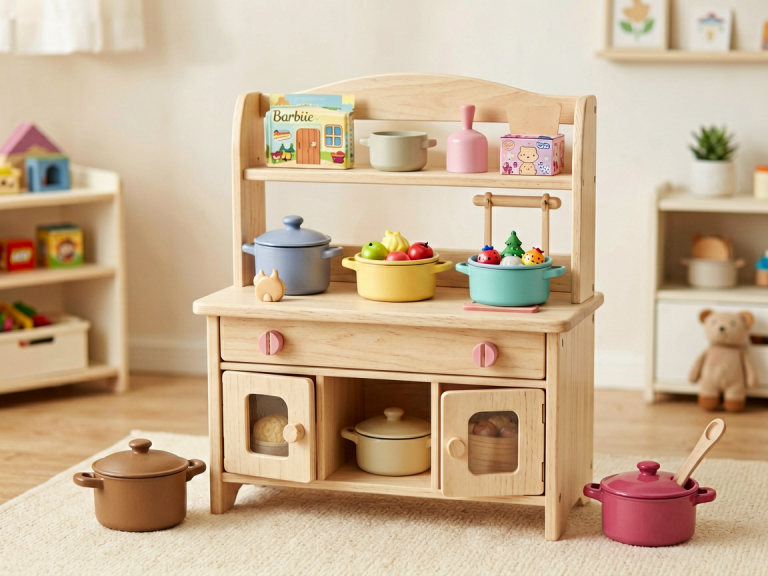
Play kitchens and doctor’s kits, for example, let children role-play adult activities, which naturally sparks curiosity about how the real world works. “Why does food need to be cooked?” “How does a stethoscope let you hear a heartbeat?” These questions emerge organically when a child is in the driver’s seat of the play scenario. The toy does not need to provide the answers; it only needs to provide the context for the questions.
Furthermore, construction toys that combine storytelling—such as themed building sets (e.g., a castle with knights, a space station with astronauts)—bridge the gap between physical building and narrative play. Children build the environment and then populate it with stories, effectively merging two modes of curiosity.
—
Digital Toys: Balancing Screen Time with Interactive Discovery
In an era dominated by screens, it would be a mistake to ignore digital toys. However, not all digital toys build curiosity. The best ones are interactive, exploratory, and adaptive—not passive. Apps and games that allow children to design their own experiments, such as virtual physics sandboxes (e.g., *World of Goo* or *The Sandbox*), cultivate the same curiosity as physical blocks and science kits, albeit in a digital medium.
A well-designed coding toy, like a programmable robot (e.g., Sphero or Botley) or a coding board game (e.g., Code Master), teaches computational thinking through trial and error. Children learn to debug their code, asking, “Why did my robot turn left instead of right? What happens if I change the sequence of commands?” The immediate visual feedback is compelling, and the iterative process mirrors the scientific method.
The key is active rather than passive consumption. A video that simply shows a child a science demonstration is not a curiosity-building toy; it is a video. But a digital simulation where the child can change parameters—gravity, friction, temperature—and observe the results in real time is a powerful tool for exploration. Parents should look for digital toys that prioritize creation over consumption, and that limit distractions such as ads or addictive reward loops.
Moreover, the most effective digital toys often encourage offline extension. A child who uses a virtual chemistry lab might be inspired to ask for a real chemistry set, or a child who designs a digital city might become curious about urban planning. The best digital toys are not replacements for physical play but gateways to it.
—
Conclusion: The Lifelong Gift of Curious Play
Toys that build curiosity are not merely playthings; they are investments in a child’s future. They teach children that the world is full of questions worth asking, that failure is a stepping stone to discovery, and that learning itself can be a joyful adventure. From blocks and science kits to storytelling props and digital sandboxes, these toys share a common thread: they empower children to take the lead in their own education.
As adults, our role is to curate these experiences thoughtfully—to provide the tools, the space, and the encouragement, but not the answers. A child who grows up with toys that build curiosity becomes an adult who continues to wonder, to question, and to innovate. In a rapidly changing world, that is perhaps the most valuable skill of all. So next time you choose a toy, ask yourself: Will this spark a question? Will it invite exploration? If the answer is yes, you are giving the gift of a curious mind—one that will last a lifetime.