The Power of Play: A Parent’s Guide to Cultivating Problem-Solving Skills Through Fun
Introduction
Every parent dreams of raising a child who can think critically, adapt to challenges, and solve problems independently. Yet in a world of structured schedules, screen time, and academic pressure, the simple act of play is often overlooked as a serious learning tool. The truth is that play—especially unstructured, imaginative, and guided play—is one of the most powerful ways children develop problem-solving abilities. This guide will walk you through the why and how of using play to nurture your child’s creative and logical thinking, offering practical strategies you can implement at home today.
Why Play Matters for Problem Solving
Problem solving is not a single skill but a bundle of cognitive processes: recognizing a challenge, generating possible solutions, evaluating options, trying and failing, and adjusting. When children play, they engage in all these steps naturally. A child building a tower with blocks must figure out why it keeps falling—too narrow a base? Uneven pieces? They experiment, test hypotheses, and revise. This is the very essence of the scientific method, but it happens without worksheets or lectures.
Play also builds emotional resilience. In a game of make‑believe, a child might face a “monster” and must decide whether to fight, flee, or negotiate. Each failed attempt in a low‑stakes environment teaches them that mistakes are not disasters but stepping stones. This emotional safety net is crucial for developing the persistence that real‑world problem solving demands. Moreover, play encourages divergent thinking—the ability to come up with multiple solutions to one problem. When a child uses a cardboard box as a spaceship, a castle, and later a car, they are training their brain to see resources in novel ways.
The Parent’s Role: From Director to Facilitator
Many parents fall into the trap of “fixing” problems for their children. We see a puzzle piece that doesn’t fit and we show them the correct orientation. We watch them struggle with a Lego instruction and we point out the missing block. While well‑intentioned, this robs the child of the satisfaction—and the cognitive workout—of solving it themselves. The most effective parenting style for problem‑solving play is guided facilitation.
Instead of giving answers, ask open‑ended questions. When your child is frustrated by a collapsing sandcastle, say, “I wonder what’s making the sides crumble? What could you try next?” This shifts the ownership of the problem to them. You are still involved, but you are a coach, not a player. Another key technique is to model your own thinking out loud. If you’re building a birdhouse together, narrate your reasoning: “Hmm, the wood is a bit crooked. I could sand it down, or I could use a shim to level it. Which do you think would work better?” Your child absorbs this metacognitive language and begins to use it themselves.
Age‑Appropriate Play Ideas for Problem Solving
- Ages 2–4: Sensory Exploration and Simple Puzzles
At this stage, problem solving is about cause and effect. Provide materials that invite discovery: water, sand, playdough, and large wooden puzzles. A 3‑year‑old learning to fit a triangle into a triangle hole is developing spatial reasoning and persistence. Encourage open‑ended sensory bins (e.g., rice with scoops and small containers) where your child must figure out how to transfer materials without spilling. Ask, “How can you get the rice into the cup without making a mess?” They’ll try different scooping angles and speeds—a perfect early lesson in trial and error.
- Ages 5–7: Construction, Rules, and Cooperative Games
Preschoolers and early elementary children thrive on building toys like blocks, magnetic tiles, or simple LEGO sets. Introduce challenges: “Can you build a bridge that holds this toy car?” or “How many blocks can you stack before it falls?” Board games with simple rules (e.g., Candy Land, Hi Ho! Cherry‑O) teach children to follow sequences and cope with luck‑based setbacks. Cooperative games like “Hoot Owl Hoot!” require children to work together to solve a common problem, building social problem‑solving skills.
- Ages 8–10: Strategy, Logic, and Creative Challenges
Now children can handle more complex puzzles like mazes, Sudoku‑like number games, and strategy board games (checkers, chess, Settlers of Catan Junior). Encourage engineering projects: build a catapult from popsicle sticks and rubber bands, or design a marble run using cardboard tubes. Introduce the idea of constraints—limitations that force creative thinking. For example, “You have ten paper clips and three sheets of paper. How can you build a structure that stands at least 30 cm tall?” This mirrors real‑world problem solving where resources are finite.
- Ages 11+:
Older children can dive into coding games (Scratch, Minecraft Education), escape room kits, and complex strategy games. Encourage them to design their own games—writing rules, creating boards, and troubleshooting play‑testing issues. This higher‑order thinking involves systems analysis and iterative improvement. Also, involve them in real‑life problems: planning a family trip budget, reorganizing a closet efficiently, or troubleshooting a broken appliance with you. The transfer of play skills to real life is the ultimate goal.
Creating a Problem‑Solving Environment at Home
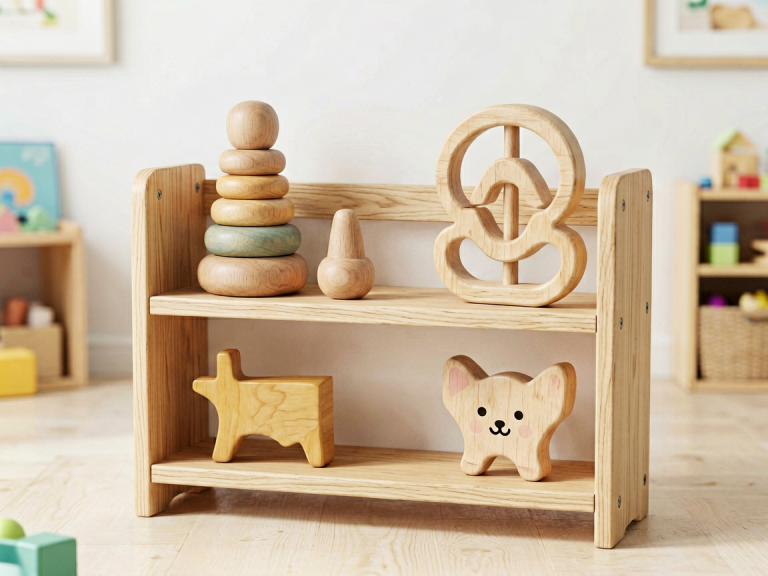
Your home’s physical and emotional environment can either support or stifle problem‑solving play. First, ensure access to open‑ended materials—items that have no single correct use. A set of wooden blocks, a bin of fabric scraps, tape, scissors, recycled containers, and art supplies invite endless possibilities. Rotate these materials every few weeks to refresh interest. Avoid over‑organizing play; a perfectly tidy playroom can discourage exploration because children fear making a mess. Designate a “messy zone” where building, painting, and experimenting can happen freely.
Equally important is your emotional climate. Children need to feel safe to fail. If your child’s tower topples, resist the urge to say, “I told you to make the base wider.” Instead, say, “Wow, that was a loud crash! What do you think you’ll do differently next time?” Celebrate effort and creative attempts, not just successful outcomes. Also, limit screen time that offers passive entertainment. While some educational apps teach problem solving, nothing beats hands‑on, tactile play where children control the variables.
Common Pitfalls and How to Avoid Them
- Over‑prompting: If you jump in too quickly, your child will learn to wait for your help. Wait at least 10–15 seconds before offering a hint. Let the silence be productive.
- Focusing on winning: In games, emphasize the process over the result. Instead of “You lost,” say, “What strategy worked well? What could you try next time?”
- Ignoring boredom: Boredom can be a catalyst for problem solving. When children complain “I have nothing to do,” resist providing instant entertainment. Let them sit with the discomfort; often they will invent a game or challenge to break the monotony.
- Using play as a reward only: If you treat play as something earned after homework, it becomes secondary. Instead, integrate problem‑solving play into daily routines—cooking together (measuring ingredients requires math), sorting laundry (categorization), or navigating a new route on a walk (spatial reasoning).
Conclusion
Problem solving is not a subject to be taught; it is a muscle to be exercised through joyful, meaningful play. As a parent, you are not required to design elaborate lesson plans. Your most important tools are patience, curiosity, and a willingness to step back. By offering the right materials, asking the right questions, and modeling a resilient attitude toward challenges, you can transform everyday play into a powerful laboratory for thinking. The child who learns to solve problems through play grows into an adult who can face life’s puzzles with creativity, confidence, and courage. So put down the instructions, embrace the mess, and play—because in every game, your child is building a better brain.
*(Word count: approximately 1,100 words)*