Introduction: The Golden Age of Discovery
Title: The Ultimate Guide to the Best Early Learning Toys for 3-Year-Olds: Nurturing Curiosity, Creativity, and Cognitive Growth
At age three, a child’s world expands dramatically. They are no longer toddlers but curious preschoolers who ask “why?” a hundred times a day, who love to pretend, and who are rapidly developing language, fine motor skills, and social-emotional awareness. This is a critical window for early learning, and the right toys can transform playtime into a powerful educational experience. However, with an overwhelming array of products on the market, parents and caregivers often struggle to identify which toys truly support development without overstimulating or frustrating a child. This comprehensive guide explores the best early learning toys for 3-year-olds, categorizing them by developmental domain, explaining their educational value, and offering practical shopping tips. Whether you are looking for a birthday gift, a holiday present, or simply a way to enrich daily play, this article will help you make informed, purposeful choices.
The Importance of Play at Age Three: Why Toys Matter More Than Ever
Before diving into specific toys, it is essential to understand what is happening in a three-year-old’s brain. Neurologically, the preschool years are a period of explosive synapse formation. Play is not just fun – it is the primary vehicle through which children learn problem-solving, cause and effect, language, emotional regulation, and social cooperation. The best early learning toys are those that align with this natural developmental trajectory. They should be open-ended, allowing for multiple uses and creative exploration; safe and durable, able to withstand enthusiastic handling; and appropriately challenging, providing just enough difficulty to encourage persistence without causing frustration. Moreover, at this age, children are beginning to engage in symbolic play – pretending a block is a phone or a cardboard box is a spaceship. Toys that stimulate imagination and role-playing are particularly valuable.
Key Features of Quality Early Learning Toys for Three-Year-Olds
Not all toys marketed as “educational” actually deliver. To cut through the noise, consider the following criteria when evaluating any toy for a 3-year-old:
- Safety first: No small parts that pose a choking hazard (though three-year-olds are past the peak danger, they still explore with their mouths). Look for non-toxic materials, rounded edges, and sturdy construction.
- Open-ended play potential: A toy that can be used in more than one way (e.g., building blocks, art supplies, play dough) encourages creativity and longer engagement than a single-purpose battery-operated toy.
- Skill alignment: Does it target fine motor skills (puzzles, lacing beads), gross motor skills (ride-on toys, balls), cognitive skills (sorting, matching, pattern recognition), or social-emotional growth (cooperative games, dollhouses)?
- Sensory engagement: Three-year-olds learn through their senses. Toys that involve touch, sight, sound, and even smell (like scented play dough) can enhance learning.
- Scalability: The best toys grow with the child. A simple set of wooden blocks will be used differently at age 3 than at age 5, making them a worthwhile investment.
Top Categories and Recommended Early Learning Toys
Below, I have organized the best early learning toys into five critical developmental domains, each with specific product recommendations that have proven educational value and high approval from parents, educators, and child development specialists.
1. Cognitive and Problem-Solving Toys: Building the Foundation for Logical Thinking
Three-year-olds are natural pattern-seekers. They love to sort, match, and classify. Toys that challenge their reasoning skills while respecting their short attention spans are ideal.
- Wooden Pattern Blocks and Shape Sorters: Classic wooden shape sorters (like the Melissa & Doug Shape Sorting Cube) teach shape recognition, spatial reasoning, and early math concepts. More advanced sets, such as geometric pattern boards, allow children to create pictures by fitting colorful shapes into designated slots. These toys develop hand-eye coordination and perseverance when a shape doesn’t fit the first time.
- Simple Jigsaw Puzzles with 8–24 pieces: Puzzles are outstanding for cognitive development. They require visual discrimination, spatial awareness, and memory. For a 3-year-old, choose puzzles with large, chunky pieces and familiar themes (animals, vehicles, family scenes). Floor puzzles are especially engaging because they involve whole-body movement. Brands like Ravensburger and Mudpuppy offer high-quality, durable puzzles.
- Memory Matching Games: A set of cards with identical images (animals, fruits, letters) helps children practice short-term memory and concentration. Many sets also include a physical component, like turning over tiles, which adds a tactile element. Playing with a parent or sibling also fosters turn-taking and social skills.
- Magnetic Building Tiles (e.g., Magna-Tiles, Magformers): These are arguably the most versatile cognitive toy for this age group. Children can build two-dimensional shapes or three-dimensional structures, learning about magnetism, geometry, and balance. The translucent panels allow light to pass through, adding a sensory dimension. At age 3, children typically start by stacking or laying tiles flat, but over time they progress to building cubes and towers. This toy grows with the child for years.
2. Fine Motor and Manipulative Toys: Strengthening Little Fingers for Writing and Self-Care
Developing fine motor skills is crucial for later tasks like holding a pencil, buttoning a shirt, or using scissors. The following toys make this practice fun and purposeful.
- Lacing Beads and Threading Activities: Large, colorful wooden beads that can be threaded onto a string or lace are excellent for hand-eye coordination and bilateral coordination (using both hands together). Look for sets that also incorporate shape or color matching. This activity also teaches patience and concentration.
- Play Dough with Tools and Cutters: Play dough is a sensory powerhouse. Rolling, pinching, cutting, and shaping strengthens the intrinsic muscles of the hand. Adding rolling pins, plastic knives (safe), and cookie cutters turns simple kneading into a creative process. You can even make homemade dough with safe ingredients, adding scents or glitter for extra sensory input.
- Squeeze and Twist Toys: Toys that require squeezing, twisting, or turning – like plastic nuts and bolts sets, or simple pop-up toys that require pushing buttons or sliding levers – improve finger strength and dexterity. A popular example is the “busy board” activity cube, which includes latches, zippers, and switches.
- Beginner Scissors and Safety Scissors: Around age 3, children can start practicing cutting with a pair of child-safe scissors (blunt tips, spring-assisted). Offer them strips of paper or play dough to cut, never loose hair or fabric. Cutting helps develop the tripod grip necessary for pencil control.
3. Language and Literacy Toys: Sparking a Love of Words and Stories
Vocabulary explodes between ages 3 and 4, from roughly 200 words to over 1,000. Toys that encourage conversation, labeling, and storytelling are invaluable.
- Alphabet Puzzles and Magnetic Letters: Wooden alphabet puzzles with chunky letters allow children to match the letters to their shaped slots, learning letter names and shapes. Magnetic letters on a refrigerator or cookie sheet enable them to make simple words (even if they are just arranging letters randomly at first). Singing the alphabet song while pointing to letters reinforces recognition.
- Interactive Storybooks and Sound Books: Books with buttons that produce sounds corresponding to the text (e.g., animal sounds, vehicle noises) add an audio element that holds attention. However, balance electronic books with traditional picture books – the genuine interaction of a parent reading aloud is irreplaceable. Look for books with repetitive phrases, rhymes, and colorful illustrations.
- Picture Cards and Vocabulary Games: Sets of photo cards (like “First Words” or “Animals”) can be used for naming, sorting by category, or playing simple games like “I spy.” These cards promote vocabulary building and categorization skills. Many speech therapists recommend them for language-delayed children as well.
- Puppets and Felt Boards: Hand puppets or finger puppets encourage dialogue and storytelling. A child can make the puppet “talk” about feelings, daily events, or imaginary adventures. Felt boards with cut-out characters (farm animals, ocean creatures) allow children to create scenes and narrate stories, boosting language production and narrative skills.
4. Gross Motor and Physical Activity Toys: Channeling Endless Energy
Three-year-olds are constantly on the move. They run, jump, climb, and tumble. Gross motor development is essential for balance, coordination, body awareness, and overall health.
- Balance Bikes (Pedal-less Bikes): A balance bike is one of the best investments for a 3-year-old. It teaches the fundamental skill of balancing without the complication of pedals. Children push with their feet, glide, and learn to steer. Most children transition to a regular bicycle much faster after using a balance bike. It also builds confidence and leg strength.
- Tricycles or Push Ride-Ons: For children who aren’t ready for a balance bike, a sturdy tricycle or a ride-on car with a parent push handle offers a stable way to practice pedaling and steering. Look for models with wide wheels for stability.
- Tunnels, Tents, and Climbing Structures: Indoor play tents or pop-up tunnels encourage crawling, rolling, and imaginative play (a tunnel becomes a cave, a tent becomes a castle). Small climbing domes or step-up blocks allow safe climbing and jumping. These toys help develop spatial awareness and risk assessment.
- Balls of Various Sizes: A set of soft, lightweight balls in different sizes (tennis ball, playground ball, beach ball) helps children practice throwing, catching, kicking, and rolling. Simple games like roll the ball back and forth or kick into a large goal teach aim and coordination. Cooperative ball games also lay the foundation for team sports later.
5. Creative and Imaginative Play Toys: Nurturing Self-Expression and Social Skills
Imaginative play is the heart of the preschool years. It allows children to process their experiences, try on different roles, and develop empathy.
- Wooden Play Kitchen and Food Sets: A pretend kitchen with pots, pans, play food, and utensils is a classic for a reason. It inspires role-playing as a chef, parent, or server. Children practice sorting, counting, sequencing (first I wash the apple, then I cut it), and social communication when they “serve” a meal. Look for sets that include a variety of fruits, vegetables, and grains to encourage healthy food awareness.
- Dress-Up Costumes and Accessories: A small trunk filled with simple costumes – a firefighter hat, a doctor’s coat, a princess dress, a chef’s apron – invites children to step into different identities. Dressing up develops self-regulation (putting on a hat and staying in character) and narrative skills. It can also be a wonderful tool for dealing with emotions: a child who is afraid of the doctor can act out a doctor visit with a stuffed animal.
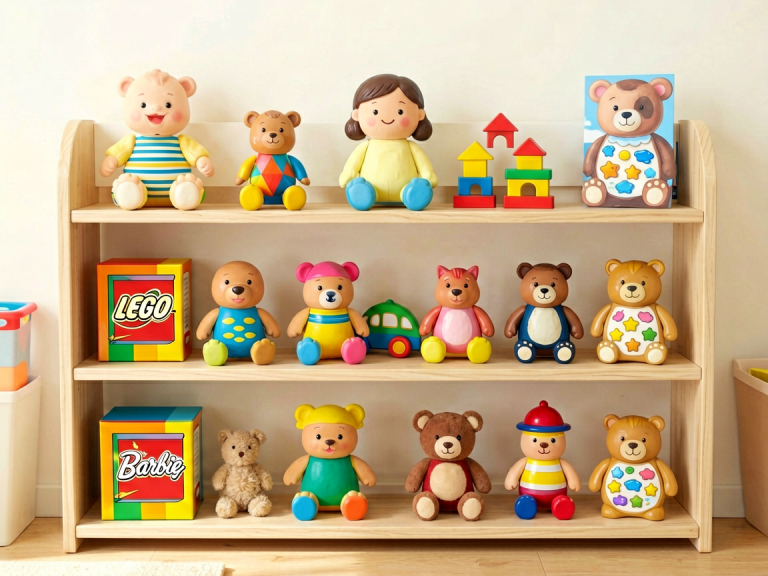
- Construction and Building Sets Beyond Blocks: In addition to classic unit blocks, consider Duplo LEGO sets (larger pieces than standard LEGO, safe for 3-year-olds). Duplo sets often come with themed characters (animals, firefighters, trains) that encourage story-building. Magnetic tiles (mentioned above) also fall into this category. The key is to have pieces that connect in a clever way, not just stack.
- Art Supplies: Crayons, Washable Markers, Stickers, and Easels: Creativity needs an outlet. Provide a variety of drawing tools (triangular crayons for easier grip, thick markers), paper of different sizes, and stickers. A child-sized easel allows for upright drawing, which strengthens shoulder and arm muscles for writing. Process art – where the focus is on the experience, not the final product – is ideal. Avoid coloring books that demand conformity; instead, offer blank paper.
Tips for Choosing the Right Toys (Without Overwhelming Your Child)
Even with a list of excellent options, parents face practical challenges: budget, space, and the child’s unique temperament. Here are strategic guidelines:
- Follow the child’s interests, not trends: Does your daughter love dinosaurs? Get her a dinosaur-themed puzzle and a set of dinosaur figurines. Does your son love vehicles? Invest in a wooden train set or a floor mat with roads. Interests-driven play is more engaging and therefore more educational.
- Rotate toys to maintain novelty: Instead of dumping all toys in a bin, keep only a few out at a time. Rotate them every week or two. This reduces clutter and rekindles excitement for “old” toys. It also prevents decision fatigue in a young child.
- Prioritize quality over quantity: A few well-made, open-ended toys are worth more than a hundred cheap, single-use plastic gadgets. Wooden toys, for instance, often last for years and can be passed down. Look for brands with good safety records and sustainable materials.
- Incorporate real-life tools when safe: A small broom, a dustpan, a measuring cup – real objects that children see adults using can be fascinating and educational. Supervised use of safe kitchen tools (like a plastic knife for cutting bananas) builds practical life skills and fine motor coordination.
- Limit screen-based toys: While some electronic learning aids have value, they are often passive. The best early learning toys require active participation – moving pieces, talking, building. Aim for a ratio of at least 80% screen-free, hands-on toys.
Conclusion: Play Is the Work of Childhood
Choosing the best early learning toys for a three-year-old is not about finding a single “magic” toy that will make your child a genius. It is about curating an environment rich in opportunities for exploration, problem-solving, and joy. A child who spends time building with blocks, pretending with puppets, and running with a ball is not just playing – they are laying the neural pathways for logic, empathy, and physical health. The toys recommended in this article are not exhaustive, but they represent a thoughtful, research-backed selection that covers the most important developmental domains. As you shop, remember that the most educational toy in any home is a present, attentive adult who plays alongside the child, asking open-ended questions like “What do you think will happen if we put this block on top?” or “Tell me about your puppet’s adventure.” Ultimately, the combination of high-quality toys and engaged interaction sets the stage for a lifetime of curiosity and learning. Happy playing