Unlocking Potential: How Parents Can Harness the Power of Learning Through Play
Introduction: The Forgotten Classroom
For decades, many parents have viewed play and learning as opposing forces—one frivolous and fun, the other serious and structured. Yet a growing body of research in developmental psychology, neuroscience, and early childhood education tells a different story: play is not a break from learning; it is the very engine of learning. When children build block towers, negotiate roles in a pretend game, or splash water in the bathtub, they are not merely amusing themselves. They are constructing mathematical reasoning, social skills, scientific hypotheses, and language fluency. For parents, the challenge is not to replace play with worksheets, but to consciously amplify the learning already embedded in everyday moments. This article offers a practical, evidence-based guide for parents who want to become intentional facilitators of learning through play—without sacrificing the joy that makes childhood magical.
—
Understanding the Science Behind Play-Based Learning
Why does play work so well? The answer lies in brain development. During play, children experience a state of low-stress, high-engagement activity that activates the prefrontal cortex—the region responsible for executive functions like planning, impulse control, and flexible thinking. Unlike passive instruction, play requires active problem-solving, creativity, and repeated trial and error. Neuroscientists call this “active learning,” and it leads to stronger neural connections, better memory retention, and deeper understanding.
Moreover, play respects the child’s pace. When a toddler stacks blocks and they tumble, she may try again five times. That persistence is self-motivated; no one forced her. In contrast, a worksheet asking her to count blocks often leads to frustration or boredom. Play naturally provides the “just right” challenge—difficult enough to stretch skills but not so hard as to cause breakdown. Parents who understand this can step back, observe, and gently scaffold rather than direct.
—
Creating a Play-Rich Home Environment
The first step for parents is to transform the home into a space that invites open-ended exploration. This does not require expensive toys. In fact, the most powerful learning tools are often the simplest: empty cardboard boxes, scarves, pots and pans, sand, water, and loose parts like buttons or pebbles.
Design Zones for Different Types of Play
Set up small, accessible areas dedicated to different play modes:
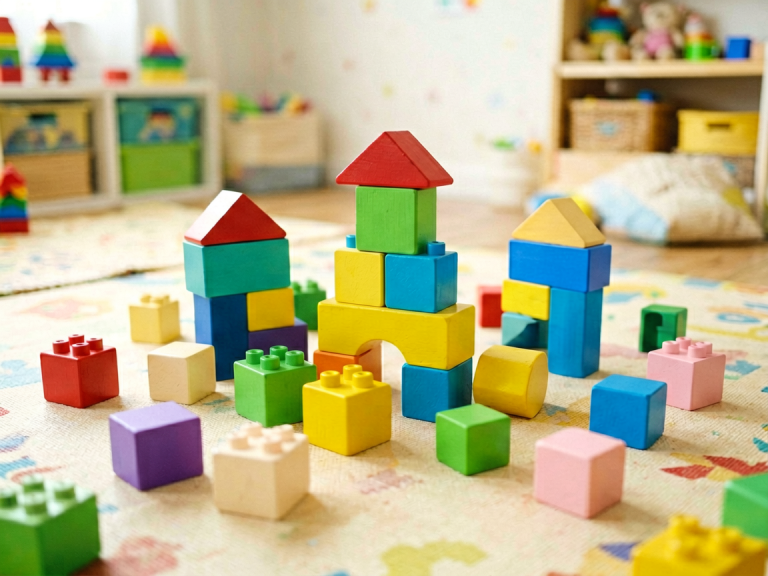
- A construction zone with wooden blocks, LEGO Duplo, or recycled containers. Here children experiment with balance, symmetry, and structures. Ask questions like, “What happens if you put the big block on top?” or “Can you build a bridge that a toy car can drive under?”
- A dramatic play corner with dress-up clothes, a play kitchen, or a simple puppet theater. In pretend play, children practice social roles, negotiate scenarios, and develop emotional vocabulary. Join in occasionally, but let them lead. Say, “I’ll be the customer. What do you recommend today?”
- A messy exploration station (in the kitchen or outdoors) with finger paint, play dough, water, or kinetic sand. Sensory play builds fine motor skills, stimulates neural pathways, and teaches cause and effect. Resist the urge to clean up immediately. The learning happens in the mess.
The Power of “Loose Parts”
“Loose parts” are materials that can be moved, combined, and transformed in endless ways—pine cones, bottle caps, fabric scraps, sticks, corks, and cardboard tubes. They encourage divergent thinking, where there is no single correct answer. A toddler may use a pine cone as a toothbrush for her teddy bear; a five-year-old might line up bottle caps to create a pattern. Provide a low shelf or a basket with these items and watch creativity explode. Parents can extend learning by asking open-ended questions: “How else could you use this?” or “What could you build with these three things?”
—
Embedding Academic Skills in Everyday Play
Many parents worry about school readiness—literacy, numeracy, and science. The good news is that these skills can be woven into play without turning it into a lesson.
Literacy Through Storytelling and Writing Pretend
Play naturally involves narrative. When a child announces, “I’m going to the moon!” they are building a story. Capitalize on this by offering props like paper and crayons for “spaceship blueprints” or “shopping lists” for the grocery store game. For younger children, label objects in their play environment with simple words: “door,” “chair,” “bear.” Point to the word as you say it. For older preschoolers, encourage them to write pretend menus for their restaurant or tickets for their train ride. Do not correct spelling; celebrate the effort. This builds phonemic awareness and confidence.
During car rides or bath time, play rhyming games or nonsense-word songs. “What rhymes with cat? Bat, hat, mat!” Such wordplay strengthens phonological processing, a key predictor of reading success.
Math and Logic in Block Play and Games
Blocks are arguably the most powerful math tool a parent can offer. A child stacking blocks learns about size comparison, balance, and spatial relationships. When you say, “Let’s see how many blocks it takes to make a tower as tall as your knee,” you introduce measurement and counting. For older children, challenge them to sort blocks by shape or color, then create patterns (red, blue, red, blue). Board games like Candy Land or simple dice games teach one-to-one correspondence, subitizing (recognizing quantities instantly), and turn-taking—an essential social skill that is also a mathematical one.
Cooking together is another gold mine. Measuring flour, counting eggs, and setting timers all involve real-world math. Let your child scoop, pour, and count aloud. If the recipe calls for ½ cup, show them that two ¼ cups fill the same amount.
Science Through Exploration and Wonder
Children are natural scientists: they observe, predict, experiment, and draw conclusions. Parents can nurture this by asking questions that spark inquiry. In the bathtub, provide cups, a funnel, and a plastic bottle. Ask, “What happens when you fill the cup and turn it upside down?” or “Why does the bottle float when it’s empty but sink when it’s full?” Let them discover buoyancy, displacement, and air pressure themselves.
Outside, turn a walk into a nature investigation. Collect leaves, rocks, or feathers. Compare textures and colors. Ask, “Why do you think this leaf is so red?” or “What might live under that rock?” For a longer project, grow a bean plant in a clear cup. Let the child water it daily and draw observations. This teaches patience, responsibility, and biological cycles.
—
The Parent’s Role: Facilitator, Not Director
Perhaps the hardest shift for parents is moving from “teacher” to “play partner.” When you take over a play scenario, you rob the child of ownership. Instead, follow these three principles:
1. Observe Before Intervening
Sit back for a few minutes. Watch what your child is doing with genuine curiosity. Notice the strategy they are using, the frustration they are working through, or the joy of discovery. Then you can offer a subtle nudge that respects their agenda. For example, if a four-year-old is struggling to put a puzzle piece in the right spot, instead of reaching over and fixing it, you can say, “I see you tried turning it. What if you try the other way?” This keeps the problem-solving in their hands.
2. Use Open-Ended Questions
Closed questions (“What color is this?”) test rote knowledge. Open-ended questions (“What do you think would happen if…?” “How can we make this stronger?” “What else could this be?”) invite creative thinking and language development. They also signal that you value the child’s ideas, not just correct answers.
3. Embrace Repetition and Boredom
Children often repeat the same play scenario for days or weeks. This is not a sign of stagnation; it is how mastery develops. A child who builds and knocks down the same block tower twenty times is internalizing principles of gravity and balance. Similarly, boredom is a catalyst for creativity. Do not rush to entertain your child when they say “I’m bored.” Instead, say, “What could you create with the things you have?” Boredom forces them to invent, negotiate, and imagine—skills that cannot be taught in a worksheet.
—
Navigating Screen Time and Digital Play
In the modern world, digital play is inevitable. But not all screen time is equal. Parents can choose high-quality apps and shows that encourage active participation rather than passive consumption. For example, a drawing app that invites children to create their own characters is far better than a show that simply plays. Set limits and co-view when possible. Talk about what you saw: “Why do you think the character did that?” This turns a passive experience into a conversation.
Additionally, blend digital and physical play. After watching a nature documentary, go outside and look for insects. After playing a counting game on a tablet, use real objects to practice the same skill. The key is that the screen should be a springboard, not a babysitter.
—
Overcoming Common Parental Pitfalls
Many well-intentioned parents fall into traps that undermine play-based learning. One common mistake is over-structuring. If every play session has a “learning goal” (e.g., “Today we will learn the letter A!”), play ceases to be play. Aim instead for a general environment where learning happens organically. Another pitfall is turning play into a performance. When you ask a child to “show Grandma what you learned,” you may create anxiety. Let play remain intrinsically motivated.
Finally, be patient with mess and noise. A quiet, tidy house is often a sign that not enough learning is happening. Allow a reasonable amount of chaos, and involve your child in cleanup. Cleaning up can itself be a learning game: “Let’s race to see who can put all the red blocks away first!” This teaches responsibility while maintaining the playful spirit.
—
Conclusion: Trust the Process
Learning through play is not a technique to be applied occasionally; it is a philosophy that respects childhood as a time of active construction. As a parent, your greatest gift is not a perfectly curated curriculum but a willing presence—a lap to sit on, a question to spark wonder, and a smile when a block tower falls. By embracing play as the foundation of learning, you give your child not only academic readiness but also resilience, creativity, and a lifelong love of discovery. The best classroom has no walls, no desks, and no bells. It is the living room floor, the backyard, and the kitchen table—wherever a child’s imagination takes flight.
*Word count: approximately 1,150 words.*