The Art of Learning Through Play: Essential Tips for Modern Parents
Introduction
In an era where early academic pressure often begins before a child can tie their own shoes, the concept of “learning through play” has emerged as both a counterbalance and a scientifically backed necessity. For parents, understanding how to harness the natural curiosity and joy of childhood is not merely a luxury—it is a fundamental tool for cognitive, social, and emotional development. Play is not the opposite of learning; it is the very engine that drives it. When children build with blocks, pretend to be astronauts, or sort colorful beads, they are not just passing time. They are constructing neural pathways, testing hypotheses, and internalizing the foundational skills of literacy, numeracy, and problem-solving. This article offers practical, research-informed tips for parents who want to transform everyday moments into powerful learning opportunities, without ever forcing a worksheet or a flashcard. By embracing the principles of guided play, you can nurture a lifelong love of discovery in your child while building the academic and social competencies they need for the future.
The Science Behind Play-Based Learning
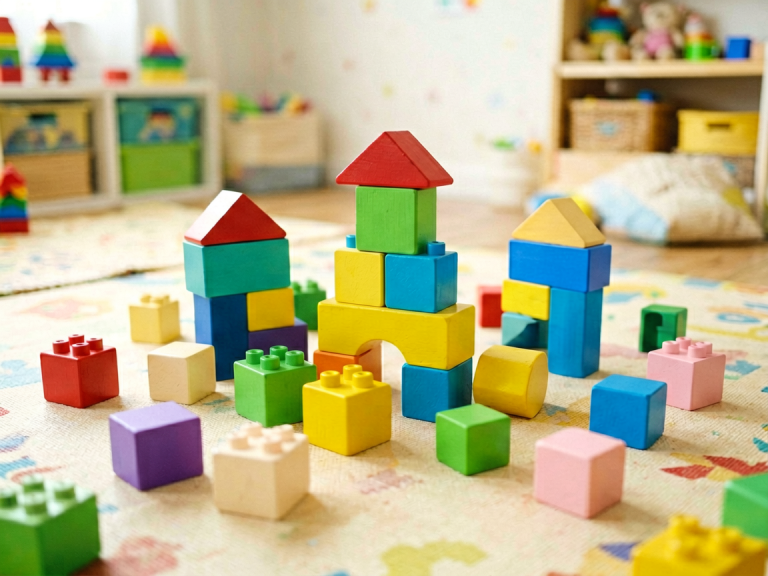
Before diving into actionable tips, it is crucial to understand why play works. Neuroscientific research has consistently shown that when children are engaged in self-directed, enjoyable activities, their brains release dopamine and endorphins—chemicals that enhance memory consolidation and motivation. Unlike passive instruction, play requires active participation: a child stacking blocks must estimate balance, adjust pressure, and observe outcomes, all of which activate the prefrontal cortex (responsible for executive function) and the motor cortex. Furthermore, sociodramatic play—such as pretending to run a grocery store—demands negotiation, perspective-taking, and language use, directly strengthening social cognition and vocabulary. A landmark study from the University of Edinburgh followed children from age seven to age 33 and found that those who had more opportunities for creative, unstructured play in early childhood scored significantly higher on measures of divergent thinking and adaptability as adults. This evidence underscores that play is not a distraction from “real learning”; it is the most efficient, child-friendly method of building the brain’s architecture.
Creating a Play-Rich Environment at Home
Your home can be a laboratory of learning without a single textbook. The key is intentional curation. Start by designating a “yes space”—a safe area where your child can explore freely without constant adult intervention. Fill it with open-ended materials: wooden blocks, fabric scraps, empty cardboard tubes, sand, water, play dough, and a variety of containers. These items do not dictate a single correct use; instead, they invite imagination. For example, a cardboard tube can become a telescope, a bridge, a trumpet, or a marble run. This divergence is precisely what stimulates creative problem-solving. Rotate toys every few weeks to maintain novelty, and resist the urge to buy expensive electronic gadgets. Research from the American Academy of Pediatrics indicates that simple, low-tech toys often promote richer play narratives than toys that sing, flash, or talk. Additionally, incorporate real-world objects: a child-sized apron and wooden spoon can turn the kitchen into a math and science classroom as you measure ingredients or discuss melting butter. Remember that the environment itself teaches; a disorganized room with too many choices can overwhelm a child, while a thoughtfully curated space invites deep engagement. Keep shelves low, labels clear (using both pictures and words for emerging readers), and allow messy play to happen—be it paint, mud, or slime—knowing that sensory experiences are building strong neural connections.
Age-Appropriate Play Strategies
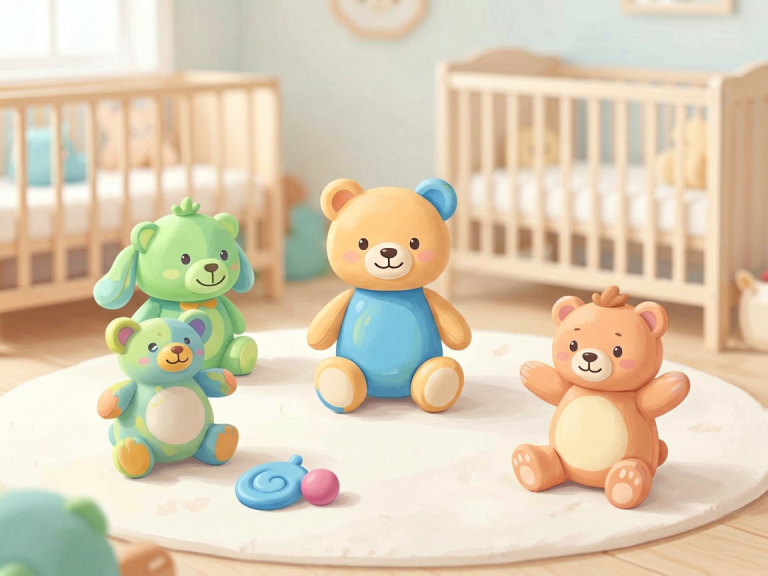
Not all play is created equal, and understanding developmental stages helps parents tailor their approach. For infants (0–12 months), the focus should be on sensory stimulation and cause-and-effect. Lay your baby on a textured mat, give them rattles that make different sounds, and engage in peek-a-boo. These activities teach object permanence and fine motor control. Toddlers (1–3 years) thrive on physical movement and simple problem-solving. Offer nesting cups, shape sorters, and push-and-pull toys. At this stage, imitate their actions—if they stack a block, stack one too. This “serve and return” interaction builds language and social reciprocity. Preschoolers (3–5 years) enter the golden age of pretend play. Encourage dress-up, puppet shows, and “store” games where they can practice counting and social scripts. Research shows that this type of play directly correlates with later reading comprehension because children learn to sequence events and understand narrative structure. For school-aged children (6–8 years), play can become more rule-based and strategic. Board games like “Candy Land” teach turn-taking and simple logic, while building with Lego or K’nex reinforces spatial reasoning. The key is to follow your child’s lead: if they are fascinated by dinosaurs, incorporate dino-themed counting, sorting, and story-making. This aligns with Vygotsky’s “zone of proximal development”—learning happens best when a child is challenged just enough, and a parent who observes carefully can offer the right level of scaffolding.
Incorporating Academic Skills into Everyday Play
One of the most common concerns parents express is whether their child will be ready for school if they “only” play. The answer is a resounding yes—provided that parents are intentional about weaving academic concepts into playful contexts. Mathematics, for example, can be learned through sorting laundry by size or color, counting the number of steps to the mailbox, or baking cookies and measuring flour. Language and literacy flourish when you pause during a story to ask, “What do you think will happen next?” or when you provide magnetic letters on the refrigerator for your child to spell simple words aloud. Science emerges when you blow bubbles and discuss why some are bigger, or when you grow a bean in a clear cup and observe root development. Even reading instruction can be disguised: write a simple treasure hunt note like “Look under the blue pillow” and watch your child decode the words while laughing. The National Association for the Education of Young Children suggests using “math talk” in everyday interactions: “You have two crackers, but I see three—can you help me count them?” This verbal scaffolding builds number sense without pressure. The golden rule is to never force it. If your child resists counting during snack time, drop it. Instead, try again later with a different context—perhaps measuring how many blocks tall their tower is. Play-based academic learning feels like a secret gift to the child, and that sense of discovery is what ignites intrinsic motivation.
The Parent as a Play Facilitator
Your role is not to direct the play but to facilitate it. This requires a delicate balance: showing genuine interest without taking over. Sit on the floor and follow your child’s narrative. If they are pretending to be a firefighter, ask open-ended questions: “Where is the fire? How can I help you put it out? What sound does the truck make?” This not only builds vocabulary and imagination but also sends the powerful message that their ideas matter. Avoid the urge to correct “mistakes” during play. If your child draws a green sun, resist saying “the sun is actually yellow.” Instead, ask, “Tell me about your green sun—is it a special kind of sun?” This preserves creative confidence and encourages explanatory language. You can also model play behaviors—show your child how you turn a sock into a puppet, or build a fort with blankets. When you play, you demonstrate that learning is a lifelong, joyful pursuit. Furthermore, use play to teach emotional regulation. If a tower collapses, don’t rush to fix it; validate the frustration: “It’s so hard when blocks fall. Let’s try a wider base together.” This builds resilience and problem-solving skills. Another tip is to narrate your own play: “I’m going to put this red block on top, but it feels wobbly. Maybe I need a bigger block underneath.” This “thinking aloud” helps children internalize metacognitive strategies.
Balancing Structured and Unstructured Play
While guided play is invaluable, children also need large blocks of unstructured time—hours when there is no schedule, no adult agenda, no learning goal. In our hyper-organized world, this is often the first thing to be sacrificed for enrichment classes or screen time. Yet unstructured play is where true creativity flourishes. Without a predetermined outcome, a child might spend 45 minutes digging a hole in the yard, pretending it is a dinosaur fossil excavation, or inventing a new game with sticks and stones. This type of play develops executive functions like self-regulation, planning, and flexibility. The British Journal of Developmental Psychology found that children who had at least 90 minutes of daily unstructured outdoor play showed higher levels of attention and lower levels of anxiety than those with more structured activities. As a parent, you can provide a loose framework—a backyard with safe materials, a basket of loose parts, a spot for climbing—and then step back. Trust that boredom is not an emergency; it is a catalyst for invention. At the same time, structured play such as family board game night, music class, or a short parent-guided science experiment has its place, particularly for practicing turn-taking and following rules. The ideal ratio is approximately 70% unstructured to 30% structured for children under age seven, shifting slightly as they grow older. The key is to listen to your child: if they are becoming frustrated or disengaged, it may be time to switch from structured to free play, or vice versa.
Conclusion
Learning through play is not a passive hope; it is an active practice that every parent can cultivate with intention and patience. By creating a rich environment, following your child’s developmental cues, weaving academic concepts into joyful activities, and stepping back to allow freedom, you are laying the groundwork for a curious, resilient, and capable human being. The research is unequivocal: children who play deeply and often become adults who think creatively, collaborate effectively, and approach challenges with flexibility. As a parent, you do not need to become a teacher in the traditional sense. Instead, become a co-explorer—a partner in wonder. The next time your child spills a box of pasta on the kitchen floor, take a breath. Before you clean it up, hand them a measuring cup and suggest they build a pasta tower. You will not only have saved the mess for a moment longer; you will have opened a door to learning that no worksheet could ever match.